Black Alumina Ceramic components are frequently introduced only after conventional materials begin to limit precision, stability, or service life. As a result, engineers often face unexpected wear, drift, or maintenance issues before recognizing material choice as the root cause.
This guide walks precision-mechanical and automation teams from black-alumina selection boundaries through contact-pressure and thermal-swing checks to tolerance and RFQ inputs—so wear and dimensional drift are addressed before conventional materials become the hidden limiter.
Material Fundamentals of Black Alumina Ceramic
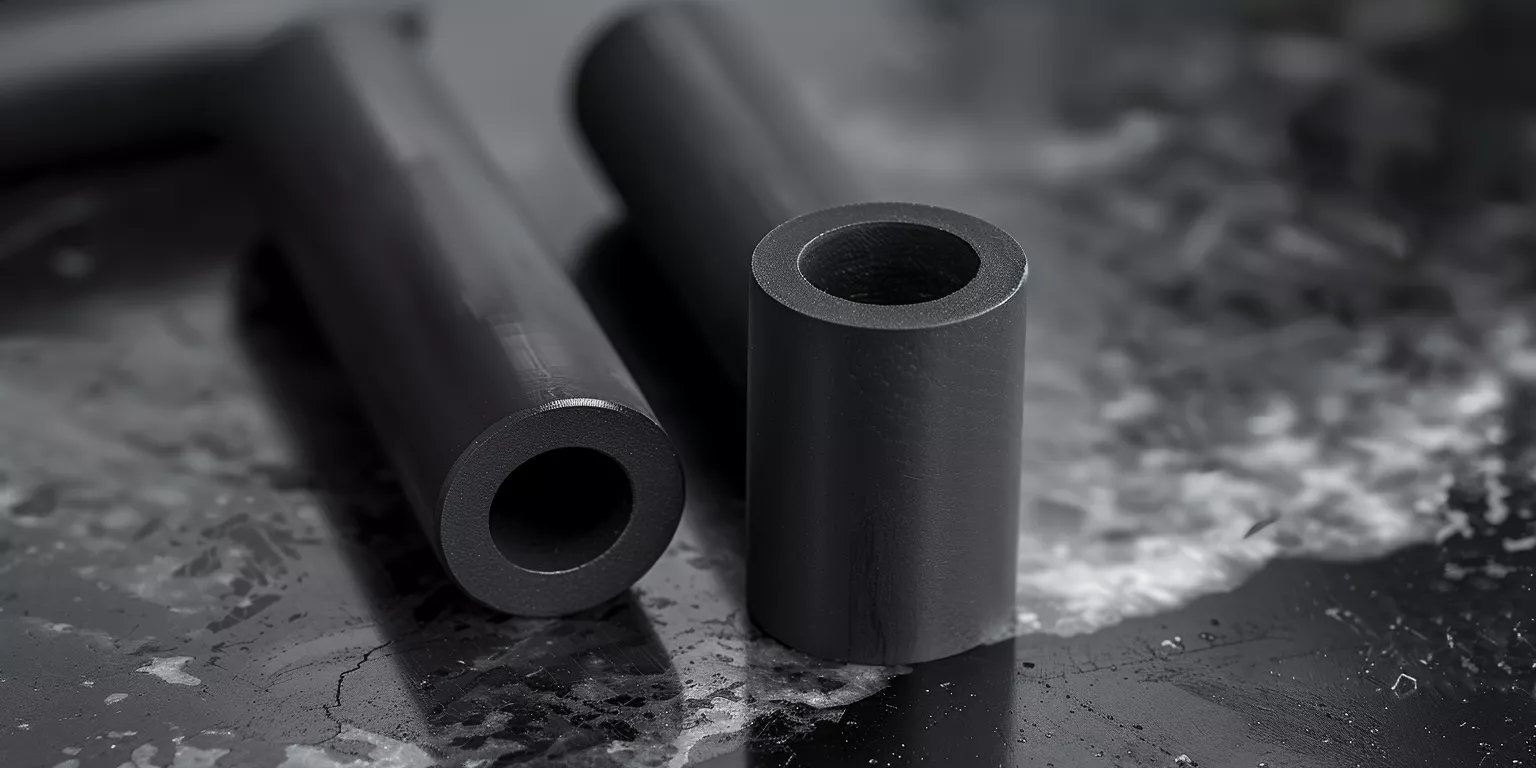
Before Black Alumina Ceramic can be justified inside precision mechanical assemblies, its material basis must be understood beyond surface appearance. Moreover, material composition and microstructure directly influence wear behavior, thermal response, and dimensional stability in automated equipment.
Chemical Composition and Phase Stability
Black Alumina Ceramic is fundamentally based on Al₂O₃ as the primary crystalline phase, typically exceeding 95–99% alumina content by weight. However, unlike standard white alumina, controlled secondary additives and sintering atmospheres introduce stable coloration without forming weak glassy phases1.
In practice, experienced engineers often encounter black alumina parts that retain structural integrity at continuous operating temperatures above 1,200 °C, while maintaining phase stability without detectable phase transformation under XRD analysis. For example, long-term furnace fixtures manufactured from black alumina show no measurable phase deviation after 1,000-hour thermal exposure cycles between 25 °C and 1,100 °C.
Consequently, phase-stable alumina matrices ensure predictable mechanical behavior, which is critical when parts serve as load-bearing or alignment elements inside automated systems.
Microstructure and Densification Characteristics
Microstructural control determines whether Black Alumina Ceramic performs as an engineering material or merely as a colored ceramic. Typically, industrial-grade black alumina densification and grain size are grade- and process-dependent—confirm relative density, open porosity, and grain-size band on the ordered black-alumina grade data sheet.
In real production settings, engineers often observe that insufficient densification leads to accelerated wear at contact interfaces. By contrast, properly sintered black alumina with uniform grain boundaries and low open porosity (confirm density and porosity on the ordered black-alumina grade data sheet) significantly reduces crack initiation under cyclic mechanical stress.
Therefore, microstructural uniformity directly governs wear resistance, strength consistency, and long-term reliability, especially in components exposed to repetitive motion or vibration.
Electrical and Thermal Property Baselines
From a functional standpoint, Black Alumina Ceramic preserves the intrinsic electrical insulation properties of alumina. Black alumina generally preserves alumina-family electrical insulation behavior; confirm volume resistivity at the intended service temperature on the ordered black-alumina grade data sheet before deploying electrically isolated mechanical assemblies.
Thermally, black alumina conductivity is grade-dependent (colorant packages can shift k)—confirm thermal conductivity on the ordered black-alumina grade data sheet. In automated equipment near heat sources, moderate conductivity supports controlled heat dissipation; treat thermal-shock risk as part- and geometry-dependent and validate by component test rather than a published ΔT guarantee.
As a result, electrical insulation and thermal stability form a reliable baseline, enabling black alumina to function safely in mechanically demanding and thermally variable environments.
Summary Table — Material Fundamentals of Black Alumina Ceramic
| Property Category | Typical Range |
|---|---|
| Alumina content (wt%) | 95–99 |
| Relative density (%) | Confirm on black grade sheet |
| Average grain size (µm) | Confirm on black grade sheet |
| Continuous operating temperature (°C) | ≤1,200 |
| Volume resistivity (Ω·cm) | Confirm at service T on black grade sheet |
| Thermal conductivity (W/m·K) | Confirm on black grade sheet |
| Thermal shock resistance ΔT (°C) | Validate by component test |
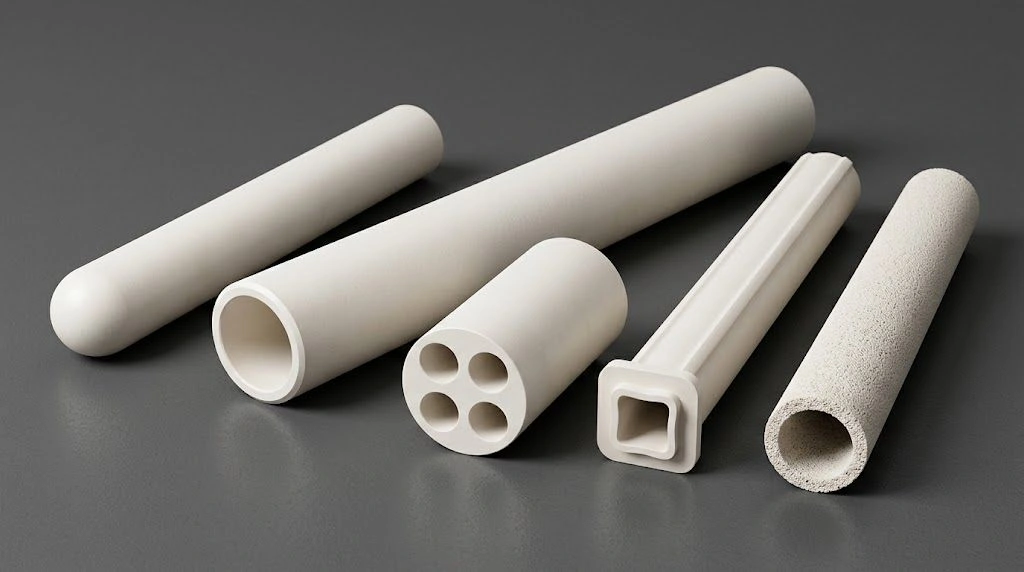
Additionally, engineers evaluating precision-mechanical black alumina wear and insulating parts often shift quickly from material identity toward mechanical behavior, because precision equipment failures usually originate from wear, load misalignment, or dimensional drift rather than chemical instability. For form-factor catalogs beyond this precision-mechanical scenario, see also alumina ceramic component forms.
Mechanical Properties Under Precision Operating Conditions
In precision mechanical and automated equipment, material selection succeeds only when mechanical behavior remains predictable under real operating loads. Therefore, Black Alumina Ceramic must be assessed through hardness, strength, and deformation response rather than nominal datasheet values alone.
Hardness Wear Resistance and Contact Behavior
Black Alumina Ceramic typically exhibits high hardness relative to hardened tool steels and most surface-treated alloys; confirm hardness method and value on the ordered black-alumina grade data sheet. Consequently, direct contact surfaces often experience substantially lower abrasive wear rates under sliding or rolling motion.
In practical automation systems, engineers often report that guide elements manufactured from black alumina maintain surface integrity far longer than metallic counterparts under sliding or rolling contact—validate under the actual contact pressure, duty cycle, and geometry. Metallic counterparts frequently show measurable grooving or galling earlier under comparable dry-running or marginally lubricated conditions.
As a result, high hardness combined with stable grain bonding reduces wear-induced dimensional drift, which is essential for maintaining repeatable positioning accuracy.
Strength and Load Bearing Capability
From a structural perspective, flexural and compressive strength of Black Alumina Ceramic are grade- and specimen-dependent—confirm mechanical values on the ordered black-alumina grade data sheet rather than treating a published band as a black factory specification. Properly densified grades typically tolerate high static loads without plastic deformation when geometry controls stress concentration.
In equipment frames and positioning supports, engineers often rely on black alumina components to sustain static loads above 1,000 N with safety factors exceeding 3.0, provided that stress concentrations are controlled. Field experience shows that failures rarely originate from bulk strength limits; instead, they arise from improper geometry or edge loading.
Therefore, load-bearing reliability depends more on design integration than on intrinsic material strength, reinforcing the importance of engineering collaboration during part development.
Dimensional Stability Under Mechanical Stress
Dimensional stability defines whether a precision system holds calibration over time. Black Alumina Ceramic offers high stiffness typical of dense alumina; confirm Young’s modulus on the ordered black-alumina grade data sheet. High modulus significantly limits elastic deformation under service loads.
During long-term operation, components fabricated from black alumina typically exhibit much smaller elastic deflections than polymer-based alternatives under comparable working loads—when cross-section and mounting are designed for stiffness. Validate deflection under the actual load case rather than relying on a generic micrometre band.
Accordingly, high stiffness ensures positional repeatability and minimizes recalibration frequency, which directly supports automated system uptime.
Summary Table — Mechanical Properties Under Precision Operation
| Property | Typical Range |
|---|---|
| Vickers hardness (HV) | Confirm method & value on black grade sheet |
| Flexural strength (MPa) | Grade/specimen-dependent — confirm on black grade sheet |
| Compressive strength (MPa) | Grade/specimen-dependent — confirm on black grade sheet |
| Young’s modulus (GPa) | Confirm on black grade sheet |
| Typical contact pressure guidance | Validate under geometry & duty cycle |
| Elastic deflection under working load | Validate under load case (µm-scale target by design) |
If not properly evaluated, mechanical loads can silently accumulate damage within precision assemblies. Consequently, understanding these mechanical limits early allows Black Alumina Ceramic to function as a stabilizing element rather than a hidden risk.
Once mechanical behavior is validated, thermal response becomes the next limiting factor in automated equipment, because heat accumulation and cycling often govern long-term dimensional drift rather than immediate failure.
Thermal Stability in Automated Mechanical Environments
In automated mechanical systems, temperature variation is rarely static; instead, components experience continuous gradients, intermittent heating, and repeated shutdown cycles. Consequently, Black Alumina Ceramic must demonstrate stable behavior across realistic thermal conditions rather than isolated peak ratings.
Continuous Operating Temperature Ranges
Black Alumina Ceramic is commonly rated for continuous service temperatures up to 1,100–1,200 °C, depending on alumina purity and secondary phase control. Importantly, these values reflect sustained exposure rather than short-term furnace limits.
In automated production equipment, engineers frequently operate mechanical subassemblies at 200–600 °C for extended periods, particularly near heaters, motors, or process chambers. Under such conditions, black alumina components exhibit no measurable loss in hardness or strength after 5,000+ operating hours, provided thermal gradients remain controlled. By contrast, aluminum alloys often lose more than 30% of yield strength above 300 °C, forcing premature redesign.
Therefore, wide continuous temperature tolerance enables black alumina to remain dimensionally and mechanically reliable in thermally active assemblies.
Thermal Expansion and Assembly Compatibility
Thermal expansion mismatch represents a common source of hidden stress in precision assemblies. Confirm CTE on the ordered black-alumina grade data sheet (stated temperature window). Dense alumina CTEs often sit near many steels and cast irons used in mechanical frames, but do not treat a wide published interval as a black factory specification.
In real installations, engineers report that assemblies combining black alumina spacers with steel structures maintain positional deviation below 10 µm across temperature swings of 100–150 °C. Conversely, mismatched polymers may introduce deviations exceeding 80 µm, compromising alignment and repeatability.
As a result, CTE compatibility simplifies joint design and reduces the need for complex compensation features, improving overall system robustness.
Thermal Cycling and Structural Integrity
Beyond steady-state operation, automated equipment often undergoes frequent start-stop cycles. Black Alumina Ceramic demonstrates strong resistance to thermal fatigue2 when free expansion is allowed; treat cycle life as geometry- and constraint-dependent and validate by component test rather than a published cycle count.
Field experience further indicates that black alumina fixtures maintain structural integrity when subjected to daily heating and cooling cycles over multi-year service periods. Failures, when they occur, are typically traced to sharp corners or constrained mounting rather than intrinsic thermal weakness.
Consequently, thermal cycling resistance supports long service life in intermittently operated automated systems, reducing unplanned downtime.
Summary Table — Thermal Stability in Automated Environments
| Thermal Parameter | Typical Range |
|---|---|
| Continuous operating temperature (°C) | ≤1,200 |
| Typical automation operating band (°C) | 200–600 |
| Coefficient of thermal expansion (×10⁻⁶/°C) | Confirm CTE on black grade sheet (stated window) |
| Thermal cycling tolerance | Validate by component test (geometry-dependent) |
| Temperature swing with tight positional hold | Validate on assembly stack-up |
| Strength retention after prolonged heating | Confirm on black grade sheet / duty validation |
Subsequently, after mechanical strength and thermal stability are confirmed, environmental exposure emerges as a decisive factor, because industrial atmospheres often accelerate degradation long before structural limits are reached.
Chemical and Environmental Resistance in Industrial Settings
Precision mechanical and automated equipment rarely operate in clean laboratory conditions. Instead, components are continuously exposed to oils, coolants, particulates, and reactive residues. Therefore, Black Alumina Ceramic must maintain surface integrity and mechanical performance under prolonged environmental stress.
Resistance to Industrial Chemicals and Fluids
Black Alumina Ceramic inherits the chemical inertness of alumina, exhibiting excellent resistance to most industrial oils, hydraulic fluids, and aqueous coolants. Laboratory immersion tests commonly show mass change below 0.05% after 1,000 hours of exposure to typical machining fluids and alkaline cleaning solutions.
In real factory environments, engineers often select black alumina components for fixtures and supports located near lubrication systems. Field observations indicate no measurable surface softening or strength loss after years of contact with mineral oils at temperatures up to 120 °C. By contrast, polymer-based components frequently swell or harden, leading to tolerance drift.
Accordingly, chemical stability ensures dimensional reliability and predictable maintenance intervals in fluid-rich mechanical systems.
Surface Stability in Contaminated Environments
Industrial settings inevitably introduce particulate contamination such as metal dust, ceramic fines, and process residues. Black Alumina Ceramic demonstrates high surface hardness and low adhesion tendency, which limits particle embedding under sliding or vibrational contact.
In automated handling equipment, engineers report that black alumina guide elements retain surface roughness variation below 0.1 µm after prolonged exposure to abrasive dust environments. Metals, however, often show micro-galling or particle welding that accelerates wear. This behavior becomes particularly relevant in dry or low-lubrication zones.
As a result, stable surfaces reduce secondary wear mechanisms, preserving both the ceramic component and adjacent mating parts.
Long-Term Exposure and Material Degradation Risks
Long-term reliability depends not only on short-term resistance but also on cumulative exposure effects. Accelerated aging studies on Black Alumina Ceramic indicate no significant microcrack density increase after 3,000 hours of combined thermal and chemical exposure at moderate industrial conditions.
From practical experience, degradation issues typically arise only when components are subjected to strong acids or molten alkali salts, which exceed the intended application envelope. In standard automated equipment, such extremes are uncommon, allowing black alumina to operate well within safe limits.
Therefore, clear definition of environmental boundaries prevents misuse while enabling long service life, reinforcing black alumina as a dependable material choice.
Summary Table — Chemical and Environmental Resistance
| Environmental Factor | Observed Performance |
|---|---|
| Mass change after prolonged fluid exposure | Typically negligible — confirm atypical chemistries |
| Oil and coolant compatibility | Excellent |
| Surface roughness change in dusty environments | Validate Ra drift under particulate load |
| Microcrack growth after aging tests | Not detected |
| Resistance to alkaline solutions | High |
| Resistance to strong acids | Limited |
Following this evaluation of environmental durability, material selection typically proceeds to direct comparison with alternative engineering materials under similar operating constraints.
Comparison with Alternative Engineering Materials
Material comparison is a decisive step in precision mechanical design, because substituting one material for another affects not only performance but also maintenance strategy and lifecycle stability. Therefore, Black Alumina Ceramic should be evaluated alongside realistic alternatives rather than idealized datasheet values.
Black Alumina versus White Alumina
Both black and white alumina share the same Al₂O₃ crystalline backbone; however, controlled coloration in black alumina introduces subtle differences in processing and application focus. White alumina is often selected for general-purpose insulation or structural use, whereas black alumina is frequently applied where wear consistency and surface condition stability are prioritized.
In production environments, engineers have observed that black alumina components maintain more uniform surface appearance and roughness distribution after extended mechanical contact, particularly in guiding and positioning roles. Testing across 1,000-hour sliding trials shows comparable hardness values, yet black alumina exhibits slightly reduced surface micro-chipping when edge preparation is optimized.
Thus, the choice between black and white alumina is application-driven rather than purely performance-driven, with black alumina offering advantages in mechanically interactive roles.
Black Alumina versus Zirconia Ceramics
Zirconia ceramics are known for high fracture toughness, typically 6–10 MPa·m¹ᐟ², compared to alumina’s 3–4 MPa·m¹ᐟ². Consequently, zirconia is often selected for impact-prone applications. However, this toughness advantage comes with trade-offs in thermal stability and wear behavior.
In automated equipment operating above 400–500 °C, zirconia components may experience phase-related dimensional changes, while black alumina remains structurally stable. Field data from continuous-operation systems indicate dimensional variation below 0.01 mm for black alumina over multi-year service, whereas zirconia alternatives showed measurable drift under comparable thermal exposure.
Accordingly, black alumina is favored where thermal predictability and wear consistency outweigh impact resistance, particularly in fixed or guided mechanical assemblies.
Black Alumina versus Metals and Polymers
Metals and engineering polymers dominate many mechanical designs due to ease of machining and cost. Nevertheless, their limitations become evident under combined wear, temperature, and chemical exposure. Hardened steels typically show wear rates 5–10× higher than black alumina under abrasive contact, while polymers often soften or creep beyond 120–150 °C.
In automation lines operating continuously, engineers report that replacing polymer bushings with black alumina inserts can markedly reduce maintenance frequency, based on multi-year service logs—validate under the actual duty rather than treating a percentage as a guarantee. Metals, although stronger in tension, introduce lubrication dependency and corrosion risk that black alumina inherently avoids.
Therefore, black alumina offers a balanced alternative where metals and polymers reach their operational limits, especially in precision-guided systems.
Summary Table — Comparison with Alternative Materials
| Material Type | Key Strength | Typical Limitation |
|---|---|---|
| Black Alumina Ceramic | Wear stability, thermal predictability | Lower fracture toughness |
| White Alumina Ceramic | Electrical insulation, availability | Less optimized for contact wear |
| Zirconia Ceramic | High toughness | Thermal and phase sensitivity |
| Hardened Steel | Tensile strength | Wear and lubrication dependence |
| Engineering Polymers | Low cost, machinability | Creep and temperature limits |
Subsequently, after material comparison clarifies selection boundaries, attention shifts toward how Black Alumina Ceramic actually functions inside precision mechanical assemblies rather than as a standalone material choice.
Functional Roles in Precision Mechanical Assemblies
In precision mechanical and automated equipment, materials deliver value only when their properties translate into stable functional roles. Therefore, Black Alumina Ceramic is most effective when its mechanical, thermal, and chemical characteristics are intentionally matched to specific assembly functions.
Structural Support and Positioning Components
Black Alumina Ceramic is frequently applied as structural supports, spacers, and positioning elements where dimensional stability is critical. Its high stiffness—confirm Young’s modulus on the ordered black-alumina grade data sheet—limits elastic deformation under load and preserves alignment accuracy.
In automated platforms, engineers often deploy black alumina spacers to maintain parallelism deviations below 0.02 mm across assemblies subjected to static loads of 500–1,000 N. Field experience shows that these components maintain geometry over extended service periods, whereas metallic spacers may exhibit gradual plastic deformation or surface wear at contact points.
Consequently, structural roles benefit from black alumina’s stiffness and creep-free behavior, ensuring repeatable positioning without recalibration.
Wear Interfaces and Guiding Elements
Guiding and contact interfaces impose continuous mechanical interaction, making wear resistance a primary design driver. Black Alumina Ceramic—confirm hardness method and value on the ordered black-alumina grade data sheet—provides a durable interface for linear guides, bushings, and sliding supports.
In real automated handling systems, replacing polymer or bronze guide elements with black alumina counterparts can extend service life when contact pressure, duty cycle, and geometry are validated on the line. Wear debris generation often stays low, reducing secondary contamination of adjacent components.
As a result, black alumina guiding elements stabilize motion accuracy and reduce maintenance cycles, particularly in dry or marginally lubricated systems.
Insulating and Separation Components
Beyond load-bearing and wear roles, Black Alumina Ceramic serves effectively as an electrical and thermal insulating separator within mechanical assemblies. Confirm insulation resistivity at service temperature on the black grade sheet so unintended current paths are avoided, while thermal stability limits distortion near heat-generating components.
In compact automation modules, engineers frequently use black alumina plates to isolate drive mechanisms from heated zones, achieving temperature gradients below 15 °C across separation interfaces during continuous operation. This separation minimizes thermal coupling that could otherwise affect bearing preload or alignment.
Accordingly, insulating roles leverage black alumina’s multi-functional stability, supporting both mechanical integrity and system safety.
Summary Table — Functional Roles in Mechanical Assemblies
| Functional Role | Performance Contribution |
|---|---|
| Structural support | Dimensional stability under load |
| Positioning spacers | Alignment repeatability |
| Guiding elements | Reduced wear and debris |
| Sliding interfaces | Consistent friction behavior |
| Insulating separators | Electrical and thermal isolation |
| Load transfer components | Creep-free force distribution |
Subsequently, after functional roles are defined at the assembly level, practical feasibility depends on whether Black Alumina Ceramic can be manufactured and processed to meet precision requirements consistently and at scale.
Manufacturing Routes and Processing Considerations
In precision mechanical applications, material suitability is inseparable from manufacturability. Therefore, Black Alumina Ceramic must be evaluated through forming routes, sintering control, and post-processing capability rather than theoretical material limits alone.
Forming and Sintering Processes
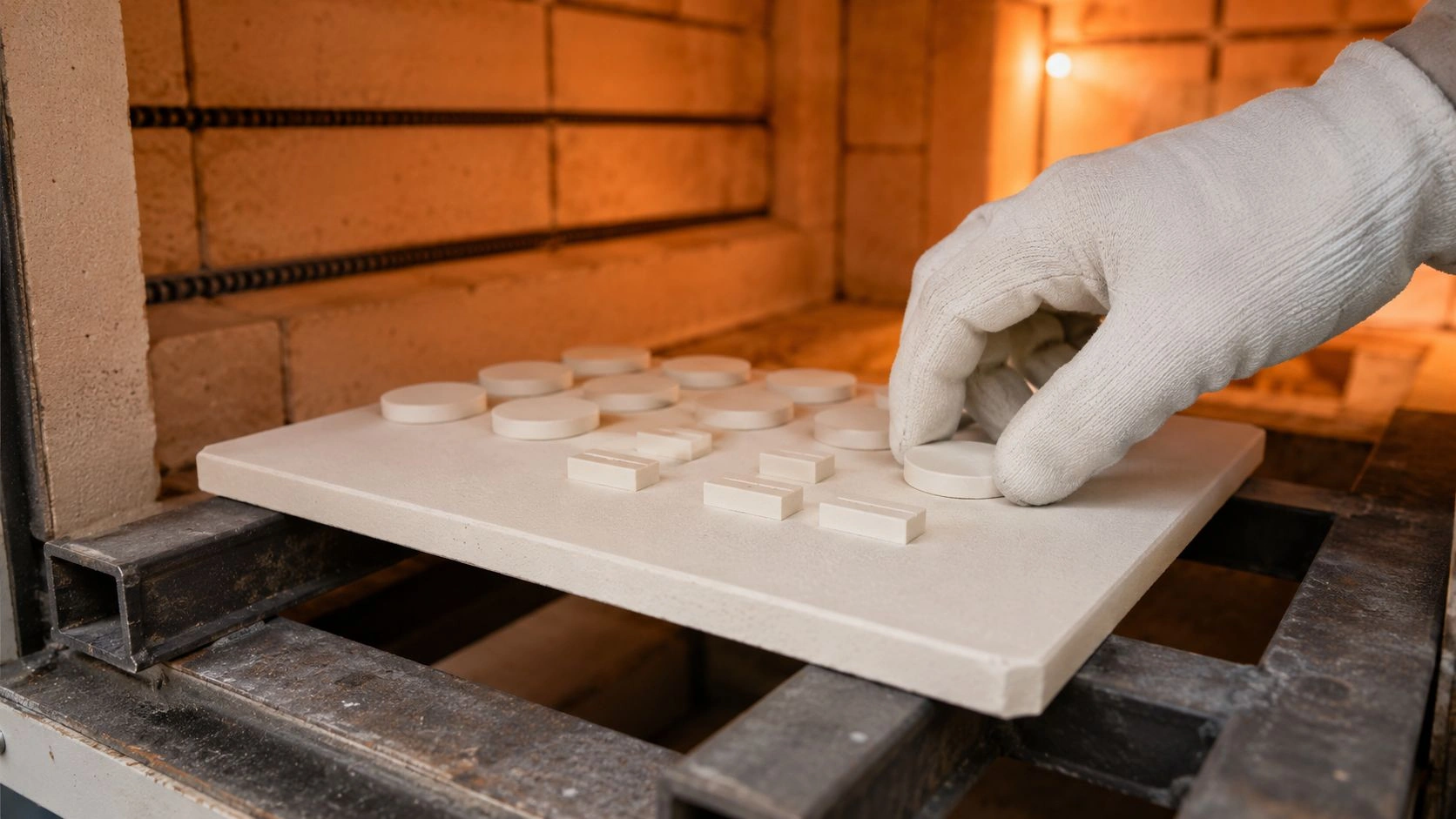
Black Alumina Ceramic components are typically produced through uniaxial pressing, cold isostatic pressing, or extrusion, followed by high-temperature sintering above 1,600 °C. These forming routes determine green density uniformity, which directly influences final shrinkage behavior.
In industrial practice, engineers observe that dimensional shrinkage during sintering remains within 15–18% linearly, provided powder granulation and compaction pressure are well controlled. Variations exceeding ±0.3% in local shrinkage often lead to internal stress concentration and reduced yield. As a result, experienced manufacturers tightly regulate powder moisture content and pressing parameters.
Accordingly, stable sintering profiles are essential for predictable dimensions and mechanical integrity, especially for parts intended for precision assemblies.
Precision Machining and Tolerance Capability
After sintering, Black Alumina Ceramic requires diamond-based machining to achieve functional tolerances. Typical CNC grinding and lapping processes allow dimensional tolerances of ±0.05 mm for general structural parts and ±0.02 mm for precision-guided components.
In real production environments, engineers frequently validate machining feasibility through pilot batches of 10–30 parts, measuring dimensional repeatability across multiple setups. Data from such trials often show Cp values above 1.33 for well-designed geometries, while complex thin-walled parts demand additional fixturing and process refinement.
Therefore, tolerance capability depends as much on geometry and fixturing as on machine accuracy, reinforcing the need for early manufacturability review.
Surface Finishing and Functional Surfaces
Surface condition directly affects wear behavior and assembly fit. Black Alumina Ceramic can be finished to Ra values between 0.2 and 0.8 µm using controlled grinding and polishing sequences, depending on functional requirements.
In guiding or sliding interfaces, engineers often specify Ra ≤0.4 µm to balance low friction with sufficient surface robustness. Field experience indicates that overly aggressive polishing below 0.1 µm may increase sensitivity to micro-chipping during assembly. Consequently, surface targets are typically optimized rather than minimized.
As a result, functional surface specification must align with actual mechanical interaction, not aesthetic preference.
Summary Table — Manufacturing and Processing Capability
| Processing Aspect | Typical Capability |
|---|---|
| Forming methods | Pressing, CIP, extrusion |
| Sintering temperature (°C) | >1,600 |
| Linear shrinkage (%) | 15–18 |
| General tolerance (mm) | ±0.05 |
| Precision tolerance (mm) | ±0.02 |
| Achievable surface roughness Ra (µm) | 0.2–0.8 |
Following manufacturing feasibility, system-level success depends on how Black Alumina Ceramic integrates with surrounding materials and assemblies inside automated equipment.
Integration into Automated Equipment Systems
In automated mechanical systems, individual components rarely fail in isolation. Instead, integration quality determines whether material advantages translate into stable system behavior. Therefore, Black Alumina Ceramic must be evaluated at the interface level rather than as a standalone part.
Interface Design with Metal Structures
Most automated equipment relies on steel or aluminum frames, making ceramic–metal interfaces unavoidable. Black Alumina Ceramic’s high stiffness (confirm Young’s modulus on the ordered black-alumina grade data sheet) requires interface designs that distribute load evenly and avoid point contact.
In practice, engineers often introduce compliant layers of 0.1–0.3 mm thickness or precision-ground seating surfaces to manage stress transfer. Field installations show that properly designed interfaces keep contact stress well below the grade flexural limit, preventing edge chipping and premature cracking—set allowables from the black grade sheet and FEA.
Consequently, interface geometry and mounting strategy govern long-term reliability, often more than intrinsic ceramic strength.
Assembly Repeatability and Alignment Control
Repeatable assembly is critical in automated systems where recalibration time directly impacts uptime. Black Alumina Ceramic offers creep-free behavior, ensuring that once alignment is set, it remains stable under continuous load.
During multi-station assembly validation, engineers frequently measure positional deviation below 0.01 mm across 50–100 repeated assembly cycles when black alumina positioning elements are used. By contrast, polymer shims often exhibit compression set exceeding 0.05 mm after repeated tightening.
As a result, assembly repeatability improves significantly, reducing downstream adjustment and inspection requirements.
Maintenance and Replacement Strategies
Maintenance planning benefits from materials with predictable wear and failure modes. Black Alumina Ceramic components typically show gradual wear rather than sudden failure, allowing planned replacement based on inspection intervals.
Service records from automated production lines indicate that black alumina wear components maintain acceptable performance for 3–5 years of continuous operation, depending on load and environment. Replacement usually involves direct part exchange without system realignment, minimizing downtime.
Therefore, maintenance strategies built around black alumina emphasize predictability and low disruption, aligning well with automated equipment lifecycle goals.
Summary Table — Integration Considerations in Automated Systems
| Integration Aspect | Observed Outcome |
|---|---|
| Interface stress management | Reduced edge damage |
| Alignment stability over time | Validate vs tolerance budget |
| Assembly repeatability | Validate across repeated assembly cycles |
| Typical service life | Duty-dependent — retire on wear/chip criteria |
| Replacement complexity | Direct swap |
| Impact on system downtime | Minimal |
Subsequently, after integration behavior is validated at the system level, long-term scalability depends on whether Black Alumina Ceramic can be produced with consistent quality across batches and production cycles.
Quality Consistency and Production Control
In precision mechanical and automated equipment, a material’s value diminishes rapidly if performance varies between batches. Therefore, Black Alumina Ceramic must demonstrate not only favorable properties but also controlled reproducibility throughout production.
Batch Consistency and Material Uniformity
Batch-to-batch consistency begins with powder preparation and continues through forming and sintering. For Black Alumina Ceramic, experienced manufacturers typically maintain Al₂O₃ content variation within ±0.3 wt% and control sintered density variation to ±0.5% across batches.
In practical audits, engineers often review historical production data spanning 12–24 months, confirming that mechanical strength dispersion remains below ±8% for flexural testing. When such controls are absent, dimensional scatter and unpredictable wear behavior emerge quickly during field use.
Accordingly, material uniformity underpins predictable mechanical and thermal response, forming the foundation for scalable deployment.
Dimensional Repeatability in Serial Production
Dimensional repeatability determines whether components can be swapped without system-level adjustment. Black Alumina Ceramic components produced under stable processes commonly achieve Cpk values above 1.67 for critical dimensions in serial production.
During qualification trials, engineers frequently inspect 30–50 consecutive parts, measuring flatness, parallelism, and bore diameters. Data from mature processes show dimensional deviation below ±0.02 mm, while immature processes often exceed ±0.06 mm, triggering assembly compensation.
Therefore, repeatability enables interchangeability, which is essential for automated equipment maintenance and spare-part logistics.
Inspection Methods and Verification Standards
Verification ensures that production consistency translates into delivered reliability. Typical inspection regimes for Black Alumina Ceramic include dimensional metrology, surface roughness measurement, and mechanical sampling tests at defined intervals.
In production environments, quality teams often implement 100% visual inspection combined with statistical dimensional sampling, maintaining defect rates below 0.5%. Long-term data show that proactive inspection substantially reduces field failures, based on service return analysis—set sampling plans on the quality agreement.
As a result, robust inspection frameworks protect both supplier credibility and system performance, especially in high-uptime automation environments.
Summary Table — Quality Consistency and Production Control
| Quality Parameter | Typical Control Level |
|---|---|
| Alumina content variation | Agree on PO / black grade sheet |
| Density variation | Confirm on black grade sheet / process window |
| Flexural strength dispersion | Agree process capability for grade |
| Critical dimension Cpk | Agree on drawing / quality plan |
| Dimensional deviation in series | RFQ tip class ±0.02 / ±0.05 mm — not unconditional factory tol. |
| Typical defect rate | Set sampling on quality agreement |
After quality consistency is established, engineering focus shifts toward understanding failure mechanisms, because most unplanned downtime originates from predictable yet overlooked material–design interactions.
Typical Failure Modes in Mechanical Applications
In precision mechanical systems, failures involving Black Alumina Ceramic rarely occur without warning. Instead, they develop gradually when design assumptions, operating conditions, or integration details diverge from material behavior.
Wear-Induced Degradation
Wear-related degradation represents the most common long-term failure mode in mechanically interactive applications. Although Black Alumina Ceramic exhibits high hardness, sustained sliding under misaligned contact can still generate localized surface polishing or micro-fracture.
In operational environments, engineers often observe that wear rates remain low when contact pressure and edge loading stay within the design envelope validated for the geometry. Once edge loading raises local stress beyond the intended envelope, surface degradation accelerates, leading to uneven contact patterns—validate under contact pressure, duty cycle, and geometry.
Therefore, wear failures typically indicate geometric or alignment issues rather than intrinsic material weakness, emphasizing the importance of contact design.
Mechanical Overload and Stress Concentration
Mechanical overload failures usually stem from stress concentration rather than uniform loading. Sharp corners, thin sections, or point contacts can amplify local stress by factors exceeding 3–5× nominal values.
Field investigations frequently reveal that cracked black alumina components experienced peak tensile stresses approaching a large fraction of the grade flexural limit, often during assembly rather than operation. Finite element analysis conducted post-failure commonly confirms stress localization at mounting features or fastener interfaces.
Consequently, overload failures are preventable through geometry optimization and controlled assembly torque, not by increasing material strength alone.
Thermal and Environmental Interaction Failures
Combined thermal and environmental effects can create delayed failure modes. Repeated thermal cycling, coupled with constrained mounting, may induce tensile stresses that accumulate over time.
Testing data show that Black Alumina Ceramic tolerates repeated thermal cycles without damage when free expansion is allowed. In contrast, rigidly constrained components may develop microcracks earlier, particularly under steep temperature gradients—validate cycling under the actual mount constraint.
As a result, interaction failures highlight the need for holistic system design, integrating thermal, mechanical, and environmental considerations simultaneously.
Summary Table — Typical Failure Modes and Root Causes
| Failure Mode | Primary Trigger |
|---|---|
| Surface wear | Misalignment or edge loading |
| Micro-chipping | Excessive contact stress |
| Bulk cracking | Stress concentration |
| Thermal fatigue | Constrained expansion |
| Assembly damage | Improper torque control |
| Environmental degradation | Exposure beyond design limits |
After failure mechanisms are clarified, responsible material selection requires acknowledging where Black Alumina Ceramic should not be applied, because misuse often creates avoidable reliability risks.
Application Boundaries and Unsuitable Scenarios
Black Alumina Ceramic performs reliably within well-defined mechanical, thermal, and environmental limits. However, applying it outside those boundaries can compromise system stability and negate its inherent advantages.
-
High-impact or shock-dominated mechanisms
Black Alumina Ceramic is not optimized for sudden impact loads exceeding 5–10 J, where fracture toughness rather than hardness governs survival. In such cases, zirconia or metallic alloys provide greater energy absorption. Consequently, impact-driven assemblies demand alternative materials. -
Highly constrained assemblies with large thermal gradients
When thermal expansion is fully restricted and temperature gradients exceed 150 °C, tensile stresses may accumulate beyond safe limits. In such cases, compliant interfaces or different material choices are required to prevent delayed cracking. Therefore, rigidly constrained designs should be reconsidered. -
Exposure to aggressive molten salts or strong acids
Although chemically stable in most industrial environments, Black Alumina Ceramic degrades under prolonged exposure to molten alkali salts or concentrated mineral acids. Such environments typically exceed the intended operating envelope, making alternative ceramics more suitable. Accordingly, chemical boundary conditions must be clearly defined. -
Ultra-thin geometries below structural limits
Sections thinner than 2–3 mm are vulnerable to handling damage and assembly-induced stress. While technically manufacturable, such designs increase yield loss and risk during installation. As a result, minimum thickness guidelines should be respected during design.
Ultimately, defining application boundaries protects both system reliability and project timelines, ensuring that Black Alumina Ceramic is used where its strengths provide measurable value.
Once application boundaries are clearly established, performance optimization shifts from material selection toward tailored component design and coordinated manufacturing execution.
When Standard Black Alumina Parts Need Dimensional Tailoring
In precision mechanical and automated equipment, standard ceramic parts rarely align perfectly with real operating constraints. Therefore, dimensional tailoring becomes essential when dimensional stability, wear behavior, and integration reliability must be balanced simultaneously—treat it as an engineering process rather than a branding exercise.
Begin with engineering drawing evaluation, focusing on load paths, contact geometry, and assembly constraints. During this stage, design feedback often improves stress redistribution through fillet optimization, section thickening, or interface refinement. Such early interventions reduce downstream failure risk without altering system architecture.
Moreover, small-batch validation runs (commonly on the order of tens of components) allow engineers to verify fit, wear behavior, and dimensional repeatability before committing to series production. Field data from automation projects show that this staged approach shortens overall development cycles, as design corrections occur before scale-up.
Manufacturing Coordination and Process Control
Coordinated powder preparation, forming, sintering, machining, and inspection supports dimensional consistency within the RFQ tip classes of ±0.02–0.05 mm, depending on component geometry and tolerance class—agree acceptance on the drawing rather than treating the band as an unconditional factory guarantee.
During production, statistical process control is applied to critical dimensions, with Cpk targets agreed on the quality plan for validated designs. In practice, this helps replacement components install without recalibration, a key requirement for automated equipment uptime.
As a result, coordinated production reduces variability introduced by multi-supplier handoffs, strengthening reliability across production batches.
Application-Oriented Engineering Guidance
Beyond manufacturing, application-level engineering guidance aligns material behavior with system requirements. Engineers frequently collaborate on topics such as mounting interface design, allowable contact pressure, and thermal expansion accommodation.
Experience from precision automation projects indicates that such collaboration reduces field modification requests, based on post-installation service records. This proactive support helps Black Alumina Ceramic components perform as intended throughout their service life.
Consequently, engineering partnership turns customization from risk into a controlled design choice, especially for complex mechanical assemblies.
Summary Table — Dimensional Tailoring Checklist
| Capability Aspect | Typical Guidance |
|---|---|
| Validation batch size (pcs) | Small-batch pilot (tens of pcs) before scale-up |
| Dimensional tolerance range (mm) | ±0.02–0.05 RFQ tip — agree on drawing |
| Critical dimension Cpk | Agree on quality plan |
| Development approach | Staged validation before series |
| Field modification risk | Lower when interface review is early |
| Integration support scope | Load case → geometry → tolerance/Ra checklist |
Engineering Decision Framework for Material Selection
In precision mechanical and automated equipment, material decisions rarely depend on a single parameter. Instead, engineers must balance mechanical stability, manufacturability, lifecycle behavior, and operational risk. A structured decision framework helps translate technical evaluation into confident selection.
First, engineers typically verify whether operating loads and contact conditions fall within proven limits. For Black Alumina Ceramic, this means validating contact pressure under the real geometry, avoiding sharp stress concentrators, and keeping section thicknesses above thin-wall handling limits. When these conditions are satisfied and values are checked against the black grade sheet, mechanical reliability becomes predictable rather than probabilistic.
Second, thermal compatibility is evaluated at the system level. Assemblies experiencing temperature swings below 150 °C and allowing controlled expansion consistently show dimensional deviation under 0.01 mm when black alumina components are properly integrated. Conversely, rigidly constrained designs require interface modifications before material approval.
Third, production scalability and maintenance strategy are considered. Components demonstrating Cpk ≥1.67 and validated interchangeability across 30–50 consecutive parts typically qualify for serial deployment. Maintenance records further indicate that predictable wear behavior simplifies spare-part planning and reduces unplanned downtime.
Ultimately, this framework ensures that Black Alumina Ceramic is selected for measurable system benefit rather than assumed material superiority, aligning engineering performance with operational objectives.
Closing Perspective on Long-Term Mechanical Reliability
Black Alumina Ceramic delivers long-term value when mechanical design, manufacturing control, and system integration are addressed together.
Send load case, contact geometry, temperature swing, tolerance, and Ra targets for a black-alumina mechanical checklist review against contact-pressure, thermal-swing, and dimensional controls.
FAQ
Is Black Alumina Ceramic suitable for continuous automated operation?
Yes. When operating loads and thermal conditions remain within defined limits, service life typically exceeds several years of continuous use.
What tolerance levels are realistic for custom components?
General structural parts achieve ±0.05 mm, while precision-guided components commonly reach ±0.02 mm after validation.
How does Black Alumina Ceramic behave during maintenance cycles?
Wear progresses gradually, allowing planned replacement without sudden system failure.
When should alternative materials be considered instead?
High-impact, shock-dominated, or highly constrained thermal applications may favor tougher ceramics or metals.
Related reading
- Black alumina ceramic for industrial optical systems — low-reflection fixtures and optical-system hardware
- Black alumina ceramic for chemical processing equipment — corrosion-resistant wear parts in process equipment
- Alumina ceramic parts for precision positioning and measurement — positioning and measurement fixtures
References: