Alumina Ceramic Boat performance frequently becomes a silent variable in thermal material research, especially when unexpected phase deviations, incomplete reactions, or poor reproducibility appear during furnace-based experiments.
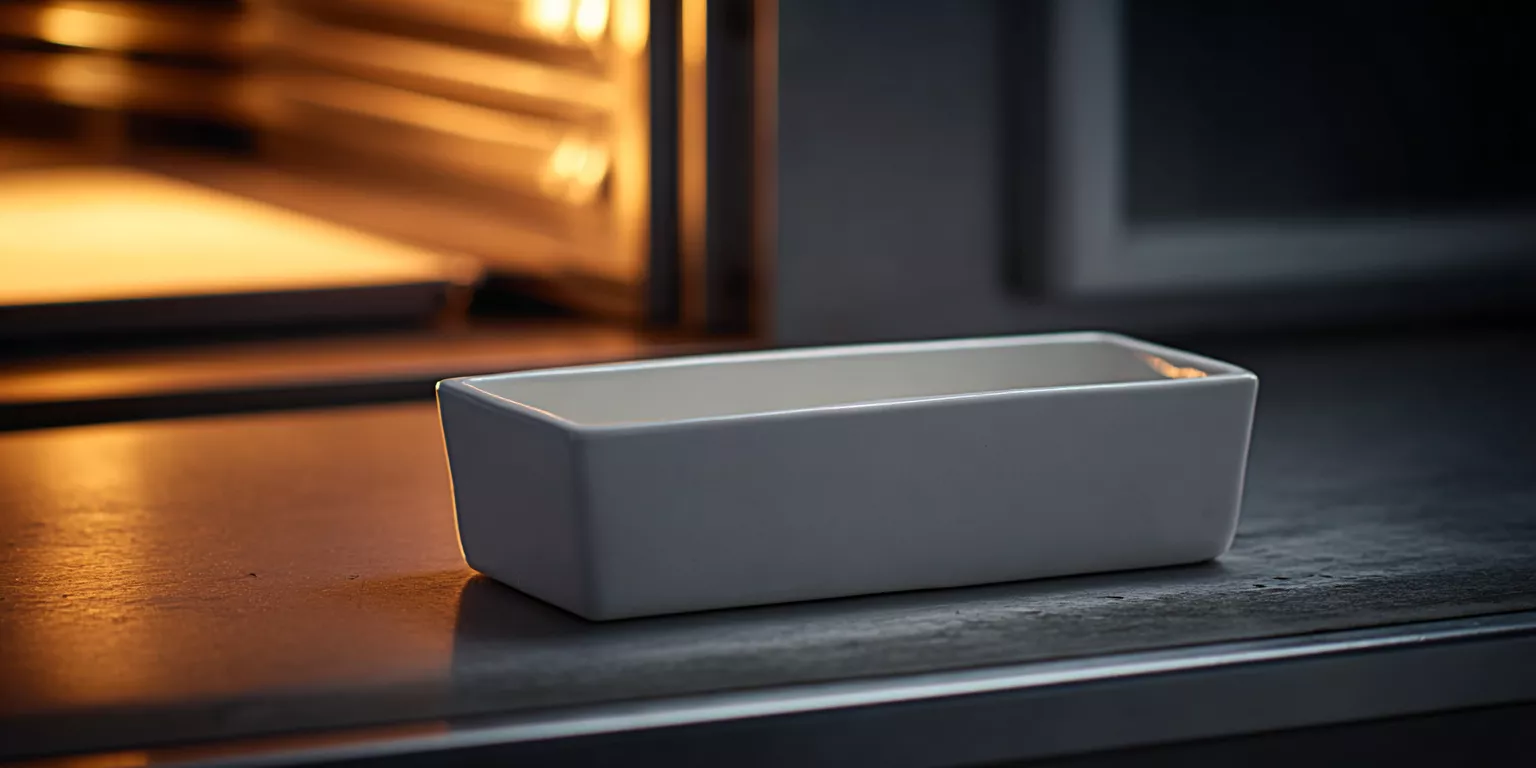
In thermal material research and calcination work, an alumina crucible boat is a thermal-field and reaction boundary — not a passive tray. Geometry, furnace placement, atmosphere access, thermal-shock practice, and reuse drift belong in the experimental plan and the RFQ, alongside grade and dimensions.
The sections below move from furnace-fit function to material screening, heat-transfer placement, open vs deep geometry, atmosphere compatibility, shock practice, reuse inspection, and customization / RFQ fields.
Functional Position of Alumina Crucible Boats in Research Furnaces
Before analyzing material properties or furnace configurations, it is necessary to clarify how an alumina crucible boat functions within research-scale thermal systems. Moreover, its role extends beyond containment, acting as a physical and thermal interface that shapes experimental boundary conditions.
Interaction Between Crucible Boat and Thermal Field Distribution
Alumina crucible boats directly influence how heat is delivered to experimental samples. In box furnaces operating between 700–1200 °C, radiant heat dominates, while the boat mediates conduction at the contact interface.
This discrepancy arises because alumina’s thermal conductivity is grade-dependent (TDS screening ~18–42 W·m⁻¹·K⁻¹ at 25 °C; elevated-T values vary — lab illustration, not a product rating) and moderates heat flow into the sample bed. Consequently, the crucible boat becomes part of the thermal boundary condition.
Therefore, alumina crucible boat geometry and thickness directly condition the thermal field experienced by the material, influencing reaction kinetics and phase evolution during synthesis and calcination.
Boundary Conditions Created by Crucible Boats in Material Reactions
Beyond heat transfer, alumina crucible boats impose boundary conditions on mass transport and gas–solid interactions. During material synthesis, reactions often depend on controlled exposure to oxygen, inert gases, or reactive vapors.
In tube furnace experiments, for example, gas flow velocities commonly range from 50–200 sccm, generating axial concentration gradients along the reaction zone. The crucible boat defines how reactants contact the sample surface and how byproducts escape. Researchers frequently report incomplete conversion in deeper or enclosed boat profiles, particularly when precursor diffusion becomes rate-limiting.
As a result, the crucible boat establishes a micro-environment that constrains reaction pathways, making it an active participant in experimental outcomes rather than a passive container.
Why Research Outcomes Depend on Crucible Boat Selection
Experimental reproducibility depends on controlling all variables that influence reaction conditions. While furnace calibration and precursor purity receive substantial attention, crucible boat selection is often standardized without scrutiny.
However, comparative studies in academic laboratories show that switching between alumina crucible boats of similar nominal size but different wall thickness can shift phase outcomes in solid-state synthesis experiments. Such variation emerges because thermal gradients and gas exposure change with wall mass.
Thus, alumina crucible boat selection directly affects reproducibility, comparability, and scientific validity, particularly in long-term research programs where trend consistency is critical.
Summary of Functional Contributions in Research Furnaces
| Functional Aspect | Typical Range | Research Impact |
|---|---|---|
| Operating temperature (°C) | 700–1400 | Sets reaction feasibility |
| Thermal conductivity (W·m⁻¹·K⁻¹) | ~18–42 @25 °C (grade-dep.) | Lab illustration, not product rating |
| Gas flow interaction (sccm) | 50–200 | Influences reaction completeness |
| Wall thickness (mm) | 2–5 | Alters thermal gradients |
| Sample temperature offset (°C) | 10–25 | Affects phase evolution |
Note: conductivity, gas-flow, wall, and offset ranges above are lab-typical illustrations for placement discussion — not ADCERAX product ratings. Confirm grade properties on the data sheet.
Before deeper furnace configuration analysis, understanding how alumina material properties behave at research temperatures is essential. Moreover, these properties explain why alumina crucible boats remain stable under extended thermal exposure while alternatives fail.
Material Properties of Alumina Crucible Boats at Research Temperatures
Alumina crucible boats are selected in research environments primarily because their intrinsic material properties remain predictable at elevated temperatures. Moreover, purity, microstructure, and thermal expansion collectively define whether long-duration experiments remain chemically and mechanically stable.
Alumina Purity and Phase Stability During Long Dwell Heating
High-purity alumina remains in the stable α-alumina phase into high temperature — continuous boat service temperature is set by the grade data sheet and duty, not by treating ~1600 °C as a boat rating.
In long-duration calcination experiments lasting 4–12 hours, lower-purity alumina often exhibits glassy grain-boundary phases that soften above 1100–1200 °C. Researchers frequently report subtle warping or surface vitrification after repeated dwells, even when macroscopic failure is absent. These changes alter thermal contact conditions between the sample and the crucible boat.
Therefore, high-purity alumina crucible boats preserve crystallographic and dimensional stability, ensuring that experimental variables remain controlled across extended heating cycles.
Microstructure Density and Its Influence on Adsorption and Release
Microstructural density determines how alumina crucible boats interact with gases and volatile species. Dense / low open-porosity alumina grades limit gas adsorption and release compared with more open ceramics .
In material synthesis experiments involving volatile precursors, such as nitrates or sulfates, researchers observe that porous crucible boats temporarily absorb reaction byproducts. During cooling, these absorbed species can be released unpredictably, introducing secondary reactions or mass fluctuations of 0.1–0.3 mg. Such effects become significant when sample masses fall below 1 g.
Consequently, high-density alumina crucible boats minimize adsorption–desorption artifacts, supporting cleaner reaction environments and more stable mass measurements.
Thermal Expansion Compatibility with Research Furnace Cycles
Alumina exhibits a relatively low and stable coefficient of thermal expansion, typically ~7.2–7.6 × 10⁻⁶ K⁻¹ (25–800 °C by grade per TDS; confirm on the ordered grade data sheet). In practice, rapid ramp rates or large thermal mismatches still need protocol control — do not treat a single CTE figure as a boat contract rating.
In practice, rapid ramp rates of 5–10 °C·min⁻¹ generate internal stresses at geometric transitions within the crucible boat. Alumina’s uniform grain structure distributes these stresses evenly, reducing crack initiation compared with materials exhibiting anisotropic expansion. When expansion behavior is well matched to furnace programs, dimensional retention stays more consistent across repeated research campaigns — still confirm CTE on the grade data sheet rather than treating a cycle count as a product rating.
Accordingly, thermal expansion compatibility allows alumina crucible boats to survive aggressive research heating profiles without compromising structural integrity.
Summary of Alumina Material Property Relevance
| Property Parameter | Typical Value | Experimental Significance |
|---|---|---|
| Alumina purity (wt%) | ≥99.5 / 99.7 / 99.9 (screening) | Confirm ordered grade on data sheet |
| Stable phase limit (°C) | α-alumina high-T phase (not a boat rating) | Continuous duty = grade sheet + duty |
| Open porosity (%) | dense / low open-porosity grades | Reduced gas adsorption (confirm on grade sheet) |
| Thermal expansion (K⁻¹) | ~7.2–7.6 × 10⁻⁶ (25–800 °C) | Confirm on grade data sheet |
| Cycle endurance (count) | inspect / replace on RFQ criteria | Not a factory cycle guarantee |
Before geometry and chemical compatibility are discussed, heat transfer behavior must be examined in realistic furnace configurations. Moreover, tube furnaces and box furnaces impose fundamentally different thermal pathways on alumina crucible boats and research samples.
Heat Transfer Behavior in Tube Furnaces and Box Furnaces
Heat transfer is rarely uniform in research furnaces, even when temperature controllers appear stable. Therefore, alumina crucible boats participate directly in how thermal energy reaches the sample, shaping gradients, delays, and local equilibria across different furnace architectures.
Radiative and Conductive Heat Paths in Box Furnaces
In box furnaces, heat transfer is dominated by radiation from surrounding heating elements, supplemented by conduction through the furnace hearth. Alumina crucible boats receive radiant energy across their exposed surfaces, while conduction occurs at limited contact points.
During material calcination at 800–1300 °C, researchers often record heating lag times of 3–8 minutes between furnace air temperature and sample core temperature. This delay increases when crucible wall thickness exceeds 4 mm, as alumina absorbs and redistributes radiant heat before it reaches the sample. Consequently, reaction onset temperatures may shift relative to programmed setpoints.
Thus, alumina crucible boats in box furnaces act as thermal buffers, smoothing temperature fluctuations but also introducing predictable thermal inertia.
Gas Flow and Axial Gradients in Tube Furnaces
Tube furnaces present a contrasting heat transfer regime, where axial temperature gradients and gas convection play significant roles. Although radiant heating remains important, forced gas flow modifies thermal and chemical uniformity.
In horizontal tube furnaces operating with gas flows of 100–300 sccm, axial temperature differences of 15–40 °C are common across the hot zone. Alumina crucible boats positioned upstream or downstream experience different effective heating rates, even at identical setpoints. Additionally, convective cooling at the boat surface slightly reduces net heat absorption compared with static environments.
Accordingly, precise positioning of alumina crucible boats becomes critical in tube furnace experiments, particularly for comparative or kinetic studies.
Practical Placement Strategies for Uniform Thermal Exposure
To mitigate non-uniform heat transfer, experienced researchers adopt placement strategies grounded in thermal mapping rather than nominal furnace markings. Central positioning within the uniform zone typically reduces temperature deviation to below ±5 °C.
Over repeated trials, such practices reduce sample-to-sample variability even without altering furnace programs. Therefore, thermal exposure uniformity depends on crucible boat placement as much as on furnace settings.
Therefore, thermal exposure uniformity depends on crucible placement as much as furnace design, reinforcing the need for deliberate experimental setup.
Summary of Heat Transfer Characteristics by Furnace Type
| Furnace Type | Dominant Heat Mode | Typical Gradient (°C) | Research Implication |
|---|---|---|---|
| Box furnace | Radiation + conduction | 10–25 | Thermal inertia effects |
| Tube furnace | Radiation + convection | 15–40 | Axial variability |
| Central hot zone | Balanced | ≤5 | Optimal reproducibility |
| Wall-adjacent zone | Radiative bias | >30 | Reaction inconsistency |
| Elevated placement | Reduced conduction | Improved | More uniform heating |
Before chemical compatibility and reaction atmospheres are examined, geometric influences must be addressed. Moreover, alumina crucible boat geometry silently governs reaction uniformity, diffusion paths, and stress development during material synthesis and calcination.
Geometry Effects on Material Synthesis and Calcination Outcomes
Alumina crucible boat geometry shapes how samples experience heat, gas exposure, and mechanical constraint. Therefore, dimensional choices influence reaction completeness and phase consistency even when material composition and furnace programs remain unchanged.
Open Versus Deep Profile Crucible Boat Structures
In calcination studies conducted between 700–1100 °C, open profiles typically improve gas access and conversion uniformity versus deeper profiles under identical dwell times. Conversely, deep-profile structures restrict gas exchange and can leave unfinished cores when dwell is short.
Conversely, deep-profile structures restrict gas diffusion, especially when sample layers exceed 5–8 mm in depth. Researchers often observe incomplete precursor burnout or residual intermediates near the lower regions of deep boats. Although deeper boats increase loading capacity, they also introduce diffusion-limited zones that alter reaction kinetics.
Accordingly, open-profile alumina crucible boats favor reaction uniformity, while deep profiles require longer dwell times or reduced loading to achieve equivalent outcomes.
Length Width and Depth Coupling with Sample Mass
Geometric proportions must be matched carefully to sample mass to avoid thermal and chemical gradients. In research practice, sample masses between 0.5–2.0 g are common for exploratory synthesis and screening experiments.
When sample depth exceeds 6 mm, internal temperature gradients of 8–15 °C frequently arise, particularly during rapid heating. These gradients shift reaction onset times and broaden phase transition ranges observed in XRD or DSC analysis. Conversely, excessively shallow loading increases surface exposure but may lead to material loss through entrainment or sublimation.
Therefore, balanced coupling between crucible dimensions and sample mass stabilizes reaction conditions, improving data comparability across repeated experiments.
Edge Curvature and Stress Distribution at High Temperature
Edge geometry influences stress concentration during heating and cooling. Sharp internal corners amplify tensile stress during thermal expansion, increasing the likelihood of microcrack initiation after repeated cycles.
Boats with rounded edges distribute thermal stress more evenly, reducing stress raisers compared with sharp-edged designs. Researchers running repeated thermal campaigns often report more consistent dimensional retention with curved-edge geometries.
Thus, edge curvature enhances structural reliability, particularly in research environments characterized by frequent heating and cooling transitions.
Summary of Geometric Influences on Research Outcomes
| Geometric Parameter | Typical Range | Experimental Effect |
|---|---|---|
| Profile type | Open vs deep | Gas diffusion efficiency |
| Sample depth (mm) | 3–8 | Thermal gradient control |
| Sample mass (g) | 0.5–2.0 | Reaction uniformity |
| Edge curvature radius (mm) | 1–3 | Stress reduction |
| Cycle durability (count) | inspect / replace on RFQ criteria | Not a factory cycle guarantee |
Before addressing mechanical reliability and reuse behavior, chemical compatibility must be examined. Moreover, alumina crucible boats operate within diverse research atmospheres and precursor systems, where subtle interactions can influence reaction purity and interpretation.
Chemical Compatibility with Research Atmospheres and Precursors
Alumina crucible boats are widely regarded as chemically inert; however, their behavior depends strongly on atmosphere composition, precursor chemistry, and exposure duration. Therefore, understanding compatibility boundaries is essential for reliable material research.
Behavior in Oxidizing Inert and Controlled Atmospheres
In oxidizing atmospheres such as air or oxygen, alumina crucible boats remain chemically stable across 700–1400 °C. Alumina does not participate in redox reactions under these conditions, preserving surface integrity during long dwell experiments.
In inert atmospheres, including argon or nitrogen at flow rates of 50–300 sccm, alumina continues to exhibit minimal interaction. Researchers performing phase-pure oxide synthesis often report consistent results over 50–100 runs, provided that gas purity exceeds 99.999%. Under these conditions, alumina functions as a neutral reaction boundary rather than a reactive substrate.
Accordingly, oxidizing and inert atmospheres represent the safest operational domains for alumina crucible boats in research environments.
Interaction Risks with Reactive or Volatile Precursors
Reactive precursors1 introduce additional considerations. Compounds containing sulfur, halogens, alkali metals, or low-melting salts may interact indirectly with alumina surfaces at elevated temperatures.
In sulfide synthesis or halide-assisted transport reactions conducted above 800 °C, researchers occasionally observe surface discoloration or minor mass changes of 0.2–0.5 mg after extended exposure. Although alumina does not chemically decompose, surface adsorption and secondary compound formation can occur, particularly when precursor vapor pressures are high. These interactions may subtly influence local chemistry near the sample interface.
Therefore, precursor volatility and reactivity must be evaluated alongside alumina stability, especially in exploratory synthesis involving unconventional chemistries.
Long Term Surface Evolution During Repeated Experiments
Repeated exposure to reactive atmospheres alters alumina surface characteristics over time. Grain boundary regions may accumulate trace residues, modifying surface energy and adsorption behavior.
In long-term research programs with many reuse campaigns, investigators should treat carrier history as an experimental variable and log inspection outcomes with the dataset.
Consequently, surface evolution represents a cumulative effect that must be managed proactively to preserve experimental consistency.
Summary of Chemical Compatibility Considerations
| Atmosphere or Precursor Type | Typical Condition | Compatibility Assessment |
|---|---|---|
| Oxidizing (air, O₂) | 700–1400 °C | Excellent stability |
| Inert (Ar, N₂) | 50–300 sccm | Minimal interaction |
| Sulfur-containing systems | >800 °C | Surface adsorption risk |
| Halide-assisted reactions | Variable | Monitoring required |
| Long-term reuse (cycles) | inspect each campaign | Surface evolution effects |
Before addressing long-term reuse strategies, structural reliability under rapid temperature transitions must be evaluated. Moreover, thermal shock remains one of the most common yet underestimated failure mechanisms in research-oriented furnace experiments.
Thermal Shock and Structural Reliability in Research Cycles
Thermal shock arises when temperature gradients generate internal stresses exceeding the ceramic’s fracture resistance. Therefore, alumina crucible boats must tolerate non-ideal heating and cooling profiles frequently used in exploratory research.
Heating Rate Sensitivity in Experimental Protocols
Rapid heating rates accelerate experimental throughput; however, they amplify internal thermal gradients within alumina crucible boats. When ramp rates exceed 10–15 °C·min⁻¹, temperature differentials of 20–40 °C can develop between the outer wall and the inner cavity.
As a result, microcracks form preferentially at geometric transitions after repeated campaigns, even when peak temperatures remain below 1200 °C. These cracks rarely cause immediate failure but seed later chips.
Accordingly, heating rate selection must consider crucible boat stress tolerance, not solely sample requirements.
Cooling Practices and Failure Initiation Mechanisms
Cooling stages impose equal or greater stress than heating. Sudden exposure of hot alumina crucible boats to ambient air induces tensile stress at the surface while the core remains hot.
In controlled studies, removing boats above ~700 °C into room air raises crack-initiation risk compared with controlled furnace cooling. Researchers frequently misinterpret delayed cracking as material defects rather than quench practice.
Therefore, controlled cooling protocols are essential to preserve structural reliability during research cycles.
Predictable Failure Signals Before Catastrophic Damage
Edge whitening or localized dullness often appear after repeated campaigns. Experienced researchers treat these signals as replacement triggers rather than waiting for catastrophic failure.
Experienced researchers correlate these indicators with declining mechanical integrity and altered thermal response. When such signs emerge, subsequent fracture risk increases sharply, even under unchanged protocols. Ignoring early signals frequently results in unexpected breakage during critical experiments.
Thus, monitoring visual and surface indicators enables proactive replacement, protecting experimental continuity.
Summary of Thermal Shock and Structural Reliability Factors
| Reliability Factor | Typical Threshold | Observed Effect |
|---|---|---|
| Heating rate (°C·min⁻¹) | >10–15 | Increased thermal stress |
| Rapid air cooling (°C) | >700 | Crack initiation risk |
| Thermal cycles (count) | repeated campaigns | Microcrack risk accumulates |
| Early visual indicators | Edge whitening | Impending failure |
| Recommended monitoring | each campaign / visual | Failure prevention |
Before comparative material selection is addressed, reuse behavior must be evaluated from an experimental integrity perspective. Moreover, in long-term research programs, subtle drift introduced by repeated crucible reuse often outweighs visible mechanical degradation.
Reusability Limits and Experimental Drift in Long Term Research
Alumina crucible boats are frequently reused in research laboratories to maintain consistency and reduce interruptions. However, reuse introduces cumulative effects that gradually influence experimental outcomes, even when structural integrity appears intact.
Accumulated Microstructural Changes Over Multiple Runs
Even when the carrier remains phase-stable, minor grain growth and boundary relaxation can accumulate over repeated campaigns.
In research environments conducting sequential synthesis or calcination experiments, investigators often observe gradual increases in surface roughness and porosity accessibility. These changes can increase gas adsorption capacity, subtly modifying local reaction environments. Such effects rarely affect single experiments but become significant in comparative series.
Therefore, microstructural evolution sets a practical reuse ceiling, independent of visible cracking or deformation.
Impact of Reuse on Comparative and Trend Experiments
Comparative research relies on consistent boundary conditions across experiments separated by weeks or months. Reused alumina crucible boats, however, may introduce uncontrolled variables into such comparisons.
In longitudinal studies tracking phase purity or reaction yield, researchers report systematic baseline drift when the same crucible boats are reused without inspection criteria. This drift often correlates with surface evolution and adsorption changes.
Consequently, reuse history must be treated as an experimental variable in comparative and trend-focused research.
Rational Replacement Strategies in Research Labs
Effective reuse management balances experimental continuity against data integrity. Rather than relying on failure-based replacement, many laboratories adopt cycle-count or surface-condition thresholds.
Labs adopt surface-condition thresholds rather than brochure cycle counts. Replacing alumina crucible boats when chips, discoloration, or unexplained mass/baseline drift appear reduces experimental drift — agree life criteria on the RFQ.
Thus, planned replacement strategies support reproducibility more effectively than maximal reuse, aligning material handling with research objectives.
Summary of Reusability and Drift Considerations
| Reuse Parameter | Typical Range | Research Impact |
|---|---|---|
| Reuse cycles (count) | campaign-based inspection | Agree life criteria on RFQ |
| Gas adsorption change (%) | qualitative / monitor | Reaction variability risk |
| Observed experimental drift (%) | monitor baselines | Data comparability risk |
| Recommended replacement | on chips / discoloration / drift | RFQ-agreed criteria |
| Monitoring interval (cycles) | each campaign / agreed N | Early drift detection |
Before concluding application scenarios, alternative carrier materials must be evaluated. Moreover, comparing alumina crucible boats with other ceramic options clarifies selection logic for specific research objectives rather than default preferences.
Alumina Crucible Boat Versus Alternative Ceramic Carriers
Material researchers frequently encounter multiple ceramic carrier options, each offering distinct thermal and chemical behaviors. Therefore, understanding comparative performance prevents inappropriate substitution that compromises experimental validity.
Comparison with Quartz Ceramic and Zirconia Carriers
Quartz ceramic carriers exhibit low thermal expansion and excellent transparency to certain radiation wavelengths; however, their softening point near 1100–1200 °C limits high-temperature research. In prolonged calcination above 1000 °C, quartz often undergoes devitrification, altering surface smoothness and dimensional stability.
Researchers conducting oxide synthesis often report delayed heating response and increased thermal lag relative to alumina. Thus, alumina crucible boats offer a balanced thermal response and stability for many research protocols.
Thus, alumina crucible boats offer a balanced thermal response and stability window suited to most material research temperatures.
Tradeoffs Between Purity Thermal Performance and Cost
Material selection involves balancing performance with practical constraints. High-purity alumina crucible boats provide stable behavior across 700–1400 °C, minimizing surface reactions and structural drift.
By contrast, lower-cost ceramic alternatives may introduce hidden variables such as impurity diffusion or phase transitions. In comparative trials, researchers observe impurity-driven color changes or mass deviations of 0.2–0.4 mg when substituting lower-grade carriers. Although initial performance appears acceptable, long-term reproducibility suffers.
Accordingly, thermal performance and chemical neutrality outweigh short-term material savings in research environments prioritizing data integrity.
Selection Criteria Based on Research Objectives
Different research objectives demand different carrier attributes. Exploratory synthesis and screening experiments prioritize rapid thermal response and ease of handling, favoring alumina crucible boats with open profiles.
High-temperature structural studies may require zirconia carriers for extreme thermal margins, whereas optical studies sometimes benefit from quartz transparency. However, for most powder calcination, phase transformation, and catalyst preparation workflows, alumina offers the optimal compromise between stability, thermal conductivity, and chemical inertness.
Therefore, carrier selection should align with experimental intent, not material availability alone.
Summary of Ceramic Carrier Comparisons
| Carrier Material | Maximum Stable Temperature (°C) | Thermal Response | Typical Research Use |
|---|---|---|---|
| Alumina | 1400–1600 | Balanced | General material synthesis |
| Quartz ceramic | 1100–1200 | Rapid at low temperature | Optical or low-temperature studies |
| Zirconia | >1700 | Slower | Extreme temperature research |
| Mullite | 1300–1400 | Moderate | Transitional applications |
| Silicon carbide | >1600 | Very high | Specialized reducing atmospheres |
Temperature ceilings in the comparison table are order-of-magnitude teaching ranges for carrier selection — not ADCERAX ratings for quartz, zirconia, or SiC. Confirm continuous duty on each material’s grade sheet and duty cycle.
Before addressing customization and engineering collaboration, practical research applications must be consolidated. Moreover, real experimental scenarios illustrate how alumina crucible boats support reproducibility across diverse material research workflows.
Standard Research Applications and Typical Experimental Scenarios
Alumina crucible boats are widely integrated into research laboratories because they adapt to multiple experimental objectives without introducing uncontrolled variables. Therefore, examining common application scenarios clarifies why they remain a default choice in both academic and industrial R&D environments.
Powder Calcination and Phase Transformation Studies
Powder calcination represents one of the most frequent uses of alumina crucible boats in material research. In oxide synthesis and phase transformation experiments conducted at 600–1200 °C, uniform heat exposure is critical to achieve homogeneous phase evolution.
Minimizes internal temperature gradients. In repeated trials, phase purity assessed by XRD is often more consistent than with deeper or enclosed carriers, particularly during short dwell experiments.
Thus, alumina crucible boats enable controlled phase development, supporting reliable interpretation of thermal transformation mechanisms.
Catalyst Preparation and Activation Experiments
Catalyst synthesis and activation workflows demand stable carriers that do not participate in surface reactions. Alumina crucible boats meet this requirement during impregnation drying, calcination, and activation stages.
Researchers frequently observe stable mass behavior and consistent surface morphology across early campaigns when handling is controlled. By contrast, alternative carriers may introduce trace contamination or adsorption effects.
Accordingly, alumina crucible boats preserve catalyst integrity during thermal activation and conditioning steps.
Solid State Synthesis and Intermediate Processing
Solid-state synthesis often involves multistep heating programs with intermediate grinding or re-calcination. Alumina crucible boats accommodate these iterative processes without cumulative distortion.
Multi-cycle calcination above ~900 °C still needs campaign inspection for chips, discoloration, or unexplained drift — do not treat brochure cycle counts as a product rating. This reliability allows direct comparison between intermediate products without confounding carrier effects. Additionally, alumina’s resistance to thermal shock supports frequent transfer between furnace and ambient environments.
Therefore, alumina crucible boats support iterative synthesis workflows, enabling systematic optimization of reaction pathways.
Summary of Research Applications Supported by Alumina Crucible Boats
| Research Application | Typical Temperature (°C) | Sample Mass (g) | Key Advantage |
|---|---|---|---|
| Powder calcination | 600–1200 | 0.5–1.5 | Uniform phase evolution |
| Catalyst activation | 400–900 | 0.3–1.0 | Chemical neutrality |
| Solid-state synthesis | 900–1300 | 0.8–2.0 | Dimensional stability |
| Intermediate processing | Variable | <2.0 | Reproducibility |
| Comparative studies | 700–1100 | Consistent | Reduced drift |
Before engineering collaboration is introduced, customization requirements must be framed within advanced research constraints. Moreover, non-standard experimental systems frequently exceed the limits of off-the-shelf alumina crucible boats.
Customization Needs in Advanced Material Research
Advanced material research often involves unconventional furnace geometries, novel material systems, or non-standard experimental protocols. Therefore, customization of alumina crucible boats becomes a technical necessity rather than a convenience.
Non Standard Furnace Dimensions and Constraints
Research furnaces frequently deviate from standardized industrial dimensions. Custom-built tube furnaces, compact box furnaces, or hybrid thermal systems impose spatial constraints that standard crucible boats cannot satisfy.
In laboratory environments using narrow tubes with inner diameters of 40–60 mm, standard-length crucible boats may disrupt gas flow uniformity or contact furnace walls. Researchers report axial temperature non-uniformities exceeding 20 °C when carrier length approaches tube diameter limits. Custom-length alumina crucible boats mitigate this issue by preserving laminar gas flow and consistent radiant exposure.
Thus, dimensional customization aligns crucible geometry with furnace architecture, stabilizing experimental conditions.
Special Geometry for Novel Material Systems
Emerging material systems introduce requirements that extend beyond conventional powder handling. Layered composites, gradient materials, and structured precursors demand precise geometric accommodation.
For instance, researchers developing thin film-derived powders or foamed intermediates often require shallow, wide crucible boats to prevent collapse or agglomeration during heating. In such cases, altering depth by 2–3 mm significantly improves structural retention and reaction uniformity. Without geometry adaptation, experimental outcomes vary unpredictably across batches.
Accordingly, geometry customization enables controlled processing of unconventional material forms, expanding experimental capability.
Risks of Improper Customization Without Engineering Review
Customization introduces risk when implemented without engineering validation. Minor dimensional changes can unintentionally amplify thermal gradients or stress concentration.
Laboratories that modify crucible designs without stress analysis often observe shorter service life or increased cracking during thermal cycling. Additionally, unvalidated shapes may alter gas–solid interaction patterns, compromising reproducibility. These issues typically emerge only after multiple experiments, obscuring root causes.
Therefore, engineering-guided customization is essential to ensure that tailored designs enhance rather than degrade research outcomes.
Summary of Customization Drivers and Impacts
| Customization Driver | Typical Adjustment | Research Benefit |
|---|---|---|
| Furnace diameter (mm) | Length reduction | Uniform gas flow |
| Sample morphology | Depth modification | Structural integrity |
| Heating protocol | Wall thickness tuning | Stress reduction |
| Novel material systems | Profile reshaping | Reaction control |
| Unguided modification | Variable | Increased failure risk |
Before concluding experimental practices and research integrity, engineering collaboration must be addressed. Moreover, translating complex research requirements into reliable ceramic components requires coordinated technical support rather than isolated procurement decisions.
Customization and RFQ Fields for Research Boats
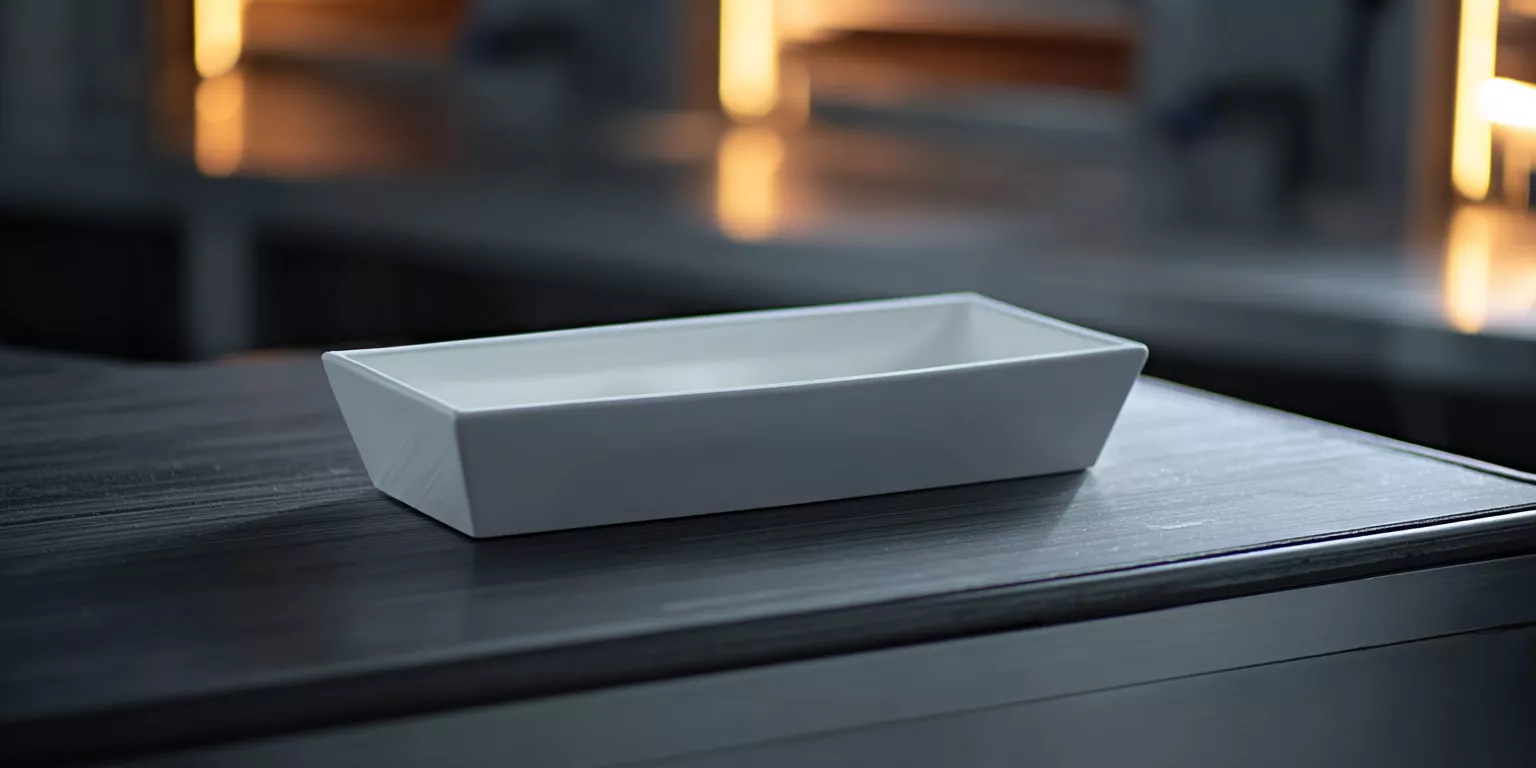
When standard alumina crucible boats do not fit the furnace ID, sample form, or atmosphere note, treat customization as an RFQ checklist — not a brand pitch. Specify furnace type (tube / box), hot-zone length, target temperature window, atmosphere, and L×W×D / wall constraints with the drawing.
- Furnace fit: tube ID or box chamber envelope, support method, and free gas path.
- Thermal window: research-typical range (often ~700–1400 °C for calcination studies) — confirm max continuous T on the grade data sheet and duty.
- Geometry: open vs deep profile, edge fillets, and sample bed depth/mass as RFQ examples.
- Atmosphere / precursor notes: oxidizing or inert default; flag sulfur/halogen or volatile species for surface monitoring.
- Inspection / reuse: agree visual and baseline checks (chips, discoloration, unexplained mass or signal drift) — do not buy a cycle-count guarantee off a brochure.
For catalog boat geometries, see alumina boat product options. For non-standard L×W×D, wall, or furnace-ID fit, use custom ceramic services. A boat (舟皿) is not the same RFQ as a deep alumina crucible — specify the open carrier geometry when calcination gas access matters.
Experimental Best Practices for Reliable Research Outcomes
Although crucible selection establishes the physical foundation of experiments, execution discipline ultimately governs data reliability. Therefore, consistent handling and documentation practices are essential to preserve experimental integrity.
-
Controlled pre-conditioning and equilibration
New alumina crucible boats should undergo an initial empty firing between 800–900 °C to stabilize surface behavior. This step minimizes first-use variability and aligns new carriers with existing experimental baselines. -
Laboratories adopting standardized placement protocols often tighten result dispersion across repeated trials.
-
Visually inspecting surface condition on a fixed campaign interval helps identify early-stage drift. This practice supports proactive replacement before experimental integrity is compromised — agree the interval and rejection criteria on the RFQ.
Overall, disciplined execution complements material and design choices, ensuring that alumina crucible boats contribute positively to research reproducibility.
Closing Perspective on Reproducibility and Research Integrity
Ultimately, alumina crucible boats function as silent enablers of reliable material research. When material properties, geometry, handling, and engineering support are aligned, experimental results remain consistent, interpretable, and scientifically defensible.
Conclusion
In conclusion, alumina crucible boats shape thermal behavior, chemical boundaries, and reproducibility in material research. Systematic selection and management transform them from passive carriers into controlled experimental assets.
For research teams specifying stable thermal carriers for complex furnace systems, send furnace ID, temperature window, atmosphere notes, and L×W×D / wall constraints in the RFQ so geometry and grade screening can be checked before build.
Related reading
- Alumina combustion boats in industrial sintering systems — When the same alumina boat geometry moves from lab calcination into industrial sintering — thermal load and campaign length change, not the research RFQ checklist.
- Types of alumina crucible — When you need crucible type and shape families (cylindrical, conical, boat-like) before locking a thermal-research boat drawing.
- TGA alumina crucibles for thermal analysis — When the instrument is TGA and the carrier is a small analysis crucible — a different thermal-analysis axis than calcination boats in tube or box furnaces.
FAQ
What temperature range is suitable for alumina crucible boats in research furnaces?
High-purity alumina crucible boats operate reliably between 700–1400 °C — confirm max continuous temperature on the grade data sheet and duty., supporting most material synthesis and calcination studies.
How many times can an alumina crucible boat be reused in research experiments? Reuse is campaign- and duty-dependent — inspect each campaign and replace on chips, discoloration, or unexplained mass/baseline drift; agree life criteria on the RFQ rather than a brochure cycle count.
Are alumina crucible boats compatible with reactive research atmospheres?
They perform best in oxidizing and inert atmospheres; reactive precursors require monitoring due to potential surface adsorption effects.
When is customization necessary for alumina crucible boats?
Customization is recommended when furnace dimensions, sample morphology, or thermal protocols deviate from standard laboratory conditions.
References: