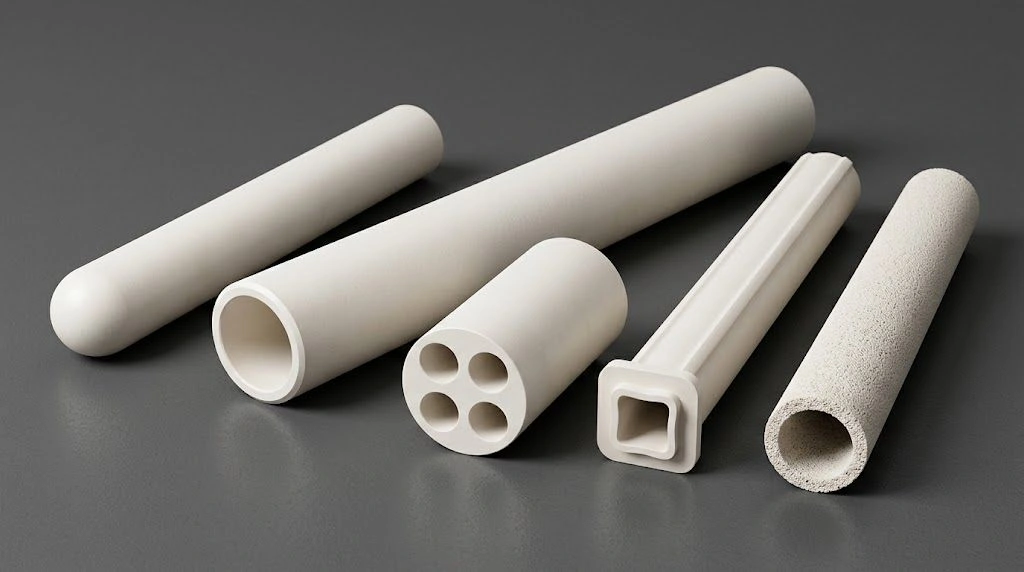
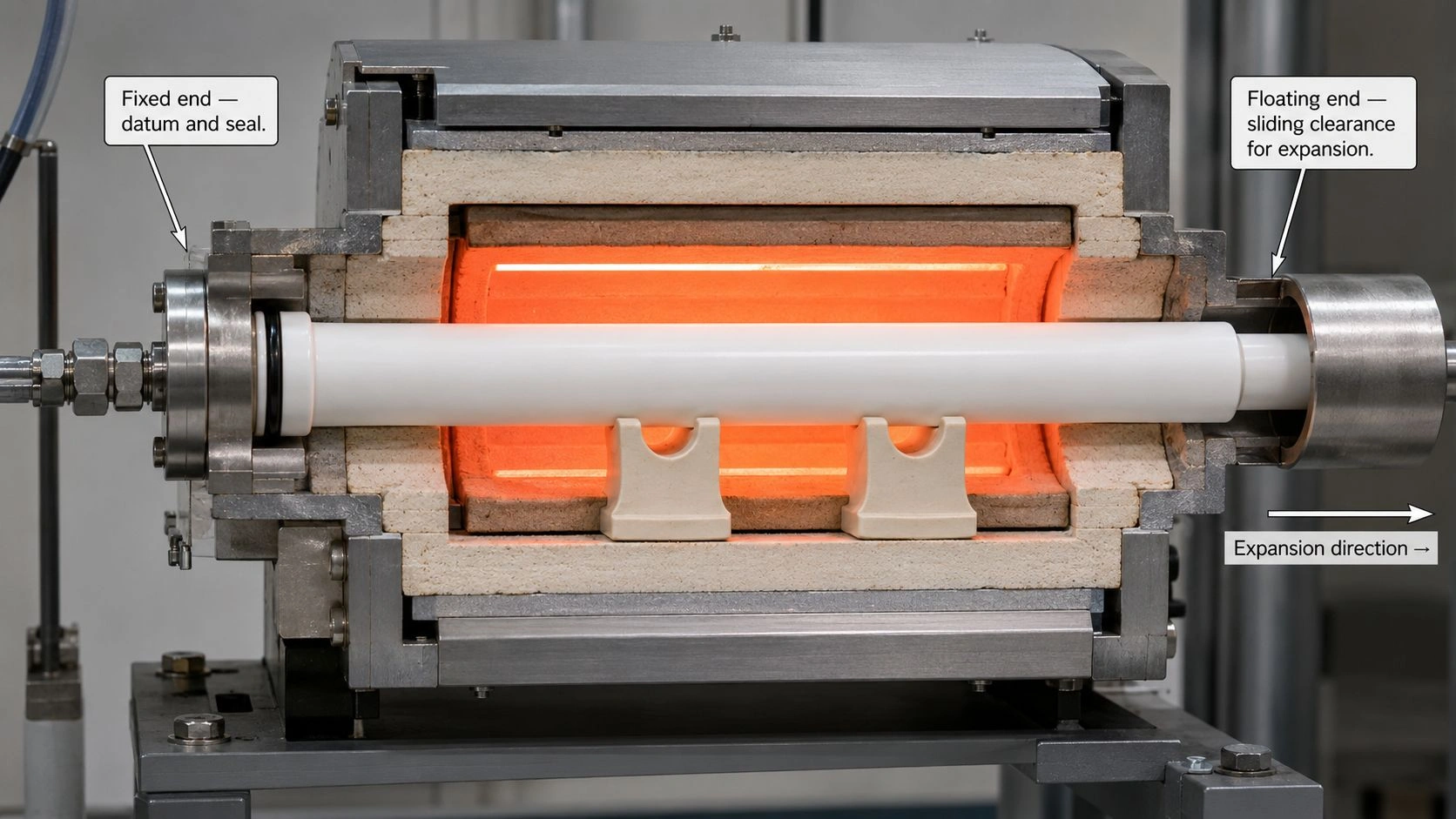
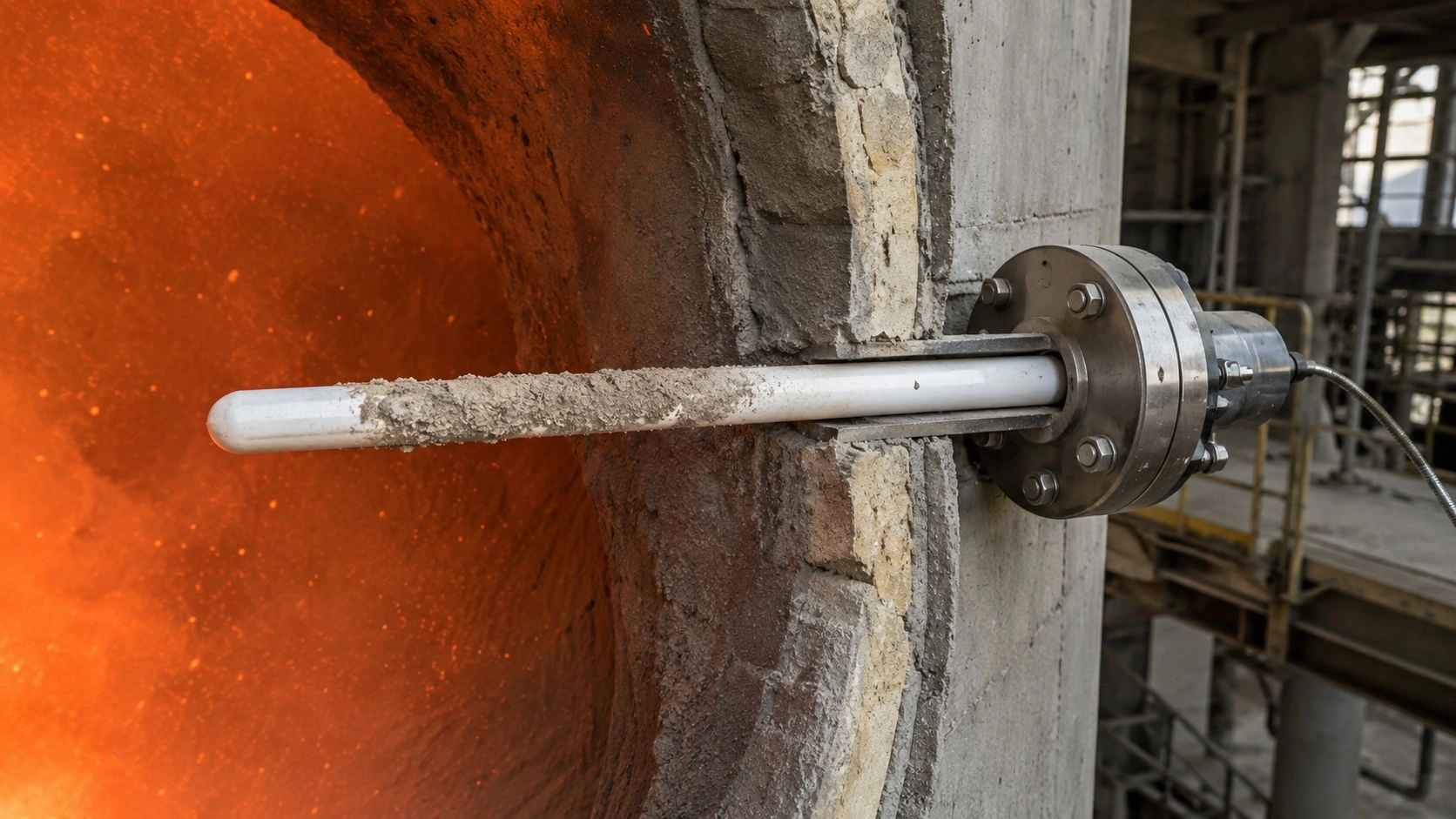
A compatibility review and procurement guide for maintenance managers and equipment engineers — covering what compatibility really means for a replacement ceramic electrode tube, which geometry and installation details must be verified, how air gap and active treatment width affect discharge performance, what mistakes cause repeat replacement failures, and what to include in an RFQ for supplier review.
Compatibility for a replacement ceramic electrode tube in a corona treater means more than matching the equipment brand. The replacement must match the electrode shape, length, holder interface, mounting references, active treatment width, air gap setting, roll type, electrical insulation role, material condition, and maintenance access. Before ordering, review old photos or samples, holder dimensions, discharge width, air-gap requirements, failure symptoms, and whether the part needs exact retrofit or controlled design adjustment.
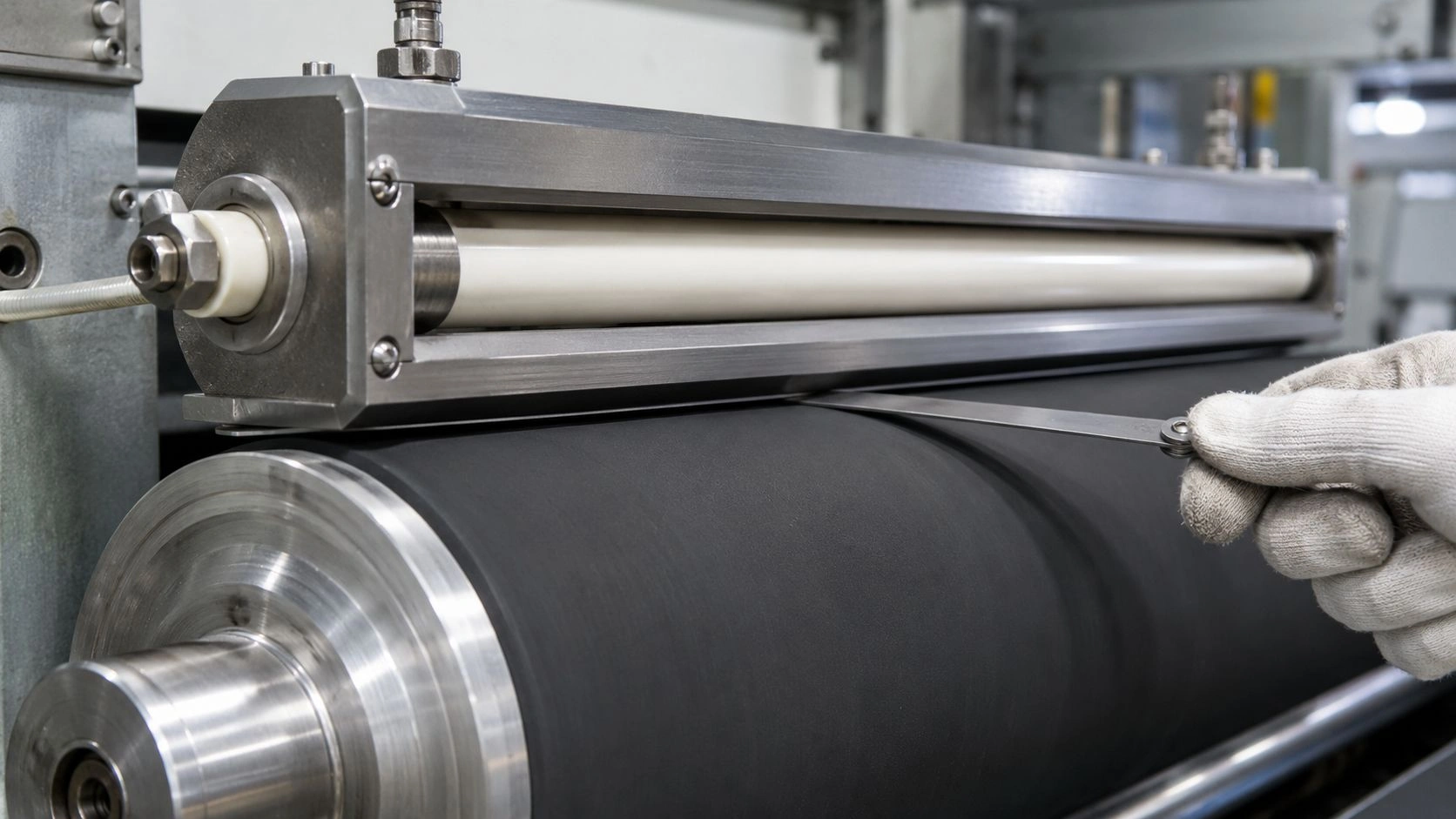
Replacement ceramic electrode tube compatibility should be reviewed against the actual station installation, including holder fit, active width, air gap, and maintenance access.
What "Compatible Replacement" Really Means in a Corona Treater
The most common replacement mistake starts here: assuming that a part described as compatible with a specific corona treater brand is compatible with the actual station installation.
Public replacement-electrode suppliers often state availability for all major corona treater brands, which correctly identifies the market demand for aftermarket ceramic electrode options. QC Electronics states it manufactures aftermarket ceramic electrodes compatible with virtually every major corona treater brand; Jemmco lists rectangular, round, and square replacement electrode options for major brands. These statements are true at the market level — but compatibility at the station level is a different question that requires a component-level review, not a brand search.
A replacement ceramic electrode tube must satisfy five separate compatibility requirements simultaneously:
- Physical installation: the tube must fit the holder, clamp, cartridge, or electrode pocket without modification.
- Discharge geometry: the tube's active face, orientation, and air gap must match the original discharge path to the ground roll.
- Treatment coverage: the tube's active treatment length must cover the required web width.
- Electrical insulation role: the tube's material, wall thickness, and surface condition must support the electrical insulation function in the specific station.
- Maintenance access: the replacement must be removable and reinstallable through the same cleaning and service access as the original.
ADCERAX's custom ceramic tubes product line supports drawing-based manufacturing for replacement ceramic electrode tubes when the original geometry must be matched from samples, old photos, or supplier drawings.
Exact retrofit versus controlled design adjustment
Before engaging a supplier, decide whether the replacement is an exact retrofit — same geometry as the original, manufactured to the same dimension specification — or whether a controlled design adjustment is needed. An exact retrofit is appropriate when the original electrode performed well and only the part needs replacing. A controlled adjustment is only appropriate when there is a documented problem — repeated cracking at a specific location, air-gap instability from electrode straightness variation, or an original geometry that is no longer available — and when the adjustment is tied to that specific documented problem.
Do not request design adjustments casually. Any change to cross-section, active length, corner radius, or wall thickness can shift the air gap, change the discharge distribution, or modify the holder fit in ways that are difficult to predict without pilot testing.
Geometry and Installation Checks: Shape, Length, Holder, and Mounting References
Physical fit must be confirmed before any process compatibility question is raised. A replacement ceramic electrode tube that cannot be installed correctly in the holder will not achieve correct discharge regardless of its material properties.
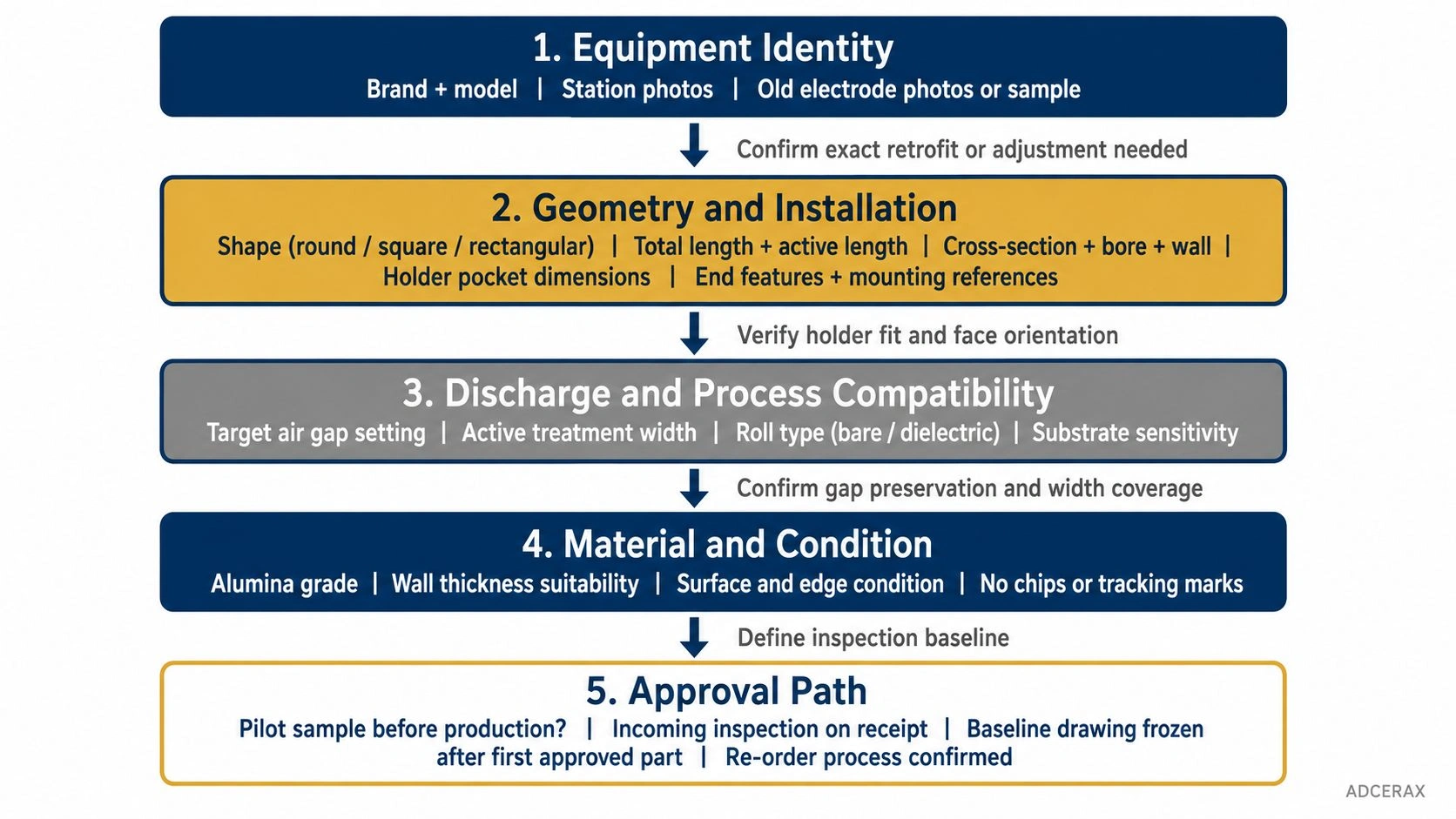
Replacement electrode tube shape must match the holder interface and discharge geometry because round, square, and rectangular forms are not interchangeable by appearance alone.
Electrode shape and cross-section. Record whether the existing electrode is round, square, rectangular, double-wide, finned, or a custom profile. Do not treat these as interchangeable. A square tube controls the orientation of the discharge face relative to the roll surface; a round tube may need an anti-rotation feature or a centered conductor to control its position in the holder; a rectangular tube defines the active face width by its external dimensions.
Pillar Technologies confirms that corona treater electrode assemblies discharge corona to the material being treated, and that electrode shape — round or square — is application-dependent. This means shape is a functional specification, not an aesthetic choice.
Total length and active length. These are not the same value. Total length determines whether the tube fits in the station mechanically. Active length — the length of the electrode face that contributes to the discharge across the web — determines treatment coverage. Measure and record both separately.
Holder, clamp, and cartridge dimensions. The tube seats inside or against a holder, cartridge, or clamping system. The seating dimensions — pocket depth, pocket width or diameter, reference faces, and any locating features — determine whether the replacement fits correctly and maintains the correct orientation and position. Record the holder pocket dimensions directly, not inferred from the electrode dimensions.
End features and mounting references. Check whether the original tube has end chamfers, ground surfaces, slots, steps, locating flats, or reference faces that control its position in the holder. These features are not always visible in photographs and are commonly omitted from informal re-order requests.
ADCERAX's alumina ceramic tubes product line covers alumina tube manufacturing in standard and custom cross-sections, with drawing-based production for holder-referenced replacement geometries.
Air Gap, Active Width, Roll Type, and Discharge Compatibility
A replacement that fits the holder physically may still create uneven or insufficient treatment if the air gap, active treatment width, or electrode-to-roll geometry changes.
Air gap and discharge uniformity
Enercon's corona treater support documentation confirms that inconsistent or insufficient corona discharge between electrode and ground roll is associated with uneven electrode air gap. This is not a minor detail — air-gap variation across the web width creates zones of stronger and weaker surface treatment that can affect adhesion, printing, or lamination quality downstream.
When a replacement ceramic electrode tube is installed, the air gap is affected by the tube's overall dimensions, straightness, surface-to-surface concentricity (for round tubes), and seating in the holder. If the replacement has slightly different outer dimensions, a different surface finish, or a deviation in straightness compared with the original, the installed air gap will change — even if the tube nominally matches the original drawing.
Record the target air gap setting used in the station, and ask the supplier whether the replacement geometry has been reviewed for gap stability in the specific holder.
Active treatment width and lane coverage
For wide-web stations, the electrode's active length must cover the required treatment width on the substrate. Corotec notes that segmented or profiled electrode options can adjust electrode geometry to support consistent corona treatment across material width — which confirms that active width and electrode profile are compatibility variables, not assumptions.
If the replacement tube is shorter than the original in active length, edge zones of the web will be under-treated. If it is longer, it may extend beyond the holder support or create discharge beyond the intended treatment lane.
Roll type and electrical configuration
Different corona treater configurations use different roll setups: bare-roll (single-dielectric), dielectric-covered roll (dual-dielectric), or all-air configurations. The electrical role of the ceramic electrode tube changes depending on the roll type. In a bare-roll setup, the alumina tube may be the sole dielectric barrier in the discharge path. In a dual-dielectric setup, both the electrode and the roll surface provide insulation.
Confirm the roll type in the station before approving a replacement. A material or wall-thickness change that is acceptable in one configuration may not provide adequate insulation margin in another.
ADCERAX's electrical ceramics application page covers alumina and other ceramic materials in electrical isolation and high-voltage insulation roles supporting corona electrode service.
Common Compatibility Mistakes That Cause Poor Treatment After Replacement
Understanding why physical fit does not guarantee process compatibility prevents the most common replacement failures.
A ceramic electrode tube can pass dimensional inspection, fit the holder, and still create uneven treatment — if the active face position has shifted by 1–2 mm relative to the original, the air gap may have changed enough to affect discharge distribution across the web.
Assuming brand compatibility equals installation compatibility
Ordering based on treater brand and electrode type alone — without recording holder pocket dimensions, active length, face orientation, or target air gap — is the most common source of replacement failures. The replacement tube may appear identical to the old one in a photograph but differ in wall thickness, active length, end feature type, or bore offset. Any of these differences can shift the electrode position in the holder or change the air gap.
Treating shape categories as interchangeable
Round, square, and rectangular electrode tubes are not interchangeable even at the same cross-sectional area. A round tube installed where a square tube is needed may rotate in the holder, shifting the discharge face. A square tube installed in a round holder may seat eccentrically. A rectangular tube may cover a different active width than the original square tube it replaced.
Requesting optimized adjustment without a documented problem
PVN's replacement electrode documentation distinguishes between exact retrofit and optimized retrofit depending on the issue with the current electrode. This distinction is important: optimized adjustments should only be made when there is a specific documented problem — not as a general upgrade. Geometry changes made without a documented problem and pilot validation can introduce new compatibility issues while appearing to address the original concern.
Not inspecting the replacement before installation
Edge chips, surface cracks, straightness deviation, and bore-position variation can all affect performance and are not visible in shipping photographs. Inspect incoming replacement tubes before installation: measure wall thickness at two cross-sections, check all four edge zones for chips, verify straightness, and confirm that the surface shows no tracking marks or prior damage.
RFQ Checklist for Reviewing Replacement Ceramic Electrode Tube Compatibility
The following checklist converts the compatibility review into a supplier-ready information package.
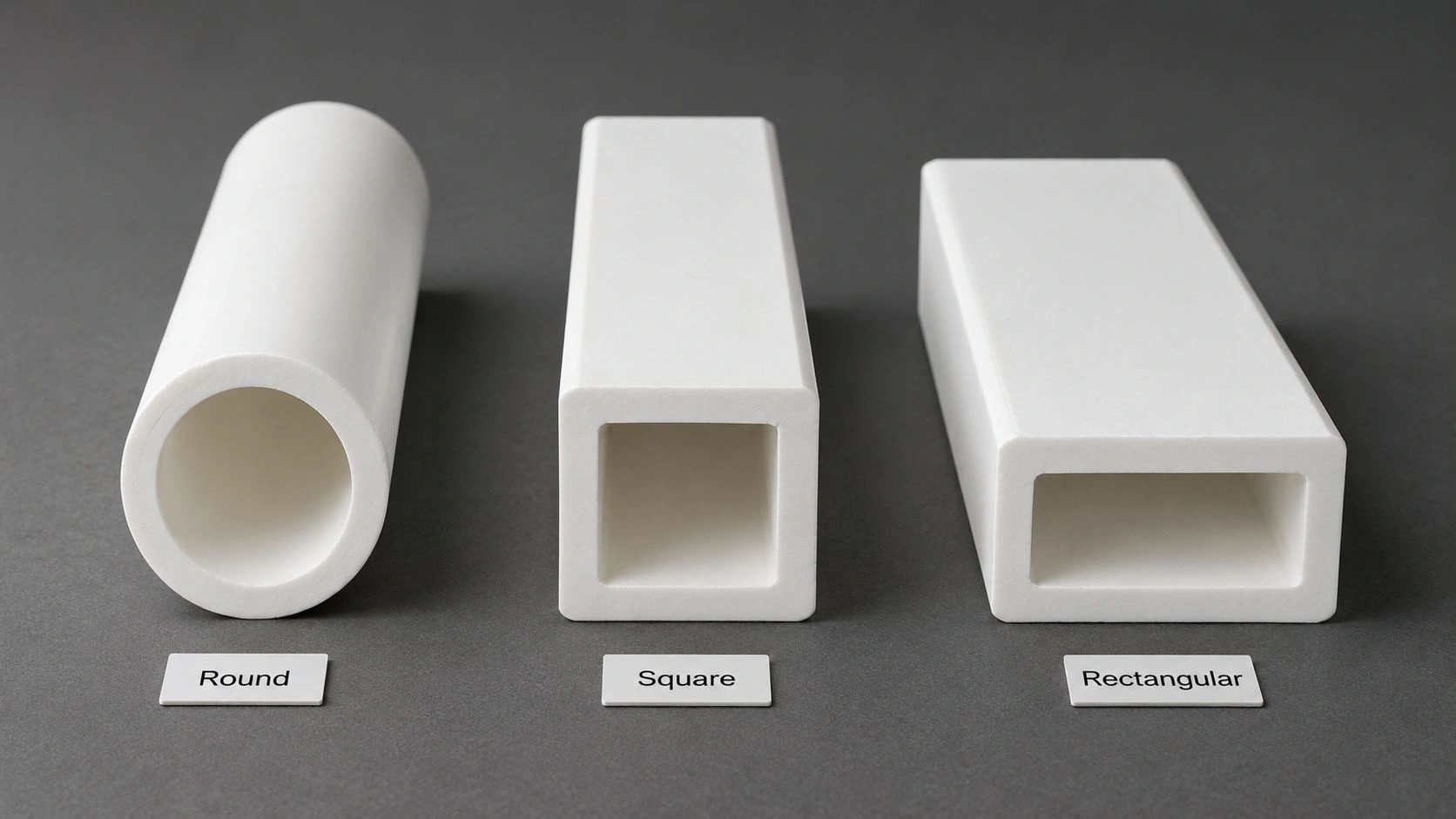
Compatibility review should move from equipment identity and geometry checks to discharge conditions, material review, and pilot approval before repeat ordering.
The following matrix maps each review area to the minimum information needed and the required supplier confirmation.
| Review Area | Minimum Information Needed | Why It Matters | Supplier Confirmation |
|---|---|---|---|
| Equipment identity | Brand, model, station photos | Starts the replacement search | Exact retrofit or review required |
| Electrode geometry | Shape, length, cross-section, bore, wall thickness | Determines physical fit and discharge geometry | Manufacturing route and tolerance feasibility |
| Holder interface | Clamp, cartridge, pocket dimensions, reference face | Controls seating and orientation | Fit-critical dimension confirmation |
| Air gap | Target setting or current measured setting | Controls discharge uniformity | Whether replacement geometry preserves gap |
| Active width | Treatment width and electrode active length | Controls web coverage | Active length and profile match |
| Roll setup | Bare roll, dielectric-covered, dual-dielectric | Changes electrode electrical role | Material and wall-thickness suitability |
| Failure symptoms | Cracking, tracking, weak discharge, uneven treatment | Guides exact vs adjusted replacement | Root-cause review before design changes |
| Approval path | Pilot sample, urgent replacement, repeat order | Controls risk and lead time | Pilot sample inspection baseline |
Values indicative; verify per supplier-specific drawing review, station conditions, and applicable electrical-insulation standards.
Fields to include in the RFQ:
- Corona treater brand and model
- Old electrode photographs (multiple angles including end features)
- Physical sample of old electrode if available
- Electrode tube shape, total length, active length, cross-section dimensions
- Wall thickness measurement
- Holder or cartridge pocket dimensions and reference face information
- Roll type (bare or dielectric-covered)
- Target air gap setting
- Active treatment width
- Substrate type and any known substrate sensitivity
- Operating speed range and power setting if known
- Visible failure symptoms (cracking location, tracking marks, weak discharge zones)
- Quantity and urgency
- Whether pilot sample approval is required before production release
Request the supplier to confirm whether the replacement is an exact retrofit or requires a controlled design adjustment, and ask them to identify any dimension that cannot be matched without a drawing review or pilot sample.
Need a compatibility review for a replacement ceramic electrode tube? Send old electrode photos, any available sample or drawing, treater brand and model, holder pocket dimensions if measurable, roll type, target air gap, active treatment width, and a description of the failure or reason for replacement. ADCERAX engineers confirm compatibility and return a replacement specification, pilot sample plan, or a request for additional measurement — no order commitment required at this stage.
Frequently Asked Questions
Does "compatible with my corona treater brand" mean the electrode tube will work?
No. Brand compatibility identifies that a replacement is available for a given treater, but compatibility with the actual station requires separately confirming holder fit, electrode shape, active length, air gap, roll type, surface condition, and maintenance access. A part can be brand-compatible but poorly matched to the specific station's holder dimensions or discharge geometry.
What measurements are needed for a replacement ceramic electrode tube?
Measure electrode shape (round, square, rectangular, or custom), total length, active treatment length, cross-section outer dimensions, bore diameter or bore position, wall thickness, and any end features such as chamfers, flats, or locating steps. Also record the holder or cartridge pocket dimensions separately — do not assume they can be inferred from the electrode dimensions.
Why is air gap important when replacing ceramic electrodes?
Air gap controls the consistency of the corona discharge between the electrode and the ground roll. If the replacement tube is installed with a different air gap — due to dimensional variation, holder seating differences, or straightness deviation — the discharge distribution across the web width will change, potentially creating uneven treatment zones.
Should I request an exact retrofit or an adjusted replacement design?
Request an exact retrofit when the original electrode performed correctly and the replacement is routine maintenance. Only request a controlled design adjustment when there is a specific documented problem — such as repeated cracking at a specific location, straightness variation causing air-gap instability, or unavailability of the original geometry — and when the adjustment has been reviewed against the original station configuration.
What should be included in the RFQ for a replacement ceramic electrode tube?
Include the treater brand and model, old electrode photographs (multiple angles), physical sample if available, electrode shape and all cross-section dimensions, wall thickness, holder pocket dimensions, roll type, target air gap, active treatment width, visible failure symptoms, quantity, urgency, and whether pilot sample approval is required before full production release.