Silicon carbide kiln furniture is selected when kilns require high-temperature strength, low thermal mass, thermal shock resistance, oxidation resistance, chemical resistance, and stable support geometry under repeated firing campaigns. The correct SiC kiln furniture depends on the product being fired, load distribution, kiln temperature, atmosphere, heating and cooling rate, support span, furniture form, SiC grade, cleaning method, and replacement strategy. Maintenance should be systematic: inspect cracks, warping, glaze and powder buildup, oxidation, edge damage, support-point wear, and contamination before each firing campaign — not only after failure.
The silicon carbide ceramics at ADCERAX — covering SiC kiln rollers, SiC trays, SiC tubes, NBSiC components, and custom SiC kiln furniture in RBSiC, SiSiC, and NSiC grades for high-temperature thermal, chemical, and mechanical environments — provide the product context for the selection and maintenance decisions described in this guide.
SiC kiln furniture provides high-temperature strength, low thermal mass, and thermal shock resistance for demanding firing cycles — correct selection requires matching furniture form, SiC grade, support span, load, and atmosphere; maintenance requires inspecting cracks, glaze residue, edge damage, and surface degradation before each firing campaign.
When should silicon carbide kiln furniture be selected?
SiC kiln furniture should be selected when conventional alternatives — cordierite, mullite, alumina, or refractory metal supports — cannot provide enough strength, flatness retention, thermal shock resistance, chemical resistance, or service life for the specific kiln duty.
[CITE: Saint-Gobain's published LO-MASS SiC kiln furniture product documentation positions SiC kiln furniture specifically for high-temperature applications requiring enhanced efficiency, higher mechanical strength than conventional kiln furniture, and faster heating and cooling cycles — confirming that the primary advantages of SiC kiln furniture are strength, low thermal mass, and thermal cycling speed — and Morgan's published Halsic SiC kiln furniture product page describes SiC kiln furniture as firing structures, setter plates, beams, rollers, and special constructions valued for efficient energy use and a favorable ratio between kiln furniture weight and sintered ware weight, with thermal shock resistance, oxidation resistance, corrosion resistance, mechanical strength, and low specific weight as the defining material properties.]
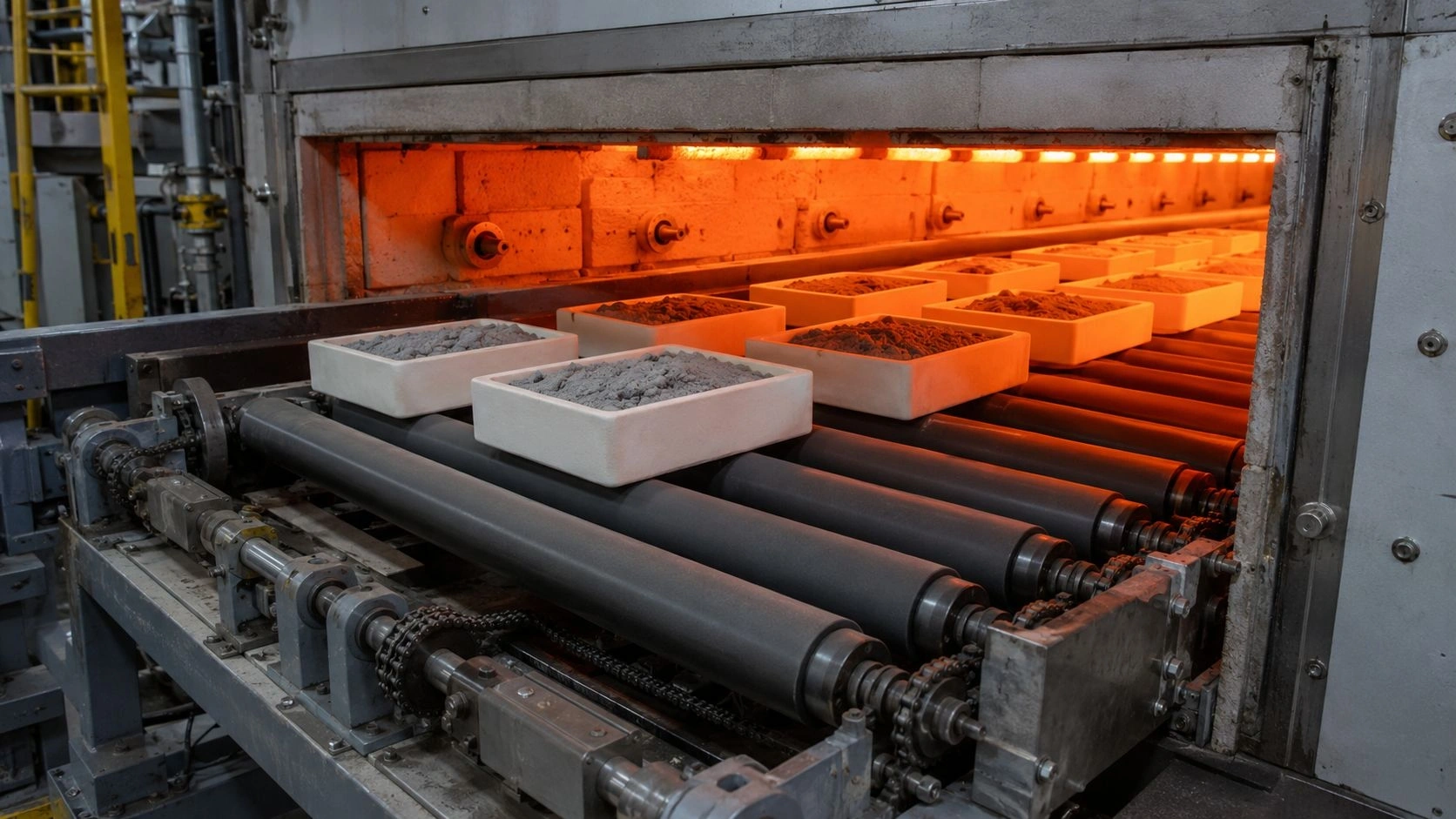
High-temperature strength and low thermal mass. In kilns where the furniture mass contributes significantly to the total thermal load — particularly roller hearth kilns, shuttle kilns, and high-throughput continuous kilns — replacing heavy oxide ceramic furniture with SiC reduces the energy required to heat and cool the furniture during each firing cycle. This reduction in thermal mass allows faster cycle times without a corresponding increase in energy consumption, which is the fundamental energy efficiency advantage of SiC over heavier cordierite or mullite alternatives.
Thermal shock resistance during repeated firing cycles. Kilns that cycle frequently — multiple firings per shift, short dwell times, rapid atmosphere transitions — impose repeated thermal shock on furniture components. SiC's combination of high thermal conductivity and low thermal expansion coefficient makes it significantly more resistant to thermal shock cracking than alumina or mullite, which is why it is preferred in fast-fire kiln configurations for technical ceramics, electronic components, and battery material calcination.
When SiC is over-specified. Not every kiln duty justifies SiC's cost premium. Low-temperature ceramics firing, decorative ware production, slow-fire cycles, and applications where the kiln atmosphere is benign and loads are light may be fully served by lower-cost cordierite, mullite, or alumina furniture. The selection decision should compare lifecycle cost — including furniture replacement frequency, energy savings from lower thermal mass, and value of avoided kiln downtime — not unit price alone.
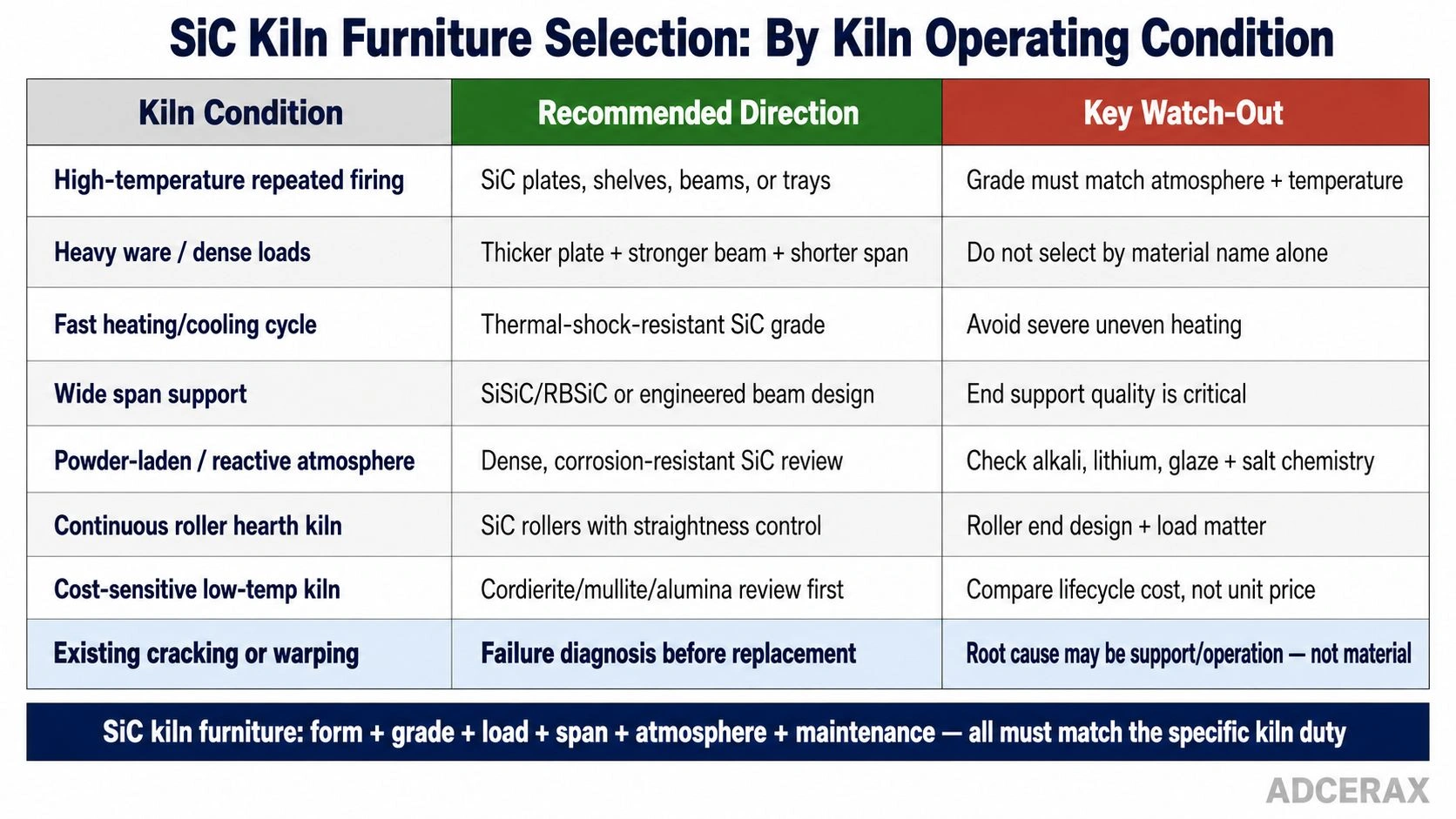
SiC kiln furniture selection should be matched to the specific kiln duty: temperature, load, span, thermal cycle, atmosphere chemistry, roller hearth transport, cost sensitivity, and existing failure patterns all point to different furniture forms, grades, and maintenance checks.
Which SiC kiln furniture form and grade should be selected?
After confirming SiC is appropriate for the kiln duty, the furniture form and material grade must be specified based on the actual mechanical and thermal load in the kiln.
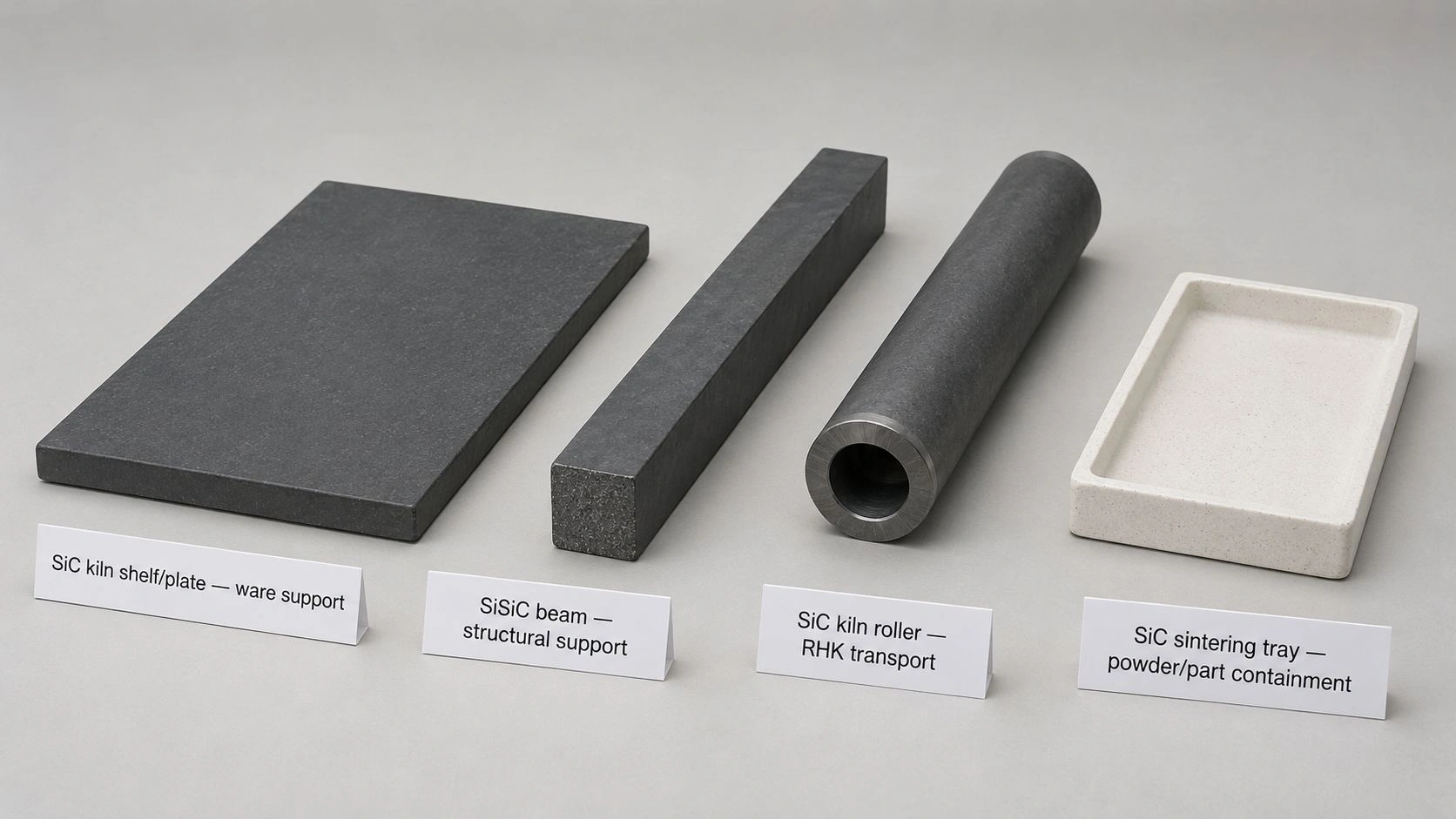
SiC kiln furniture includes shelves, plates, beams, rollers, trays, saggers, and custom support structures; each form must be specified by load path, support span, firing temperature, atmosphere, flatness or straightness tolerance, and cleaning method.
[CITE: Morgan's published SiC kiln furniture product documentation confirms that the product family includes firing structures, setter plates, beams, rollers, and special constructions for supporting sintered ware — and IPS Ceramics' published kiln-car structures page confirms that SiSiC beams are used extensively as support structures in kiln and furnace construction and as kiln furniture support frames, specifically noting that SiSiC's combination of strength and creep resistance enables larger unsupported spans than alternative ceramic beam materials.]
Plates, shelves, setters, and trays for flat support. Flat kiln furniture — shelves, setter plates, batts, and trays — provides the primary horizontal support surface for ware during firing. Selection of plate thickness depends on span between supports, ware weight per unit area, kiln temperature, and required flatness retention. Thicker plates provide greater bending stiffness but add thermal mass and cost; thinner plates are more thermally efficient but must be matched to shorter spans and lighter loads.
Beams and posts for load-bearing kiln structures. Beams carry the primary structural load in kiln-car top decks, multi-deck shelf systems, and tunnel kiln furniture stacks. IPS's confirmation that SiSiC beams enable larger spans in kiln construction reinforces the practical rule: span and load must be calculated before beam cross-section and grade are specified. Posts define vertical separation between shelf levels and must resist axial compression and lateral offset without cracking.
Rollers for continuous kilns and transport stability. In roller hearth kilns, the roller is the critical furniture component — it must carry sagger or substrate loads across the full kiln width while maintaining straightness and resisting surface degradation from kiln atmosphere. The SiC kiln roller at ADCERAX is specifically positioned for continuous RHK operation with straightness retention and resistance to thermal cycling and alkali atmospheres.
RSiC, NSiC/NBSiC, RBSiC/SiSiC, and SSiC grade selection logic. The grade comparison table maps the main choices:
| SiC family | Best fit | Main advantage | Main limitation |
|---|---|---|---|
| RSiC | High-temperature kiln furniture where porosity is acceptable | High service-temperature potential and thermal shock performance | Higher porosity and lower strength than dense grades |
| NSiC/NBSiC | Shelves, posts, beams, and kiln furniture needing oxidation/creep resistance | Good load-bearing and thermal cycling behavior | Supplier-specific porosity and atmosphere limits |
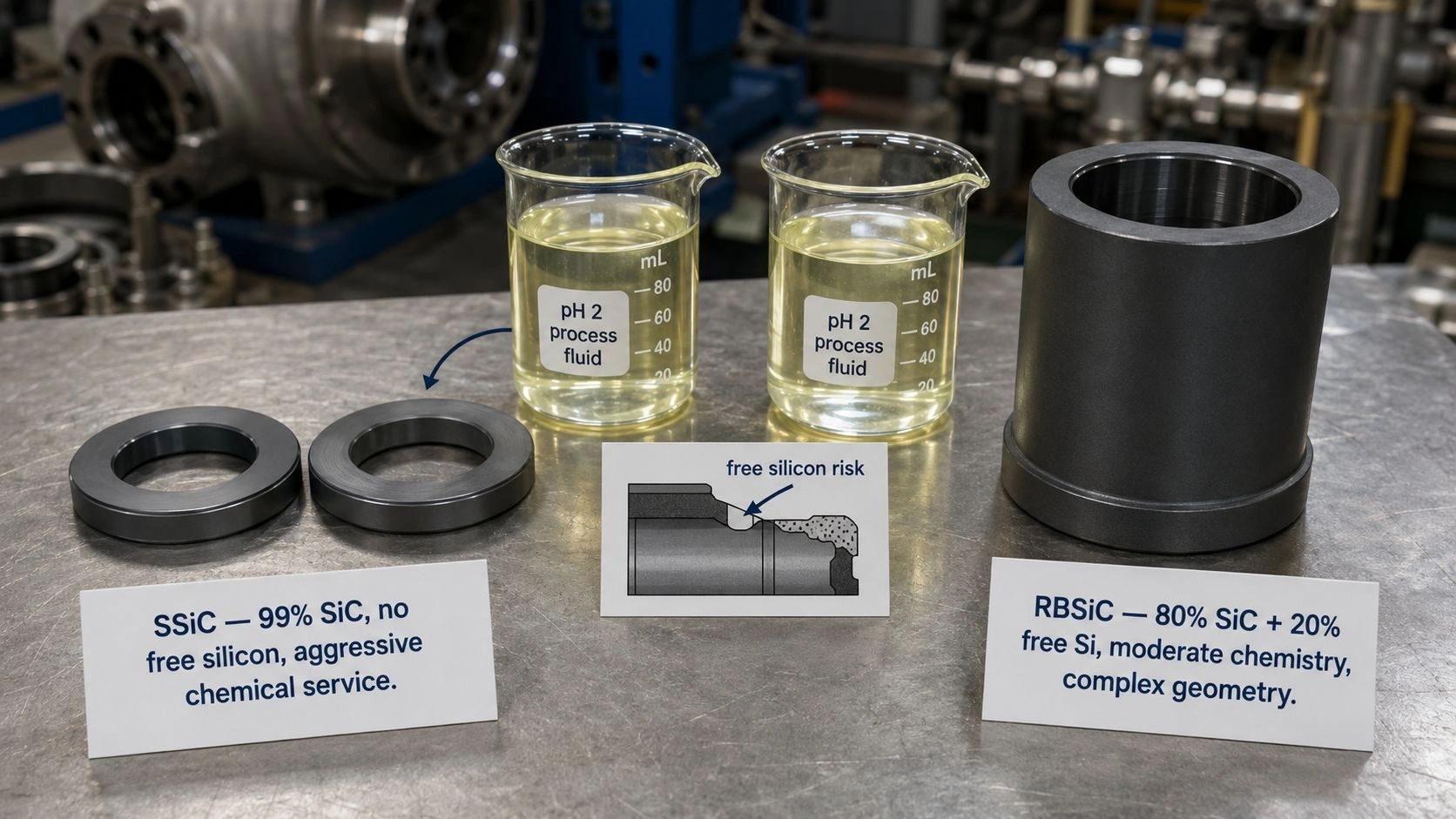
| RBSiC/SiSiC | Beams, rollers, supports, plates, and complex kiln structures | High strength, good thermal conductivity, near-net shapes | Residual silicon phase must be checked for certain atmospheres |
| SSiC | Severe-duty dense SiC components | High density, corrosion resistance, wear resistance | Higher cost and stricter manufacturing constraints |
| Oxide-bonded SiC | Cost-sensitive refractory applications | Economical SiC-based option | Lower severe-duty performance than advanced SiC grades |
The nitride-bonded silicon carbide ceramic page at ADCERAX covers NBSiC's oxidation and creep resistance advantages for kiln furniture applications. The silicon carbide ceramic tray page covers high-temperature sintering trays with optimized flatness, thermal shock resistance, and oxidation resistance.
What operating variables control SiC kiln furniture life?
Material grade determines the potential service life of SiC kiln furniture. The actual service life is determined by how the furniture is loaded, supported, and operated relative to that potential.
Load distribution and support span. The bending moment that a kiln shelf or beam must resist depends on the unsupported span between supports, the weight of ware and kiln furniture above, and the distribution of that load across the furniture width. A SiC shelf that is strong enough for a 200 mm span may fail under the same load on a 350 mm span if wall thickness or grade was not adjusted for the increased bending. IPS's note that SiSiC beams enable larger spans than alternative ceramic materials shows that span extension requires a specific material-grade justification, not just a span measurement.
Heating and cooling rate and thermal shock risk. Rapid heating causes the outer surface of a kiln furniture piece to expand faster than the cooler interior, creating tensile stress on the interior that can initiate cracking. Rapid cooling creates the same gradient in reverse. SiC's high thermal conductivity reduces the temperature gradient across the furniture cross-section during rapid thermal change, making it more resistant to thermal-shock cracking than alumina or cordierite. However, no ceramic material is immune to severe thermal shock. Kiln operating procedures — maximum allowed heating and cooling rates, temperature hold points, and emergency cooling discipline — are as important as material selection for thermal-shock survival.
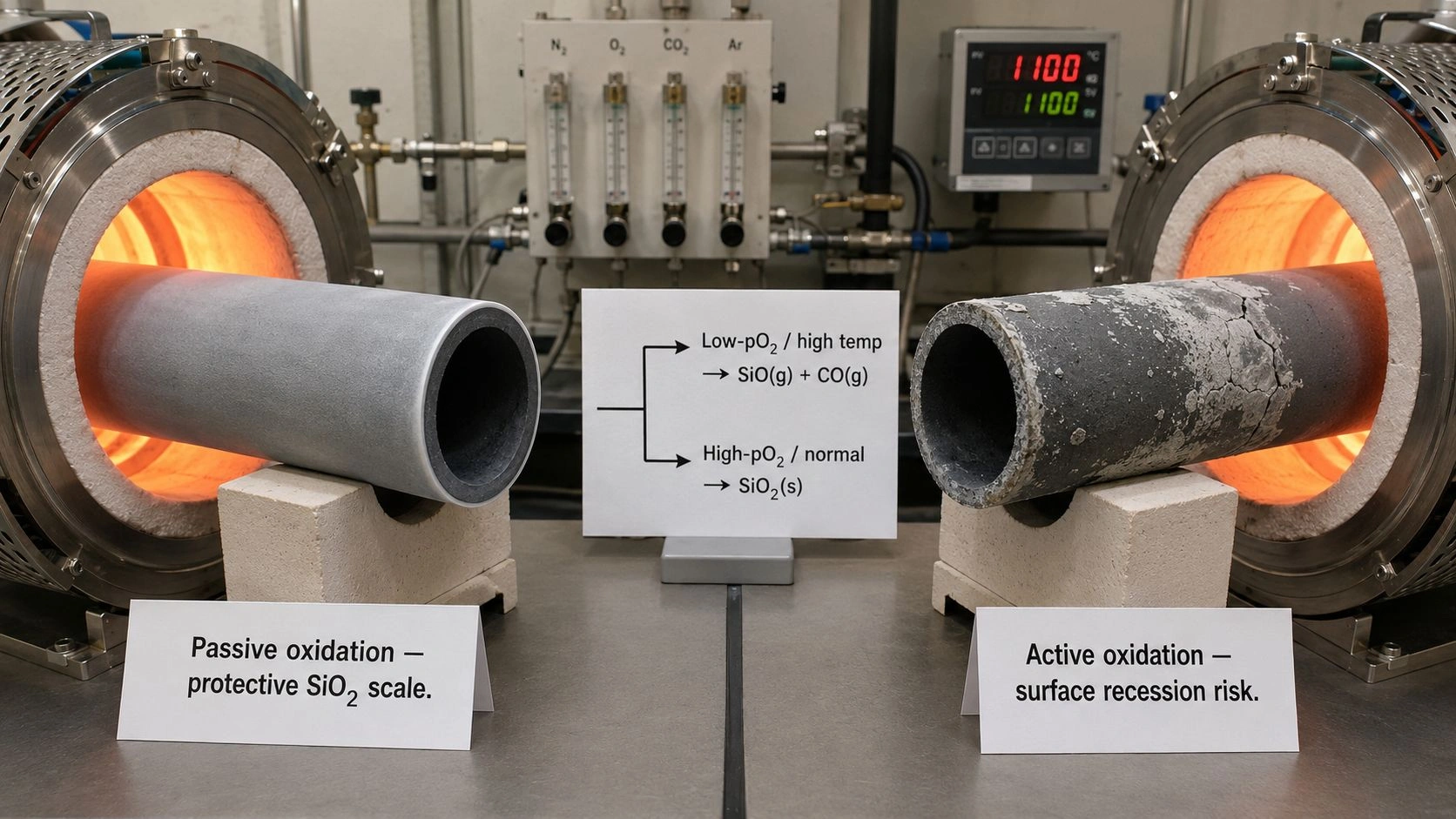
Atmosphere chemistry and surface degradation. Published Saint-Gobain documentation on why SiC is chosen for kiln furniture specifically emphasizes chemical resistance alongside hardness and thermal shock resistance — recognizing that kiln atmospheres in industrial production are not always neutral. Oxidizing atmospheres cause slow surface oxidation of SiC forming a silica layer; this is normally protective in air atmospheres but can become problematic in rapid cycling or when the oxide layer spalls. Alkali vapors from glazes or fluxes, lithium-containing vapors from cathode calcination, salt and soda atmospheres in floor-tile kilns, and reactive product powders can each attack SiC surfaces in ways that differ by grade and surface density. Dense SiC grades generally resist chemical surface degradation better than porous grades.
How should SiC kiln furniture be maintained?
SiC kiln furniture that is correctly specified for the duty can still fail prematurely if maintenance is reactive rather than preventive. Systematic pre-campaign inspection and cleaning are the primary maintenance tools.
The Maintenance Checklist maps the required inspection and cleaning tasks:
| Maintenance task | Purpose | Frequency |
|---|---|---|
| Inspect cracks and edge chips | Prevent sudden fracture during firing | Before each campaign |
| Check flatness/straightness | Prevent ware distortion and tracking errors | Regularly by fixture type |
| Remove glaze or powder buildup | Reduce sticking and contamination | Before reuse when residue appears |
| Inspect support points | Prevent point loading and stress concentration | Every loading cycle |
| Rotate shelves/plates where allowed | Even out wear and thermal exposure | Scheduled maintenance |
| Record firing count and atmosphere | Identify lifetime patterns | Every campaign |
| Retire unstable furniture | Avoid catastrophic kiln damage | When cracks, deformation, or contamination progress |
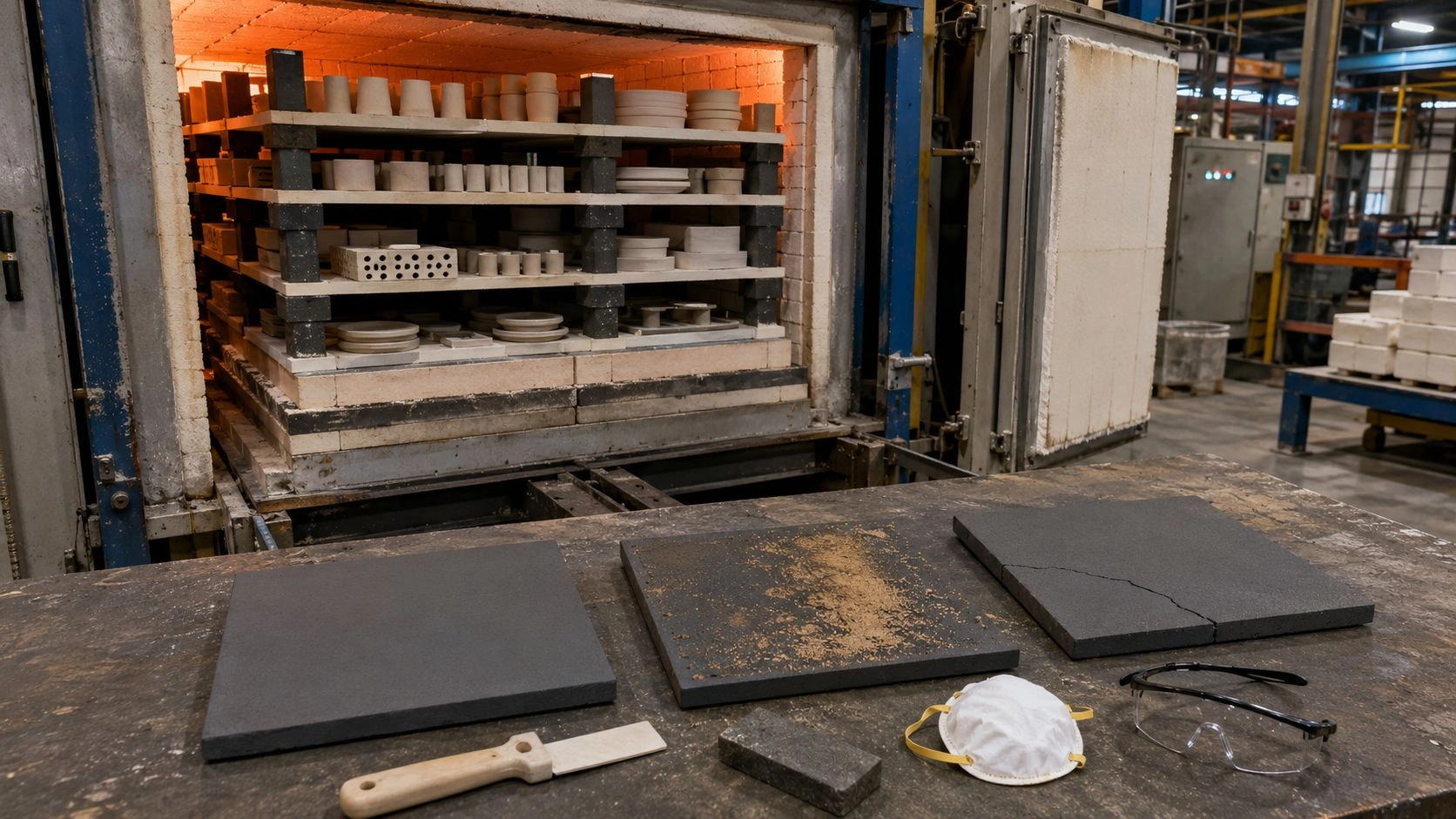
Pre-firing inspection. Before each firing campaign, every kiln furniture piece that will carry load should be inspected for cracks — including hairline cracks not visible under normal light — edge chips, progressive warping, surface roughening, glaze deposits, and unstable contact geometry. Ceramic Arts Network's published kiln shelf maintenance guidance recommends examining shelves and furniture during loading, scraping loose or flaky kiln wash, and removing glaze residue before reuse.
Cleaning glaze, powder, and residue. Glaze and powder deposits on kiln furniture surfaces are not cosmetic issues. A glaze buildup on a shelf surface changes the thermal contact characteristics between the furniture and the ware, creates sticking risk for subsequent firings, can cause uneven temperature distribution in the product, and adds thermal mass that reduces the energy efficiency of the SiC furniture. IPS Ceramics' published cleaning guidance for kiln shelves recommends removing serious glaze residue before reuse, using grinding methods carefully because fired glaze is hard and produces airborne dust that requires dust and eye protection.
Rotation, recordkeeping, and retirement. Tracking firing count, load pattern, atmosphere type, and observed damage per furniture piece or furniture set creates the data needed to predict when replacement is approaching. Rotating shelves and plates between positions distributes thermal and mechanical exposure more evenly across the furniture inventory. Retiring furniture proactively — before progressive cracks reach critical length, before deformation accumulates enough to cause ware distortion, or before contamination becomes irreversible — is more economical than catastrophic failure during a firing campaign.
What failure modes occur when SiC kiln furniture is mis-specified or poorly maintained?
The Failure Diagnosis Matrix maps the most common mis-specifications and their diagnostic questions:
| Observed problem | Common wrong diagnosis | Better engineering question |
|---|---|---|
| Shelf cracks after firing | ""SiC material is bad"" | Was thermal shock, uneven support, or point loading present? |
| Beam bows | ""Need higher temperature grade only"" | Was span/load/creep margin calculated correctly? |
| Roller tracking is unstable | ""Drive issue only"" | Is roller straightness, surface wear, or load distribution changing? |
| Ware sticks to setter | ""Glaze problem only"" | Is surface residue, kiln wash, or material chemistry causing adhesion? |
| Surface roughens | ""Need harder SiC"" | Is oxidation, alkali vapor, salt/soda, lithium vapor, or powder attack present? |
| Repeated breakage in same location | ""Batch quality issue"" | Is support alignment or contact stress concentrated there? |
| Contamination marks on ware | ""Process powder issue"" | Is kiln furniture residue or previous glaze deposit transferring? |
Cracking from thermal shock or uneven support. A SiC shelf or plate that cracks after a firing is not necessarily a material failure. Point loading — where a ware piece or support rests on a small area of the shelf rather than a flat distributed surface — creates localized bending stress that can exceed the shelf's flexural strength even when the average load is within specification. Point loading is particularly common when ware bases are not flat, when support stilts are not level, or when furniture is placed on an uneven kiln-car deck.
Sagging and deflection from load and span mismatch. Beam deflection and shelf sagging are geometry-and-load problems before they are material problems. A beam that performs correctly on a 300 mm span may show visible deflection on a 500 mm span carrying the same load — not because the beam quality changed, but because the bending moment at mid-span doubled. The correct corrective action is to reduce span, reduce load, or upgrade to a geometry with higher second moment of area — not simply to order a beam labeled ""higher grade.""
The SiC tube hub at ADCERAX covers kiln rollers, protection tubes, and related high-temperature tubular components that complement kiln shelf and beam furniture systems.
What RFQ data should be sent for SiC kiln furniture?
The RFQ Checklist for SiC Kiln Furniture maps the required specification fields:
| RFQ field | Why it matters | Required? |
|---|---|---|
| Kiln type | Tunnel, shuttle, roller hearth, batch, pusher change load path | Yes |
| Component type | Shelf, plate, beam, roller, post, tray, sagger, custom frame | Yes |
| Drawing/dimensions | Defines geometry and fit | Yes |
| Temperature range | Confirms grade suitability | Yes |
| Atmosphere | Oxidizing, reducing, alkali, lithium, glaze, salt/soda, powder-laden | Yes |
| Load per component | Controls strength and deflection | Yes |
| Span/support spacing | Controls bending and sagging | Yes |
| Thermal cycle | Heating/cooling rate affects shock risk | Yes |
| Product being fired | Defines contamination and sticking risk | Yes |
| Current failure mode | Guides redesign or grade change | If replacement |
| Flatness/straightness tolerance | Critical for plates, shelves, rollers, and beams | Yes |
| Cleaning method | Affects maintenance and surface life | Recommended |
| Quantity/packaging | Important for fragile long or flat ceramic parts | Yes |
For replacement orders, send photos of failed furniture showing crack location, warp magnitude, surface deposit type, and failure position relative to support points. This is the most efficient diagnostic input for confirming whether the replacement needs the same geometry or a corrected specification.
Selecting or replacing SiC kiln furniture for your production kiln? Share your kiln type, firing temperature, atmosphere, product being fired, component form, drawing with dimensions, load per component, span, support spacing, thermal cycle, current failure mode, and quantity. ADCERAX can review whether RSiC, NSiC, RBSiC, or SiSiC grade in the required form fits the operating envelope and propose a specification with material data.
Frequently Asked Questions
When should silicon carbide kiln furniture be selected?
Select SiC kiln furniture when the kiln requires high-temperature strength, low thermal mass, thermal shock resistance, chemical resistance, oxidation resistance, and stable geometry under repeated firing cycles. Saint-Gobain's published data confirms SiC's value for high-temperature applications with faster heating and cooling cycles, while Morgan's documentation describes SiC as providing thermal shock resistance, oxidation resistance, corrosion resistance, and high mechanical strength with low specific weight.
What forms of SiC kiln furniture are common?
Common forms include shelves, plates, setter plates, beams, posts, rollers, batts, trays, saggers, tubes, kiln-car structures, and custom support frames. Each form solves a different support, transport, spacing, or protection problem inside the kiln.
What is the difference between RSiC, NSiC/NBSiC, RBSiC/SiSiC, and SSiC kiln furniture?
They differ by bonding and sintering route, porosity, strength, oxidation behavior, creep resistance, temperature capability, shape complexity, and cost. RSiC is often used for high-temperature structural kiln furniture where porosity is acceptable; NSiC/NBSiC is valued for oxidation and creep resistance; RBSiC/SiSiC offers high strength and complex shapes; SSiC is dense and suitable for the most severe-duty applications at higher cost.
Why does SiC kiln furniture crack or warp?
Common causes include thermal shock from rapid heating or cooling, uneven loading or point loading, excessive unsupported span, corrosive atmosphere attack, glaze or powder penetration, poor handling causing edge chips, and using a grade or geometry that does not match the actual kiln duty. Material quality is only one possible cause.
How should SiC kiln shelves or plates be cleaned?
Inspect before reuse for cracks, edge damage, and surface deposits. Remove loose kiln wash by scraping. Remove glaze and fired powder residue before reuse — serious buildup may require careful grinding with dust and eye protection. Track residue type and recurrence frequency as a maintenance indicator.
Is SiC always better than cordierite, mullite, or alumina kiln furniture?
No. SiC is better when thermal shock, low weight, high load, fast cycling, chemical resistance, or long-span support justify the cost premium. Cordierite, mullite, or alumina may be more economical for lower-temperature, lower-load, slower-cycle, or less chemically demanding firing applications.
What should be included in a SiC kiln furniture RFQ?
Send kiln type, firing temperature, atmosphere, product being fired, component form with drawing, dimensions, load, span, support spacing, thermal cycle, SiC grade preference, current failure mode, flatness and straightness tolerance, cleaning method, quantity, and packaging requirements. For replacement orders, add photos of the failed furniture with a description of failure location and pattern.
"