A testing and verification decision guide for quality engineers and equipment engineers — covering when supplier material data is sufficient, when dielectric strength testing is justified, why the datasheet value is not a complete component answer, and what to include in an RFQ or inspection plan for square alumina corona electrode tubes.
A square alumina tube does not always need separate dielectric strength testing for corona use — but testing, or documented dielectric evidence at an appropriate level, is recommended when the tube acts as the primary dielectric barrier, operates near its voltage design margin, has thin walls, sharp or chipped corners, surface damage, an unknown material grade, or will be used in a new or critical corona electrode assembly. For low-risk replacements of known geometry and grade, supplier material data plus dimensional and surface inspection may be sufficient.
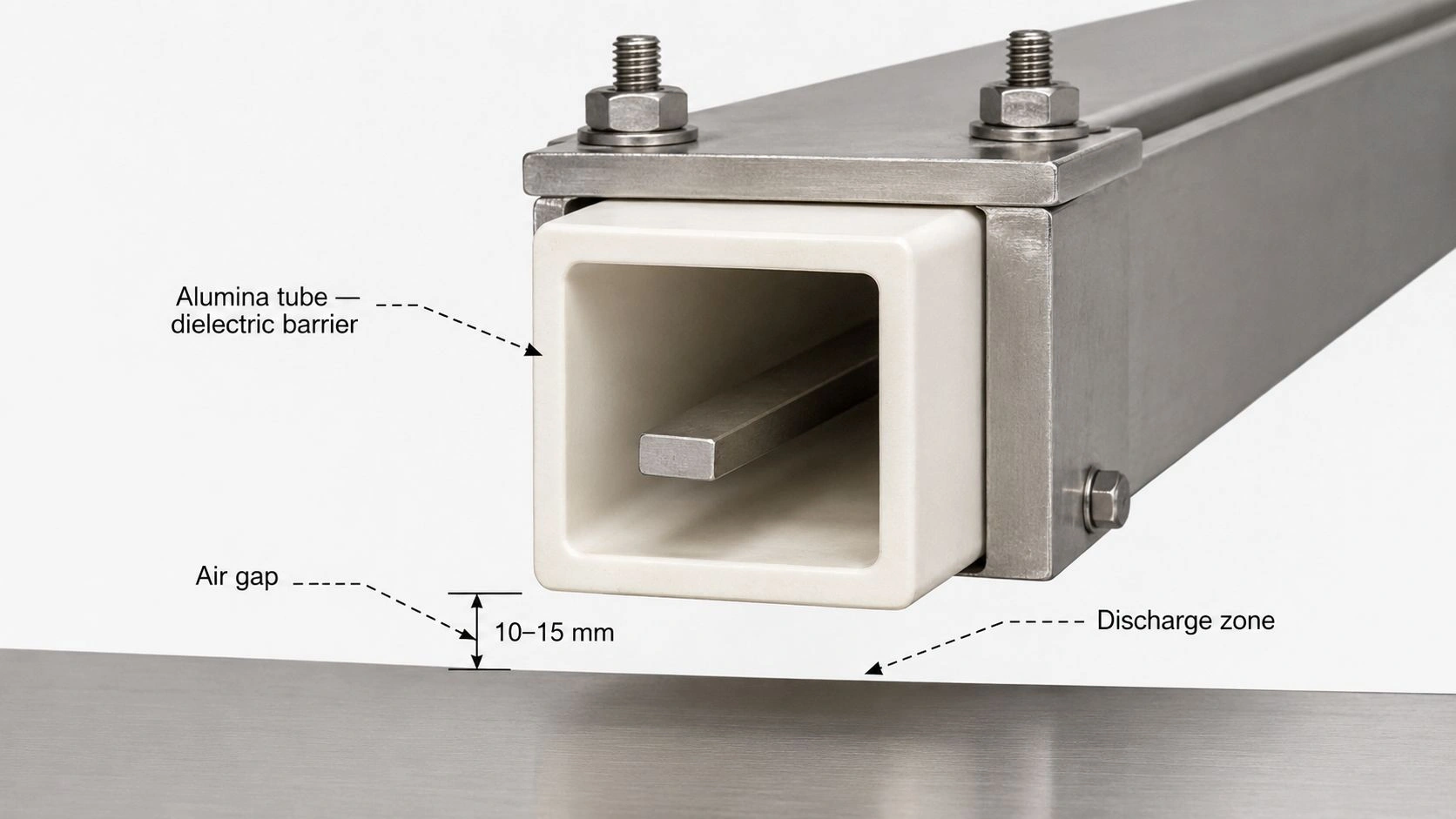
A square alumina tube used as a dielectric barrier should be reviewed against installed air gap, discharge zone, wall thickness, and holder geometry before deciding the dielectric verification level.
The Testing Decision Depends on Risk, Not Shape Alone
Square shape does not automatically trigger dielectric strength testing, but the square geometry adds verification considerations that round tubes do not always present. Corners, wall thickness variation, edge condition, surface-to-bore offset, and the position of the discharge path relative to the tube faces can all affect where electrical stress concentrates in a real corona electrode assembly.
Corona treater suppliers consistently market ceramic electrode tubes on the basis of high dielectric strength. Alumina ceramic corona electrode profiles are positioned for high purity and high dielectric strength as properties that support process stability. This commercial emphasis is correct — dielectric performance is a real functional requirement in corona service — but it does not mean that every tube requires its own dielectric breakdown test before installation.
The practical decision maps onto three verification levels:
- Level 1 — Supplier material data: for repeat replacement of a known grade and geometry in a validated corona station with an unchanged air gap and no surface damage.
- Level 2 — Material certificate plus dimensional and surface inspection: for replacement parts from a new supplier lot, custom-cut lengths, or geometries that have not previously been tested in the specific electrode assembly.
- Level 3 — Formal dielectric testing or pilot sample validation: for new tube geometry, reduced wall thickness, high-voltage margin applications, unknown material grade, visible damage, or critical production stations where failure has significant consequences.
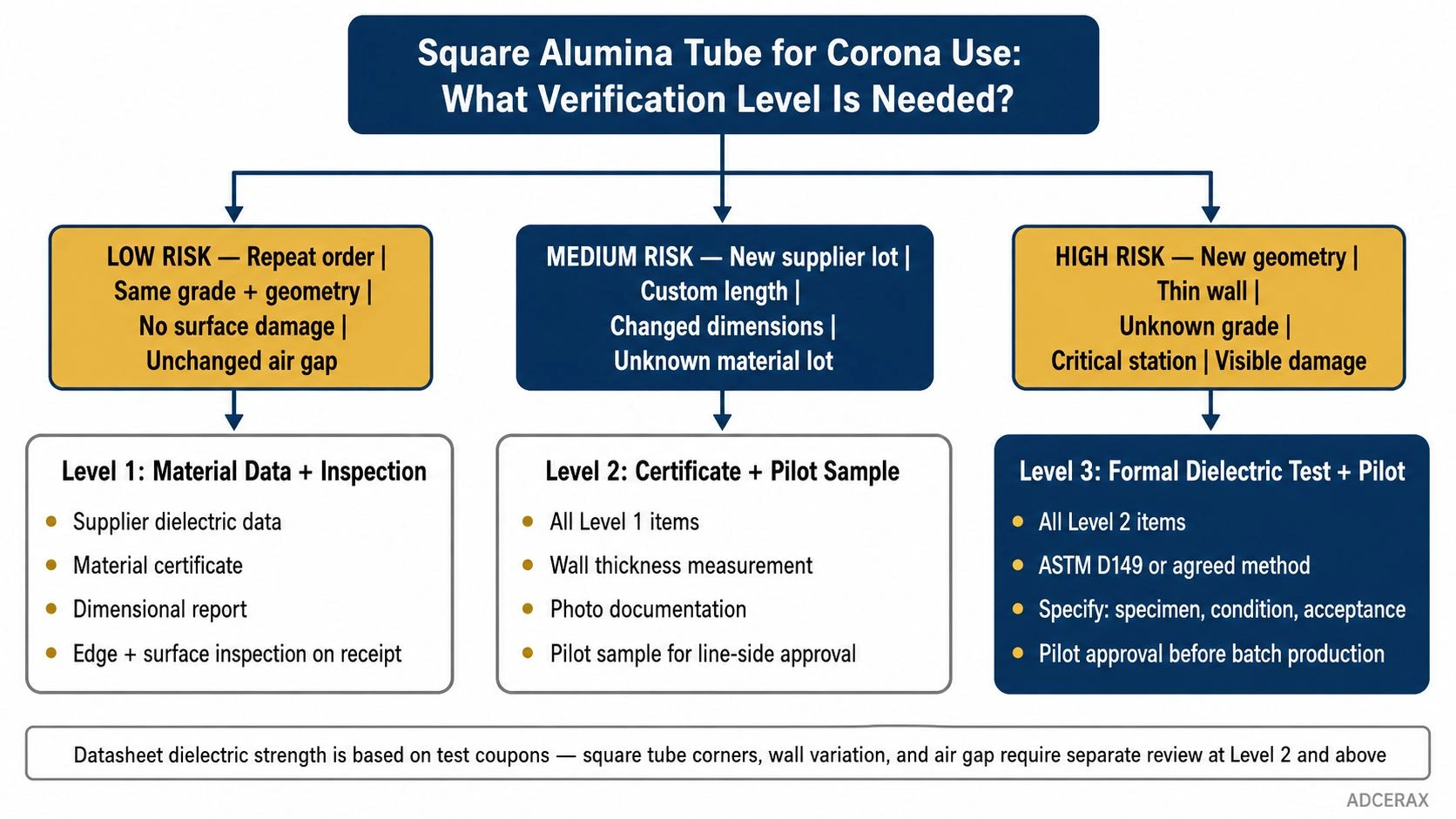
Verification level should be selected by application risk, including repeat order status, material lot, geometry change, wall thickness, surface damage, and station criticality.
ADCERAX's alumina ceramic tubes product line and electrical ceramics application page cover tube geometry, material grades, and electrical insulation applications supporting corona electrode and high-voltage isolation service.
When Supplier Data or a Material Certificate May Be Sufficient
For routine replacement in an established corona electrode assembly, a formal dielectric breakdown test may not be necessary if the following conditions are all met:
- The replacement tube matches the previously validated grade, geometry, and wall thickness.
- The material grade is confirmed — the supplier can identify the Al₂O₃ purity class and whether it matches the original part.
- No edge chips, surface cracks, tracking marks, or glaze defects are visible on the tube before installation.
- The corona station air gap and electrode configuration are unchanged from the validated design.
- The supplier provides dielectric strength data from their material specification or a current material certificate.
In this scenario, the appropriate verification path is: confirm material grade, receive a dimensional inspection report confirming wall thickness and cross-section consistency, perform a surface and edge visual inspection on receipt, and document the lot number and supplier certificate against the order. This is not a shortcut — it is the appropriate evidence level matched to the actual risk.
ADCERAX's alumina ceramic materials page covers purity grades and electrical property ranges for alumina, supporting material confirmation before placing a repeat order. For tubes with non-standard cross-sections or lengths, ADCERAX's custom ceramic tubes page covers drawing-based manufacturing.
The key question for Level 1 verification is whether the new tube is genuinely the same as the previously validated part. If the supplier, material lot, wall thickness, length, or corner radius has changed — even if the nominal dimensions appear the same — the verification level should increase.
When Dielectric Strength Testing Should Be Requested
Request formal dielectric testing, or at minimum a supplier test proposal, when any of the following conditions apply to the square alumina tube:
- New geometry not previously validated in the specific corona electrode assembly — a different bore, wall thickness, corner radius, or tube length.
- Reduced wall thickness relative to the previously used design — thinner walls reduce the dielectric barrier margin under the same applied voltage.
- Unknown or unconfirmed material grade — the alumina purity and electrical properties cannot be verified from available documentation.
- Visible surface damage including chips at corners, cracks, tracking marks from prior discharge, or glazing defects that could create a low-resistance path.
- High-voltage margin applications where the operating voltage is close to the design limit and any reduction in wall condition or material quality represents a safety or performance risk.
- Critical production corona station where dielectric failure — arcing through the tube, localized breakdown, or tube rupture — would stop production, contaminate the treated surface, or damage the station hardware.
- Replacement part for a previously failed tube where the cause of the original failure is not yet established.
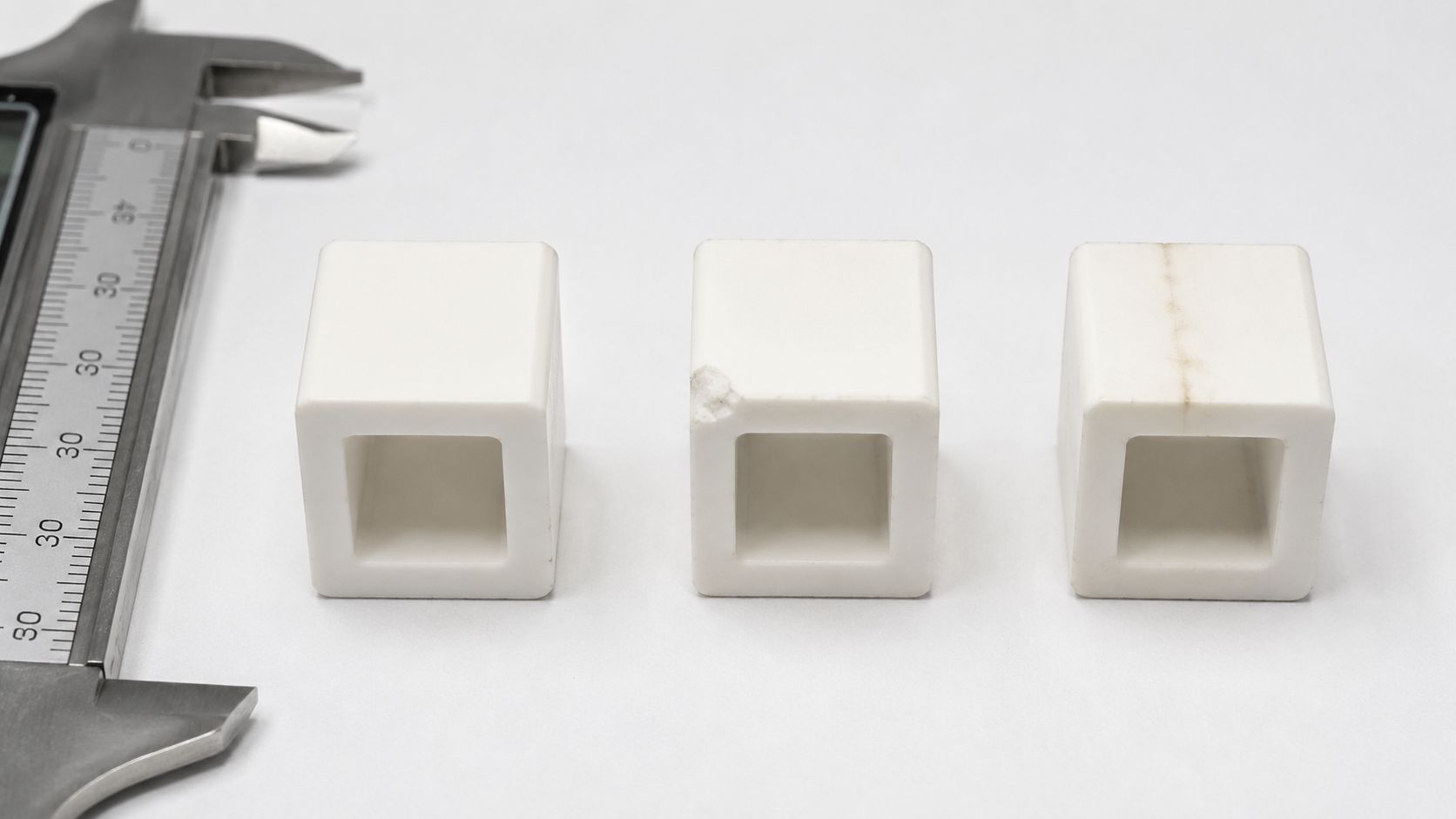
Visible chips, cracks, and tracking marks on square alumina tubes should be treated as dielectric risk indicators, especially near the discharge path or holder contact zones.
ASTM D149 covers procedures for determining dielectric breakdown voltage and dielectric strength of solid insulating materials at commercial power frequencies. It is a recognized reference when the RFQ needs formal dielectric evidence — but the test condition (specimen geometry, electrode type, voltage waveform, test medium) must be specified by agreement between buyer and supplier, not left open.
Enercon confirms that ruptures compromise ceramic dielectric strength wherever they occur — which confirms that visible surface and edge damage is not a cosmetic issue in corona service. A chipped corner, a crack along a tube face, or a tracking path from a previous discharge event are rejection triggers, not acceptances that dielectric testing can override.
The following table maps risk conditions to verification direction and RFQ action.
| Risk Condition | Why It Matters | Verification Direction | RFQ Action |
|---|---|---|---|
| Known repeat part, unchanged geometry | Previously validated | Supplier data + certificate sufficient | Confirm same grade and dimensions |
| Unknown alumina grade | Datasheet value may not apply | Material certificate required | Request purity class and electrical property data |
| Reduced wall thickness | Electric stress margin reduced | Dielectric evidence recommended | State wall thickness and voltage condition |
| Sharp or chipped corners near discharge path | Local stress concentration and tracking risk | Surface inspection; formal test if critical | Define no-chip zones and rejection criteria |
| Cracks, ruptures, or tracking marks | Compromise dielectric integrity | Reject or test under controlled review | Do not reuse damaged tubes without investigation |
| New square tube geometry | Coupon data may not reflect component behavior | Supplier review + pilot sample | Include drawing, assembly role, and air gap |
| Critical corona production station | Failure affects uptime or surface quality | Formal test plan recommended | Define test method, acceptance, and sampling |
Values indicative; verify per agreed dielectric test method, supplier-specific material data, and component inspection.
Why Dielectric Strength Is Not Just a Material Datasheet Number
The most common verification error is treating the supplier's published dielectric strength value as a complete answer for a specific square alumina tube in a specific corona application.
Dielectric strength is typically expressed in kV/mm, calculated by dividing breakdown voltage by test-coupon thickness. The test coupon is a flat specimen of controlled thickness, surface condition, and geometry — not a square tube with corners, a bore, and an installed air gap.
Breakdown voltage depends on the applied test geometry. Morgan Technical Ceramics confirms that dielectric strength is calculated from breakdown voltage divided by test coupon thickness — meaning the result is inherently tied to the specimen used. For a square alumina tube, the following factors create local electrical stress conditions that the datasheet value does not capture:
- Corner geometry: the interior and exterior corners of a square tube create electrical stress concentrations that differ from the flat-face mid-wall region. A chip or crack at a corner creates an even stronger local concentration.
- Wall thickness consistency: a tube with nominal 3 mm walls but a 10% variation in wall thickness has one region with effectively 10% less dielectric margin than the specification implies.
- Air gap and installed position: the voltage distribution between the alumina tube, the trapped air, and the ground roll depends on the actual installed gap, not the tube material alone.
- Surface contamination and tracking history: residue, moisture, or prior discharge tracking on the tube surface can create conductive paths at voltages well below the bulk material limit.
IEC 60672-2 applies to ceramic, glass, and glass-ceramic materials for electrical insulation and specifies test methods — but material test results should be treated as evidence about the material, not as a substitute for component-level review. Published research also confirms that dielectric strength test values for ceramics can vary with test setup and parameters, reinforcing that method and specimen condition must be specified when requesting or comparing data.
The practical consequence is that the dielectric number from a datasheet is a necessary input for verification, but it should always be combined with a physical inspection of the tube's edge condition, surface state, wall thickness measurement, and a review of how the installed geometry affects local stress distribution.
RFQ Language for Dielectric Verification in Square Alumina Corona Tubes
The following checklist converts the verification decision into actionable RFQ and inspection plan language.
Fields to include in the RFQ:
- Square tube cross-section dimensions (outer, inner, bore)
- Wall thickness — nominal and acceptable tolerance
- Overall length
- Corner radius or edge treatment specification
- Material grade (Al₂O₃ content; IEC material class if applicable)
- Electrical property requirement (dielectric strength reference or requested test method)
- Surface condition — as-fired or ground; no-chip zones defined
- Packing method — protection for corners and faces during transit
Verification level to request:
- Level 1 (low-risk repeat): Material grade confirmation, supplier dielectric data or material certificate, dimensional inspection report, surface and edge inspection on receipt, and lot traceability.
- Level 2 (medium risk — new lot, custom length, or changed supplier): All Level 1 items plus photographic surface documentation of representative tubes, confirmed wall thickness measurement, and a pilot sample for line-side inspection before bulk acceptance.
- Level 3 (high-risk — new geometry, reduced wall, unknown grade, critical station): All Level 2 items plus a formal dielectric test proposal from the supplier — state the applicable method (ASTM D149 or agreed equivalent), specimen type, test condition, and whether the test is destructive. Agree acceptance criteria before ordering. Require pilot sample approval before batch production release.
Inspection items at incoming receipt (all levels):
- Visual inspection of all four faces for cracks, chips, surface tracking, or glaze defects
- Corner and edge condition — any chip within the discharge path is a hold/reject trigger
- Wall thickness spot check on at least two cross-sections
- Overall length and cross-section dimensions against drawing
- Packaging damage inspection — corner and face damage can occur in transit
Specifying dielectric verification requirements for square alumina corona electrode tubes? Send the tube drawing or dimensions, material grade if known, applied voltage or power station class, air gap dimension, whether the part is a repeat or new design, and the current failure or concern. ADCERAX engineers confirm the appropriate verification route, available material grades, and RFQ requirements — no order commitment required at this stage.
Frequently Asked Questions
Does every square alumina tube for corona use need dielectric strength testing?
No. Low-risk repeat replacements of a validated grade and geometry may only need supplier material data, grade confirmation, dimensional inspection, and surface/edge inspection. Formal dielectric testing is justified when the tube is a new design, thin-walled, high-voltage-margin, unknown grade, visibly damaged, or used in a critical production corona station.
Is a dielectric strength value from a supplier datasheet enough?
It may be enough for low-risk replacement if the geometry, grade, and surface condition match the previously validated part. For new designs or unknown grades, the datasheet value alone is not sufficient because it is based on a defined flat test specimen, not on the square tube's corners, wall variation, or installed air gap.
When should ASTM D149 testing be requested?
Request ASTM D149 or an agreed equivalent when formal dielectric breakdown evidence is required for a new square tube geometry, unknown or changed material, reduced wall thickness, high-voltage application, or critical corona station qualification. Specify specimen type, test conditions, and acceptance criteria before ordering — and confirm whether the test is destructive.
Can chips or cracks on a square alumina tube reduce its dielectric performance?
Yes. Chips at corners, cracks along tube faces, ruptures, and surface tracking marks create local dielectric weak points. A tube with visible damage in the discharge path should not be approved based on the material grade's published dielectric strength value. It should be held for investigation or rejected.
What wall thickness is required for a square alumina tube in corona use?
The correct wall thickness depends on the applied voltage, frequency, air gap, material grade, tube cross-section, and electrode design. No universal minimum thickness can be stated here. The supplier should be given the voltage condition, air gap, and tube geometry, and should confirm whether the proposed wall thickness provides adequate dielectric margin for the specific application.