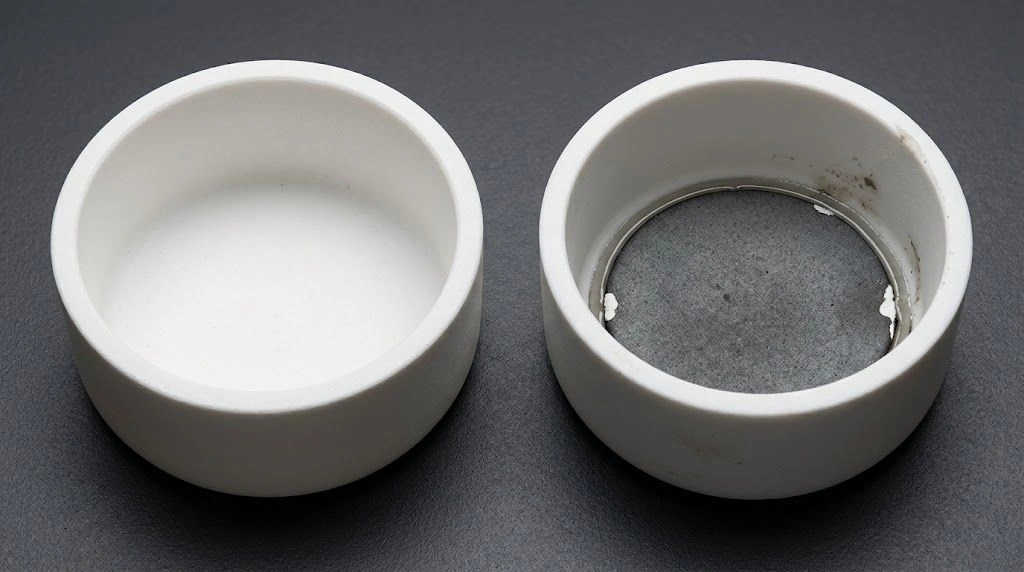
SiC ceramic membranes can offer superior recovery after fouling because their hydrophilic surface, chemical stability, mechanical robustness, and cleaning tolerance help reduce the permanence of foulant attachment and restore flux more completely after CIP. They do not eliminate fouling: oil droplets, organic matter, colloids, suspended solids, scale, and biofilm can all accumulate on SiC membrane surfaces or inside pores. The advantage of SiC is that a larger fraction of that fouling often remains removable when flux, TMP, crossflow velocity, pretreatment, and cleaning timing are properly controlled. That distinction — superior recovery rather than zero fouling — is the commercially meaningful claim that pilot data must validate before system design and procurement.
The ceramic membranes at ADCERAX — covering SiC, alumina, and zirconia options positioned by feed severity, cleaning intensity, and uptime requirements — provide the product context for the fouling and recovery analysis described in this article.

SiC ceramic membranes offer superior fouling recovery through hydrophilic surface wetting that reduces oil adhesion, chemical cleaning tolerance that allows more aggressive CIP, and rigid ceramic structure that maintains performance through repeated cleaning cycles — but fouling is not eliminated; it must still be managed through pretreatment, sustainable flux, and timely cleaning.
What actually causes ceramic membrane fouling?
Understanding why SiC recovers better requires first understanding what creates fouling that is difficult to recover from. Ceramic membrane fouling is not a single mechanism — it is a combination of feed-side, membrane-side, and operation-side factors that together determine whether flux loss is temporary and recoverable or permanent and additive.
[CITE: Published ScienceDirect research on ceramic membrane filtration for oily wastewater treatment confirms that fouling in ceramic membrane systems is influenced by wastewater properties including oil concentration and pH, membrane characteristics including hydrophilicity and surface charge, and operating parameters including cross-flow velocity and permeate flux — establishing that fouling is a multi-variable system problem rather than a material-only problem, and that the same membrane can produce very different fouling behavior depending on which of these co-variables is outside its design range.]
Reversible fouling: cake layer, loose deposits, and removable oil layer. Reversible fouling is foulant accumulation that can be removed by physical cleaning — backwash, relaxation, increased crossflow, or a simple water rinse. It includes the cake layer of suspended solids that forms on the upstream membrane face during filtration, loosely attached oil droplets that have not bonded to the membrane surface, and colloids that have settled in pore channels without forming strong molecular bonds with the pore wall. Reversible fouling causes TMP rise and flux decline but is expected in normal operation. The key is preventing it from transitioning to irreversible fouling.
Irreversible fouling: pore blocking, strong adsorption, and compacted layers. Irreversible fouling is flux loss that cannot be recovered by physical cleaning and requires chemical cleaning — or cannot be fully recovered even by chemical cleaning. It occurs when oil droplets penetrate pore entrances and partially seal them, when organic species form strong adsorptive bonds with the membrane surface or pore walls, when a cake layer is compressed under sustained TMP until its structure densifies and traps finer particles and oil, or when scaling ions deposit crystalline scale inside pores. Each irreversible fouling event that is not fully removed by CIP adds permanently to the membrane's reduced flux state.
Why TMP rise and flux decline do not identify root cause by themselves. Rapid TMP rise can indicate excessive feed loading, wrong pore size for the particle distribution, flux above sustainable limits, inadequate crossflow, or delayed cleaning — all of which have different solutions. A TMP curve alone cannot distinguish between a material limitation and an operating boundary violation. This is why fouling diagnosis must begin with feed characterization and operating log review, not with membrane replacement.
Why does SiC often recover better after fouling?
The recovery advantage of SiC membranes has a specific set of mechanisms that apply most strongly in oily and organic-fouling-dominated service conditions. It is not a general superiority over all foulants in all operating conditions.

Ceramic membrane fouling is driven by feed properties, membrane surface interactions, and operating parameters together; SiC improves recovery through hydrophilicity, surface charge effects, chemical cleaning tolerance, mechanical rigidity, abrasion resistance, and thermal stability.
[CITE: Published PubMed research on fouling of alumina membranes with and without silicon carbide deposition specifically found that SiC-deposited membranes showed lower reversible and irreversible fouling compared with uncoated alumina membranes under equivalent oil-in-water emulsion conditions — and published RSC Advances research on hydrophilic SiC hollow fiber membranes for oil-water separation reports that stronger hydrophilicity correlated with higher water flux and better anti-fouling behavior, confirming that SiC's hydrophilic surface character creates measurable advantages in oil-bearing membrane filtration applications.]
Hydrophilicity: why water-wet surfaces recover better. A hydrophilic membrane surface preferentially interacts with water rather than with oil or hydrophobic organic species. When water occupies the surface and pore walls first, oil droplets must displace that water layer to adsorb onto the surface — which requires overcoming the energy barrier of hydrophilic water-surface interactions. This mechanism reduces the initial adhesion rate of oil and organic foulants and makes the fouling layer more loosely attached, which directly translates to better flux recovery when cleaning removes the fouling layer. SiC's covalently bonded surface structure maintains inherent hydrophilicity across the pH range that most industrial wastewater presents, without requiring surface coatings that can degrade over time.
Surface charge effects: why pH and surfactants change fouling behavior. The electrostatic interaction between the membrane surface and foulant particles depends on the surface charge of both the membrane and the foulant at the operating pH. When the membrane and foulant carry the same charge sign — both negatively charged, for example — electrostatic repulsion reduces the rate of surface deposition. SiC's surface chemistry can support this charge-based repulsion mechanism in defined pH ranges, and TU Delft's published ceramic membrane research confirms that SiC-modified and SiC-deposited membranes can reduce fouling compared with alumina by improving hydrophilicity and electrostatic repulsion under specific emulsion conditions. The practical consequence is that operating pH selection matters for fouling behavior, and feed pH analysis is a required input before membrane system design.
Chemical cleaning tolerance: why stronger CIP can restore flux. The most direct operating consequence of SiC's chemical stability is that the membrane surface can tolerate more aggressive cleaning chemistry than polymer membranes and, in many configurations, more aggressive cleaning than oxide ceramic membranes. When oil or organic fouling is thick or compacted, recovery requires concentrated alkaline cleaning, surfactant-assisted cleaning, oxidant exposure, or elevated cleaning temperature. SiC can sustain these cleaning conditions through many repeated CIP cycles without the surface degradation, pore erosion, or rejection loss that would accumulate in polymer membranes over equivalent cleaning intensity. PMC's published ceramic UF membrane cleaning review confirms that CIP is the standard flux recovery method for ceramic membrane systems, and the cleaning chemistry matched to the foulant type — not cleaning intensity alone — determines how much flux is recovered.
Mechanical stability: ceramic structure resists deformation under backwash and crossflow. Rigid ceramic membrane structure means that the physical backwash pressure used to dislodge fouling cake does not deform pore geometry, stretch fiber walls, or cause permanent flow-path changes. Over hundreds of backwash and CIP cycles, this mechanical stability maintains consistent pore structure and reproducible flux recovery performance in a way that hollow-fiber polymer membranes — which can experience gradual fiber deformation, fiber breakage, and bundle compaction — cannot always sustain.
The Why SiC Offers Better Recovery table maps the mechanisms:
| SiC feature | Recovery benefit | Engineering note |
|---|---|---|
| Hydrophilicity | Reduces oil adhesion and improves water wetting | Most important for oily/emulsified feeds |
| Chemical stability | Allows stronger CIP options | Seals and module housing must also tolerate chemicals |
| Mechanical rigidity | Resists deformation during cleaning/backwash | Useful for repeated recovery cycles |
| Abrasion resistance | Handles solids better than polymer membranes | Pretreatment still needed for large particles |
| Surface charge control | Can reduce foulant attachment under certain pH conditions | pH and surfactants change interactions |
| Thermal stability | Supports hotter cleaning or feed conditions | System components may limit temperature |
Which fouling types can SiC improve — and which still need pretreatment?
SiC's recovery advantages are real but bounded. They apply most strongly to specific fouling modes, and several categories of fouling require system design responses that SiC cannot substitute for.
The Ceramic Membrane Fouling Types and SiC Recovery Logic table maps the boundary:
| Fouling type | Typical cause | How SiC helps | Still required |
|---|---|---|---|
| Oil adhesion | Emulsified oil, hydrophobic foulants | Hydrophilic surface reduces oil attachment | Oil droplet and surfactant analysis |
| Organic fouling | COD/TOC, proteins, surfactants, polymers | Stronger cleaning tolerance supports recovery | Correct CIP chemistry |
| Cake layer | TSS, colloids, biomass | Rigid ceramic surface tolerates backwash/crossflow | Pretreatment and flux control |
| Pore blocking | Fine droplets, colloids, small particles | Better surface chemistry may reduce irreversible attachment | Correct pore size and sustainable flux |
| Scaling | Ca/Mg/silica/salts | Acid cleaning may be possible if module allows | Scaling control and antiscalant strategy |
| Biofouling | Microbial growth, EPS | Ceramic tolerates cleaning, but biology remains root cause | Process control and cleaning timing |
SiC helps with oily and organic fouling recovery. The fouling types where SiC's recovery advantage is strongest are those driven by oil adhesion, emulsified organic matter, COD-bearing wastewater, and feeds where the foulant is primarily attached through surface energy rather than chemical bonding. In these cases, hydrophilic wetting and strong alkaline or oxidant cleaning can remove the fouling layer effectively enough to restore high flux recovery fractions.
Scaling and biofouling require system-level controls, not only material upgrade. Mineral scale from calcium, magnesium, silica, or iron deposits forms through precipitation chemistry that is independent of the membrane material. SiC's acid-cleaning tolerance helps with scale removal, but antiscalant chemistry, pH adjustment, or softening upstream are required to prevent rapid scale recurrence. Biofouling from microbial growth and EPS accumulation requires biological process control, disinfection, and cleaning timing management — SiC's cleaning tolerance supports recovery but does not prevent biological growth.
Free oil and coarse solids should be removed before the membrane. As in oil and grease removal applications generally, bulk free oil and large suspended particles should be removed by upstream separation before the SiC membrane stage. Loading a SiC membrane with free-floating oil or coarse abrasive particles at high concentration uses filtration capacity for material that pretreatment equipment could remove more economically, and it creates fouling loads that exceed what even aggressive CIP can fully address.
When is SiC superior to alumina or polymer membranes?
The recovery comparison between SiC, alumina, and polymer membranes should be made based on the specific fouling mode the system faces — not on material brand preference.
SiC vs alumina: recovery advantage appears in severe oily and organic feeds. Alumina ceramic membranes provide strong chemical cleaning tolerance and good mechanical robustness for most industrial filtration duties. In moderate fouling conditions — stable feeds, periodic scaling, routine TSS cake fouling — alumina may recover comparably to SiC at lower cost. The difference appears most clearly in feeds with significant oil content, emulsified organic foulants, or conditions where more aggressive alkaline cleaning is needed repeatedly. Published research comparing SiC-deposited and plain alumina membranes under oil-in-water emulsion conditions documents a measurable fouling reduction for the SiC-modified surface, confirming the advantage is real but feed-condition dependent.
SiC vs polymer: stronger CIP and mechanical durability. Nature's published research on ceramic membranes for water treatment confirms that ceramic membranes generally offer stronger chemical and mechanical robustness than polymer membranes, while polymers remain cost-effective for controlled mild feeds. The polymer membrane's recovery limitation shows most clearly in systems that require frequent aggressive cleaning — the cleaning intensity that would restore SiC flux degrades polymer membrane material over time, accumulating irreversible permeability loss that is not recoverable by further cleaning.
When alumina or polymer still wins. If the feed is mild, fouling rate is low, cleaning chemistry is gentle, and cost or module availability is the primary constraint, alumina or polymer membranes may recover adequately without requiring SiC's cost premium. SiC's value is in applications where the marginal improvement in recovery percentage — across hundreds of cleaning cycles over years of operation — generates enough OPEX saving to offset the initial capital difference.
The SiC vs Alumina vs Polymer Recovery Comparison table maps the decision:
| Decision variable | SiC membrane | Alumina ceramic membrane | Polymer membrane |
|---|---|---|---|
| Oil-fouling recovery | Strong | Moderate to strong | Feed-dependent, often weaker under harsh cleaning |
| Chemical cleaning tolerance | Strong | Strong | More restricted |
| Abrasion tolerance | Strong | Good | Lower |
| Initial cost | Highest | Medium to high | Lowest |
| Best fit | Severe oily/organic/abrasive wastewater | Stable ceramic filtration | Mild, cost-sensitive feeds |
| Main risk | Over-specified if feed is mild | May not recover as well in severe oily feeds | Irreversible fouling or chemical aging in harsh feeds |
| Selection rule | Use when recovery and uptime justify cost | Use when ceramic durability is enough | Use when feed is controlled and CAPEX dominates |
The silicon carbide membrane page at ADCERAX covers tubular SiC modules, flat-sheet configurations, and MBR formats for harsh industrial wastewater. The ceramic membrane category covers both alumina and SiC options for direct product comparison.
Why do SiC membrane recovery projects still fail?
Even with SiC membranes in place, recovery projects underperform when the root cause of flux loss is not material-limited. The fouling mechanism drives this: if the fouling is caused by free oil overload, excessive operating flux, delayed cleaning, or incompatible cleaning chemistry — conditions that no membrane material fully compensates for — the SiC upgrade does not resolve the problem.
Operating above sustainable flux creates irreversible fouling. Every membrane — SiC, alumina, or polymer — has a critical flux or sustainable flux below which fouling is primarily reversible and recoverable. Above that threshold, fouling accelerates and transitions from reversible cake to irreversible compacted and adsorbed layers that CIP cannot fully remove. Published ceramic membrane fouling literature confirms that operating parameters — crossflow velocity and permeate flux in particular — are co-drivers of fouling severity alongside feed and material properties.
Cleaning too late reduces recovery even on SiC. The fouling layer that forms during filtration becomes progressively more resistant to cleaning as time passes under TMP. Oil droplets initially resting on the membrane surface with weak van der Waals attachment become increasingly embedded as the cake above them compresses under pressure. Starting CIP at an early TMP rise threshold — rather than waiting for a hard operating limit to be reached — is the operating protocol that most determines whether SiC's chemical tolerance advantage translates to high flux recovery fractions.
The Misdiagnosis Matrix maps common failure patterns:
| Observed problem | Common wrong diagnosis | Better engineering question |
|---|---|---|
| Flux does not recover after CIP | ""SiC membrane failed"" | Was cleaning delayed until fouling became irreversible? |
| TMP rises quickly | ""Need smaller pore size"" | Is flux too high or pretreatment insufficient? |
| SiC not better than alumina | ""SiC is overhyped"" | Was the feed severe enough for SiC's recovery advantage to appear? |
| High oil in permeate | ""Membrane material is wrong"" | Is oil droplet size below pore cut-off or surfactant-stabilized? |
| Frequent chemical cleaning | ""Need stronger chemicals"" | Is upstream oil/solids loading too high? |
| Pilot succeeds but plant fails | ""Supplier data is wrong"" | Did pilot include worst-case feed, hardness, surfactants, and repeated cleaning cycles? |
What cleaning-recovery and pilot-test data should be requested?
Proving that SiC offers superior recovery for a specific application requires measuring recovery, not initial flux. AWA's published SiC membrane pilot report confirms that pilot testing of SiC membranes is used to assess flux rates and product-water quality under source-water challenge conditions — precisely because real-feed variability cannot be predicted from lab-scale or datasheet performance.

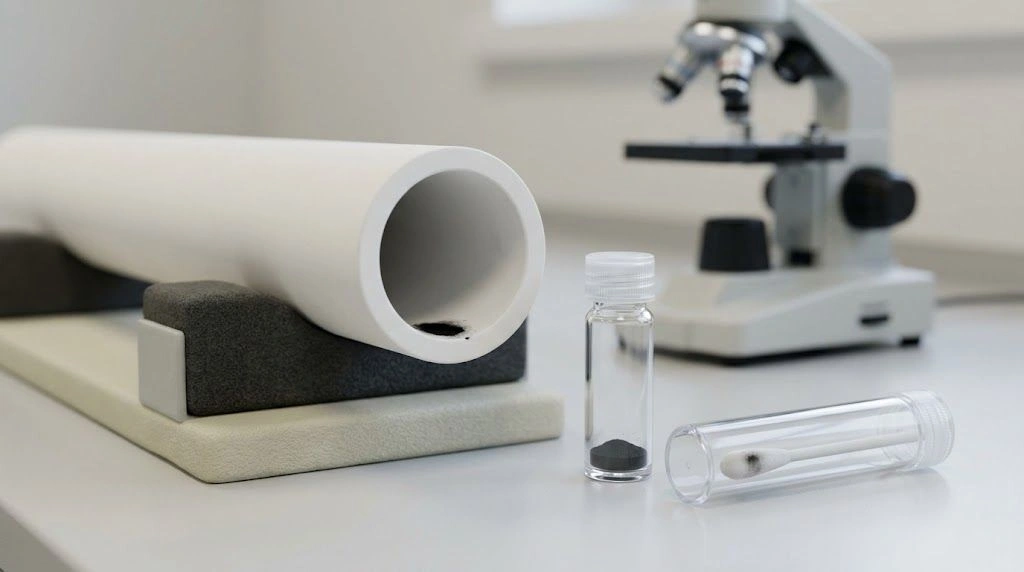
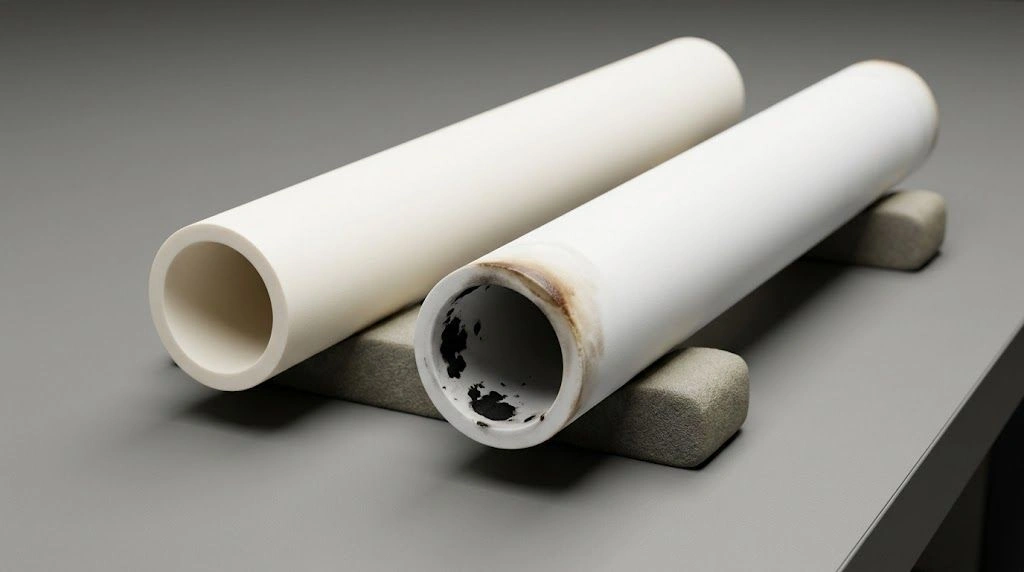
Comparing clean, oil-fouled, and post-CIP SiC membrane specimens helps show the practical meaning of recovery: the key KPI is not only initial flux, but how much flux returns after repeated fouling and alkaline CIP cycles.
The RFQ / Pilot-Test Data Checklist maps the required information:
| Parameter | Why it matters | Required? |
|---|---|---|
| Wastewater source | Defines likely foulants | Yes |
| Oil and grease | Key driver for SiC recovery value | If present |
| COD/TOC | Indicates organic fouling load | Recommended |
| TSS/particle size | Controls cake and pore blocking | Yes |
| pH range | Controls surface charge and cleaning compatibility | Yes |
| Hardness/scaling ions | Drives inorganic fouling | Recommended |
| Surfactants | Stabilize emulsions and alter surface interactions | If present |
| Target flux | Must stay below sustainable range | Yes |
| TMP range | Tracks fouling and recovery | Yes |
| CIP chemicals | Determines recovery and compatibility | Yes |
| Cleaning frequency | Shows fouling severity | Yes |
| Recovery after CIP | Main proof of SiC value | Yes |
| Pilot duration | Captures repeated fouling/recovery cycles | Yes |
Minimum recovery metrics the pilot must measure. Initial clean-water flux at the start of the pilot is useful context but not proof of recovery advantage. The data that matters is stable operating flux after the membrane reaches fouling equilibrium with real feed, TMP rise rate over representative operating periods, flux recovery percentage after each CIP cycle measured over at minimum five to ten cleaning cycles, and the irreversible fouling fraction — the permanent flux reduction that accumulates after repeated cycles regardless of cleaning. If SiC is genuinely delivering superior recovery, the irreversible fouling fraction after ten cycles should be meaningfully lower than the polymer or alumina alternative tested under equivalent feed conditions.
Investigating SiC membrane fouling and recovery for your system? Share your wastewater source, oil and grease content, COD/TOC, TSS, pH range, temperature, hardness, surfactants, target flux, TMP range, current membrane type, cleaning chemicals, cleaning frequency, and current flux recovery percentage. ADCERAX can review whether SiC membranes would offer a measurable recovery advantage for the specific fouling mode and propose a pilot-test configuration.
Frequently Asked Questions
Do SiC ceramic membranes still foul?
Yes. SiC membranes foul from oil, organic matter, suspended solids, scale, biofilm, and colloids. Their advantage is not zero fouling — it is better cleaning recovery and lower irreversible fouling fraction under conditions where hydrophilicity, surface charge, and chemical cleaning tolerance reduce the permanence of foulant attachment.
Why does SiC recover better than alumina in some oily wastewater?
SiC's stronger inherent hydrophilicity reduces oil adhesion to the membrane surface compared with less hydrophilic oxide ceramic surfaces. Published research on SiC-deposited alumina membranes observed lower reversible and irreversible fouling under defined oil-in-water emulsion operating conditions compared with uncoated alumina membranes. This advantage appears most strongly when the fouling is oil- or organic-dominated and cleaning chemistry can be matched to the foulant type.
What is irreversible fouling?
Irreversible fouling is the fraction of flux loss that physical cleaning cannot recover and that chemical cleaning only partially addresses. It accumulates over repeated operating and cleaning cycles, comes from pore blocking, strong molecular adsorption, compacted organic or oil layers, or scaling, and represents the membrane's permanent capacity reduction over its operating lifetime.
Does hydrophilicity really matter for membrane fouling?
Yes. Published RSC research on hydrophilic SiC hollow fiber membranes confirmed that stronger hydrophilicity correlated with higher water flux and better anti-fouling behavior in oil-water emulsion filtration service. The mechanism is that a hydrophilic surface preferentially wets with water rather than oil, reducing the driving force for oil droplet adhesion and making the fouling layer more loosely bound and easier to remove by cleaning.
Can stronger cleaning always restore SiC membrane flux?
No. Cleaning strength helps only when it is matched to the foulant chemistry and applied before fouling becomes compacted or irreversible. Applying maximum cleaning intensity to fouling that has been accumulating under sustained TMP for extended periods recovers less flux than applying the correct cleaning chemistry at an early TMP rise trigger. Cleaning protocol design is as important as cleaning tolerance when specifying a ceramic membrane system.
When is SiC not worth the recovery upgrade?
SiC is over-specified when the feed is mild, fouling rate is low, cleaning chemistry is gentle, and polymer or alumina membranes already recover well across their expected service life at lower cost. The recovery premium SiC provides has value only when irreversible fouling accumulation and cleaning frequency in the alternative system are the limiting drivers of OPEX or uptime.
What data proves SiC recovery advantage?
Useful proof requires: stable operating flux at fouling equilibrium with real feed, TMP rise rate over representative operating periods, flux recovery percentage after each CIP cycle over a minimum of five to ten cycles, irreversible fouling fraction after repeated cycles, cleaning chemical consumption per cycle, and pilot operation under worst-case feed conditions — not only average feed.
"