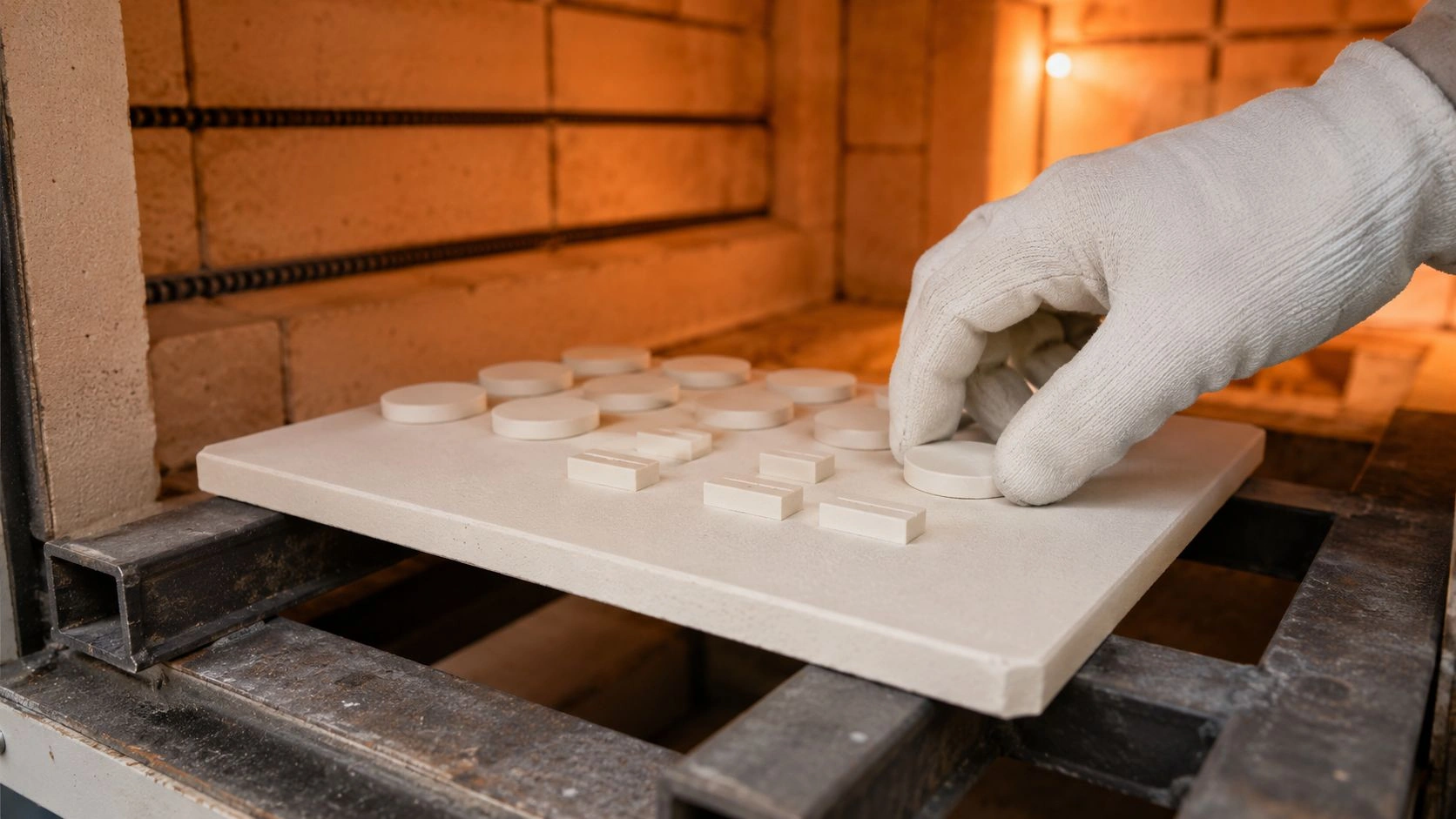
tga alumina crucibles are often selected quickly, yet incorrect size choices frequently introduce hidden variability into thermal analysis results. Consequently, size-driven decisions directly influence accuracy, repeatability, and experimental confidence.
In summary, this guide consolidates size-related knowledge that laboratory users, research engineers, and analytical teams typically seek when searching for TGA alumina crucible sizes.
Before examining specific dimensions, it is helpful to understand why size selection repeatedly emerges as a decisive factor in reliable TGA testing.

Why TGA Alumina Crucible Size Matters More Than You Think
Crucible size influences thermal behavior long before temperature programs begin. Therefore, overlooking dimensional factors often leads to subtle but systematic deviations in mass-loss curves.
-
Size as a controlled variable in TGA measurements
Crucible volume and geometry act as boundary conditions for heat transfer. In practice, laboratories running identical materials with different crucible sizes frequently observe size-/flow-/loading-dependent baseline offsets that can distort comparative studies — confirm on method RFQ. Consequently, size consistency becomes a prerequisite for reproducible datasets. -
How crucible geometry influences heat transfer and mass loss curves
Geometry determines how heat penetrates the sample bed. For example, shallow crucibles reach thermal equilibrium faster, while deeper profiles delay internal temperature stabilization by several seconds at process-typical heating rates above about 10 °C/min — atmosphere-/instrument-dependent. As a result, reaction onset temperatures may appear shifted. -
Common errors caused by incorrect crucible size selection
Analysts often overload small crucibles or underfill large ones. This mismatch increases thermal gradients, and in repeated tests size-/loading-dependent mass-loss scatter is often reported — confirm on method RFQ. Ultimately, such errors propagate into flawed kinetic interpretations.
Accordingly, size awareness is not optional but foundational.
Standard TGA Alumina Crucible Sizes Explained
Standardization simplifies cross-laboratory comparison, yet real-world testing repeatedly shows that size differences introduce subtle but measurable effects. Therefore, understanding what each nominal volume implies in daily operation becomes essential for reliable thermal analysis. Moreover, size selection of TGA alumina crucibles often determines whether historical data can be meaningfully reused. Catalog-class / instrument-typical volumes (commonly about 25–850 µL, with some holders extending toward 0.15–5 mL) are screening ranges only — confirm instrument holder fit and drawing RFQ before locking a size class.
70 µL Alumina Crucibles: The Most Widely Used Standard
The 70 µL alumina crucible has become the default choice in many laboratories because it offers a practical balance between thermal responsiveness and sample capacity. Indeed, it is commonly selected when analysts aim to maintain continuity with existing datasets and standardized methods.
In routine laboratory practice, technicians frequently load between 5 and 15 mg of material into a 70 µL crucible. At heating rates of 5–20 °C/min, internal thermal equilibrium1 is typically achieved within 1–2 seconds, which limits temperature gradients inside the sample bed. In comparative studies, this consistency often results in onset temperature deviations2 below ±1 °C across repeated runs.
From accumulated experience, laboratories conducting long-term material screening favor this size because archived results align closely over months or years. Consequently, the 70 µL crucible often functions as the reference point against which alternative sizes are evaluated.
Typical Characteristics of 70 µL TGA Alumina Crucibles
| Parameter | Typical Range |
|---|---|
| Nominal volume (µL) | 70 |
| Outer diameter (mm) | 6.0–6.8 |
| Height (mm) | 4.0–5.0 |
| Typical sample mass (mg) | 5–15 |
| Maximum use temperature (°C) | 1600 (high-purity selection ceiling — confirm grade + duty; not an all-grade TGA contract T) |
85 µL Alumina Crucibles: When Larger Sample Capacity Is Needed
The 85 µL alumina crucible is typically selected when sample morphology or density limits representative loading in smaller volumes. However, increased capacity inevitably alters heat transfer behavior.
In particular, analysts working with fibrous fillers, foamed polymers, or low-density powders often find that 70 µL crucibles constrain sample distribution. By contrast, 85 µL designs comfortably accommodate 10–30 mg while preserving acceptable surface exposure. In practice, this improved distribution reduces localized overheating and uneven decomposition.
Nevertheless, empirical observations show that temperature stabilization may lag by approximately 2–4 seconds compared with 70 µL crucibles at identical heating rates. Therefore, experienced users often compensate by reducing heating ramps or extending isothermal holds to maintain data comparability.
Typical Characteristics of 85 µL TGA Alumina Crucibles
| Parameter | Typical Range |
|---|---|
| Nominal volume (µL) | 85 |
| Outer diameter (mm) | 6.8–7.5 |
| Height (mm) | 4.5–5.5 |
| Typical sample mass (mg) | 10–30 |
| Maximum use temperature (°C) | 1600 (high-purity selection ceiling — confirm grade + duty; not an all-grade TGA contract T) |
Other Common Volume Variants Used in Research Laboratories
Beyond mainstream sizes, laboratories occasionally rely on smaller or larger crucibles to address specific analytical goals. These alternatives are less common, yet their use is often deliberate rather than incidental.
Smaller volumes, typically 40–50 µL, are favored in kinetic or rapid-decomposition studies3. Their reduced thermal mass allows near-instantaneous heat transfer, which is particularly valuable when process-typical heating rates exceed about 20 °C/min — confirm on instrument + method RFQ. Conversely, crucibles around 100 µL are preferred in ash-content or residue-focused workflows, where containment and residue visibility matter more than response speed.
In practice, size diversity reflects experimental intent rather than preference. Consequently, experienced laboratories maintain multiple sizes to support different testing strategies.
Less Common TGA Alumina Crucible Volumes
| Nominal Volume (µL) | Typical Application Focus |
|---|---|
| 40–50 | Rapid decomposition, kinetics |
| 100 | Residue and ash quantification |
| >100 | Pilot or method-development tests |
Beyond Volume: Key Dimensional Parameters You Must Check
Volume alone never defines crucible performance. Instead, dimensional coherence governs mechanical stability, balance behavior, and thermal symmetry during measurement. Therefore, experienced analysts routinely verify geometry alongside nominal volume.
Outer Diameter and Height: Fit, Stability, and Balance Considerations
Outer diameter directly determines how the crucible seats within the balance assembly. Even small mismatches can shift the center of gravity and influence signal stability.
In practice, misalignment caused by diameter deviations of 0.2 mm has been observed to increase oscillation during purge gas flow. Engineers have documented elevated balance noise when diameter tolerance exceeds drawing-/catalog screening limits around ±0.1 mm — confirm on instrument holder RFQ. As a result, diameter consistency becomes critical for maintaining low-noise baselines.
Ultimately, stable seating ensures that recorded mass changes reflect true chemical behavior rather than mechanical artifacts.
Wall Thickness and Bottom Shape: Thermal Response Implications
Wall thickness controls how quickly heat is transmitted from the furnace to the sample. Thicker walls absorb more energy before transferring heat inward.
For example, increasing wall thickness from about 0.6 mm to 1.0 mm (drawing-/catalog screening ranges, often spanning roughly 0.1–1.0 mm) can delay internal sample temperature rise by several seconds at process-typical rates near 10 °C/min — confirm on drawing RFQ. Consequently, thin-wall designs are preferred for kinetic accuracy, while thicker walls are chosen when durability and repeated reuse are prioritized.
Bottom geometry further shapes conduction pathways. Flat bases distribute heat evenly across the sample, whereas rounded bases may concentrate heat centrally, altering early-stage reaction profiles.
Weight Consistency Between Crucibles and Its Impact on Baseline Stability
Weight variation introduces subtle balance recalibration effects that accumulate over repeated measurements. In routine testing, differences exceeding ±5 mg often correlate with observable baseline drift.
Laboratory audits frequently show that crucible sets with weight deviations below ±2 mg maintain more stable baselines across 10–20 cycles. Accordingly, experienced users treat weight consistency as an integral quality parameter rather than a secondary attribute.
Dimensional Control Parameters and Their Effects
| Parameter | Typical Tolerance | Observed Effect |
|---|---|---|
| Outer diameter (mm) | ±0.1 (drawing-/catalog screening) | Seating stability |
| Height (mm) | ±0.2 | Gas exposure symmetry |
| Wall thickness (mm) | ±0.1 (drawing-/catalog screening) | Thermal lag |
| Empty crucible mass (mg) | ±2 | Baseline drift |
Crucible Size and Atmosphere: Air, Nitrogen, and Reactive Gases
Atmosphere selection modifies how size-related effects manifest during TGA measurements. Thus, crucible geometry must be evaluated together with purge conditions to avoid misinterpretation.
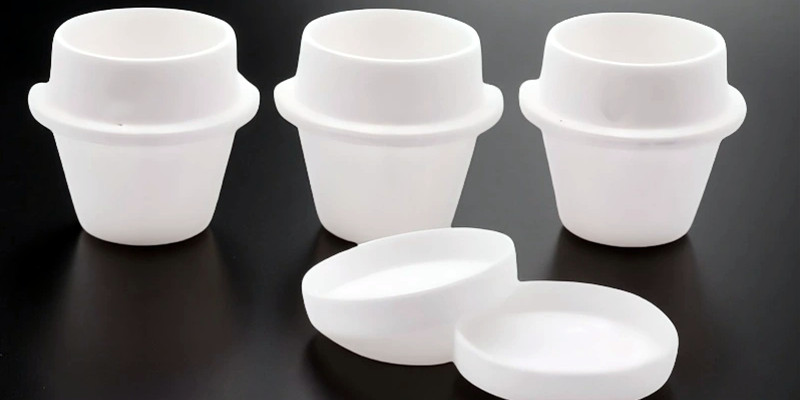
Open vs. Lidded Alumina Crucibles: Size and Gas Flow Interaction
Open crucibles maximize gas exchange, which benefits oxidation and combustion studies. However, higher gas velocities can increase convective cooling at the sample surface.
In contrast, lidded crucibles restrict flow and dampen turbulence, reducing size-/flow-dependent oxidation-rate scatter in controlled tests — confirm on method RFQ. Size plays a critical role here, as larger volumes trap evolved gases more effectively. Therefore, lid selection should align with both crucible size and reaction mechanism.
How Crucible Size Affects Gas Exchange and Reaction Kinetics
Larger crucibles increase diffusion path length for evolved gases. In nitrogen atmospheres, this can delay volatile removal by several seconds.
Experimental comparisons indicate that doubling crucible volume may slow apparent reaction rates in a size-/flow-dependent way under identical conditions — confirm on method RFQ. Consequently, kinetic interpretations must account for size-induced gas transport limitations to avoid underestimating reaction rates.
Atmosphere–Size Interaction Summary
| Atmosphere | Size Sensitivity | Primary Effect |
|---|---|---|
| Air | Medium | Oxidation rate variability |
| Nitrogen | High | Volatile diffusion delay |
| Reactive gases | High | Secondary reactions |
How to Choose the Right TGA Alumina Crucible Size for Your Application
After geometry and atmosphere are understood, crucible selection should follow application logic rather than habit. Therefore, size decisions are best made by matching experimental objectives to physical constraints.
Small Samples vs. Large Samples: Matching Crucible Size to Sample Mass
Small samples benefit from minimal dead volume and rapid heat transfer. For instance, 3–5 mg samples placed in 70 µL crucibles typically reach equilibrium quickly and produce sharp transition signals.
Conversely, loading 20 mg into the same crucible risks layering and uneven heating. In such cases, 85 µL designs distribute material more evenly and reduce thermal gradients. Thus, maintaining consistent mass-to-volume ratios supports reproducible outcomes.
Decomposition, Oxidation, and Residue Analysis: Size-Specific Considerations
Decomposition studies emphasize fast and uniform heat transfer. Smaller crucibles minimize gradients and reduce reaction delay.
Residue analysis, however, prioritizes containment and surface stability. Larger crucibles limit spillage and enable uniform ash formation. Therefore, analytical goals should dictate size choice rather than convenience.
High-Temperature Runs: Size Selection Under Thermal Stress
At process-/duty-typical temperatures above about 1200 °C (with high-purity selection ceilings near 1600 °C — not an all-grade TGA contract T), thermal expansion becomes significant. Larger crucibles experience higher absolute expansion, which can affect seating and balance stability.
Field experience consistently shows that mid-range sizes, particularly 70–85 µL, maintain dimensional stability better than oversized variants. Hence, extreme volumes are rarely optimal for sustained high-temperature programs.
Reusability and Cleaning: Does Size Change the Equation?
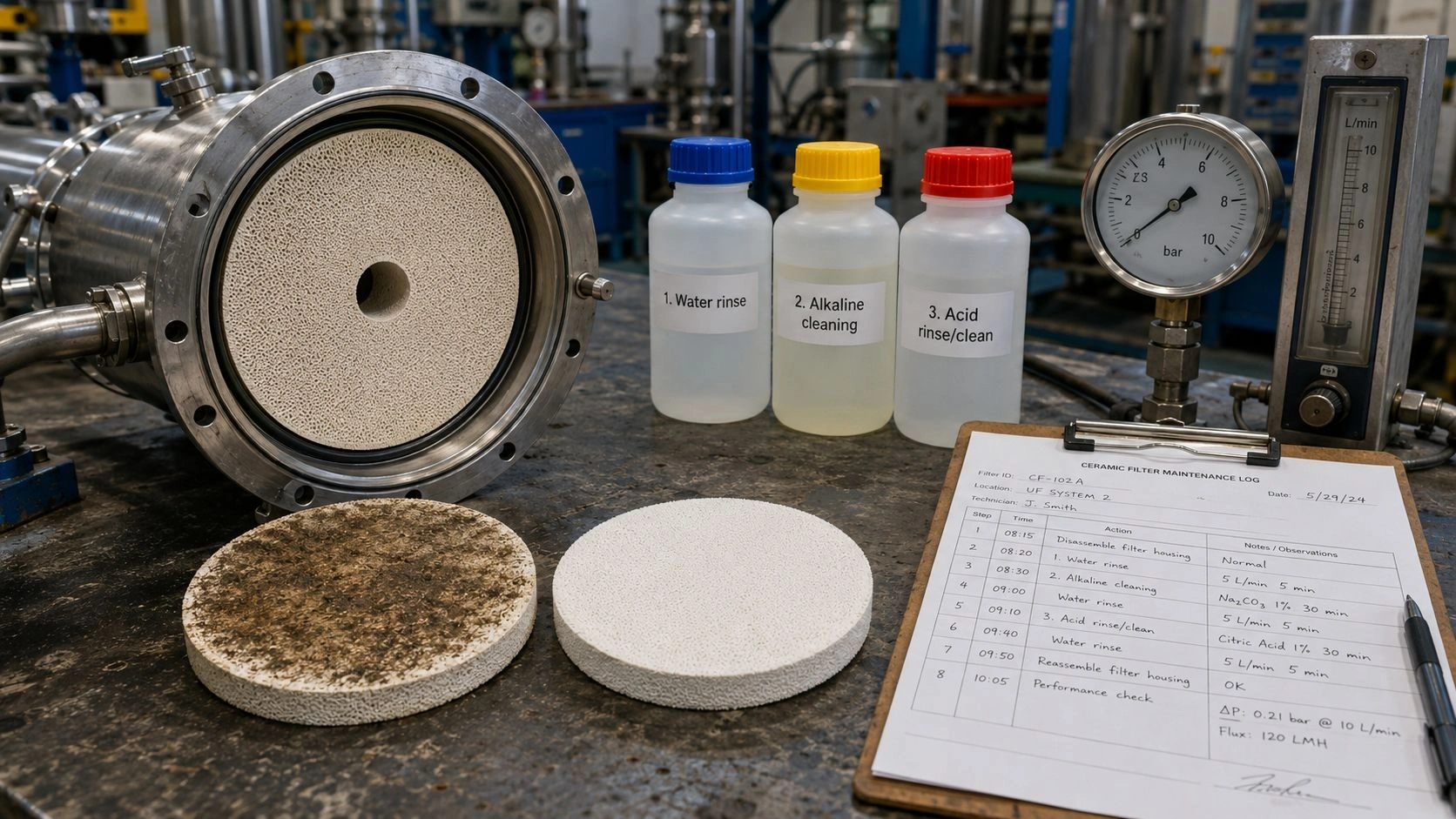
Crucible reuse is rarely limited by “number of washes” alone; instead, it is governed by how cleaning and re-firing gradually change surface state and baseline behavior. Consequently, the real question is not whether the outer size visibly shrinks, but whether repeated cleaning alters mass stability, wettability, and residue carryover in ways that matter to TGA curves.
-
Does repeated cleaning change crucible size in practice?
Dimensional change is usually not the primary failure mode for high-fired alumina crucibles. Nevertheless, after 10–20 thermal cleaning cycles above process-typical temperatures around 800 °C, minor surface densification and edge rounding can be observed, and the effect is more noticeable at the rim than the body. In typical laboratories, any size shift is often below 0.05–0.10 mm, yet baseline drift can still appear even when geometry looks unchanged. Therefore, performance monitoring should focus on baseline and mass stability rather than visual dimensional checks alone. -
Long-term repeatability: what actually drifts after many reuses
The most common drift mechanism is residual mass carryover rather than dimensional drift. Over 20 reuse cycles, residual buildup can exceed 1 mg if deposits are not fully removed, and this often correlates with baseline instability and apparent changes in low-level mass-loss regions. Moreover, aggressive chemical cleaning may leave trace salts that shift early-stage curves in sensitive runs below 10 mg loading — confirm on method RFQ. Accordingly, periodic re-firing, controlled rinsing, and a discard threshold based on baseline behavior are more effective than relying on appearance.
Ultimately, crucible size changes only marginally, yet cleaning-driven surface and residue effects can still alter results; therefore, repeatability should be managed through size-matched cleaning discipline and baseline-based acceptance limits.
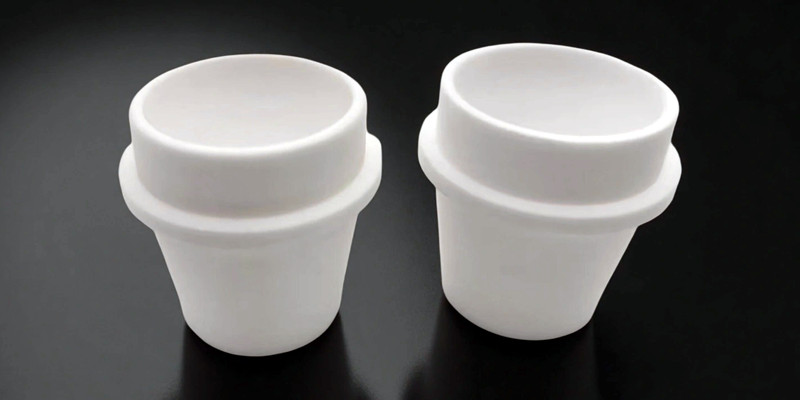
When Standard TGA Alumina Crucible Sizes Are Not Enough
Standard sizes cover most workflows, yet edge cases still appear in real laboratories. Therefore, non-standard geometry becomes relevant when sample form, reaction behavior, or handling constraints repeatedly compromise repeatability.
-
Non-standard sample shapes and special research requirements
Elongated fibers, thin films, and layered substrates often sit unevenly in standard cups. Consequently, mass distribution becomes inconsistent, and onset points may drift by 2–4 °C between runs at 10 °C/min. In particular, a wider mouth or a shallower profile can reduce stacking effects, which improves repeatability. -
Pilot studies and method development using custom sizes
Early-stage method development frequently involves screening 30–60 samples per week, and small mismatches quickly amplify variability. Moreover, when the same material is tested at process-typical rates such as 5, 10, and 20 °C/min, inconsistent bed height can widen size-/loading-dependent mass-loss scatter — confirm on method RFQ. As a result, custom sizes are often used to lock sample geometry before finalizing SOPs.
Ultimately, customization becomes a practical tool when standard crucibles repeatedly limit data comparability.
Size RFQ checklist for non-standard TGA alumina crucibles
When catalog sizes cannot lock sample geometry, a brand-free Size RFQ checklist keeps volume, outer diameter/height, wall/bottom geometry, empty-mass band, lid/robot needs, atmosphere, and instrument holder model on one drawing package. Engineering-driven size matching is often the fastest route to remove recurring artifacts without changing core methods. For non-standard volume·geometry·instrument-fit RFQ support, see custom ceramic services.
-
Drawing-based size matching
A target volume and geometry can be defined from a drawing or physical sample. Consequently, repeated seating and loading behavior becomes predictable, and baseline stability typically improves within 5–10 validation runs. In addition, dimensional checks can be aligned with the same parameters engineers already control in SOPs. -
Batch consistency control
Crucibles can be produced with controlled outer diameter, height, and empty mass consistency. Therefore, balance noise can be kept low, and baseline drift risk is reduced when multi-day programs exceed 8–12 hours per run. Notably, sets controlled within ±2 mg empty-mass variation are typically easier to standardize across operators. -
Application-linked surface and firing options
Surface condition and pre-firing practices can be selected to minimize initial mass change. Consequently, early-stage curves become cleaner, especially in low-mass tests below 5 mg where artifacts are amplified. Likewise, these options help maintain repeatability in high-temperature sequences approaching high-purity selection ceilings near 1600 °C — confirm grade + duty; not an all-grade TGA contract T.
Accordingly, custom sizing is best positioned as an engineering solution for repeatability, not a deviation from standard practice.
TGA / DSC Instrument × Alumina Crucible Size Fit Matrix
This matrix consolidates catalog-class / as-published instrument-fit rows from supplier product pages. It is a selection aid for RFQ screening — confirm fit on buyer instrument + drawing RFQ — not a universal compatibility guarantee. Final fit still depends on holder geometry, lid/robot options, and engineering review. Rows marked Strong include specific instrument models (and usually OEM part numbers) as shown on-site; brand-only rows are omitted here.
Source product pages: DSC alumina crucibles (TGA≠DSC shunt) · TGA alumina crucible · money page alumina crucibles · custom ceramic services.
NETZSCH (strong evidence)
| Catalog item | Capacity | Compatible instruments (as on page) | OEM / Part No. |
|---|---|---|---|
| AT-NA-071 / AT-NA-074 | 85 µL | DSC 204 F1 Phoenix; DSC 200 F3 Maia; DSC 3500 Sirius; DSC 214 Polyma; TG 209 F1 Libra; TG 209 F3 Tarsus; STA 449 F1/F3/F5 Jupiter; DSC 404 F1/F3 Pegasus | 399.972 / GB399972 (cup); 399.973 / GB399973 (lid, AT-NA-073) |
| AT-NA-077 / 078 / 079 | 300 µL (±lid) | TG 209 F1 Libra; TG 209 F3 Tarsus | NGB803698 / NGB808209 |
| AT-NA-080 / 081 / 082 | 350 µL (±lid) | TG 209 F1 Libra; TG 209 F3 Tarsus | NGB800453 / NGB800454 |
| AT-NA-085-1 | 0.15 mL | STA 449 F1/F3 Jupiter; DSC 404 F1/F3 Pegasus | GB399147 |
| AT-NA-087 | 0.2 mL | DSC 404 F1/F3 Pegasus; STA 449 F1/F3/F5 Jupiter | GB445172 |
| AT-NA-086 | 0.3 mL | DSC 404 F1/F3 Pegasus; STA 449 F1/F3/F5 Jupiter | NGB810411 |
| AT-NA-088 / 088-01 | 3.4 / 5 mL | STA 449 F1/F3/F5 Jupiter | GB445213 / NGB809163 |
TA Instruments (strong evidence)
| Catalog item | Capacity | Compatible instruments (as on page) | OEM / Part No. |
|---|---|---|---|
| AT-TA-022 / 024 | 90 µL | SDT Q600 / SDT 2960 | 960070.901 / 961060.901 (cup); 960239.901 (lid) |
| AT-TA-025 / 026 | 40 µL | SDT Q600 / SDT 2960 | 960072.901 (+ lid 960239.901) |
| AT-TA-027 | 100 µL | DTGA / Q5000 IR / TGA-HP50 / VTI-SA | 957329.903 |
| AT-TA-028 | 100 µL | Q500 / Q50 / TGA2950 / 2050 / TGA-HP50 / VTI-SA | 952018.907 |
| AT-TA-032 | 100 µL | DTGA / Q5000R | 957329.903 |
| AT-TA-033 | 250 µL | Q5000 IR | 957329.904 |
| AT-TA-035 | 500 µL | TGA 2950 / 2050 | 952018.91 |
Mettler Toledo / PerkinElmer / Shimadzu (strong evidence excerpt)
| Brand | Catalog item | Capacity | Compatible (as on page) | OEM / Part No. |
|---|---|---|---|---|
| Mettler | AT-MA-003 | 70 µL | Mettler | 30244541 |
| Mettler | AT-MA-004 | 70 µL + lid | Mettler TGA / sample robot | ME-00024123 |
| Mettler | AT-MA-007 | 150 µL + lid | Mettler E / sample robot | ME-00024124 |
| PerkinElmer | AT-PA-133-1 | 20/40 µL | DSC 6000, 8000, Pyris 1, Jade, 4000, Diamond, DSC 6, 8500, Pyris 6, DSC 7 | PE-N5190180 |
| PerkinElmer | AT-PA-134 | 250 µL | TGA6 / As6 / STA 8000, TGA 4000, STA 6000 | PE-N5200045 / PE-N5200040 |
| Shimadzu | AT-DA-098 / 099 | 25 µL (±lid) | DSC-50/50Q/50V, DTA-50, TGA-50/50H, TGA-51/51H, DSC-60 / DTG-60, DSC-60 plus | 201-54321 |
| Shimadzu | AT-DA-099-1 | 90 µL | DSC-60 / plus, TGA-50/51, DTG-60, DTA-50 | 201-54321-01 |
| Shimadzu | AT-DA-101 | 850 µL | TGA-51 series | 201-56825-90 |
RFQ tip: send instrument model, holder/lid/robot requirement, target volume, and (if replacing OEM) the OEM part number. Confirm fit on buyer instrument + drawing RFQ — not a universal compatibility guarantee. Brand-only matches without a model are not treated as hard compatibility claims.
Request TGA alumina crucible size review · non-standard volume·geometry·instrument-fit RFQ
Practical checklist: TGA alumina crucible size RFQ
Use this brand-free short checklist before you change size class or place an RFQ:
- ☐ Target signal (onset vs residue) and sample mass band without bed instability
- ☐ Catalog-class volume + OD/height/wall/bottom — confirm instrument holder + drawing RFQ
- ☐ Atmosphere / lid / flow path interaction with chosen size
- ☐ Duty temperature vs grade (1600 °C = high-purity selection ceiling, not all-grade contract T)
- ☐ Empty-mass consistency and cleaning/reuse acceptance limits
- ☐ Instrument model + OEM P/N if replacing — confirm fit, not a universal guarantee
Conclusion
In essence, TGA alumina crucible sizes shape thermal accuracy, data repeatability, and experimental reliability. Selecting size deliberately — volume, geometry, atmosphere, and instrument-fit — ensures that measured behavior reflects materials, not artifacts.
If consistent results matter, evaluate crucible size as carefully as temperature programs. For standard TGA size catalog screening see TGA alumina crucible; for TGA crucible size RFQ on the money page see alumina crucibles; for non-standard volume·geometry·instrument-fit RFQ see custom ceramic services.
Related reading
- How to clean TGA alumina crucibles — When residue or baseline drift after reuse should gate cleaning method before you change crucible size
- How to remove iron from alumina crucible in TGA — When Fe contamination artifacts dominate the curve and size changes alone will not fix the signal
- TGA alumina crucibles for thermal analysis — When you still need the broader TGA crucible scene (purity/atmosphere/duty) after locking a size class
FAQ
How much sample should be loaded into a 70 µL TGA alumina crucible?
Typically about 5–15 mg is a common screening load for a catalog-class 70 µL holder — confirm on instrument method RFQ.
Does crucible size affect reaction onset temperature?
Yes. Larger volumes may delay apparent onset by several seconds at higher process-typical heating rates — atmosphere-/instrument-dependent; confirm on method RFQ.
Can one crucible size be used for all atmospheres?
Not ideally. Size interacts with gas flow, so atmosphere-specific optimization is recommended.
Are custom sizes useful outside pilot studies?
They are beneficial whenever standard geometries compromise sample representativeness or handling.
References:
-
Understanding internal thermal equilibrium is crucial for optimizing heating processes and ensuring consistent results in experiments. ↩
-
Exploring ways to minimize onset temperature deviations can enhance the accuracy and reliability of thermal studies. ↩
-
Understanding these studies can enhance your knowledge of thermal analysis and its applications in various scientific fields. ↩