High-performance ceramics frequently fail when property assumptions oversimplify real conditions; consequently, zirconia ceramics demand a precise property-level understanding to avoid structural, thermal, or chemical misapplication.
Zirconia ceramics exhibit an uncommon combination of strength, thermal stability, electrical behavior, and chemical endurance. Property assumptions that ignore grade, temperature, and environment are a common path to structural, thermal, or chemical misapplication — so the sections below stay on performance boundaries and practical limits, not a catalog tour.
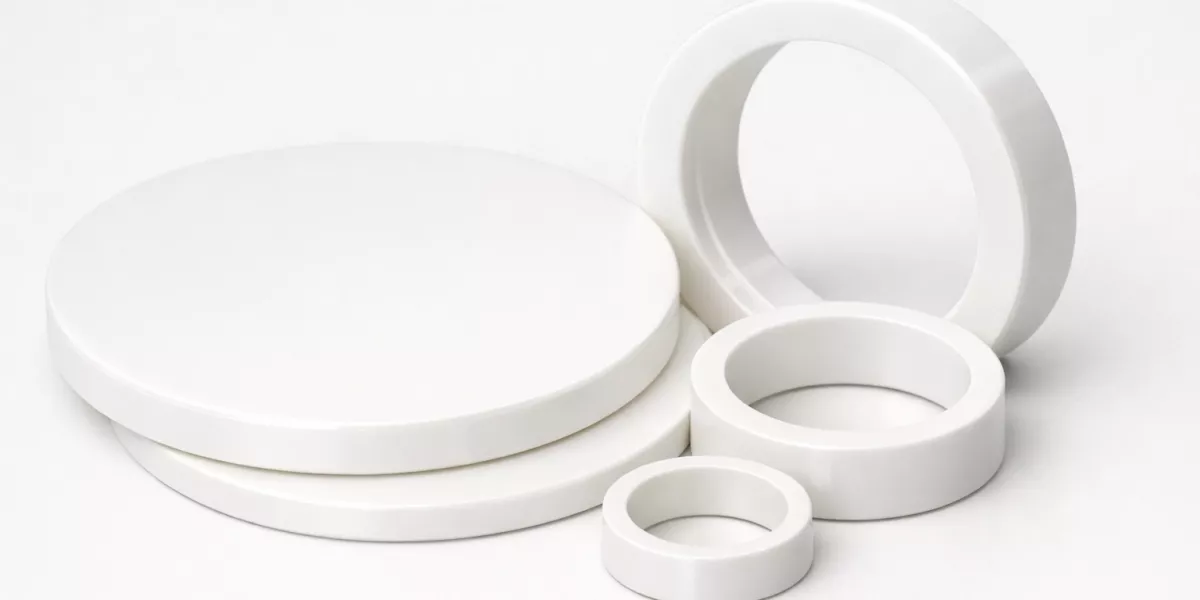
Before individual property domains are examined, a concise material-level orientation is necessary; therefore, the following section establishes essential crystallographic and classification references to anchor subsequent discussions without diverting analytical focus.
Zirconia ceramic properties are often queried at a high level by engineers seeking fast orientation; accordingly, this opening section provides a compact reference framework to support accurate interpretation of later mechanical, thermal, electrical, and chemical analyses.
Introductory Overview of Zirconia Ceramic Properties
Zirconia ceramics occupy a distinctive position among advanced oxides because structural, thermal, and functional behaviors are tightly coupled to crystal structure and stabilization chemistry. Consequently, even brief familiarity with these fundamentals improves interpretation of property data presented later.
-
Crystallographic nature of zirconium dioxide
Zirconium dioxide exists in monoclinic, tetragonal, and cubic crystal forms depending on temperature and stabilizer content. At room temperature, the monoclinic phase dominates in pure zirconia, exhibiting a theoretical monoclinic density near 5.68 g/cm³ (crystallographic context only; product densities follow the grade table) and a relatively high volumetric expansion during phase change. However, controlled stabilization suppresses spontaneous transformation, thereby enabling mechanical reliability under operational stress. As a result, crystallography becomes a silent but decisive factor behind observed zirconia ceramic properties. -
Classification of zirconia ceramics by stabilizing systems
Stabilized zirconia systems are commonly categorized as yttria-stabilized zirconia, magnesia-stabilized zirconia, and calcia-stabilized zirconia, each producing a different balance of toughness, conductivity, and thermal behavior. Yttria-stabilized compositions typically retain over 90% tetragonal or cubic phase at ambient conditions, while magnesia-stabilized variants favor high-temperature dimensional stability. Nevertheless, stabilizer concentration directly influences oxygen vacancy density, which subsequently affects electrical and thermal responses. Therefore, classification by stabilization chemistry provides a practical shorthand for anticipating zirconia ceramic properties across service environments.
In other words, this overview serves as a structural compass rather than a full explanation, enabling the following sections to focus entirely on measurable property behavior without recurring foundational digressions.
Zirconia Ceramics Mechanical Properties Under Structural Stress
Mechanical performance remains the most scrutinized dimension of zirconia ceramic properties, largely because structural failure is often abrupt and unforgiving. Across load-bearing environments, zirconia distinguishes itself by combining high intrinsic strength with an unusual resistance to catastrophic fracture, a pairing rarely observed in oxide ceramics. Such behavior does not arise from a single parameter but from an interlocked set of strength, toughness, hardness, and fatigue responses that must be interpreted together rather than in isolation.
Strength and Fracture Toughness Characteristics of Zirconia Ceramics
Measured flexural strength of dense zirconia ceramics typically is grade-dependent at room temperature (see the stabilizer-system table; 3Y-TZP typically 800–1000 MPa at 20 °C), exceeding alumina by a substantial margin under comparable density conditions. This elevated strength originates from fine grain size control, often below 0.5 μm, which limits critical flaw dimensions within the microstructure. As a result, stress concentration sensitivity decreases, allowing zirconia to sustain higher applied loads before crack initiation.
Fracture toughness further differentiates zirconia from conventional brittle ceramics. Values between 6 and 10 MPa·m¹ᐟ² are commonly reported for partially stabilized systems, whereas fully stabilized variants maintain slightly lower but still exceptional resistance. During mechanical loading, localized stress at crack tips can trigger limited crystallographic rearrangement, consuming strain energy that would otherwise drive crack propagation. Such energy dissipation alters the classical brittle fracture pathway expected of oxide ceramics.
From repeated observations in high-load fixtures and rotating assemblies, fracture surfaces frequently display shortened crack lengths and deflected propagation paths rather than clean cleavage planes. These features reflect a material response designed to resist sudden failure, reinforcing why zirconia ceramic properties are often selected where safety margins must remain predictable under peak stress.
Hardness Wear Resistance and Contact Damage Behavior
Zirconia ceramics exhibit grade-typical Vickers hardness in the stabilizer-system table, positioning them below silicon carbide yet above most alumina grades used in structural roles. This hardness level provides sufficient resistance against abrasive particles while avoiding excessive brittleness associated with ultra-hard ceramics. Consequently, surface integrity can be maintained under sliding or rolling contact without rapid microcrack formation.
Wear testing under dry and lubricated conditions consistently demonstrates low material removal rates, often below 10⁻⁶ mm³/N·m in pin-on-disk configurations. Such performance arises from a balance between surface hardness and subsurface toughness, which suppresses chipping at asperity contacts. Instead of generating loose debris, zirconia surfaces tend to polish gradually under controlled abrasion.
In practical mechanical interfaces, contact damage frequently manifests as shallow indentation marks rather than radial crack networks. These observations underline a key attribute of zirconia ceramic properties: resistance to localized damage does not rely solely on hardness, but on the ability of the surrounding microstructure to accommodate contact stress without unstable fracture.
Fatigue Performance Within Zirconia Ceramics Mechanical Properties
Cyclic loading introduces a different class of mechanical challenge, where subcritical crack growth1 rather than immediate fracture governs service life. Zirconia ceramics require grade-specific fatigue qualification against static flexural strength when subjected to millions of loading cycles. Such retention is uncommon among oxide ceramics and reflects controlled crack tip shielding mechanisms active under repeated stress.
Long-duration fatigue and slow crack growth must be qualified for the selected grade and surface condition; this overview does not publish a universal crack-growth-rate band. In contrast, many brittle ceramics exhibit accelerated failure once cyclic stress exceeds modest thresholds.
Experience from high-speed rotating components and reciprocating assemblies shows that fatigue-induced failure, when it occurs, tends to initiate from surface flaws introduced during machining rather than from intrinsic bulk defects. Therefore, mechanical reliability depends not only on bulk zirconia ceramic properties but also on surface preparation quality and residual stress control.
Mechanical Property Limits and Failure Envelopes
Despite their robustness, zirconia ceramics are not immune to mechanical limitations. Tensile stress states remain particularly critical, as ceramics fundamentally tolerate compressive loading more effectively than tensile forces. Once tensile stress exceeds the critical fracture threshold, failure remains sudden, underscoring the need for conservative stress design.
Temperature elevation further narrows the mechanical safety envelope. At elevated temperature, flexural strength is grade- and load-dependent; treat high-temperature strength as case-qualified rather than a fixed percentage drop from the room-temperature band.
Field analyses of fractured zirconia components often reveal combined stress origins rather than singular overload events. Mechanical failure typically emerges from an intersection of surface damage, cyclic loading, and thermal gradients. Understanding these boundaries ensures zirconia ceramic properties are leveraged within their genuine mechanical domain rather than assumed to be universally tolerant.
Summary of Zirconia Ceramics Mechanical Properties
| Property | AD-ZRO-3Y (3Y-TZP) |
AD-ZRO-8Y (8Y-FSZ) |
AD-ZRO-MG (Mg-PSZ) |
AD-ZRO-CA (Ca-PSZ) |
|---|---|---|---|---|
| Density (g/cm³, typical) | 6.00–6.08 | 5.90 | 5.70–5.80 | 5.60–5.75 |
| Flexural strength (MPa, 20°C, typical) | 800–1000 | 300 | 500–755 | 400–600 |
| Fracture toughness KIc (MPa·m½, 20°C, typical) | 7.2–9.0 | 3.5–4.0 | 6–12 | 5–8 |
| Vickers hardness (GPa, typical) | 12.5 | 12.3 | 11.5 | 10–11 |
| First-use cue | Structural / wear | Oxygen-ion / functional | Toughness / cycling | Dense / refractory config |
Values are grade-family selection data (stabilizer systems). Do not blend them into one unnamed wide band. Pure monoclinic theoretical density ~5.68 g/cm³ is crystallographic context only — not a product density target.
For the same grade matrix on product pages, see the zirconia grade properties block on the zirconia tube or zirconia crucible page.
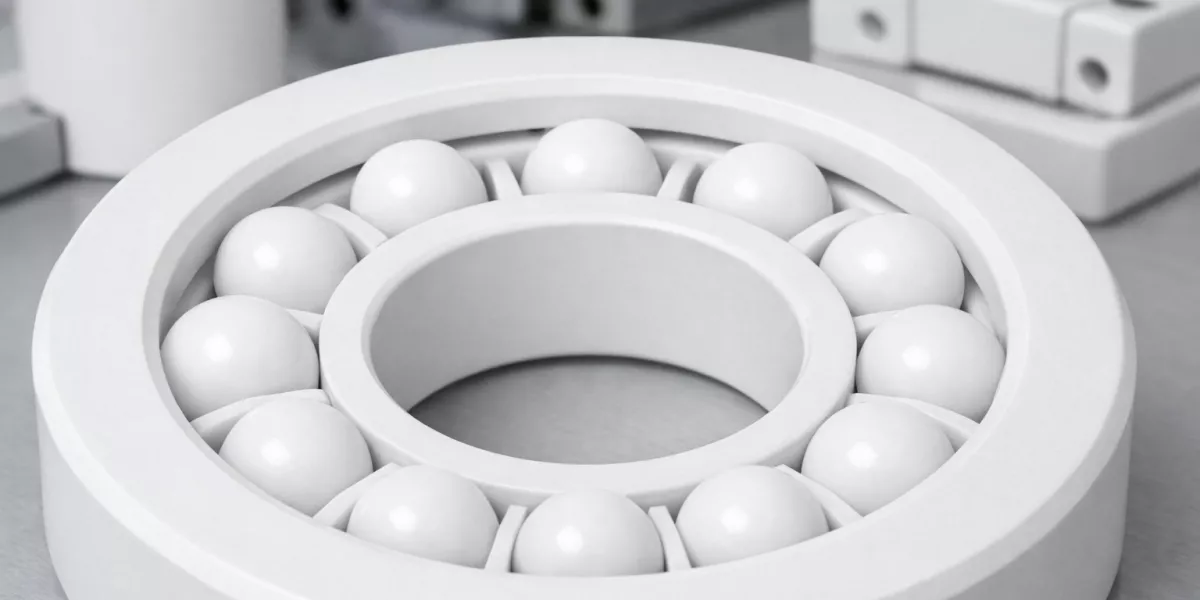
Zirconia Ceramic Thermal Properties Across Temperature Regimes
Thermal response governs whether zirconia ceramics maintain dimensional stability or drift into stress-driven failure as temperature varies. Within broad operating ranges, heat exposure reshapes mechanical margins, transport behavior, and interface compatibility, making thermal properties inseparable from structural reliability.
High Temperature Stability as a Zirconia Ceramic Thermal Property
Zirconia remains a high-temperature oxide family; continuous service temperature is not screened from a single melting-point claim and must be qualified for grade, load, and atmosphere. Structural integrity remains largely intact well beyond 1,000 °C, provided grain growth and phase redistribution remain controlled. Such stability allows zirconia components to retain load-bearing capability where many alumina grades soften or lose stiffness.
Sustained exposure to elevated temperature, however, introduces time-dependent deformation. Creep at high temperature is case-specific; do not screen designs from a single creep-rate number on this overview. Grain boundary diffusion governs this response, meaning purity and stabilizer distribution strongly influence long-term dimensional accuracy.
Observations from furnace fixtures and thermal barrier components consistently show that catastrophic thermal collapse is rare. Performance degradation tends to occur gradually, allowing inspection-based intervention before structural loss becomes critical.
Thermal Conductivity Characteristics of Zirconia Ceramics
Thermal conductivity represents a defining contrast between zirconia and many alternative ceramics. Dense structural zirconia grades show low thermal conductivity that is grade-dependent at room temperature (see the structural thermal table); do not screen insulation duty from a single unnamed band. Such low heat transfer arises from lattice distortion and phonon scattering associated with stabilizer-induced defects.
Restricted heat flow creates strong temperature gradients under rapid heating. While this behavior enhances insulation capability, it simultaneously elevates internal stress when temperature changes abruptly. Therefore, zirconia ceramic thermal properties favor controlled heating profiles rather than rapid thermal ramping.
In comparative assemblies, zirconia often functions as a thermal barrier adjacent to metals or conductive ceramics. Heat localization rather than dissipation becomes the dominant design outcome, which must be anticipated during component integration.
Thermal Expansion Behavior and Mismatch Sensitivity
Coefficients of thermal expansion for zirconia ceramics typically fall between 10.0 and 11.5 ×10⁻⁶ K⁻¹ across ambient to intermediate temperatures. Such values exceed those of alumina and silicon carbide, reducing mismatch stress when paired with steels or superalloys. As a result, zirconia interfaces often exhibit improved adhesion stability during thermal cycling.
Excessive mismatch remains problematic when zirconia is bonded to low-expansion substrates. Interfacial shear stress can accumulate during heating, particularly across rigid joints. Measurements of bonded assemblies show stress concentrations rising sharply once differential expansion exceeds 0.15%.
Operational evidence indicates that expansion-driven failure tends to initiate at corners and geometric discontinuities. Rounded transitions and compliant interlayers frequently extend service life by redistributing expansion-induced strain.
Thermal Shock Resistance Limits
Resistance to thermal shock depends on the interaction between thermal conductivity, expansion, and fracture toughness. Thermal-shock tolerance is grade- and geometry-dependent; qualify quench/ramp limits on the actual part rather than a single ΔT band, and do not treat zirconia as interchangeable with silicon nitride or silicon carbide shock margins.
Rapid cooling generates tensile stress at the surface while the interior remains hot. Zirconia’s fracture toughness mitigates crack initiation, yet repeated shock cycles progressively degrade surface integrity. Microcracks accumulate rather than propagate catastrophically, altering stiffness before visible failure appears.
Field experience from laboratory furnaces and heated enclosures shows that failure seldom results from a single shock event. Instead, cumulative exposure gradually narrows the safe thermal window, reinforcing the need for controlled heating and cooling protocols.
Summary of Zirconia Ceramic Thermal Properties
| Property | AD-ZRO-3Y (3Y-TZP) |
AD-ZRO-MG (Mg-PSZ) |
AD-ZRO-CA (Ca-PSZ) |
|---|---|---|---|
| CTE (10⁻⁶/K, 40–80°C, typical) | 11 | 10.5 | 10.0–10.5 |
| Thermal conductivity (W/(m·K), 20°C, typical) | 3 | 2.5 | 2 |
| Specific heat (J/(g·K), typical) | 0.46 | 0.45 | 0.44–0.46 |
Structural thermal rows apply to 3Y / Mg / Ca selection families. Do not apply them blindly to 8Y-FSZ functional grades. Continuous-use temperature and thermal-shock margins require case qualification (load, atmosphere, cycle) — no single ΔT or melting-point claim is used as a universal screen here.
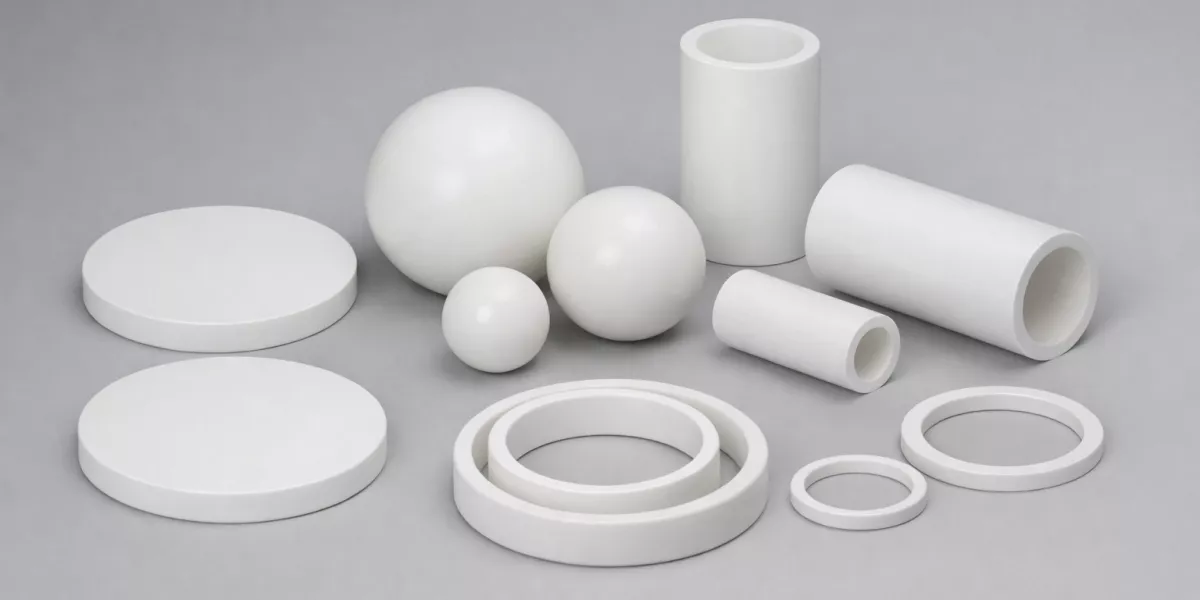
Zirconia Ceramic Electrical Properties in Insulating and Ionic Systems
Electrical behavior in zirconia ceramics emerges from lattice defects rather than free electrons, giving rise to a combination of insulation stability and temperature-activated ionic transport. Across electrical fields and elevated temperatures, charge movement remains tightly constrained, which explains why zirconia performs reliably in both insulating architectures and electrochemical environments.
Electrical Insulation Performance of Zirconia Ceramics
Dense structural zirconia grades exhibit volume resistivity typically >10¹⁴ Ω·cm at 20°C (see the grade table), placing them firmly within the class of high-resistivity oxide insulators. Dielectric breakdown strength is not used here as a universal screen; match insulation duty to grade and geometry. Such performance is sustained by the absence of free charge carriers and by a compact crystal lattice that limits electron mobility.
As temperature rises, resistivity gradually decreases rather than collapsing abruptly. Measurements near 600 °C often show resistivity remaining above 10⁷ Ω·cm, which preserves insulation functionality under moderate thermal stress. This gradual transition contrasts with polymeric insulators, which frequently exhibit sharp degradation once thermal thresholds are exceeded.
Experience from heater assemblies and electrically isolated supports indicates that insulation failure rarely initiates within the zirconia bulk. Breakdown events more often originate at contaminated surfaces or poorly finished interfaces, emphasizing that electrical zirconia ceramic properties depend on surface condition as much as intrinsic material behavior.
Oxygen Ion Conductivity as a Functional Electrical Property
Stabilized zirconia becomes electrically active through oxygen ion transport rather than electron conduction. Oxygen vacancy concentrations introduced by aliovalent stabilizers enable ionic mobility once thermal energy exceeds activation barriers. At elevated temperature, ionic conduction appears in fully stabilized functional grades once atmosphere and defect chemistry allow — specify those conditions on the RFQ.
Such conductivity increases exponentially with temperature, reflecting thermally activated hopping between lattice sites. Activation energy for ionic transport is grade- and atmosphere-dependent; confirm on the functional grade datasheet for the intended temperature rather than assuming a single overview value. Consequently, electrical response remains predictable across wide temperature intervals.
Operational observations from electrochemical cells reveal that ionic conduction remains stable over thousands of hours when grain boundary chemistry remains uniform. Degradation usually correlates with impurity segregation rather than intrinsic instability, highlighting the sensitivity of functional zirconia ceramic properties to compositional control.
Electrical Behavior Under Coupled Thermal and Electrical Loading
Simultaneous exposure to heat and electric fields introduces complex interactions within zirconia ceramics. Elevated temperature enhances ionic mobility, while sustained electric potential gradients can induce localized defect redistribution. Despite these effects, electrical degradation progresses slowly under controlled conditions.
Long-duration testing at 1,000 °C under DC fields below 1 V/mm typically shows conductivity drift remaining under 5% over 5,000 hours. Such stability supports predictable electrical performance during continuous operation. Microstructural examination often reveals minimal grain boundary alteration when impurity levels remain low.
Service records from sensor housings and insulating spacers show that electrical failure most often arises from thermal cycling rather than constant-field exposure. Repeated expansion and contraction can open microgaps at interfaces, indirectly affecting electrical continuity rather than altering bulk electrical zirconia ceramic properties.
Electrical Property Boundaries and Misapplication Risks
Electrical limitations emerge when zirconia ceramics are applied outside intended regimes. At lower temperatures, ionic conductivity becomes negligible, rendering zirconia unsuitable for applications requiring charge transport near ambient conditions. Conversely, excessive electric fields can trigger localized heating that accelerates defect migration.
AC field exposure introduces dielectric loss that should be confirmed for the intended frequency band rather than assumed from a single overview value. At higher frequencies, polarization lag can generate internal heating, narrowing safe operating margins. Such behavior underscores the importance of matching electrical excitation modes to material capability.
Failure analyses consistently show that misapplication rather than intrinsic weakness accounts for most electrical issues. Accurate interpretation of zirconia ceramic properties therefore depends on aligning temperature, field strength, and frequency with the underlying conduction mechanism.
Summary of Zirconia Ceramic Electrical Properties
| Property | AD-ZRO-3Y (3Y-TZP) |
AD-ZRO-MG (Mg-PSZ) |
AD-ZRO-CA (Ca-PSZ) |
|---|---|---|---|
| Volume resistivity (Ω·cm, 20°C, typical) | >10¹⁴ | >10¹⁴ | >10¹⁴ |
| Volume resistivity (Ω·cm, 300°C, typical) | 10⁶–10⁸ | 10⁸–10¹⁰ | 10⁷–10⁹ |
Structural grades above remain high-resistivity at room temperature. 8Y-FSZ is selected for oxygen-ion / solid-electrolyte duty; ionic acceptance is specified to operating temperature and atmosphere — not collapsed into a single room-temperature conductivity number on this overview.
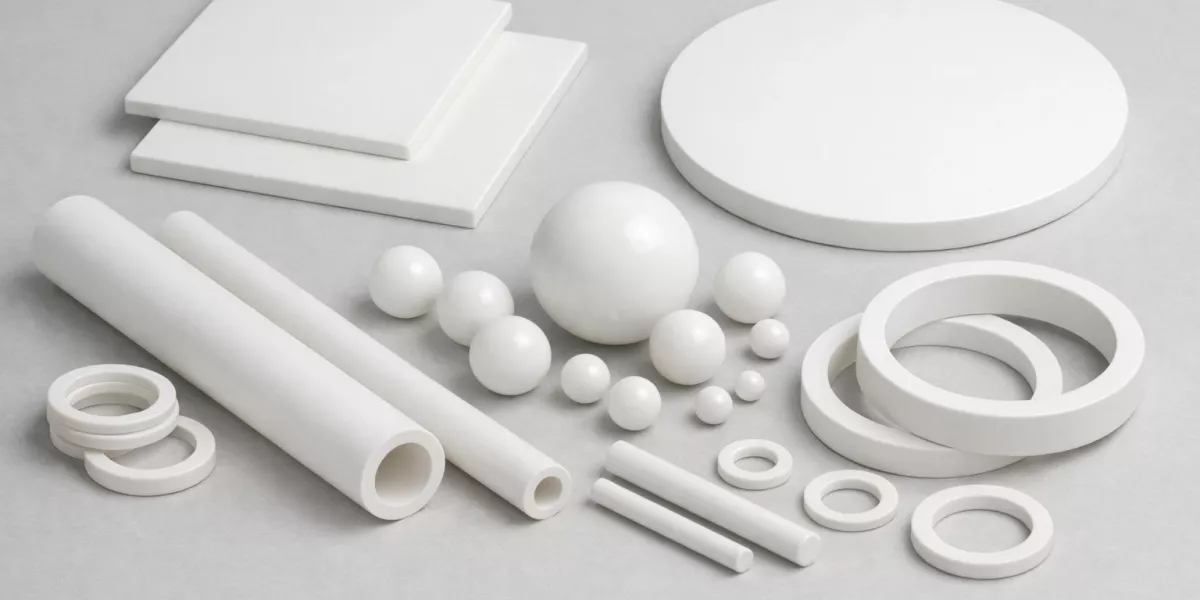
Zirconia Ceramic Chemical Resistance in Aggressive Environments
Chemical durability often defines whether zirconia ceramics retain structural integrity or experience gradual degradation when exposed to reactive media. Across acids, alkalis, molten phases, and humid atmospheres, resistance arises from strong Zr–O bonding and a dense oxide lattice, yet limits remain governed by temperature, chemistry, and exposure duration.
Acid and Alkali Resistance Within Zirconia Ceramic Chemical Properties
Zirconia ceramics demonstrate strong resistance to most inorganic acids at ambient and moderately elevated temperatures. Weight loss measurements in sulfuric and hydrochloric solutions commonly remain below 0.05 mg/cm² after 24 hours at 25 °C, indicating minimal dissolution. This stability stems from the low solubility of zirconium oxide and the absence of easily leachable secondary phases.
Alkaline environments impose a different challenge. Concentrated sodium or potassium hydroxide solutions can attack grain boundaries, particularly above 80 °C, where ionic diffusion accelerates. Mass change rates increase noticeably once hydroxide concentration exceeds 20 wt%, revealing a threshold beyond which chemical inertness diminishes.
Inspection of chemically exposed components frequently reveals smooth surface recession rather than pitting. Such uniform material loss preserves dimensional predictability longer than localized corrosion, illustrating a controlled degradation mode intrinsic to zirconia ceramic properties.
Corrosion Behavior in Molten Metals and High-Temperature Media
Contact with molten metals introduces combined chemical and thermal stress. Zirconia ceramics exhibit low wettability against aluminum, copper, and iron melts, with contact angles often exceeding 120° under inert atmospheres. Reduced wetting limits metal infiltration and slows interfacial reaction kinetics.
At temperatures above 1,200 °C, prolonged exposure can promote interfacial diffusion, especially in the presence of active elements such as magnesium or calcium. Reaction layers measuring several micrometers have been observed after extended dwell times, indicating gradual chemical interaction rather than immediate attack. Such layers often remain adherent, delaying structural compromise.
Operational records from casting and melt-handling systems show that failure rarely results from bulk dissolution. Instead, degradation typically initiates at joints or microcracks where molten media gain access to internal surfaces, underscoring the role of geometry and surface condition in chemical endurance.
Hydrothermal Interaction and Low Temperature Degradation
Exposure to water vapor introduces a distinct chemical aging mechanism in zirconia ceramics. At temperatures between 65 and 300 °C, moisture can penetrate grain boundaries, promoting localized phase destabilization in susceptible compositions. This phenomenon, often termed low temperature degradation2, manifests as surface roughening and microcrack formation.
Quantitative studies report flexural strength reductions of 10–30% after 100 hours in pressurized steam at 134 °C for poorly stabilized materials. In contrast, optimized compositions maintain strength loss below 5% under identical conditions, highlighting composition sensitivity. Chemical interaction proceeds slowly yet persistently, altering near-surface structure.
Field examinations of humid service environments reveal that degradation progresses inward over time rather than appearing uniformly. Such depth-dependent behavior reinforces the need to consider exposure duration alongside chemical composition when evaluating zirconia ceramic properties.
Chemical Resistance Limits and Environmental Exclusions
Despite broad inertness, zirconia ceramics are not universally resistant. Fluoride-containing acids, including hydrofluoric solutions, readily dissolve zirconium oxide, producing rapid material loss even at low concentrations. Strong alkali melts at elevated temperature also exceed safe chemical boundaries.
Combined chemical and mechanical stress further narrows tolerance windows. Erosive flow carrying reactive species accelerates surface removal, transforming slow chemical corrosion into measurable wear. Laboratory simulations demonstrate mass loss rates increasing by an order of magnitude under simultaneous abrasion.
Assessment of failed components consistently indicates that chemical misapplication rather than intrinsic weakness accounts for premature degradation. Accurate deployment of zirconia ceramic properties therefore requires careful matching of chemistry, temperature, and exposure mechanics.
Summary of Zirconia Ceramic Chemical Resistance
| Chemical Environment | Typical Resistance Behavior | Reference Condition |
|---|---|---|
| Inorganic acids | Minimal mass loss | 25 °C, 24 h immersion |
| Strong alkalis | Moderate grain boundary attack | ≥80 °C, ≥20 wt% |
| Molten metals | Low wettability, slow reaction | ≥1,200 °C, inert |
| Water vapor | Surface aging possible | 65–300 °C, humid |
| Fluoride media | Rapid dissolution | Ambient conditions |
Integrated Interpretation of Zirconia Ceramic Properties
Evaluation of zirconia ceramics becomes meaningful only when mechanical, thermal, electrical, and chemical attributes are considered as an interconnected system rather than isolated metrics. Each property domain exerts reciprocal influence, shaping performance boundaries that cannot be inferred from single-parameter comparisons. As a consequence, zirconia ceramic properties function as a coordinated profile in which enhancement of one characteristic often introduces constraints elsewhere.
When those boundaries point to a real part family, continue on the matching product page rather than treating this overview as a stock list: zirconia tube forms for containment and furnace duty, zirconia crucibles for melt contact, or the zirconia ceramics hub for other geometries.
-
Mechanical–thermal coupling within zirconia ceramics
High fracture toughness and strength allow zirconia to tolerate localized stress; however, relatively low thermal conductivity concentrates heat, amplifying thermal gradients under rapid heating. This interaction explains why mechanically robust components may still experience thermally induced stress accumulation. Controlled temperature transitions therefore remain essential to preserve structural margins. In essence, mechanical reliability is inseparable from thermal management. -
Electrical behavior shaped by thermal and chemical conditions
Electrical insulation stability persists across moderate temperature ranges, while ionic conductivity emerges only when sufficient thermal energy activates defect mobility. Chemical purity and grain boundary integrity influence both behaviors simultaneously, as impurity segregation alters resistivity and ionic transport. Consequently, electrical zirconia ceramic properties cannot be evaluated independently of thermal exposure and chemical environment. Performance consistency depends on maintaining equilibrium among these variables. -
Chemical resistance constrained by mechanical and thermal stress
Inertness toward acids and molten metals remains reliable under static conditions; nevertheless, mechanical abrasion or cyclic thermal expansion accelerates chemical interaction at exposed surfaces. Microcracks generated by stress create new reactive pathways, subtly shifting corrosion mechanisms. Chemical durability therefore reflects not only intrinsic bonding strength but also the mechanical and thermal history of the material.
Taken together, zirconia ceramic properties describe a balanced material system rather than a collection of extremes. Strength coexists with insulation, chemical stability aligns with thermal endurance, and each advantage carries operational boundaries. Understanding these interactions enables accurate performance expectation without overstating universal applicability.
Selection and RFQ fields for zirconia property reviews
Use this checklist when a property overview must turn into a reviewable inquiry. Ranges on this page are grade-dependent and typical unless tied to a named stabilizer system and test method.
- Stabilizer / grade family (e.g. 3Y-TZP, YSZ, MSZ, CSZ) and density class
- Maximum continuous temperature and peak excursion
- Atmosphere (air, vacuum, inert, reducing) and moisture exposure
- Chemical media (acids, alkalis, molten salts/metals) and exposure time
- Mechanical load, wear, cyclic fatigue, and impact risk
- Geometry family (tube, plate, ball/grinding media, crucible, custom)
- Critical dimensions, tolerance, and surface-finish needs
- Acceptance tests / validation method (strength, toughness, LTD, leak, wear)
Conclusion
Zirconia ceramics deliver exceptional performance when mechanical, thermal, electrical, and chemical properties are interpreted as a unified system rather than isolated strengths.
For projects requiring precise alignment between operating conditions and material behavior, a property-focused evaluation of zirconia ceramics supports reliable, long-term component performance.
FAQ
What distinguishes zirconia ceramic properties from other oxide ceramics?
Zirconia combines high fracture toughness with thermal stability and chemical inertness, a profile rarely achieved simultaneously in oxide materials.
Do zirconia ceramics remain electrically insulating at high temperature?
Electrical resistivity decreases gradually with temperature, yet insulation performance remains stable across moderate thermal ranges.
Are zirconia ceramics resistant to all chemical environments?
Most acids and molten metals pose limited risk, while fluoride media and strong alkali melts exceed safe chemical boundaries.
Does thermal shock limit zirconia ceramic usage?
Thermal shock tolerance exceeds many oxides but requires controlled heating and cooling to maintain long-term reliability.
References:
Related reading
- Zirconia ceramic density ranges — density band detail; not this four-domain overview
- Zirconia ceramics toughness by material system — toughness systems; keep fracture-toughness deep-dive there
- What is zirconia ceramic? — definition/education hub; this page stays on property boundaries