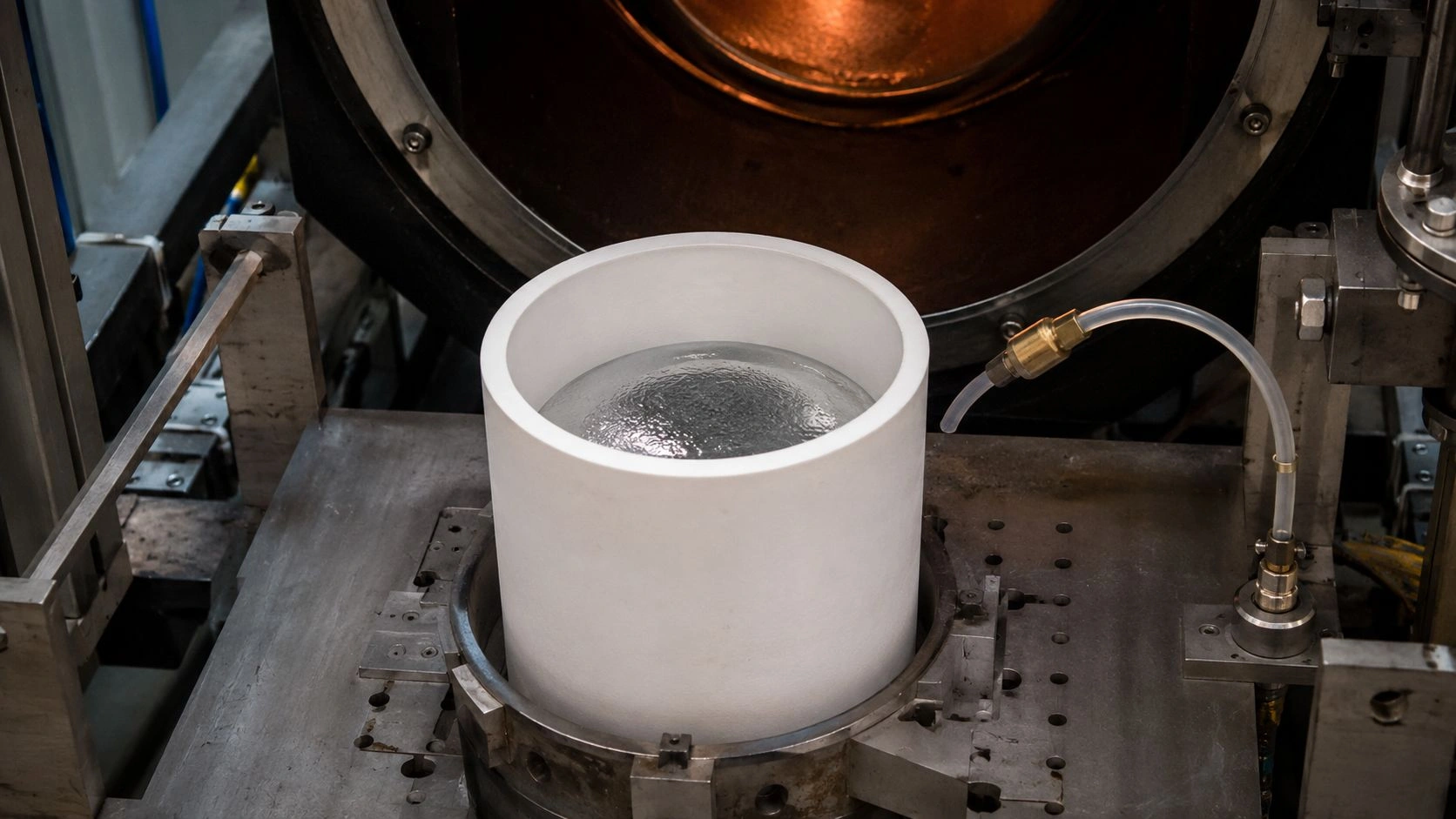
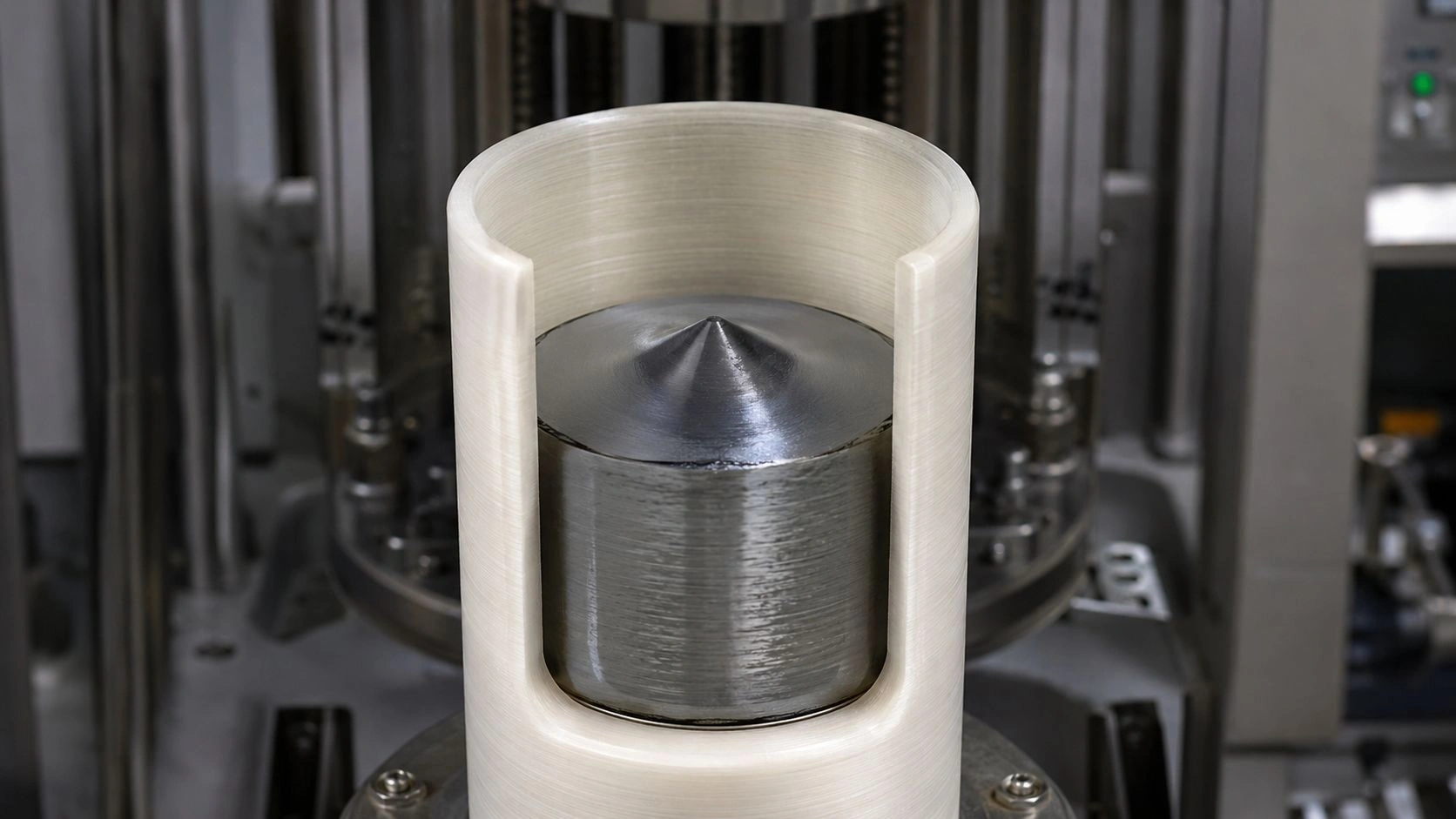
A buyer comparing boron nitride crucible quotes often sees prices from under $50 to near $1,000 on the same search page and reasonably asks whether those are the same part. They are not. BN crucible pricing is segmented by material route, envelope size, geometry complexity, tolerance, lid configuration, and whether the part ships from stock or is machined from a customer drawing. Understanding which of those levers applies to a specific process is what separates a useful budget estimate from a confused RFQ that produces non-comparable quotes. This guide gives the current price bands, the specifications that actually move a quote, the process conditions that justify the BN premium over alumina or graphite, and the RFQ inputs a supplier needs to price the part accurately on the first pass.
Boron Nitride Crucible Cost — Direct Answer
Boron nitride crucible cost ranges from roughly $35 for small stocked hot-pressed parts to $940 or more for pyrolytic BN (PBN) components, with size, material route, geometry complexity, tolerance, and stock-versus-custom status driving most of the quote-to-quote variance.
- Small stocked hot-pressed BN crucibles — approximately $35–$56
- Heater-matched or small application-specific BN crucibles — approximately $40–$153
- Medium machined hot-pressed BN crucibles — approximately $150–$395
- Large or tapered hot-pressed BN crucibles — approximately $350–$900
- Specialty PBN crucibles — around $940+
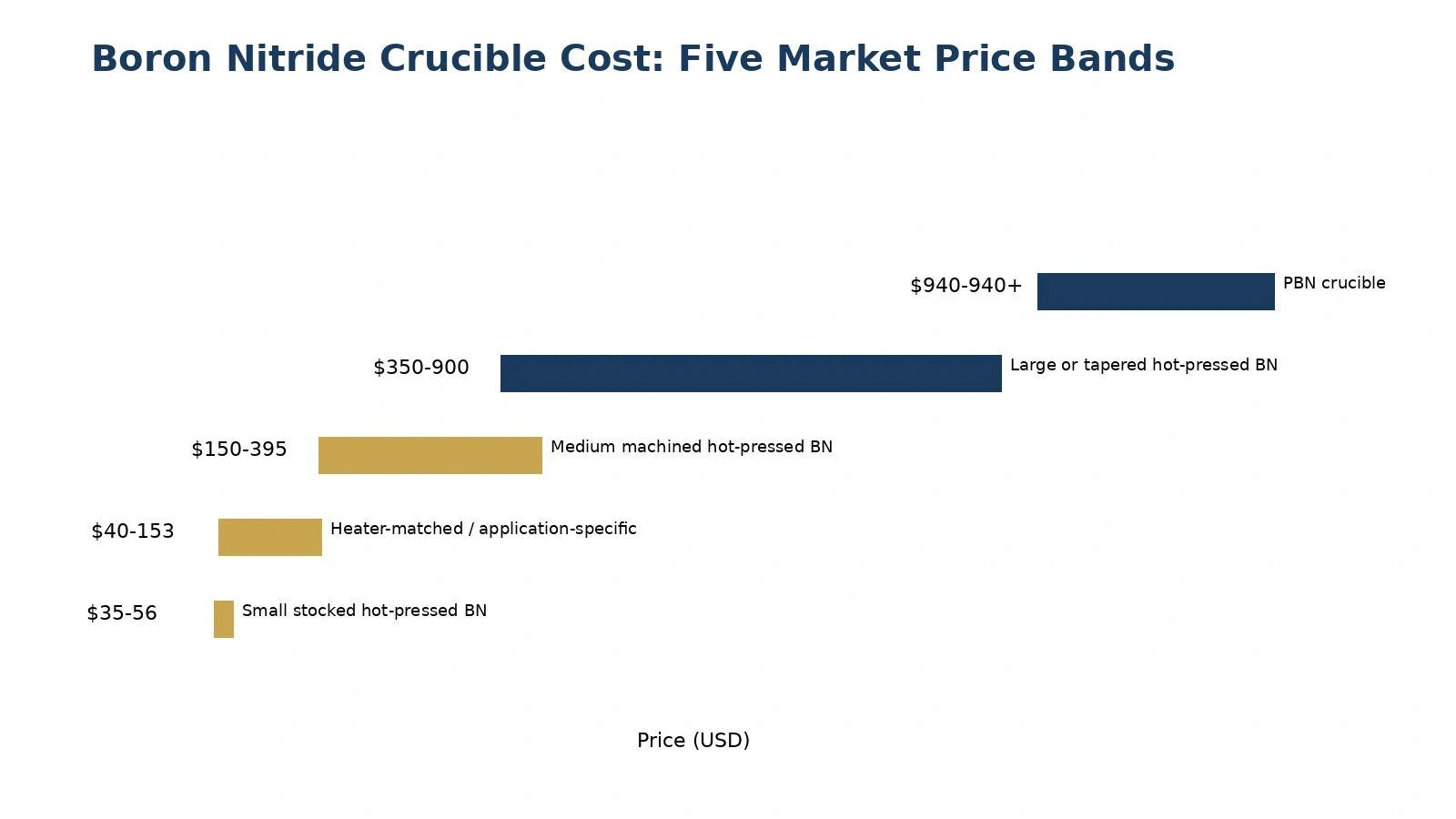
Five visible price bands in the current BN crucible market — the band a specific part falls into is decided by size, machining complexity, and whether the material is hot-pressed BN or PBN.
What Does a Boron Nitride Crucible Cost in the Current Market?
Current live listings show BN crucible pricing is segmented, not uniform. Small stocked hot-pressed parts begin in the mid-double-digit range. Heater-matched vacuum-source crucibles commonly sit between roughly $40 and $153 depending on the heater family and fit geometry. Standard machined BN99 cylindrical or tapered sizes move upward into $150, $350, $600, and $900 brackets as envelope size and wall complexity increase.
A reference custom hot-pressed BN crucible at 2 in OD × 3 in H is visible at $395.50. A PBN 25-50 crucible example lists at $940. The first framing question is therefore not "what is BN?" but whether the project is buying a $50 consumable, a mid-hundreds machined part, or a near-$1,000 specialty component.
Which Specifications Change Boron Nitride Crucible Price the Most?
The strongest price drivers are mechanical, not brand-related. Material route is first: hot-pressed BN and PBN sit in different manufacturing classes and different price brackets. Envelope volume is second — a larger OD or taller body adds raw material cost and machining hours proportionally. Geometry complexity adds another step: tapered bodies, stepped walls, heater-matched features, and balance holes each extend the machining and fit-control burden.
Tolerance class, lid configuration, and quote mode round out the cost structure. Tight tolerances require additional inspection and absorb a higher scrap rate; staged lids and matched assemblies add part count; drawing-based custom parts are priced from first principles rather than from a stock SKU. Choosing among BN material grades — standard HPBN versus high-purity HPBN versus PBN — is usually the single largest lever.
| Cost Driver | Lower-Cost State | Higher-Cost State |
|---|---|---|
| Material route | Hot-pressed BN | PBN |
| Envelope size | Small stock size | Large OD / tall / tapered |
| Geometry | Simple cylinder | Tapered, stepped, heater-matched |
| Tolerance | Standard catalog | Tight / interface fit |
| Lid design | Open or simple lid | Staged lid, balance holes |
| Quote mode | Stock SKU | Drawing-based custom |
Driver matrix synthesised from supplier pages that expose stock sizes, custom formulas, and separate handling for tight-tolerance or PBN parts.
Same material name does not mean same manufacturing burden. A simple small cylinder, a thin-wall tight-tolerance heater part, and a PBN component are three different cost structures — even when all three are called boron nitride crucibles.
When Is a Higher Boron Nitride Crucible Cost Technically Justified?
BN cost is justified when the process needs non-wetting behaviour, chemical inertness, electrical insulation, rapid thermal-cycling tolerance, or cleaner melt handling than lower-cost ceramics reliably provide. Technical references consistently point to BN stability around 1,800–2,100 °C in inert or nitrogen atmospheres and a useful air limit near 900–1,200 °C depending on grade. The economic case is strongest where contamination, sticking, reaction, or thermal-cycling failure would otherwise drive scrap, downtime, or cleaning burden.
Operations teams sourcing crucibles for aluminium or magnesium alloy melt service frequently report that BN's non-wetting behaviour reduces post-cast cleaning and dross adherence enough to offset the material premium within a handful of cycles. For routine open-air furnace duty without severe wetting or purity demand, BN is over-specified — alumina or graphite is the defensible choice. Engineers evaluating this threshold benefit from the option to compare ceramic crucible options against the specific atmosphere and melt chemistry before accepting a BN quote. Thermal-property claims used in this comparison should be tied to recognised test methodology — ASTM C1470 for thermal properties and ASTM C408 for thermal conductivity — so datasheet numbers from different suppliers can be read on the same basis.
What Should You Include in a BN Crucible RFQ?
A strong BN crucible RFQ carries more than capacity and outer diameter. The supplier needs full geometry (OD, ID, height, wall thickness, base form), lid or nozzle or balance-hole requirements, operating atmosphere, peak working temperature, melt or salt chemistry, expected thermal cycle pattern, cleanliness requirement, quantity, and whether the part is stock-compatible or drawing-based. For custom geometry, include a dimensioned drawing with tolerance callouts and surface-finish notes. For applications near the air-service boundary, state the maximum dwell temperature and dwell duration explicitly. Buyers working from a broader material selection matrix should also state what alternative materials are being benchmarked so the supplier can flag over-specification before quoting.
How Should You Evaluate a BN Crucible Quote Before Ordering?
Comparable quotes require a normalised basis: material route (HPBN or PBN), purity grade, envelope, machining features, tolerance class, lid configuration, inspection scope, lead time, MOQ, and packaging. A lower headline price is not cheaper if it silently relaxes wall thickness, material route, or dimensional control. Flexural-strength or density claims used to defend a quote should be tied to comparable test methodology — ASTM C1161 for flexural strength, ASTM C373 for bulk density — so the comparison is on technical equivalence rather than marketing language. ADCERAX supports drawing-based custom BN crucible quoting for buyers who need specification control rather than catalogue-only transactions.
Conclusion
The selection divider in BN crucible buying is not price — it is whether the process conditions justify BN at all, and if so, which specification tier the part actually needs. Process conditions fix the material route and grade; geometry and tolerance fix the machining class; RFQ completeness fixes quote comparability. Reversing that order produces confused quotes and repeated supplier cycles.
Working on a BN crucible budget or preparing to issue an RFQ? ADCERAX engineers review the atmosphere, peak temperature, melt chemistry, geometry, and tolerance requirements, then return a quote that names material route (HPBN or PBN), grade, inspection scope, and lead time on the same basis across parts. Send the process conditions and drawing — or dimensional sketch — to open a BN crucible quote request.
FAQ
Why are PBN crucibles much more expensive than hot-pressed BN crucibles?
PBN is grown by chemical vapor deposition from BCl₃ and NH₃ on custom mandrels rather than machined from pressed billets. The deposition cycle is long, yields a binder-free 99.99%+ layered material, and commits mandrel tooling per geometry. The result is a price class around $940 and higher versus mid-hundreds for equivalently sized machined hot-pressed BN.
Does adding a lid or balance hole change the price significantly?
Yes — each added feature carries machining time, inspection, and assembly-fit impact. A staged lid, a matched sealing step, or balance-hole arrays can move a quote by 15–40% over an open cylindrical baseline of the same envelope. On a drawing-based RFQ, each feature should appear with its tolerance rather than being described in prose.
What details must procurement send before asking for a BN crucible quote?
Minimum data: material route (HPBN or PBN), purity grade, OD, ID, height, wall thickness, base form, lid or nozzle requirements, operating atmosphere, peak temperature, melt or salt chemistry, cycle pattern, quantity, and required inspection certificates such as ASTM C373 bulk density. Missing any of these forces the supplier to price against assumptions, producing non-comparable quotes.
How do stock BN crucibles differ from custom-machined parts in lead time and quote accuracy?
Stock SKUs carry catalogue tolerances, fixed geometry, and typically ship within days. Custom drawing-based parts are priced from first principles — material volume, machining hours, tolerance class, inspection scope — and carry longer lead times because billet selection and fixture setup happen per order. Quote accuracy on stock SKUs is near-immediate; custom quotes require the full RFQ data set.