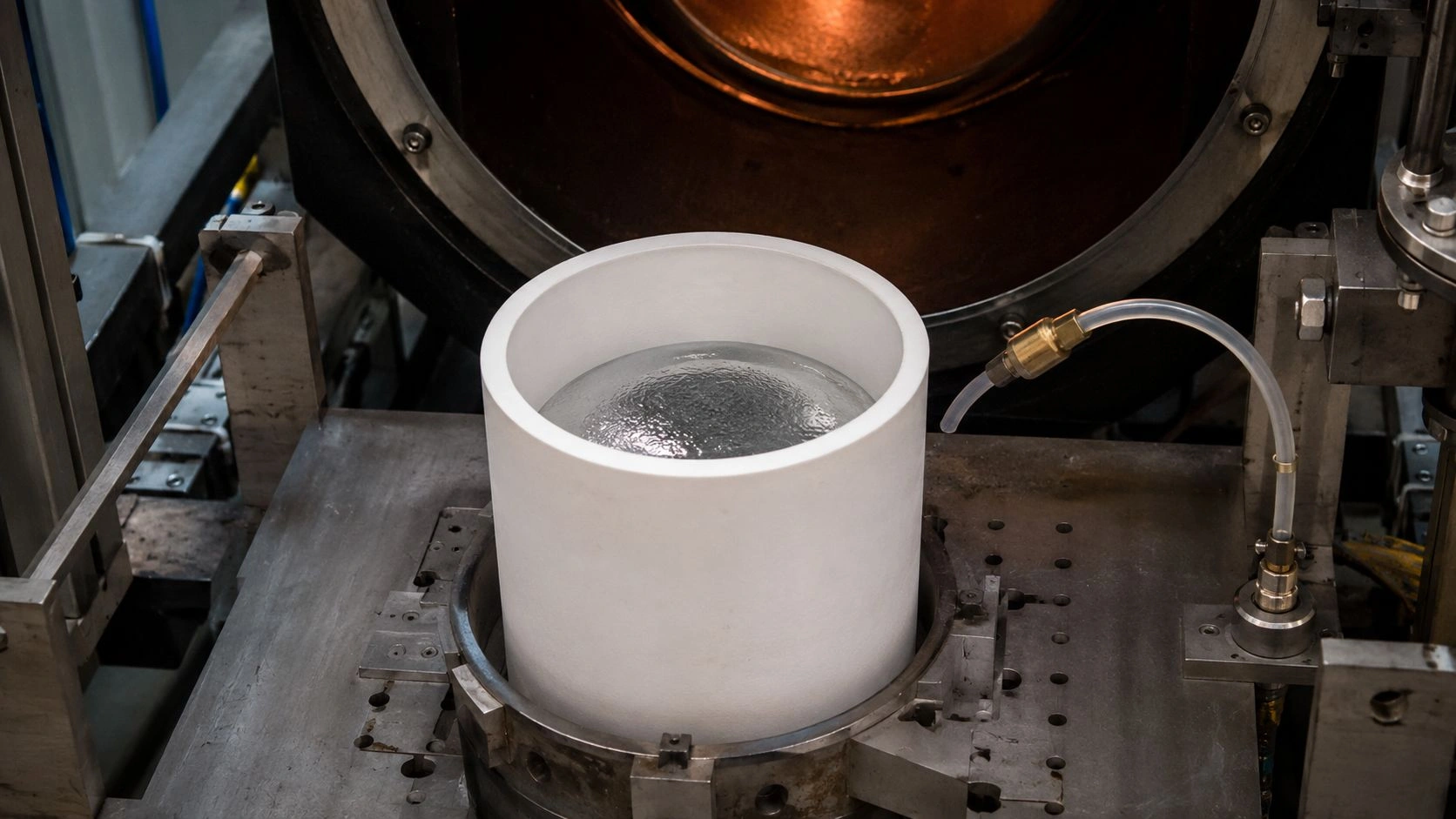
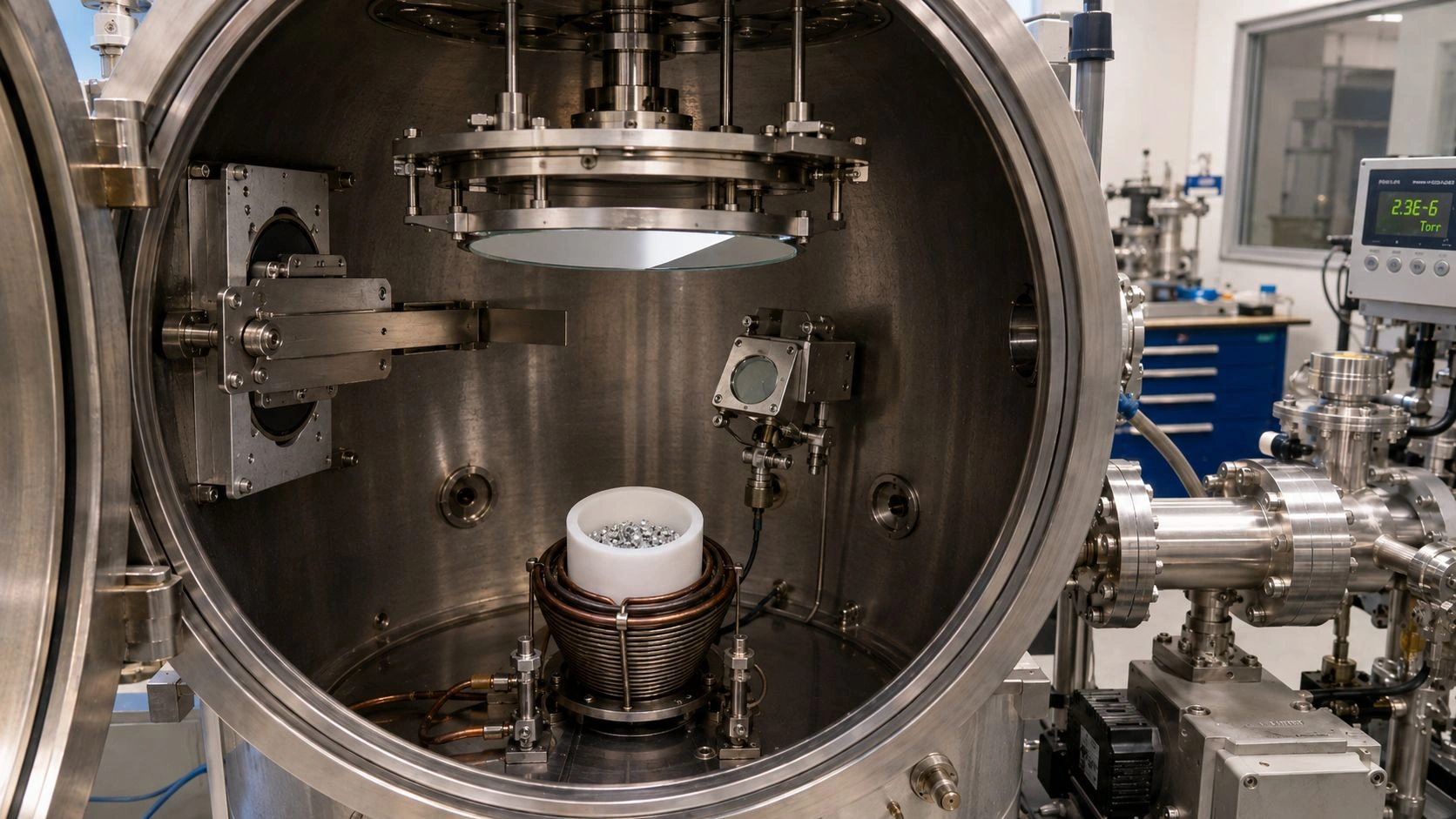
PBN crucibles are a strong choice for germanium single crystal growth when the process prioritizes high purity, low contamination, and controlled melt–crucible interaction, especially in VGF, VB, or detached-growth style configurations. Their strongest advantages are ultra-high purity, nonporous CVD structure, and a high wetting angle with molten germanium that can promote detached growth. They are not the only valid route across all Ge growth processes, because some high-purity CZ-style systems still use silica crucibles inside quartz shielding to isolate the melt from graphite and furnace contamination.
The selection decision in germanium single crystal growth is driven by more than crucible purity. It is driven by whether the growth mode itself — directional solidification with controlled melt-wall behavior, or CZ-style growth with shielded indirect containment — is the right architecture for the project. This guide maps PBN's actual role, explains why it is especially strong for detached and VGF/VB germanium growth, identifies the boundaries where silica-based routes remain valid alternatives, and closes with the specification language for a crucible RFQ.
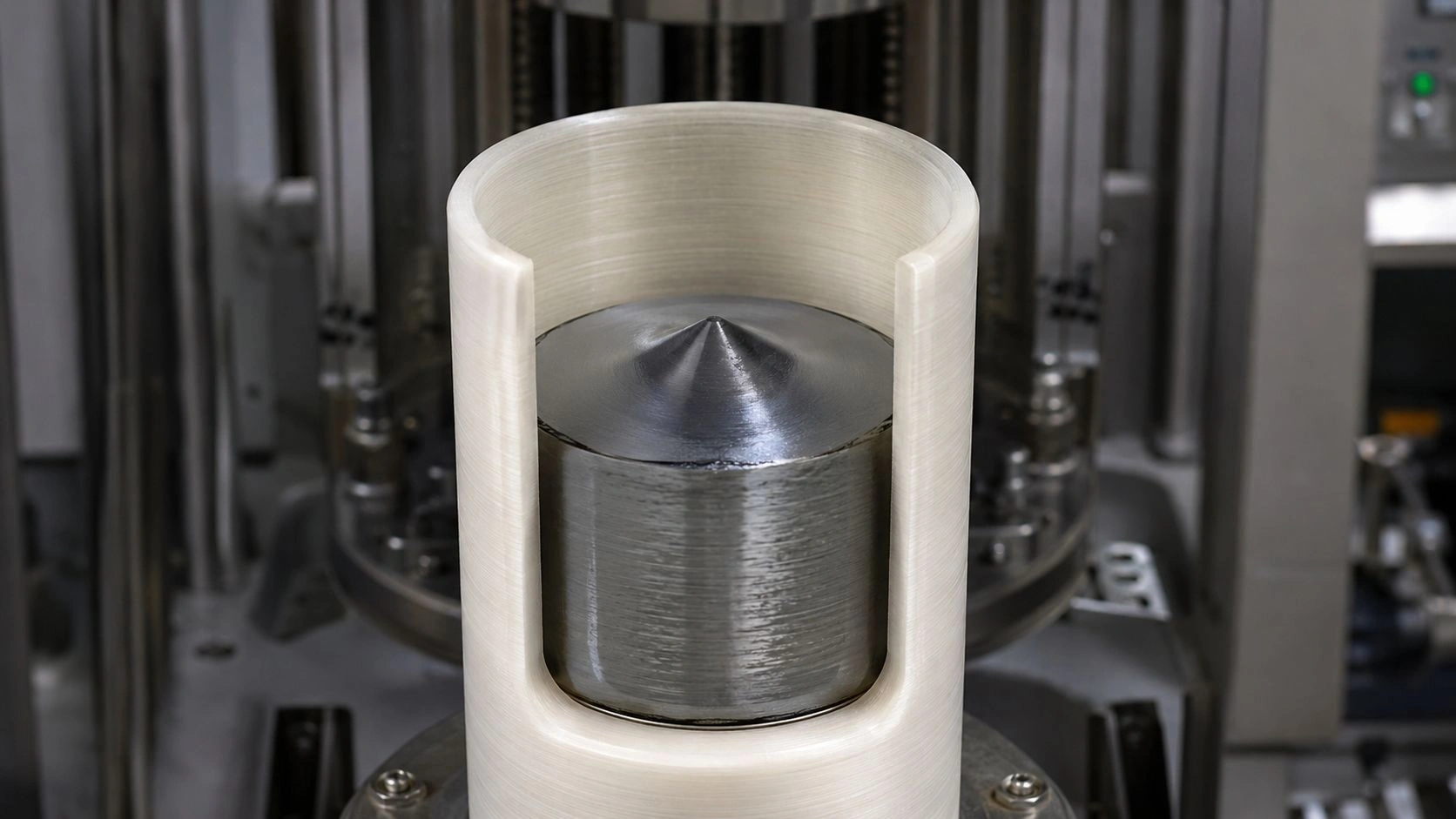
PBN crucibles in germanium single crystal growth serve as both a high-purity containment vessel and a wetting-control interface — two functions that together make detached growth and clean directional solidification achievable.
The boron nitride crucibles described in this guide include PBN (pyrolytic boron nitride) grades produced by CVD, a high-purity form within the boron nitride ceramics family — the specific nonporous BN form used in semiconductor crystal growth rather than hot-pressed HPBN grades used in metallurgical applications.
What PBN crucibles actually solve in germanium crystal growth
PBN crucibles solve two distinct problems at once in germanium crystal growth: contamination control and interface control. These are related but not the same, and both are relevant to Ge crystal quality.
On the contamination side, published PBN materials documentation describes PBN as a high-purity CVD ceramic with very low metallic impurities and an inert-atmosphere service temperature reaching 2400°C. The same source explicitly states that PBN crucibles require high purity because they hold the semiconductor raw material, and that PBN prevents impurity contamination better than conventional sintered BN crucibles. In germanium growth, where semiconductor ceramics applications depend on controlled carrier concentration and detector performance, this purity baseline is not a minor marketing claim — it is the governing material quality requirement.
On the interface-control side, published NASA germanium-growth research states that crystals grown without wall contact have in general higher crystal quality than conventional Bridgman-grown crystals with wall contact. In those same experiments, pyrolytic boron nitride containers were used for all growth runs. PBN is not simply a clean material for germanium — it is part of a growth mechanism that can change the solidification interface itself.
PBN is a crystal-growth tool, not just a clean container
The most important framing correction for engineers evaluating PBN for germanium is that the crucible choice can determine the growth mode. An inert but high-wetting container still imposes wall contact on the growing crystal. PBN's distinct wetting behavior with molten germanium creates conditions where the crystal can detach from the wall — changing stress state, dislocation density, and surface morphology in ways that high-purity silica alone does not achieve.
The purity and the wetting angle are both part of the PBN value argument
If PBN were only a purity story, silica-based shielded systems would close most of the gap. If PBN were only a wetting-angle story, lower-purity BN coatings on silica would be equivalent. The evidence shows that PBN's strongest case for germanium combines both effects: ultra-high purity as a direct melt-contact material, and favorable wetting angle as a growth-mode enabler.
Why PBN is especially attractive for germanium detached growth
In germanium single crystal growth, PBN's interface behavior is documented specifically for detached growth — a configuration where the crystal grows with a thin gap between the melt and the crucible wall rather than in direct contact. Published NASA detached-growth research states that the high wetting angle of molten germanium on pBN leads to detachment, and that the detached surface was smooth while the attached-growth surface inherited the roughness of the ampoule interior.
Published data on gap thickness in pBN-crucible germanium growth indicates typical values in the range of 10–100 μm — a measurable, reproducible gap that reflects PBN's consistent wetting behavior with molten Ge rather than a random occurrence. That range also shows detached growth is not a marginal effect; it is a geometrically defined state that the pBN interface systematically supports.
This makes PBN's case for detached germanium growth substantially stronger than its case for generic "high-purity crystal growth." In germanium specifically, the wetting angle advantage on pBN enables a growth mode — detached growth — that produces distinct crystallographic and surface-quality outcomes. That is the connection between the material property (wetting angle) and the process outcome (crystal quality and interface condition) that validates PBN as a crystal-growth tool rather than just a clean vessel.
Detached growth on pBN outperforms BN-coated silica for full detachment
Published NASA germanium directional-solidification research documents an important comparison: detached growth was achieved in pBN crucibles, while only partly detached growth was achieved in BN-coated silica crucibles under the same growth conditions. That comparison is significant because BN-coated silica would retain some purity benefit from the coating while lacking the full surface and wetting properties of a solid CVD PBN body. The result supports that the pBN bulk material, not just BN surface chemistry, is the relevant variable for achieving full detachment in germanium growth.
VGF and VB are the growth architectures where PBN is officially positioned
Shin-Etsu's current PBN crucible product documentation explicitly positions PBN crucibles for Vertical Gradient Freezing and Vertical Bridgman crystal growth methods, and mentions detachable seed-section configurations as available geometry options. That commercial positioning aligns directly with the research literature, where germanium single crystal growth in pBN crucibles appears consistently in Bridgman-style, VGF-style, and detached-growth experimental setups rather than in CZ-type growth.
Where the boundaries of PBN's case begin
Three boundary conditions define when PBN's case for germanium crystal growth is strongest, and when alternative containment strategies remain valid:
PBN is not the only route for high-purity germanium single crystal growth. A published patent on high-purity germanium crystal growth describes a silica crucible inside a quartz shield, with an outer graphite crucible used for RF heating — a containment architecture specifically designed to prevent contamination from graphite, insulation, and stainless-steel furnace components from reaching the germanium melt. That silica-inside-quartz-shield approach represents a different and legitimate solution to the same contamination-control problem that PBN addresses directly. The appropriate engineering conclusion is not that PBN is universal, but that PBN is the right answer for some Ge growth architectures and silica-shielded systems are the right answer for others.
PBN's strongest case is for directional solidification architectures, not all Ge crystal growth. The published literature and official product positioning both center PBN on VGF, VB, and Bridgman-style growth. CZ-type germanium growth, particularly in HP-Ge detector production, may use different containment logic — often silica-based — where the thermal and fluid dynamics of CZ pulling and the specific contamination sources being managed call for a different containment strategy.
PBN's value should not be specified on temperature alone. If a germanium crystal growth process does not involve direct melt-PBN contact, does not benefit from detachment behavior, and does not have a contamination pathway that pBN specifically blocks better than a shielded alternative, specifying PBN for its temperature rating alone is over-specification. PBN earns its role in Ge growth through purity plus wetting angle, not simply through surviving the process temperature.
When PBN clearly leads and when silica-based routes remain valid
The Selection Matrix below maps the five most common decision scenarios for germanium single crystal growth crucible selection:
| If the Ge growth duty looks like… | Best-fit route | Why |
|---|---|---|
| VGF / VB / detached-growth style with strong concern for wall contact and crystal quality | PBN crucible is a strong first-look route | PBN is officially offered for VGF/VB; NASA germanium research links pBN to detached growth and smoother detached crystal surfaces |
| High-purity directional solidification where direct melt-container purity matters | PBN crucible | PBN is positioned as a high-purity crucible material that prevents impurity contamination better than sintered BN; CVD structure eliminates porosity pathways |
| Ge growth route where the process architecture uses silica/quartz-shield CZ-style containment | Silica/quartz-shield route remains credible | HP-Ge patent architecture uses silica crucible + quartz shield + graphite heating to isolate contamination — a distinct and validated approach |
| Need for full detached growth rather than partial detachment | PBN has a stronger case than BN-coated silica | Published NASA research reports detached growth in pBN and only partly detached growth in BN-coated silica under comparable conditions |
| Specification driven by temperature requirement only, without purity or wetting concerns | Do not specify PBN by temperature alone | PBN's value in Ge growth comes from purity and wetting behavior; temperature capability alone does not distinguish it from other high-temperature options |
Route logic synthesized from Shin-Etsu PBN crucible documentation, NASA germanium detached-growth research, JSTAGE crystal-growth setups, and HP-Ge patent containment architecture.
The practical rule: choose PBN first when purity, detachment, and direct melt-wall behavior are central to Ge crystal quality. Choose silica/quartz-shield routes when the process architecture is CZ or HP-Ge style and contamination control is being solved by shielding rather than by replacing the direct crucible material with PBN.
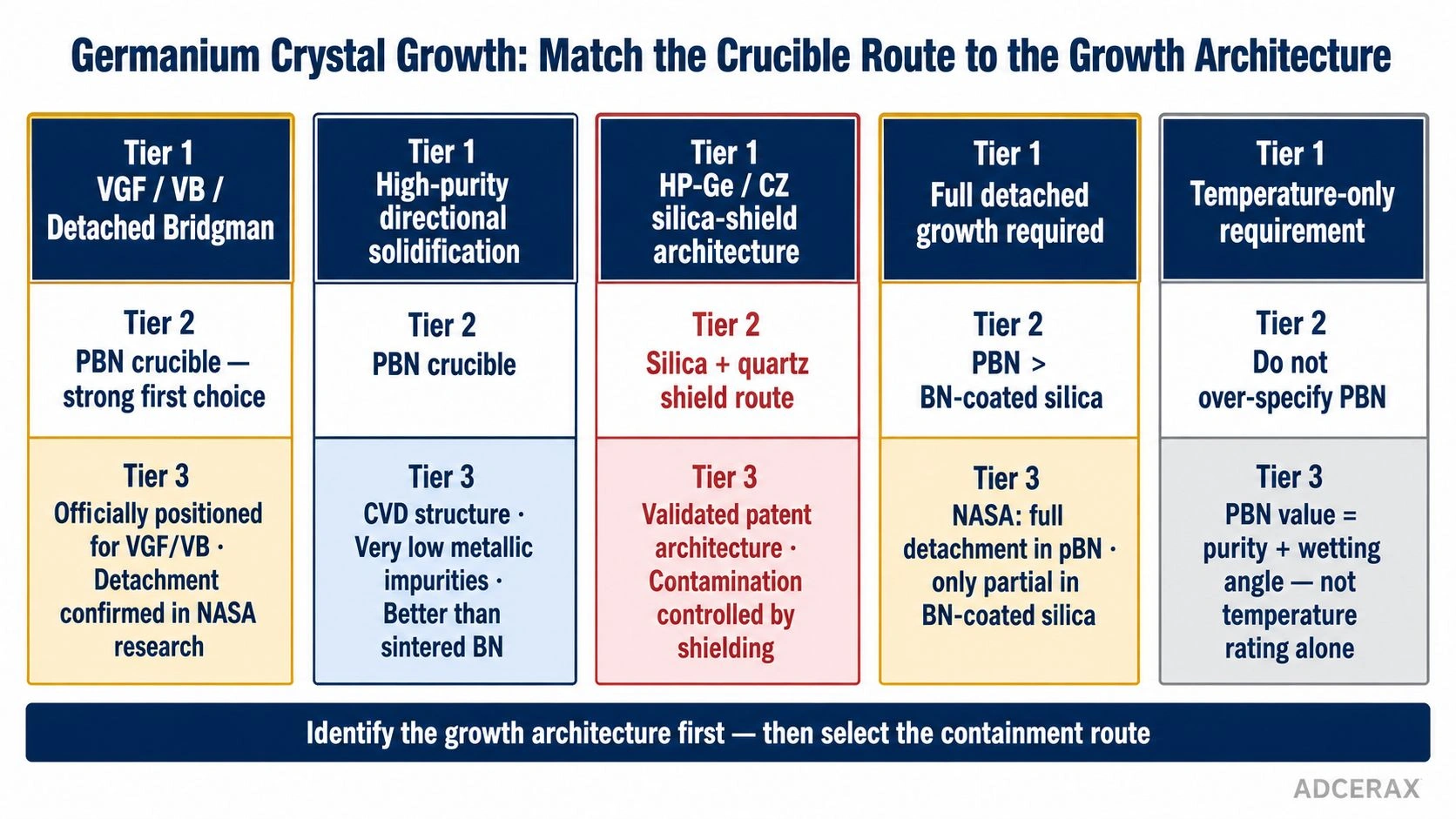
Five germanium crystal growth scenarios — and which containment route fits each one. The key insight: PBN and silica-based systems solve the same contamination problem through different architectural strategies.
In some Ge systems, graphite is not the direct melt container
A practical clarification that matters for RFQ language: in many germanium growth setups, graphite is not the material in direct contact with the melt. It may function as an external susceptor or heater, while the actual melt containment is either pBN or silica. The real comparison for germanium crystal quality is often not pBN versus graphite, but pBN direct containment versus silica-based shielded containment — two strategies that involve graphite in different roles.
Detachable seed sections are a specialized geometry for Ge work
Shin-Etsu's crucible documentation mentions detachable seed-section configurations as an available PBN crucible option. For germanium single crystal growth where seeded nucleation and controlled interface formation are part of the growth protocol, specifying a PBN crucible with detachable seed-section geometry addresses both the material choice and the geometry requirement simultaneously.
What should go into the RFQ and process specification
Before writing "PBN crucible for germanium single crystal growth," the specification must resolve the growth mode, the containment role, and the primary performance priority. Without those three variables, PBN could be specified for a process where a silica-shield system is the established and validated route, or a silica-shield system could be retained where PBN's detachment behavior would meaningfully improve crystal quality.
The specification checklist for PBN crucibles in germanium crystal growth:
- Growth mode — specify VGF, VB, detached Bridgman, CZ, or other directional-solidification variant; the growth mode determines whether PBN's detachment and direct-containment advantages are relevant.
- Containment role — specify whether the PBN crucible is the direct melt vessel, an ampoule insert, or a combination with a detachable seed section; this determines crucible geometry and any seed-section specification.
- Priority — state whether the primary requirement is purity, detached-growth behavior, low wall stress on the crystal, surface quality, or scale-up practicality; these map to different geometry and grade options.
- Atmosphere or vacuum condition — specify evacuated sealed system, inert gas flow, or ambient; the sampled Ge-growth setups vary from sealed evacuated ampoules to gas-controlled atmospheres, and crucible sealing requirements differ accordingly.
- Seed-section geometry — if a detachable seed section is required, specify seed bore diameter, detach-joint geometry, and seed crystal orientation; these are standard PBN crucible custom parameters for crystal-growth applications.
- Purity documentation — require trace-metal impurity data for the PBN crucible lot; for semiconductor germanium applications where carrier concentration is the quality metric, crucible impurity documentation is part of process traceability.
Conclusion
PBN crucibles are a proven and appropriate choice for germanium single crystal growth in VGF, VB, and detached-growth architectures, where their combination of ultra-high purity and favorable wetting angle with molten germanium directly influences crystal quality, surface condition, and growth mode. Silica-based shielded containment remains a valid alternative in CZ-style and HP-Ge architectures where contamination control is achieved by isolating the melt from graphite and furnace components rather than by replacing the direct crucible material. The correct specification identifies the growth mode, the containment role, and the primary crystal-quality driver — and then assigns the crucible architecture that answers all three.
Specifying PBN crucibles for germanium single crystal growth? Send the growth method, crucible geometry, seed-section requirements, atmosphere specification, and purity documentation needs. ADCERAX engineers can provide custom ceramic manufacturing guidance and return a grade recommendation with trace-impurity confirmation, geometry guidance, and detachable seed-section options for the confirmed growth process; turnaround depends on inquiry complexity — no RFQ commitment required at this stage.
Frequently Asked Questions
Are PBN crucibles actually used for germanium single crystal growth?
Yes. Multiple published germanium crystal-growth studies use pBN crucibles or pBN ampoules for Bridgman-style and VGF-style Ge single crystal growth, and Shin-Etsu's current PBN product documentation explicitly positions PBN crucibles for VGF and VB crystal-growth methods. The use is well established in both the research literature and commercial crystal-growth practice.
Why is PBN specifically attractive for germanium rather than just any high-temperature semiconductor growth?
Because PBN provides two advantages that are particularly relevant to germanium: very high purity as a direct melt-contact material, and a high wetting angle with molten germanium that can enable detached growth. Published NASA research documents that the high wetting angle of molten Ge on pBN leads to detachment, which produces smoother crystal surfaces and higher crystal quality than wall-contact growth. This combination of purity and wetting behavior is specific to the Ge-pBN material pair and is not simply a generic high-temperature ceramic advantage.
Does PBN replace quartz or silica in every germanium growth system?
No. A high-purity germanium growth patent documents a different containment architecture — silica crucible inside a quartz shield with an outer graphite crucible for RF heating — that addresses contamination control through shielding rather than through replacing the melt-contact material with PBN. That silica-based shielded system is a distinct and validated approach used in some HP-Ge and CZ-style workflows. PBN and silica-shielded systems are competing strategies for the same contamination-control goal, each suited to different growth architectures.
Is PBN mainly a material for III-V semiconductor growth, or is it validated for germanium?
PBN is heavily used in III-V semiconductor growth (GaAs, InP), but published product documentation explicitly states that PBN crucibles are also proven for non-III-V applications. The germanium-specific experimental literature, including multiple NASA publications, confirms direct use of pBN crucibles in germanium single crystal growth with documented results on gap thickness, detachment behavior, and crystal quality.
What is the biggest specification mistake for PBN in germanium crystal growth?
Writing "PBN crucible for germanium growth" without specifying the growth mode. PBN's strongest case is tied to VGF/VB/directional-solidification and detached-growth logic, where its wetting behavior is a functional part of the process. For CZ-style or HP-Ge detector growth using silica-shield containment, the decision involves a different set of tradeoffs. The growth mode is the first and most important specification variable before any crucible material is committed.