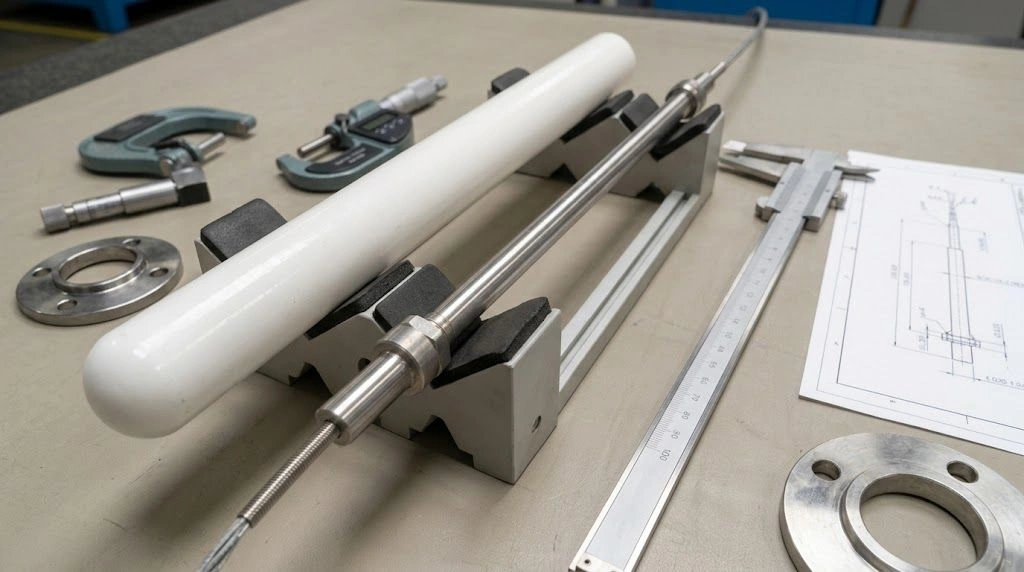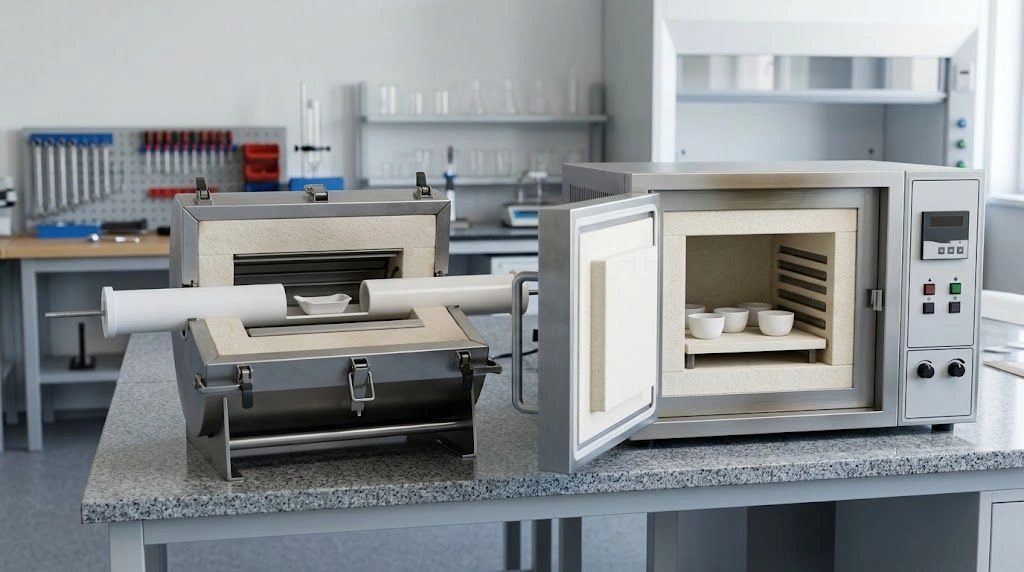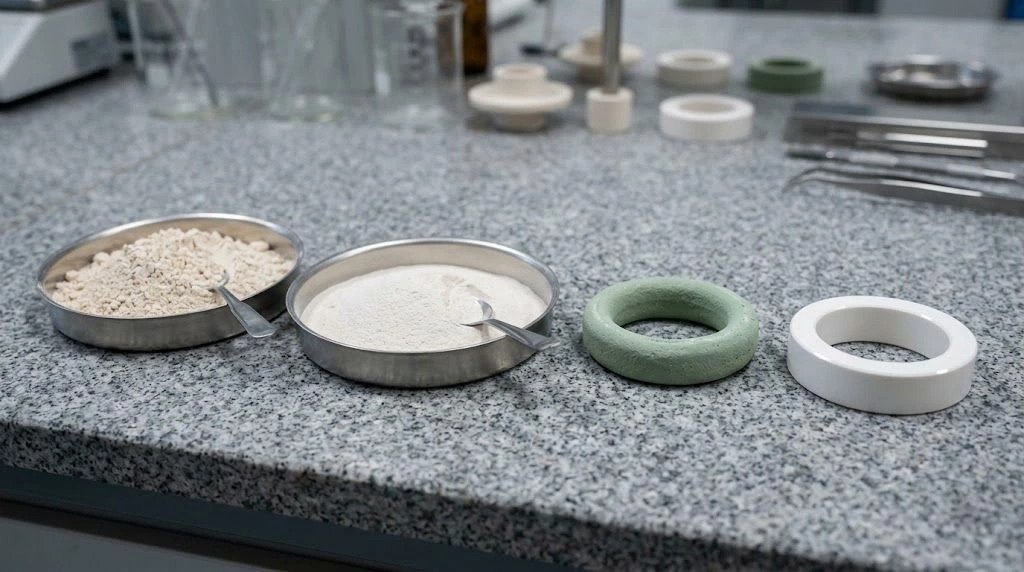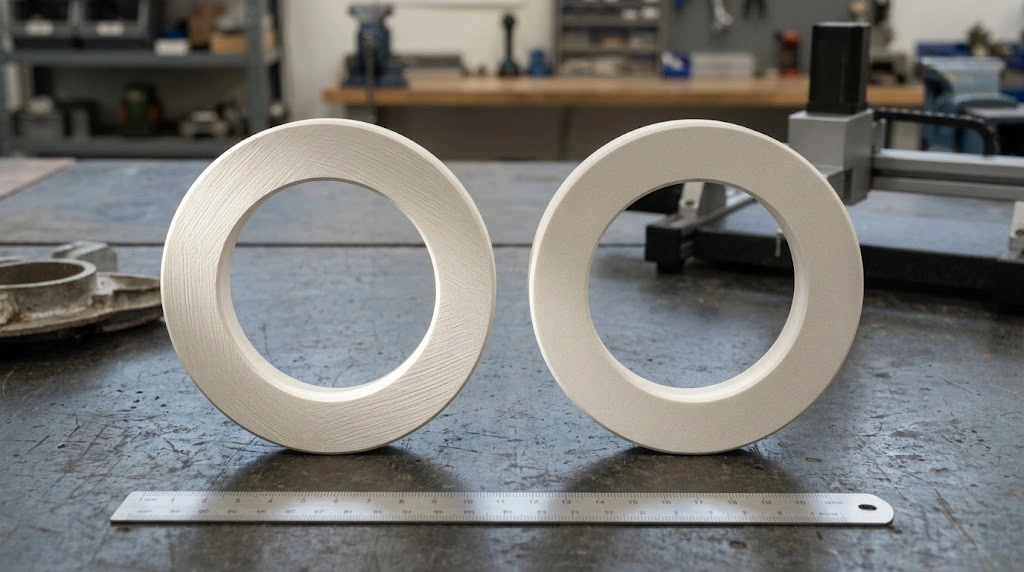
Ceramics are not automatically magnetic or nonmagnetic. Many structural ceramics, including common high-purity oxide and non-oxide grades, have only weak diamagnetic or paramagnetic responses and may suit equipment near magnetic fields. Ferrites and some ceramic garnets are deliberately ferrimagnetic. A finished component may also become magnetically significant because of iron-bearing impurities, machining contamination, pigments, metallization, brazing alloys, inserts, or fasteners. Designers should therefore specify a measurable magnetic limit rather than writing only “nonmagnetic ceramic.”
Are Ceramics Magnetic?
Ceramic describes a materials and processing class, not one magnetic state. A ceramic may be diamagnetic, paramagnetic, antiferromagnetic, or ferrimagnetic. Common structural ceramics are often called nonmagnetic because they lack strong permanent-magnet behavior and may have relative permeability close to unity. That wording becomes useful only when the allowed deviation, test condition, and finished-part configuration are defined.
Even a weak susceptibility can matter in a high field gradient, close to a precision magnetometer, or inside equipment where a small force, field distortion, or retained moment changes the measurement. The right question is not simply “Does a magnet stick?” but “Which magnetic response can the equipment tolerate?”
| Magnetic Response | Behavior in an Applied Field | Remanence After Field Removal | Equipment-Design Meaning |
|---|---|---|---|
| Diamagnetic | Very weak response opposing the applied field | Normally none | Often treated as weakly magnetic, but measurable in sensitive systems |
| Paramagnetic | Weak attraction while the field is present | Normally little or none | Response depends on composition, field, and temperature |
| Antiferromagnetic | Opposing atomic moments largely cancel | Usually low net magnetization | Low net moment does not eliminate all field-dependent effects |
| Ferrimagnetic | Opposing moments do not fully cancel | Can retain magnetization | Common in magnetic ceramic ferrites and garnets |
| Ferromagnetic | Strong parallel ordering | Can retain substantial magnetization | A small metallic inclusion can dominate a structural ceramic part |
Nonmagnetic Is an Engineering Limit, Not a Fundamental Category
Every material responds to a magnetic field at some level. In equipment specifications, “nonmagnetic” usually means the response remains below an application-defined threshold. That threshold might be written as maximum relative permeability, susceptibility, magnetic moment, remanence, attractive force, or stray-field disturbance at a stated position.
The correct parameter depends on the failure mechanism. A sensor mount may be limited by field distortion; a moving stage may be limited by force in a gradient; a vacuum assembly may be limited by residual magnetization; and an AC system may also care about frequency-dependent loss and conductive loops.
Magnetic Susceptibility and Relative Permeability
For a linear, isotropic material under corresponding conditions, volume susceptibility (\chi) and relative permeability (\mu_r) are related by:
[
\mu_r = 1 + \chi
]
This simple relationship should not be extended blindly. Real materials may be anisotropic, nonlinear, hysteretic, temperature-dependent, or frequency-dependent. Volume, mass, and molar susceptibility use different definitions and units; mixing them can produce a meaningless comparison. A report should state the convention, units, field, temperature, orientation, frequency where applicable, and specimen geometry.
Ferrites Prove That Ceramics Can Be Magnetic
Ferrites are iron-oxide-containing ceramic materials. Many are ferrimagnetic. Soft ferrites are engineered for field response in inductors, transformers, absorbers, and RF components; hard ferrites can serve as permanent magnets. They should not be grouped with weakly responding structural alumina, zirconia, aluminum nitride, silicon nitride, or silicon carbide components.
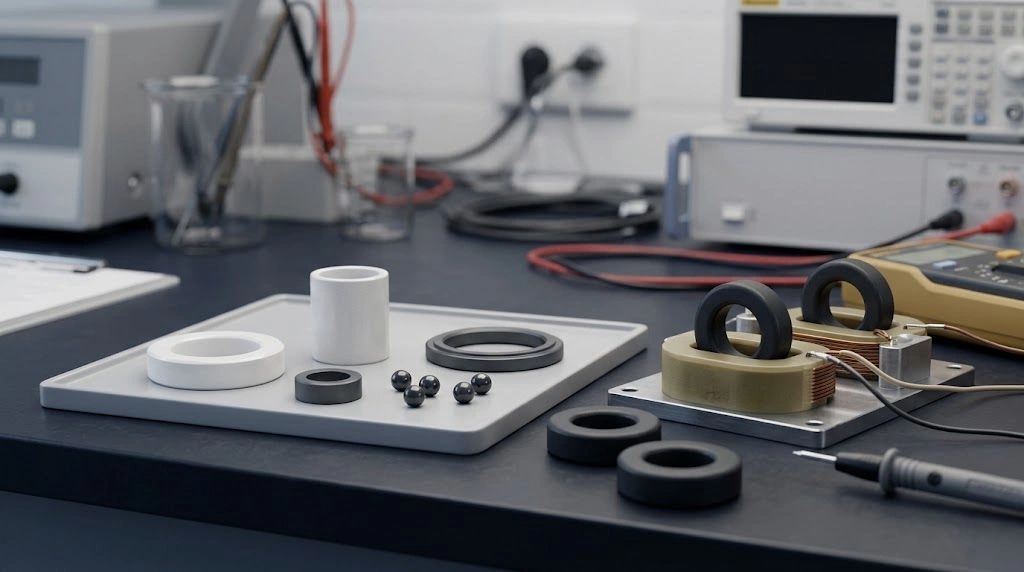
Ceramics span weakly responding structural grades and deliberately magnetic ferrites; the material class alone does not define magnetic behavior.
Which Technical Ceramics Are Usually Weakly Magnetic?
High-purity structural ceramics are often considered when a design needs electrical insulation, low eddy-current generation, wear resistance, or dimensional stability near magnetic equipment. They do not contain the continuous ferromagnetic metal matrix found in steel. Their response, however, remains grade- and process-specific.
Purity, sintering aids, pigments, secondary phases, milling media, processing tools, and temperature can shift measured susceptibility or residual magnetic signal. A family name supports initial screening, not final acceptance.
| Ceramic Family | Typical Equipment Role | Initial Magnetic Expectation | Mandatory Qualification |
|---|---|---|---|
| High-purity alumina | Insulator, spacer, guide, feedthrough body | Often weak response | Confirm purity, Fe/Ni/Co limits, metallization, and finished-part test |
| Zirconia | Wear sleeve, guide, valve part, precision component | Often weak but grade/additive dependent | Confirm stabilizer, pigments, secondary phases, and process contamination |
| Aluminum nitride | Electrically insulating thermal-management part | Often considered where a metal spreader is unsuitable | Confirm additives, metallization, joining materials, and magnetic limit |
| Silicon nitride | Bearing, roller, guide, high-speed component | Often useful where metal mass and eddy currents are undesirable | Confirm sintering aids, lot chemistry, processing, and hardware |
| Silicon carbide | Seal, wear, thermal, or structural part | Grade and production-route dependent | Confirm free silicon, binders, additives, inclusions, and attached materials |
| Ferrite ceramic | Magnetic core, absorber, permanent magnet, RF part | Deliberately magnetic | Specify ferrite composition, magnetic function, frequency, and temperature |
Alumina and Zirconia Need Grade Qualification
High-purity alumina and unpigmented structural zirconia may be practical starting points for low-magnetic structural parts, but neither name is an acceptance criterion. Trace iron, nickel, or cobalt; colored pigments; recycled powder; milling pickup; stabilizers; and secondary phases can change the result. The production route and finished-part measurement matter more than a generic datasheet statement.
Dark color is also not a reliable proxy. A dark ceramic may use a nonferromagnetic color system, while an apparently clean white ceramic may contain trace magnetic contamination. Verify chemistry and response instead of judging by appearance.
Non-Oxide Ceramics Can Reduce Metal-Related Design Problems
Silicon nitride, silicon carbide, and aluminum nitride can replace metal in selected bearings, guides, insulating supports, seals, or thermal-management structures. Their electrical and magnetic behavior may reduce eddy-current or field-interaction concerns, but composition and processing still matter. Sintering aids, residual phases, conductive free silicon, metallization, and assembly hardware can control the system-level result.
Nonconductive Does Not Mean Nonmagnetic
Electrical conductivity and magnetic response are separate properties. Ferrites demonstrate this clearly: many have high electrical resistivity yet strong magnetic behavior. Conversely, a weakly magnetic ceramic assembly can still contain a conductive metallized layer that generates eddy currents. Specify both properties when both affect the equipment.
Why Can a Ceramic Part Disturb a Magnetic System?
The base ceramic is only the first layer of a finished component. Raw-material impurities, fabrication contamination, coatings, joints, and hardware can create a magnetic response much larger than that of the bulk ceramic. Testing powder or an unmachined blank alone may therefore miss the feature that matters in service.
Raw Materials and Sintering Additives
Iron-bearing impurities can enter through minerals, recycled powder, additives, pigments, binders, or furnace contact. Nickel- or cobalt-bearing phases may also be important in sensitive applications. A total elemental concentration does not always predict magnetic behavior because chemical state, phase, particle size, and distribution affect how an impurity responds.
Specify restricted elements where justified, but pair chemistry limits with a functional magnetic test when the equipment has a strict field-disturbance requirement.
Machining and Handling Contamination
Steel fixtures, magnetic chucks, worn grinding equipment, wire brushes, shot blasting, contaminated coolants, and shop debris can transfer ferrous particles to a ceramic surface or embed them in small chips and pores. Handling trays, tweezers, or packaging staples can recontaminate a cleaned part.
A magnetic signal that appears after grinding may be a process-control problem rather than an intrinsic ceramic property. Cleaning, controlled tooling, protected storage, and post-process verification should follow the same finished condition that will be delivered.
Metallization, Brazing, Inserts, and Fasteners
A ceramic feedthrough body may respond weakly while its metallization, braze, pin, threaded insert, spring, washer, or steel fastener dominates the assembly. Plating stacks can also include magnetic layers. An assembly labeled “ceramic” should never inherit a nonmagnetic claim from the ceramic body alone.
| Risk Layer | Possible Magnetic Source | Review Action |
|---|---|---|
| Base ceramic | Impurities, pigments, secondary phases, sintering aids | Review grade chemistry and representative lot data |
| Machining | Ferrous pickup, embedded swarf, magnetic chuck contact | Control tools, cleaning, and post-machining test |
| Surface treatment | Metallization, plating, conductive coating | Review complete layer stack and thickness |
| Joining | Braze alloy, active-metal layer, solder, adhesive filler | Test the joined condition if it enters the sensitive zone |
| Hardware | Pins, inserts, springs, fasteners, washers | Specify each item and inspect the complete assembly |
| Packaging | Staples, steel clips, contaminated foam or trays | Use controlled packaging and final cleanliness check |
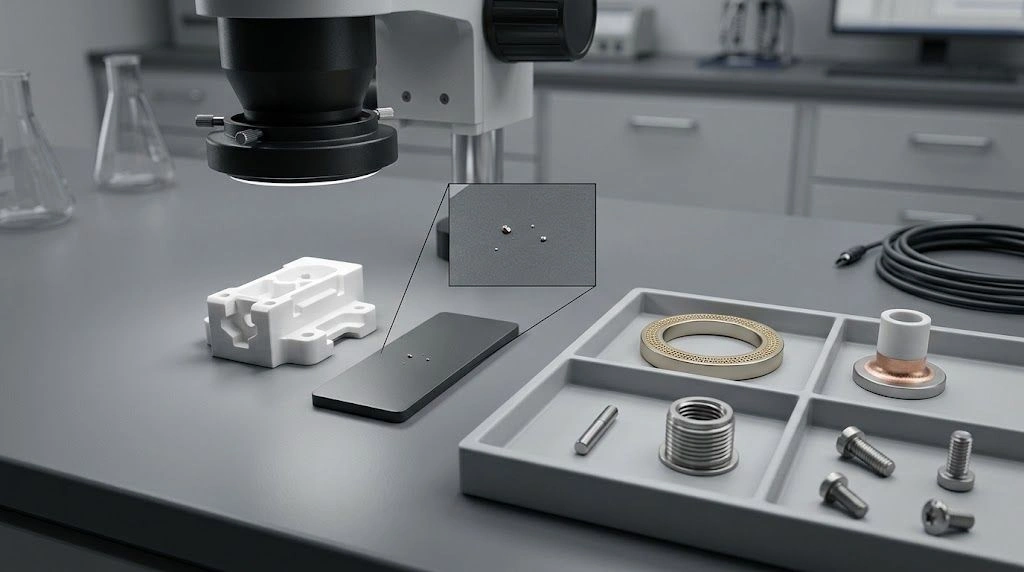
Ferrous particles, metallization, brazes, inserts, and fasteners can dominate the magnetic response of an otherwise weakly magnetic ceramic body.
How Should Magnetic Behavior Be Measured and Specified?
Start with the equipment failure mode, then select a measurand and test geometry that reproduce it. A permeability requirement may suit one magnetic circuit, while magnetic moment or stray field may better represent a small finished assembly near a sensor. Results are not interchangeable merely because each is described as “magnetic.”
A Hand Magnet Is Only a Screening Tool
A hand magnet can reveal a strongly magnetic ferrite, steel insert, or gross ferrous contamination. It cannot establish a tight susceptibility or relative-permeability limit, quantify remanence, reproduce the service field gradient, or distinguish weak paramagnetism from acceptable background. Magnet strength, distance, part mass, friction, and operator judgment make the test poorly controlled.
Use it for incoming gross-defect screening only if the procedure is documented. Do not use “not attracted to a magnet” as the sole certificate for precision magnetic equipment.
Match the Measurement to the Design Risk
| Design Risk | Possible Measurand | Important Test Conditions |
|---|---|---|
| Field distortion in a magnetic circuit | Relative permeability or susceptibility | Field strength, frequency, orientation, geometry, temperature |
| Force in a field gradient | Force or apparent susceptibility | Field and gradient, fixture background, mass, orientation |
| Residual field near a sensor | Magnetic moment, remanence, or stray field | Magnetizing history, distance, axis, ambient-field compensation |
| AC loss or heating | Complex permeability, loss, or system response | Frequency, amplitude, temperature, waveform |
| Finished assembly compatibility | Assembly-level field or moment test | Delivered hardware, joining, cable/pin state, test position |
The ASTM A342/A342M method family provides examples of permeability measurements on feebly magnetic materials, including comparison with calibrated low-permeability inserts. Its suitability, current edition, specimen restrictions, and applicability to a specific ceramic geometry must be confirmed before referencing it on a drawing. A standard written around particular specimens cannot automatically validate every small or complex ceramic part.
Control Background and Calibration
Weak measurements are easily dominated by fixtures, sample holders, nearby steel, instrument drift, Earth’s field, or residue on the part. The laboratory should document blank correction, calibration or reference standards, instrument resolution, repeatability, orientation, specimen dimensions, mass, and environmental conditions. If the measurement is near the instrument’s detection limit, the report should state that limitation instead of reporting false precision.
Test the Delivered Configuration
Measure representative finished parts after final machining, cleaning, metallization, joining, and hardware installation whenever those steps can change magnetic behavior. If only the ceramic body must meet the limit, state that boundary explicitly. For assemblies, define whether every unit, a sampling plan, or a first-article plus lot audit is required.
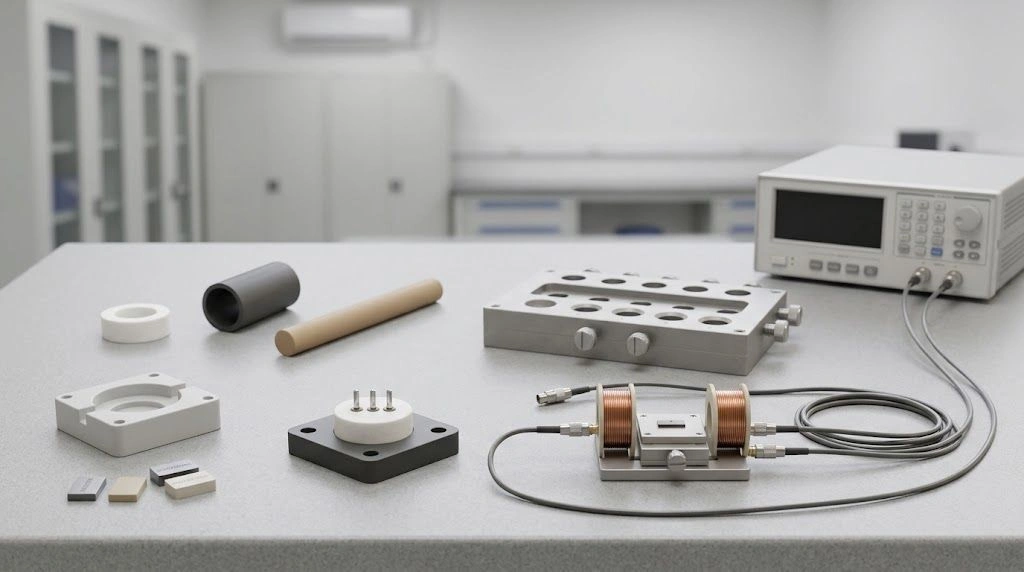
Meaningful verification matches the measured quantity, field conditions, specimen geometry, and delivered assembly to the equipment risk.
What Should a Low-Magnetic Ceramic RFQ Include?
An RFQ should translate “nonmagnetic” into a measurable, application-linked requirement. It must also separate the ceramic body from coatings, joints, and hardware so the supplier knows which configuration must pass.
Copyable Drawing Note
Magnetic requirement: The finished [ceramic body / complete assembly] shall meet [specified relative permeability, susceptibility, magnetic moment, remanence, force, or stray-field limit] when tested by [agreed method] at [field strength, frequency if applicable, temperature, orientation, and measurement position]. Report the instrument, calibration/reference method, resolution, background correction, specimen condition, and actual result.Supplier Data Checklist
- Exact ceramic family, grade, purity, color system, and batch identity.
- Sintering aids, secondary phases, and restricted Fe/Ni/Co limits where relevant.
- Manufacturing and finishing route, including grinding and cleaning controls.
- Drawing revision, dimensions, mass, orientation, and sensitive-zone location.
- Metallization, coating, plating, braze, adhesive, insert, pin, and fastener details.
- Required measurand and numerical acceptance limit.
- Field strength, gradient, frequency, temperature, and orientation.
- Whether the body, finished part, or complete assembly must pass.
- Test method, instrument type, calibration/reference method, and resolution.
- Blank/background correction and stated detection limit.
- Magnetizing and demagnetizing history where remanence matters.
- Sample count, lot frequency, individual results, and traceability.
- Cleanliness, packaging, and ferrous-particle prevention requirements.
- Prototype validation and production requalification plan.
Copyable RFQ Language
Please review this part for use near magnetically sensitive equipment. Propose a structural ceramic grade and state its purity, additives, pigments, restricted magnetic-element limits, and relevant magnetic-property data. Identify all machining, metallization, joining, insert, and hardware sources that could alter the finished response. Quote testing for the delivered configuration against the specified measurand, limit, field, frequency, temperature, orientation, and measurement position; include instrument resolution, calibration or reference method, background correction, sample count, and lot traceability.
When requesting custom ceramic parts, include the magnetic-field conditions, sensor distance, allowed disturbance, complete assembly stack, and drawing. ADCERAX’s relevant scope is structural ceramic components, not ferrite cores or permanent ceramic magnets; specialized magnetic-material functions should be routed to an appropriate ferrite or magnet supplier.
Frequently Asked Questions
Are alumina and zirconia attracted to magnets?
High-purity structural grades typically show only weak responses, so an ordinary hand magnet may reveal no attraction. That observation does not prove compliance with a sensitive magnetic requirement. Grade chemistry, contamination, attached layers, and test conditions still require review.
Can iron contamination make a ceramic part magnetic?
Yes. Ferrous particles from powder processing, grinding tools, fixtures, handling, or packaging can create a detectable local or assembly-level response. The effect depends on amount, chemical state, particle form, position, and equipment sensitivity.
Is a ferrite the same as a structural ceramic?
No. Ferrites are ceramic materials intentionally engineered for magnetic functions. Structural alumina, zirconia, AlN, Si₃N₄, and SiC are selected primarily for mechanical, thermal, electrical, wear, or chemical functions.
Does electrical insulation prove a ceramic is nonmagnetic?
No. Electrical resistivity and magnetic response are different properties. Ferrites can be electrically resistive and strongly magnetic, while metallized ceramic assemblies can be weakly magnetic yet electrically conductive at the surface.
Should the ceramic body or finished assembly be tested?
Test the configuration that represents the equipment risk. If metallization, brazing, inserts, pins, or fasteners enter the sensitive region, assembly-level verification is usually more relevant than testing the ceramic body alone.
Decision rule: Do not approve a ceramic as “nonmagnetic” from its family name or a hand-magnet check. Define the tolerated effect, measure the delivered configuration under relevant conditions, and control contamination and hardware through the complete process.