Ash content in recrystallized alumina crucibles usually refers to the sample residue measured after ashing — the inorganic fraction left when organic and volatile material is burned away — not ash produced by the crucible itself. However, the crucible can still affect measurement accuracy through blank mass drift, surface contamination, absorbed moisture, residual cleaning chemicals, sample carryover from previous runs, or impurity release at high temperature. Reliable ash-content results require pre-firing, blank correction, controlled cooling, clean handling, and batch-specific crucible documentation.
That measurement-system framing — crucible as container, but not invisible to the test — is the engineering principle this guide is built around.
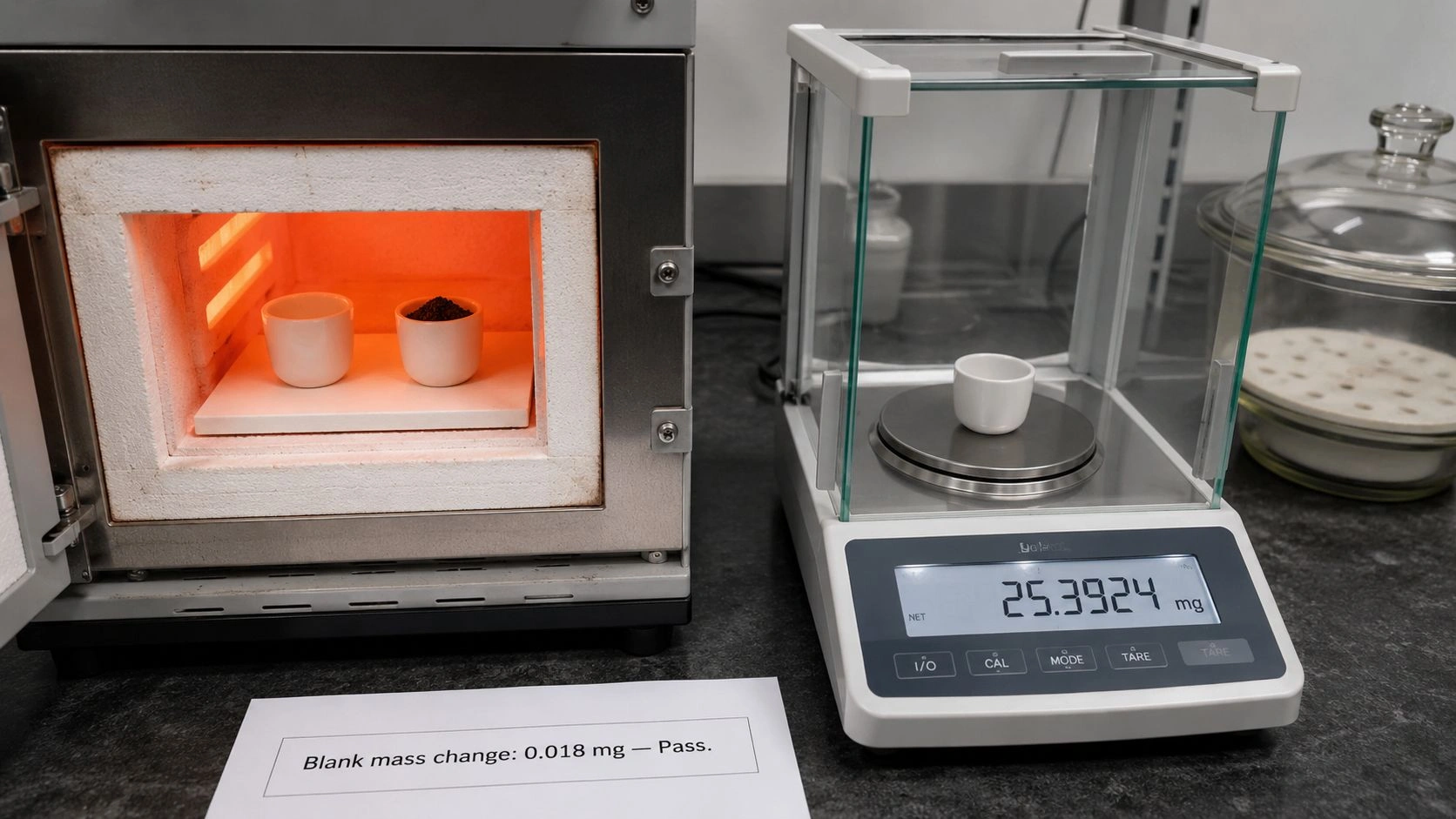
Recrystallized alumina crucibles are stable, high-temperature containers for ash-content testing — but accurate results require pre-firing, blank correction, and controlled handling, because the crucible is not automatically invisible to the measurement.
What "ash content" means in a recrystallized alumina crucible
The title of this article contains a real ambiguity that should be resolved before anything else: ash content measured in a crucible refers to the sample residue, not to ash produced by the crucible material itself. Recrystallized alumina does not combust or produce ash — it is already a fully inorganic oxide ceramic fired at high temperature.
In a standard ash determination workflow, TA Instruments describes the process as heating a sample in air to a high enough temperature that organic substances pyrolyze, leaving the inert and inorganic residue that is then weighed as a percentage of the original sample mass. The crucible in that workflow is the vessel. Intertek's ash content overview describes the same sequence: a dried, pre-weighed crucible is charged with sample, burned above 500°C (method-dependent), cooled, and reweighed — the mass difference between the charged crucible before and after burning is the ash residue.
In both descriptions, the crucible is supposed to be a stable reference mass. The complication is that it does not always stay perfectly stable.
Sample ash residue vs crucible background
When a crucible gains moisture from the laboratory atmosphere, adsorbs residue from a previous run, or picks up handling contamination, its mass at the time of weighing is not the same as its mass at the time of calibration. Even a 0.1 mg change in a 20 mg ash measurement represents a 0.5% error — an illustrative sensitivity example, not an ADCERAX blank-acceptance criterion. For high-sensitivity ash work, the crucible must be treated as part of the measurement system, not just as a passive container.
Why recrystallized alumina is used as a high-temperature container
Recrystallized alumina — also referred to as high-purity or fully dense alumina in different commercial contexts — provides better dimensional stability, lower open porosity, and greater chemical inertness than standard-grade alumina at high temperature. For ashing workflows that involve muffle furnace temperatures above 800°C, repeated cycles, or chemically aggressive residues, recrystallized alumina provides more consistent container behavior than porcelain or lower-purity alumina alternatives.
Why the crucible is not automatically invisible to the test
An alumina crucible that has not been properly pre-fired still contains adsorbed water, trace organics from manufacturing, and potentially surface particulates from packaging or handling. When that crucible is heated for the first time during an ash run, it loses mass from these volatile sources — and if the crucible is not pre-weighed after that first-use conditioning, the reported ash value includes a systematic error from the crucible itself. This is not a failure of alumina as a material; it is a failure of method discipline around the crucible.
How crucible blank, pre-firing, and residue control affect ash results
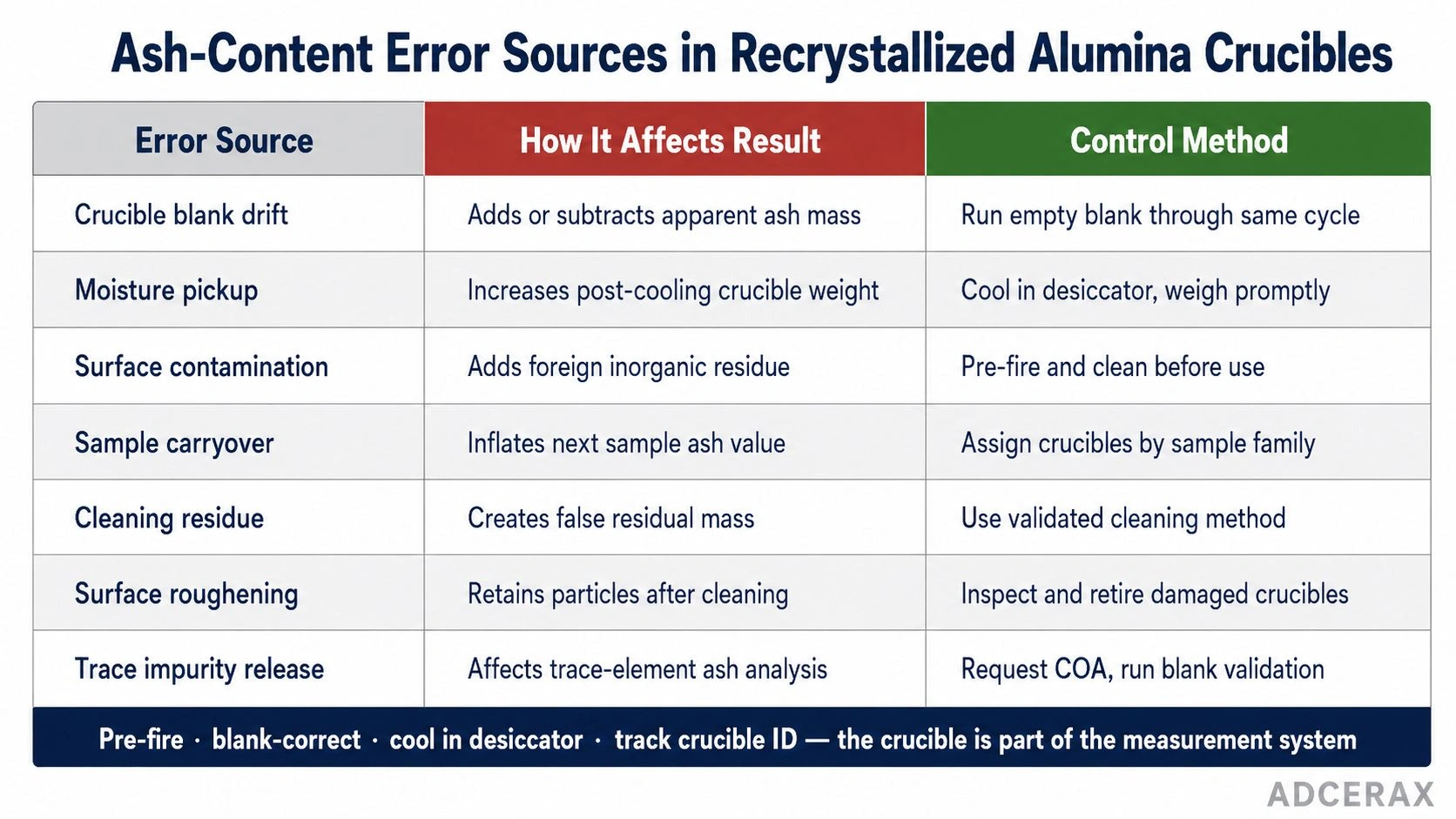
After understanding that the crucible can shift the measurement, the practical question is which error mechanisms matter most and how to control them.
The Ash-Content Error Sources table below maps each crucible-related error mechanism to its control method:
| Error source | How it affects result | Control method | RFQ/SOP note |
|---|---|---|---|
| Crucible blank drift | Adds or subtracts apparent ash mass | Run empty crucible blank through same cycle | Define blank acceptance criterion |
| Moisture pickup | Increases post-cooling weight | Cool in desiccator and weigh promptly | Specify cooling workflow |
| Surface contamination | Adds foreign inorganic residue | Pre-fire and clean before use | Ask for clean packaging |
| Sample carryover | Inflates next sample ash | Assign crucibles by sample family | Track crucible ID and history |
| Cleaning residue | Creates false residual mass | Use validated cleaning method | Avoid unknown detergents or salts |
| Surface roughening | Retains particles after cleaning | Inspect and retire damaged crucibles | Define retirement criteria |
| Trace impurity release | Affects trace-element ash analysis | Request COA and blank validation | Specify critical elements |
Values are qualitative; verify blank acceptance and contamination thresholds using the laboratory's validated ash method and sample matrix.
Blank crucible correction. Running an empty crucible through the same heating cycle as the sample confirms that the crucible does not contribute measurable mass to the result. The blank mass difference — the change in crucible mass from before to after the heating cycle — should be recorded and verified against the laboratory's acceptance criterion. Treat blank verification against the lab acceptance criterion as required procedure for the method — not optional.
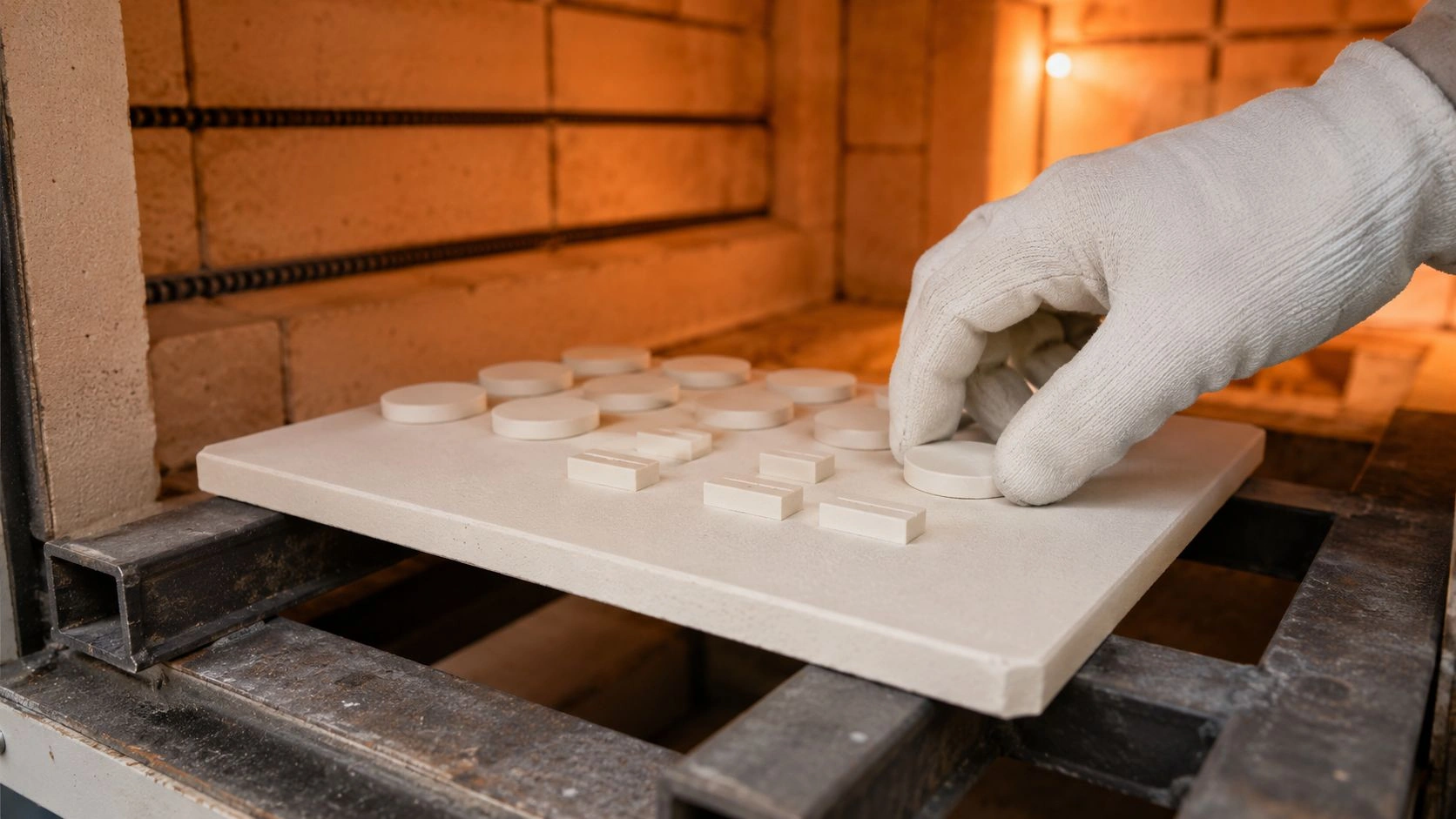
Pre-firing and conditioning before first use. A new crucible that has not been pre-fired may release adsorbed water, trace organic species, or manufacturing residues during the first ash run. Pre-firing — heating the empty crucible to the intended ashing temperature or slightly above, then cooling and weighing — drives off these volatile species before the crucible is used for sample analysis. Published biomass ash procedures often require overnight pre-conditioning at ashing temperature specifically for this reason — verify your own SOP; that example temperature is not an ADCERAX pre-fire rating.
Moisture and desiccator cooling. After a furnace cycle, a hot alumina crucible that is cooled in open laboratory air will adsorb moisture from the atmosphere before weighing — and the amount adsorbed depends on humidity, cooling time, and crucible surface area. Cooling in a sealed desiccator over a suitable desiccant, then weighing promptly after removal, minimizes moisture contribution to the tare mass.
Sample carryover and surface residue. If a crucible is reused across different sample types — especially samples with different ash chemistries, reactive metal oxides, or flux-forming residues — residue from one run can interfere with the next. Assigning crucibles to a specific sample family, cleaning to a validated protocol, and inspecting for residue before reuse reduces carryover risk.
Reuse cycles and mass stability tracking. Reusable alumina crucibles should be tracked by a laboratory identifier. After each use, the cleaned and pre-fired crucible mass should be compared to the original reference mass. A crucible that shows consistent mass gain or loss across reuse cycles — even after proper cleaning and pre-firing — should be retired, because the mass instability indicates surface changes that can no longer be corrected by blank subtraction alone.
When recrystallized alumina crucibles are the right choice
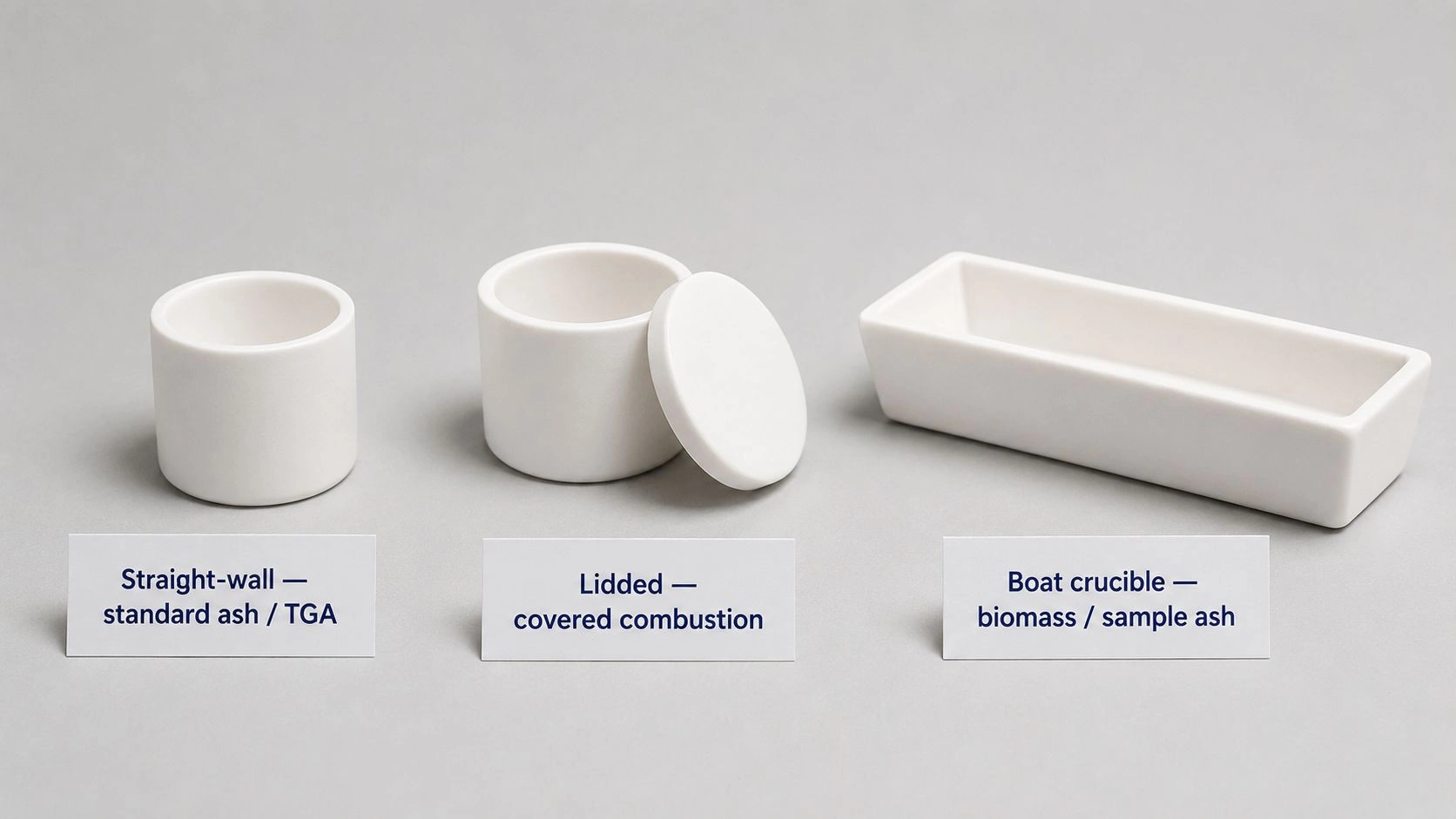
After defining the error mechanisms that must be controlled, the material route question becomes: when is recrystallized alumina the appropriate crucible, and when is another material better?
Recrystallized and high-purity alumina crucibles are strong candidates for ash-content workflows that require high-temperature stability, repeated heating cycles, chemical resistance to many inorganic residues, and dimensional stability over extended use. Some published TGA crucible listings cite reusable alumina crucibles around 1600°C — that is industry literature, not an ADCERAX rating; match the instrument and method temperature to the crucible rating you procure. Published high-purity alumina labware notes also describe powder calcination, sintering, reacting, vaporizing, and sample analysis uses. For these applications, recrystallized alumina often provides better long-term container reliability than porcelain or lower-purity alternatives when the method temperature and chemistry fit.
The When Recrystallized Alumina Fits Ash Testing table maps common ash-test conditions to material suitability:
| Application condition | Recrystallized alumina fit | Main advantage | What to verify |
|---|---|---|---|
| High-temperature ash/TGA | Strong candidate | Thermal stability and reusability | Instrument temperature and crucible size |
| Biomass/fuel ash | Strong candidate with blank control | Handles muffle furnace cycles | Empty crucible blank |
| Polymer filler ash | Often suitable | Resists >500°C ashing conditions (method-dependent) | Residue sticking and cleaning |
| Powder calcination residue | Strong candidate | Dense high-purity container | Reaction with powder chemistry |
| Ultra-trace elemental ash | Use with validation | Stable ceramic container | COA and blank element profile |
| Flux-rich samples | Use caution | High-temperature ceramic stability | Flux attack and surface glazing |
| Alkali/salt residues | Use caution | Reusable if surface remains stable | Carryover and surface roughening |
| Low-temperature routine ash | May be more than needed | Durable, reusable | Cost vs porcelain/metal pans |
The Material Route Comparison table maps other common crucible materials to their ash-test fit:
| Crucible/pan material | Best-fit use | Main advantage | Main limitation |
|---|---|---|---|
| Recrystallized alumina | High-temperature reusable ash/TGA/calcination | High thermal stability and low interaction with many residues | Needs blank control and trace-element validation |
| Porcelain | Routine moderate-temperature ashing | Common and economical | Lower high-temp/purity confidence |
| Quartz/silica | Silica-compatible or optical workflows | Transparent and silica chemistry | Softening/devitrification/alkali attack |
| Platinum | High-precision analytical workflows | Excellent cleanability and thermal response | Cost and sample-chemistry compatibility limits |
| Aluminum pan | Low-temperature thermal analysis | Fast heat transfer and low cost | Not suitable for high-temperature ashing |
| Graphite | Reducing or special high-temp support | Thermal shock and machinability | Oxidizes in air and can contaminate ash |
The case for recrystallized alumina is strongest when the method requires repeated high-temperature cycles, when residues are predominantly inorganic oxides or silicates, and when method validation confirms that the alumina blank is stable enough for the measurement precision required. The case weakens when the ash involves reactive chemistry that can glaze or attack the alumina surface, when extreme trace-element purity limits require a different material (platinum, zirconia, or a pre-characterized low-blank alumina grade), or when the method temperature is well below 600°C and porcelain or metal pans are already validated and adequate.
Do not misdiagnose ash variation as sample chemistry alone
When ash-content results show unexplained variation between runs, between operators, or between instrument batches, the natural first response is to attribute the variation to sample heterogeneity. That is sometimes correct — but crucible and workflow sources deserve equal scrutiny before sample chemistry is concluded to be the cause.
Sample heterogeneity vs crucible carryover. A crucible that retains alkali salts, reactive metal oxides, or carbonaceous residue from a previous run contributes a systematic bias to the next measurement. The bias may look like sample-to-sample variation if crucible IDs are not tracked. Assigning crucibles to a specific sample family and logging their cleaning and pre-firing history converts carryover from an invisible error source into a controlled and detectable one.
Moisture pickup after furnace cooling. In a humid laboratory environment, an alumina crucible cooled in open air can gain several tenths of a milligram before weighing — an amount that is significant at the precision levels required for trace-level ash measurements. If one operator uses a desiccator and another does not, the two results will not agree, and the disagreement will appear to be sample variation. Standardizing the cooling protocol is the fix, not re-testing the sample.
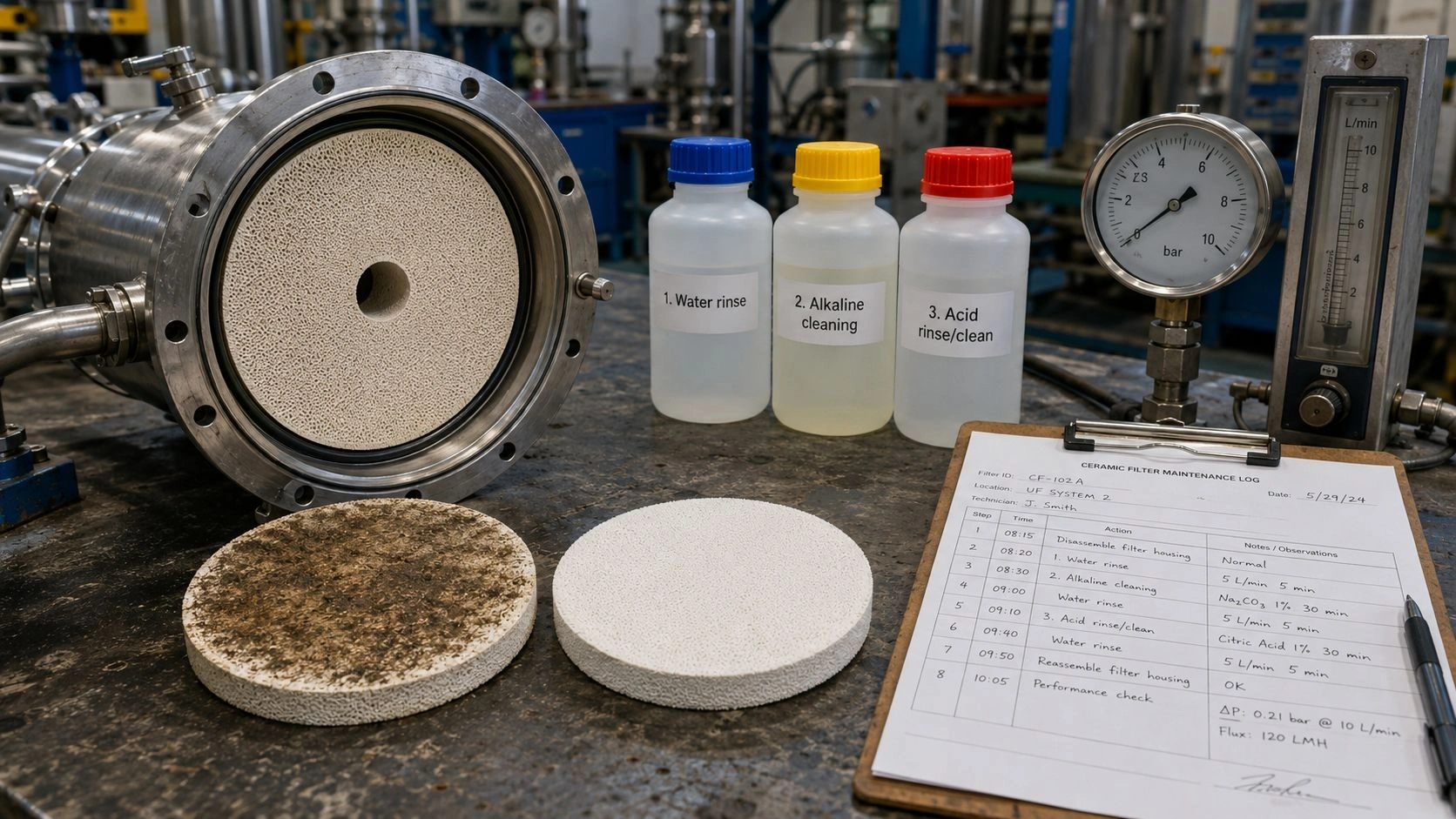
Cleaning residue and tool contamination. If crucibles are cleaned with detergents, acid solutions, or alkaline cleaners and not fully rinsed, the cleaning chemical can contribute residual mass to the next ash run. Similarly, metal tweezers, contaminated tongs, or paper tissue used to handle clean crucibles can transfer contamination. Specifying clean-room-grade or inert-material handling tools and a validated cleaning protocol eliminates this source before it appears as ash variation.
Furnace airflow and incomplete combustion. Ash values can drift between runs if the muffle furnace airflow is not consistent — insufficient oxygen at the sample surface leads to incomplete combustion, leaving carbonaceous residue that registers as inorganic ash. This is a furnace and method variable, not a crucible material variable, but it produces results that look identical to crucible contamination. Confirming that the ashing is complete (no carbon color, full white residue) before recording the result is the appropriate control.
When to retire reusable alumina crucibles. Crucibles that show consistent blank drift after proper pre-firing and cleaning, visible glazing or fusion from reactive residues, surface cracks that retain particles, or discoloration that cannot be cleaned should be retired. Continuing to use a degraded crucible creates correlated errors across all runs that use that crucible — which cannot be corrected by simple blank subtraction.
RFQ and SOP checklist for recrystallized alumina ash crucibles
A complete RFQ for recrystallized alumina ash crucibles must provide both the application conditions and the measurement quality requirements — without both, the supplier cannot confirm whether the purity grade, surface finish, pre-fired condition, and packaging cleanliness are appropriate.
| RFQ field | Why it matters | Recommended wording |
|---|---|---|
| Alumina purity | Controls background impurities | "Quote alumina purity grade with COA and impurity profile (e.g. 99.7% class if method requires)" |
| Density/porosity | Controls residue retention | "Provide density and open porosity if available" |
| Crucible size | Controls sample mass and ash depth | "State volume, OD, height, wall, lid requirement" |
| Ash temperature | Defines thermal boundary | "Continuous and peak ashing temperature" |
| Pre-fired condition | Reduces first-use drift | "Specify whether crucibles are pre-fired/clean packed" |
| Blank criterion | Controls method accuracy | "Run blank crucible through same cycle; define allowable mass change" |
| Critical elements | Controls trace contamination | "List Al, Na, K, Fe, Ca, Mg, Si, Ti limits if relevant" |
| Surface finish | Affects residue removal | "State inner surface finish and cleanability requirement" |
| Reuse plan | Controls carryover risk | "Specify single-use, limited reuse, or tracked reuse" |
| Packaging | Protects clean workflows | "Clean bag, separators, batch label, lot traceability" |
RFQ wording above is screening guidance for inquiry completeness — not a blank-mass guarantee or factory acceptance contract.
RFQ fields are the minimum for a high-purity alumina ash crucible inquiry; add instrument compatibility, lid requirement, and SOP reference as needed.
For critical ash-content workflows — trace elemental ash, regulatory compliance testing, or method validation for new sample matrices — running a blank validation series using the candidate crucible lot before placing a production order is the most reliable qualification step. Three to five blank cycles using the actual ashing temperature, atmosphere, and cooling protocol, with mass change logged per cycle, confirms whether the specific crucible lot and the laboratory's handling workflow together achieve the required blank stability.
Evaluating recrystallized alumina crucibles for ash-content or TGA workflows? Share your sample type, ash temperature, hold time, balance readability, residue mass, blank criterion, reuse plan, critical trace elements, and required crucible size — so grade, geometry, pre-fire state, and blank criterion can be matched to the method. For catalog geometry and grades, see alumina crucibles; for ashing-oriented labware, see ceramic ashing crucibles; for non-standard lids, boats, or lot traceability, use custom services. No commitment required at this stage.
Frequently Asked Questions
Does a recrystallized alumina crucible have "ash content"?
In normal ash testing, ash content refers to the sample residue, not the crucible. The crucible can still contribute measurement error through blank mass drift, surface contamination, retained residue from previous runs, or trace impurity release at high temperature — which is why a blank crucible should always be run through the same heating cycle as the sample and its mass change recorded.
Why are alumina crucibles used for ash determination?
Alumina crucibles are used because they tolerate high temperatures, resist most inorganic ash chemistries, are dimensionally stable over repeated heating cycles, and are reusable when properly cleaned and conditioned. Some published thermal-analysis suppliers list reusable alumina crucibles for TGA near 1600°C — treat that as published-supplier guidance, not an ADCERAX rating, and match instrument/method temperature to the crucible rating.
Should recrystallized alumina crucibles be pre-fired?
Yes, especially for precise ash or TGA work. Pre-firing drives off adsorbed moisture, trace organics from manufacturing, and surface volatile species before the crucible is used for sample analysis. Published biomass ash procedures require crucibles to be pre-conditioned overnight at ashing temperature specifically to remove combustible contaminants before the first use.
How do crucible blanks affect ash results?
A blank crucible run through the same heating cycle as the sample confirms whether the crucible gains or loses measurable mass during that cycle. If the crucible is not blank-corrected, any mass change in the crucible during the heating cycle appears in the reported ash value. Published biomass ash methods require an empty crucible blank and set an allowable blank-difference criterion as a method accuracy control.
Can reusable alumina crucibles contaminate later ash tests?
Yes. Reuse can create carryover if residues, salts, fluxes, metal oxides, or cleaning chemicals remain on the crucible surface or in surface pores after cleaning. Assigning crucibles to a specific sample family, using a validated cleaning protocol, tracking crucible IDs and blank history, and retiring crucibles that show persistent blank drift or surface degradation all reduce carryover risk.
What should I ask a supplier for?
Ask for alumina purity grade with COA and impurity profile, density and open porosity, crucible dimensions matched to the sample volume and instrument, whether crucibles are supplied pre-fired or require first-use conditioning, clean packaging with lot traceability, surface finish and cleanability information, and whether trace-element blank characterization data is available for the lot.
Related reading
- Alumina Crucibles in Noble Metal (Pt, Pd, Rh) Assay Labs — When the lab workflow is noble-metal assay or fire-assay crucible selection — not ash-content blank control on recrystallized alumina.
- How to Clean Alumina Crucible Safely and Extend Service Life? — When reusable alumina crucibles need a validated cleaning protocol to limit residue carryover between ash runs.
- Alumina Crucible Grain Growth After 1000+ Thermal Cycles — When repeated furnace cycles change grain structure and you need to decide whether to retire a crucible — beyond the blank SOP on this page.