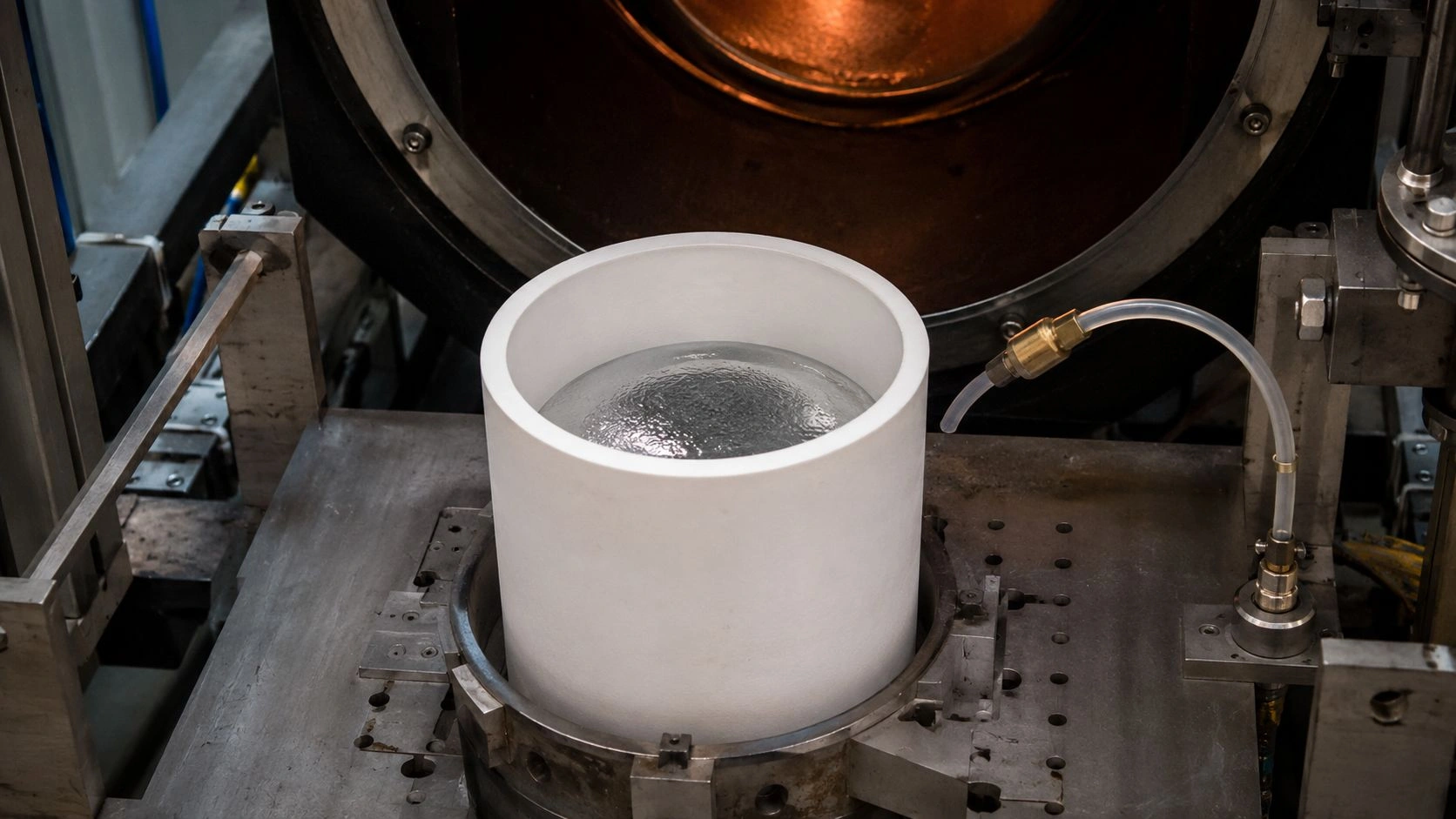
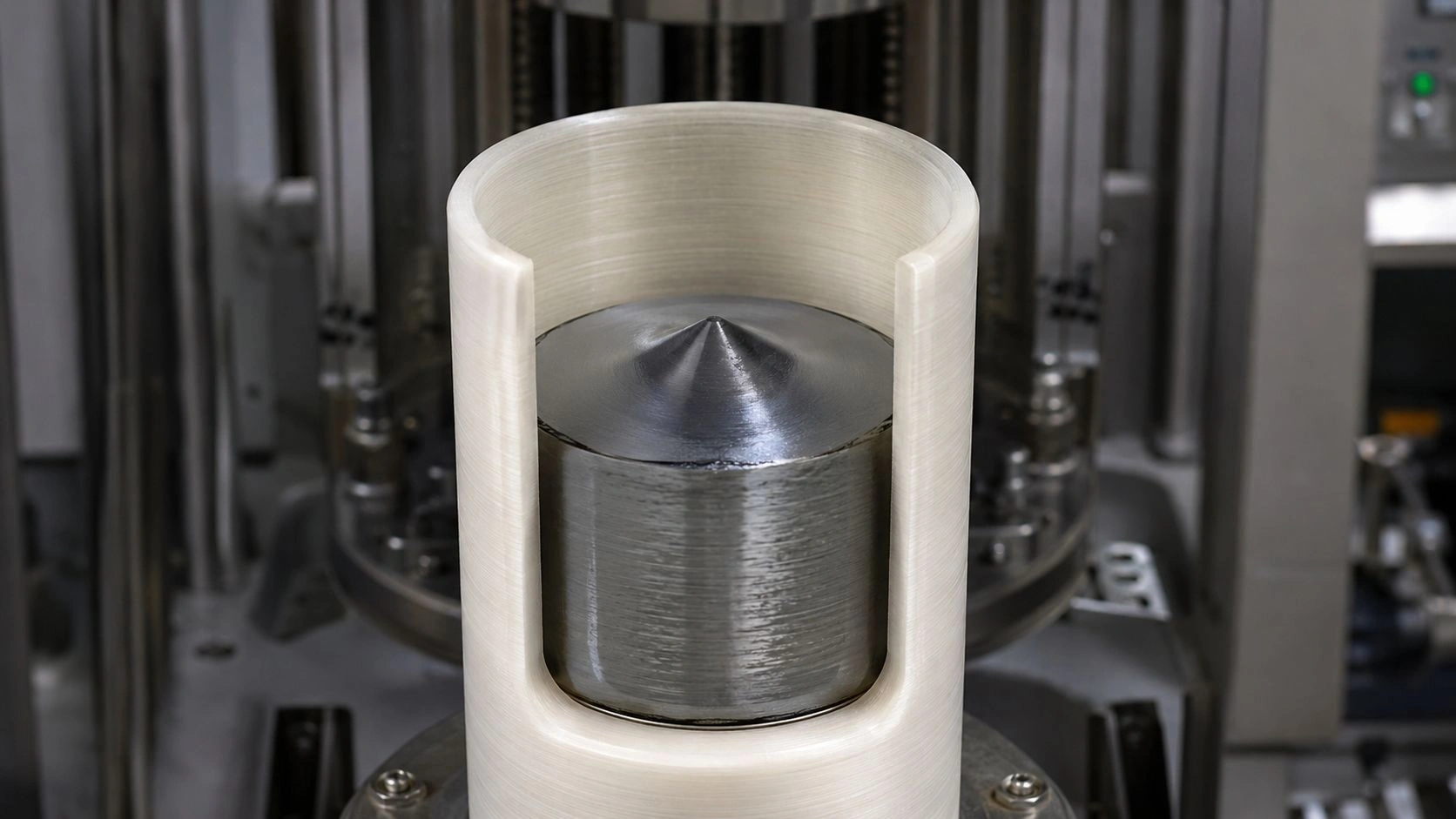
PBN crucibles are useful in OLED organic effusion cells when low outgassing, high purity, chemical inertness, stable heating, and clean post-run behavior are more important than using the lowest-cost or most standard source hardware. In organic deposition, the crucible is not only a container — it affects material temperature distribution, condensation behavior near the lip, spitting risk, and deposition-rate stability. PBN should be specified with source temperature range, organic material sensitivity, crucible volume, fill height, lip geometry, vacuum level, and cleaning requirements clearly defined. When those conditions are met, PBN can improve source stability meaningfully; when they are not the governing limitation, switching to PBN from quartz may not change the deposition outcome.
That conditional framing — PBN solves a specific set of source problems, not every deposition problem — is the engineering decision rule for OLED organic effusion crucible selection.
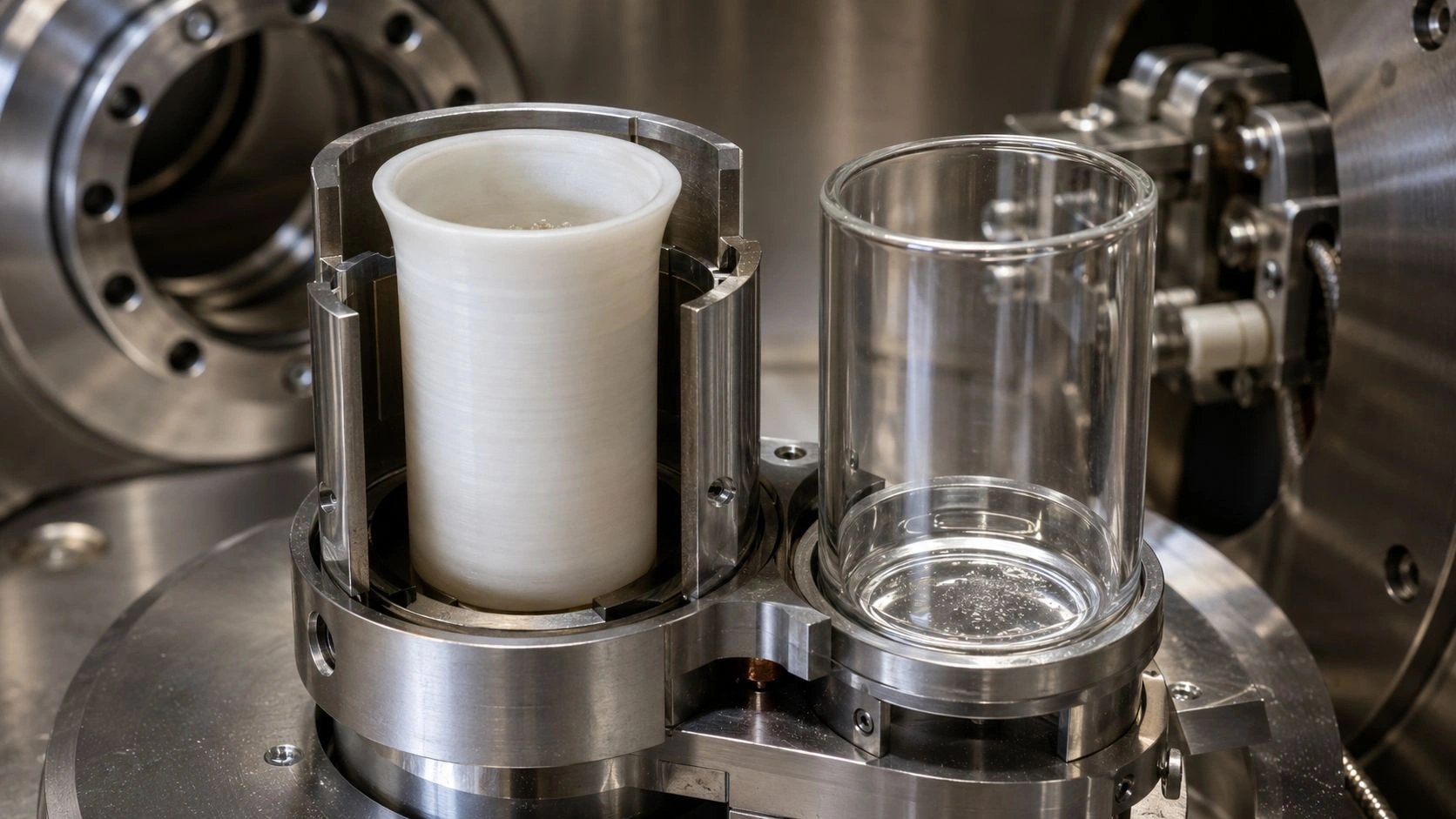
PBN crucibles in OLED organic effusion cells address specific source problems — low outgassing, thermal uniformity, non-wetting interior, and custom lip/bore geometry — rather than serving as a universal replacement for quartz in all organic evaporator configurations.
When PBN belongs in OLED organic effusion cells
PBN belongs on the shortlist for OLED organic effusion cells when the source cleanliness, thermal behavior, and geometry requirements cannot be met by standard quartz crucibles. The starting question is not "is PBN better than quartz?" — it is "what is the specific problem the crucible must solve?"
Organic evaporators for OLED and OPV materials are designed to deliver controlled, stable evaporation of thermally sensitive molecules. Published descriptions of organic effusion cell systems note that OLED organic deposition requires uniform and precise heating, with source temperature controlled above the vapor-pressure threshold of the organic material and below its decomposition temperature. That narrow operating window means that any source variable that disrupts temperature uniformity or introduces contamination can directly affect deposition stability and film quality.
PBN as a vacuum organic-source material, not just a high-temperature ceramic. PBN's value in organic evaporation is not its maximum temperature capability — most OLED organic materials evaporate at relatively low temperatures compared to metals or oxides. PBN's value comes from its low outgassing in high-vacuum environments, its chemical inertness toward organic molecules, its custom-manufacturable geometry, and its ability to support controlled temperature distribution in the source. These properties remain relevant as engineering screening factors even when evaporation temperature is below 300°C — value is driven by outgassing, geometry, cleanability, and rate stability, not by needing ultra-high-temperature capability.
Why organic materials make temperature stability more important than maximum temperature. Small-molecule OLED organics — emitter hosts, dopants, transport materials — can decompose or photodegrade if held near their evaporation temperature for extended periods. A source material or geometry that creates local hot spots, uneven heating, or unstable temperature excursions exposes organic molecules to degradation conditions even if the nominal source temperature is within specification. This makes thermal stability and temperature uniformity more critical than they would be for metal or oxide deposition at similar temperatures.
When quartz remains acceptable and when PBN should be evaluated. Quartz is the standard crucible material in many commercial organic evaporator configurations and is fully appropriate for a wide range of OLED organic materials at lower temperature ranges. PBN should be evaluated when quartz geometry is fixed and does not match the organic material's behavior, when quartz outgassing has been identified as a contamination source, when custom lip or bore geometry is required for condensation control, or when clean post-run residue removal is limiting crucible reuse.
Which PBN benefits matter most for OLED deposition?
PBN offers several properties that are relevant to OLED organic evaporation, but not all are equally important for every application. Establishing which benefits actually address the specific source problem prevents specifying PBN on properties that the process does not require.
Published PBN material characterization from major PBN producers describes CVD-PBN crucibles as chemically stable, thin yet durable, and typically thermally anisotropic — high in-plane thermal conductivity with lower through-thickness conductivity — a combination that promotes uniform heating of crucible contents while reducing radial energy loss. Use directional thermal data for the ordered CVD architecture; do not paste hot-pressed BN isotropic screening conductivity as if it were PBN. For OLED organic evaporation, geometry and thermal behavior (non-wetting, low-outgassing interiors; custom volumes, bores, lips, and wall profiles) are the engineering variables that differentiate PBN from generic quartz in organic source applications.
The PBN Use Boundary table below maps common organic source conditions to PBN suitability:
| Condition | PBN is a strong candidate when | Use caution when | What to verify |
|---|---|---|---|
| Vacuum cleanliness | Low outgassing and clean walls matter | Source contamination comes from shutter or chamber, not crucible | RGA/bake-out result |
| Organic material sensitivity | Temperature uniformity reduces degradation risk | Organic decomposes at required vapor-pressure temperature | Thermal stability test |
| Deposition rate | Stable flux requires stable source temperature | Rate instability comes from PID or thermocouple placement | QCM rate stability |
| Lip condensation | Lip/neck geometry can be customized | Source lip is too cold or overfilled | Lip temperature and residue |
| Geometry fit | Custom PBN volume, bore, lip, wall profile needed | Standard quartz crucible already meets needs | Drawing and source model |
| Cleaning/reuse | Non-wetting, smooth PBN surface helps post-run cleanup | Material polymerizes or decomposes strongly | Post-run residue inspection |
Values indicative; verify with source-specific temperature control, organic material behavior, and supplier-specific PBN data.
Low outgassing and vacuum cleanliness. In high-vacuum organic deposition systems, residual gas from the crucible material can interfere with film composition, degrade organic molecules at the substrate surface, or contaminate adjacent sources. PBN's low outgassing in high-vacuum environments is one of its most practically verifiable advantages over alternative materials. Buyers commonly require RGA/bake evidence per lot or process qualification — that is a buyer verification practice, not a claim that every furnace run is RGA-certified, and it is not an invented ppm outgassing contract.
Thermal anisotropy and temperature uniformity. CVD-PBN is typically thermally anisotropic: heat spreading is higher in-plane than through-thickness for the ordered layered architecture. For a crucible, that directional behavior can support more uniform heating along the wall from the heater winding than an isotropic ceramic with similar through-thickness conductivity — improving temperature distribution in the organic material pool, rate stability, and reducing local decomposition risk. Quote directional data for the ordered CVD architecture; do not overlay hot-pressed BN isotropic screening conductivity values onto PBN.
Non-wetting and post-run cleaning. Many OLED organic materials leave residues that can be difficult to remove from source crucibles after evaporation runs. PBN's smooth, dense interior is often observed as less wetting to many OLED organics than quartz, which can reduce residue adhesion and make post-run cleaning easier — but that observation is organic-family-, fill-height-, and cleaning-protocol-dependent, not a universal non-wetting guarantee. When it holds, cleaner crucible interiors also reduce carryover contamination risk between different organic materials in multi-source systems.
Custom volume, bore, lip, and wall profile. PBN can be manufactured by CVD into custom crucible geometries that are not available in standard quartz tube configurations. For OLED organic sources, the relevant customization options include lip inner diameter and height, neck length, bottom shape, wall thickness, and overall volume. These geometric parameters directly affect vapor path, condensation behavior, fill-level management, and source-cell fit.
Do not misdiagnose source instability as a PBN material problem
When OLED organic deposition shows rate instability, spitting, lip condensation, film nonuniformity, or unexpected chamber pressure rise, the crucible material is one possible cause among many. Before specifying a PBN replacement, the actual root cause should be identified — because most deposition instability in organic sources originates in the organic material, the temperature control system, or the source geometry rather than in the crucible material itself.
Organic material decomposition vs crucible contamination. Published analysis of OLED source design notes that many small-molecule organic materials can degrade when maintained near their evaporation temperature for extended periods. Decomposition byproducts can contaminate the film even when the crucible material is completely clean. If rate instability correlates with time at temperature rather than with the crucible surface, decomposition is the more likely cause.
Temperature overshoot vs PBN thermal behavior. Rate spikes and instability caused by PID overshoot, poor heater-to-thermocouple coupling, or inadequate thermal mass in the source assembly will appear regardless of crucible material. Before changing from quartz to PBN to address rate instability, the temperature control system should be tuned with the existing crucible geometry and fill level to confirm that the controller — not the crucible — is the instability source.
Lip condensation and shutter contamination. Organic vapor that condenses near the crucible lip, on the shutter face, or on cold surfaces near the source opening creates particulate or semi-liquid contamination that can fall back into the melt and cause spitting. This is a temperature management problem at the lip and nearby surfaces, not a crucible body material problem. A PBN crucible with a better-designed lip geometry may reduce condensation by keeping the lip warmer, but only if the geometry change is correctly specified.
Fill height and material distribution. Research on OLED evaporation source geometry notes that high-viscosity organic materials may distribute unevenly in flat-bottom crucibles, exposing part of the crucible bottom without material coverage during evaporation. This can create locally hot spots and affect both rate stability and material utilization. Fill height management and bottom geometry are therefore deposition-quality variables independent of crucible material.
The Misdiagnosis Matrix below maps common OLED source problems to better diagnostic questions:
| Observed problem | Common assumption | Better diagnostic question |
|---|---|---|
| Rate drift | PBN crucible issue | Was PID stability, thermocouple location, or organic decomposition checked? |
| Spitting | PBN surface problem | Is fill level too high, material unevenly distributed, or temperature overshooting? |
| Lip condensation | Wrong crucible material | Is the lip too cold or geometry unsuitable for the vapor path? |
| Film nonuniformity | PBN impurity | Is source geometry, shutter timing, or material pool shape responsible? |
| Higher chamber pressure | PBN outgassing | Is organic material, moisture, residue, or chamber wall contamination responsible? |
| Poor post-run cleaning | PBN not non-wetting enough | Did the organic material decompose or polymerize during long heating? |
Diagnosis should be based on RGA data, temperature logs, QCM records, and post-run inspection before any crucible material change is specified.
PBN crucible shape variables for OLED organic sources
After confirming that PBN addresses the specific source problem, the crucible geometry must be specified around how the organic material heats, spreads, evaporates, and condenses inside the effusion cell — not from a catalog volume selection.
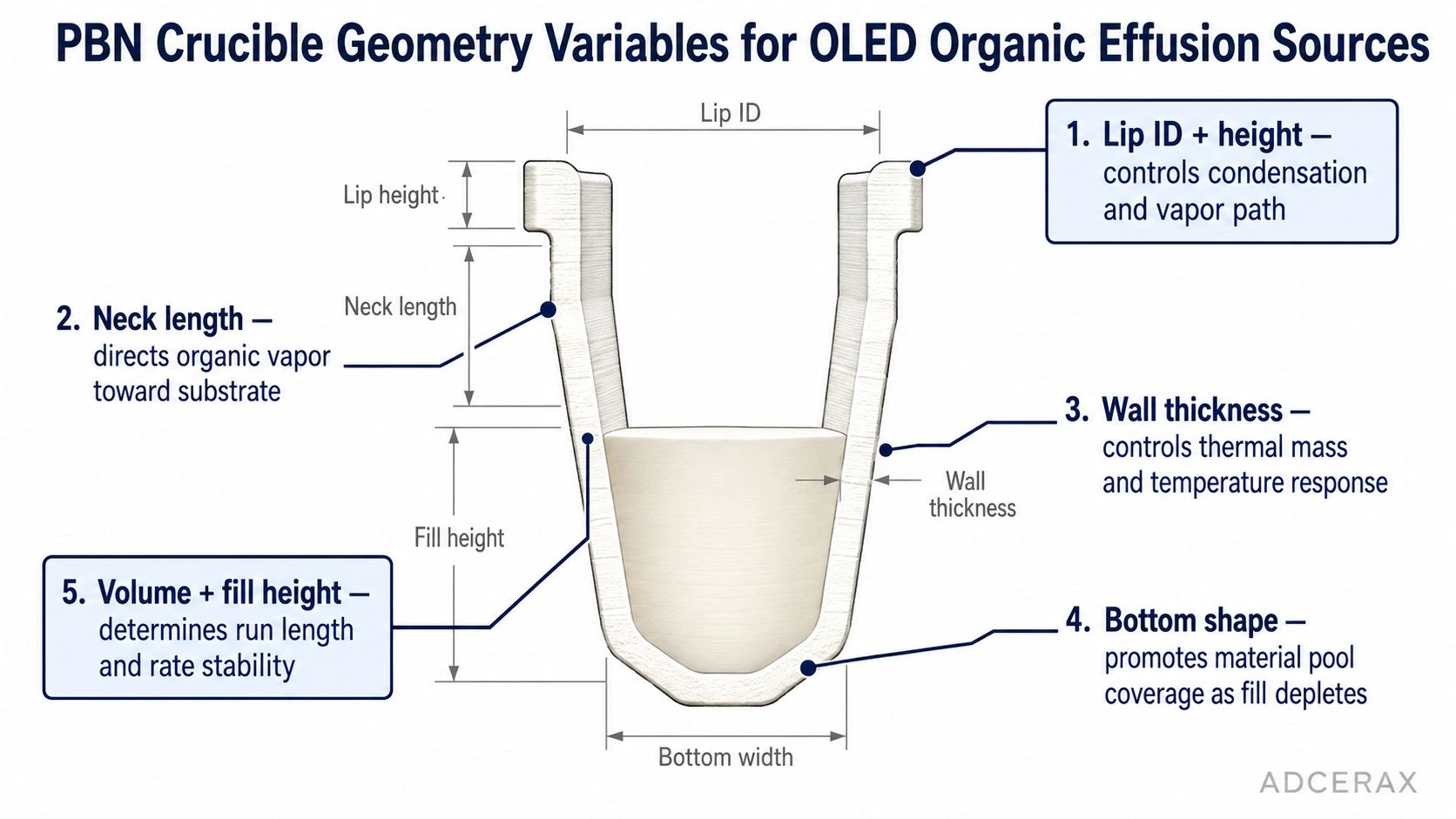
Five PBN crucible geometry variables determine organic source behavior — lip geometry and fill height have the largest direct effect on condensation control and deposition-rate stability.
Capacity and fill height. Crucible volume must match the organic material quantity needed for a full production run without requiring mid-run refills. Fill height matters because organic material that is filled too high reaches the lip zone, increasing condensation risk; material filled too low at the start of a run creates a large exposed bottom area before a stable pool forms. Published organic evaporator and source-design materials note capacity windows from as small as 2 cm³ for low-volume materials to 35 cm³ or larger for production sources — source-matched published/system bands, not an ADCERAX factory capacity contract — with fill height typically specified as a fraction of total crucible height.
When geometry must leave the catalog envelope, start from the PBN crucible product path for vacuum/organic evaporation duty, cross-check solid vs other BN forms on the boron nitride crucible page, and use custom services only when bore, lip, wall profile, or length must be cut to the source drawing.
Bottom shape and material distribution. A conical or shaped bottom promotes organic material flow toward the lowest point of the crucible as the pool depletes, maintaining coverage over the heated bottom surface through more of the run. A flat bottom may leave uncovered areas that create local hot spots. For organic materials with higher viscosity at their evaporation temperature, bottom geometry has a larger effect on run-to-run reproducibility.
Lip and neck geometry and condensation control. The crucible lip — the opening at the top — defines the vapor path from the organic pool to the deposition space. A lip that is too narrow or too cold creates a condensation trap where organic vapor deposits and accumulates. A lip that is too wide or too close to a cold surface in the source assembly allows vapor to escape sideways rather than directing it toward the substrate. Custom PBN lip inner diameter, lip height, and any neck extension can be specified to match the effusion cell's vapor-path geometry and thermal design.
Wall thickness and thermal response. Thinner PBN walls reduce thermal mass and allow faster temperature response to the heater — useful when source temperature is ramped frequently. Thicker walls provide more thermal stability during steady-state operation and reduce the risk of local temperature variation from heater non-uniformity. Wall thickness specification should follow the source heater design and the required temperature ramp rate.
Source-cell fit and thermocouple position. The PBN crucible must fit the effusion cell bore with appropriate clearance for thermal expansion while maintaining good thermal contact between the cell heater and the crucible outer wall. Thermocouple position — whether the thermocouple contacts the crucible bottom, the outer wall mid-height, or the cell body — directly affects the thermal control accuracy at the organic material pool. Specifying crucible geometry without confirming the thermocouple position relative to the fill level can introduce control errors that appear to be material problems.
RFQ checklist for PBN effusion cells in OLED organic deposition
A complete RFQ for PBN effusion crucibles must provide both the organic material context and the source hardware context — without both, the supplier cannot confirm whether the proposed PBN geometry, volume, and lip configuration are appropriate.
Engineering guidance on PBN crucible specification for OLED organic effusion sources confirms the complete RFQ sequence: organic material family or name, evaporation/sublimation temperature range, decomposition sensitivity if known, target deposition rate, source model and existing crucible drawing, crucible capacity and recommended fill height, lip/neck geometry, vacuum level, bake-out temperature, thermocouple position, heater configuration, and cleaning/reuse expectations — because organic material behavior at evaporation temperature, source geometry, and thermal control all interact to determine whether PBN provides the deposition stability improvement being sought. A supplier who receives only "PBN crucible for OLED" cannot confirm volume, lip design, or thermal suitability without the remaining context.
| RFQ field | Why it matters | Recommended wording |
|---|---|---|
| Organic material family | Controls temperature and compatibility | "Specify emitter/host/dopant/transport material family" |
| Evaporation temperature | Defines thermal window | "Provide operating and bake-out temperature range" |
| Source model | Controls fit | "Identify effusion cell model and existing crucible drawing" |
| Crucible volume | Controls fill and stability | "Quote capacity and recommended fill height" |
| Lip/neck geometry | Controls condensation and vapor path | "Specify lip ID, lip height, neck length, or orifice" |
| Wall thickness | Controls heat response | "Confirm wall uniformity and tolerance" |
| Purity/outgassing | Controls vacuum cleanliness | "Provide PBN purity and low-outgassing suitability" |
| Cleaning/packaging | Protects OLED materials | "State clean packing, handling, and reuse guidance" |
| Validation | Confirms actual performance | "Compare QCM rate stability, RGA, residue, and film uniformity" |
RFQ fields are the minimum for a PBN OLED effusion crucible inquiry; add shutter clearance, crucible length, and surface finish requirement as needed for specific source models.
For standard and custom PBN OLED effusion crucibles, catalog-typical volume bands for standard PBN crucibles are often quoted around 20–120 cc — final ID/OD/height and usable fill remain on the drawing / quote, not a whole-geometry contract capacity. Use the PBN crucible path for vacuum evaporation / organic source geometries, the BN crucible page when comparing solid BN forms, and custom services when lip, bore, or wall profile must match a specific effusion-cell drawing.
For validation after receiving a PBN crucible, the practical comparison should measure deposition-rate stability (QCM data over multiple runs), residual gas behavior (RGA signal during bake-out and during deposition), post-run residue on the crucible interior, lip condensation amount and character, and film uniformity across the substrate. Comparing these metrics between the existing quartz crucible and the new PBN crucible — under identical source temperature, fill level, and run protocol — is the correct way to confirm that PBN delivers the expected improvement.
Evaluating PBN crucibles for OLED organic effusion sources? Share organic material type, source model, effusion cell drawing, evaporation temperature, crucible volume and recommended fill height, lip/neck geometry, vacuum level, bake-out condition, thermocouple position, heater configuration, and cleaning protocol so the RFQ can lock geometry and verification fields — not a catalog opener alone.
Frequently Asked Questions
Why is PBN used in OLED organic deposition sources?
PBN is used when low outgassing, high purity, chemical inertness, thermal stability, and custom crucible geometry help stabilize organic evaporation. Its value in OLED applications specifically comes from vacuum cleanliness, temperature uniformity from CVD-PBN thermal anisotropy (qualitative directional behavior), often-cleaner post-run residue behavior vs quartz when organic family and cleaning protocol allow, and the ability to manufacture custom lip and bore geometries that standard quartz tubes cannot provide.
Is PBN always better than quartz for OLED evaporation?
No. Quartz is standard in many organic evaporator configurations and fully appropriate for many low-temperature organic sources. PBN should be evaluated when quartz geometry, outgassing, thermal behavior, or post-run cleaning performance does not meet the specific process requirement. Specifying PBN without confirming which source problem it is solving is unlikely to improve deposition stability.
What OLED deposition problems can PBN help with?
PBN may help with low-outgassing requirements, clean source interiors, smoother post-run cleaning when organic family and protocol allow, thermal uniformity through anisotropic heat spreading, and custom lip or bore geometry for condensation control. It does not automatically solve organic material decomposition, PID instability, poor thermocouple placement, inadequate fill-level management, or chamber wall contamination.
Why does crucible geometry matter in OLED evaporation?
Crucible geometry affects material distribution in the pool, exposed bottom area as material depletes, lip condensation behavior, vapor path to the substrate, and source-cell thermal contact. Published analysis of OLED evaporation source design confirms that organic material distribution inside the crucible can directly affect evaporated film uniformity — making geometry a deposition-quality variable independent of crucible material choice.
What temperatures are typical for organic effusion cells?
Source temperatures vary by material. Published-typical organic evaporator bands for OLED/OPV materials often fall around 15–300°C — material- and source-dependent, not a PBN service rating. Broader organic effusion systems are described in literature/brochure typical windows such as 50–700°C depending on source design and organic material volatility. The narrow window between vapor-pressure temperature and decomposition temperature makes precise control more important than maximum temperature capability.
What information should I send to a supplier for a PBN OLED crucible?
Send the source model and existing crucible drawing, organic material family and evaporation temperature range, required crucible capacity and fill height, lip inner diameter and height, neck length if applicable, wall thickness, vacuum level, bake-out temperature, thermocouple position in the source assembly, heater configuration, cleaning and reuse expectations, and whether a quartz-to-PBN comparison trial is planned before full production use.
Related reading
- PBN tubes for effusion cells in MBE systems — How PBN tube liners in MBE effusion hardware differ from crucible geometry choices for OLED organic sources.
- Long-term storage of PBN components and moisture risks — Where moisture uptake in stored PBN parts becomes a vacuum-cleanliness risk before the next organic run.
- BN coatings on graphite vs solid BN crucibles — When a BN coating on graphite is a different materials decision than a solid PBN crucible for organic evaporation.