SiC tubes in Li battery cathode roller hearth kilns refer to several distinct functional ceramic components: roller tubes that transport saggers through the kiln, radiant or heating tubes that support thermal uniformity, thermocouple protection tubes that shield temperature sensors, and cooling-zone pipes that support controlled airflow and thermal transition. They are used together because cathode active material calcination combines high temperature, oxygen-rich or controlled atmospheres, long dwell time, continuous mechanical loading, and chemical exposure from lithium-containing powder chemistry. The correct SiC tube type is chosen by its kiln position, the load it carries, the temperature and atmosphere it faces, the straightness and span it must maintain, and the failure mode it controls.
Product context for the component decisions in this guide: silicon carbide tubes for kiln rollers and heat-exchange applications (SSiC and RBSiC grades in roller, protection, heating, and custom forms), plus lithium-battery processing ceramics and drawing·kiln zone·atmosphere RFQ.
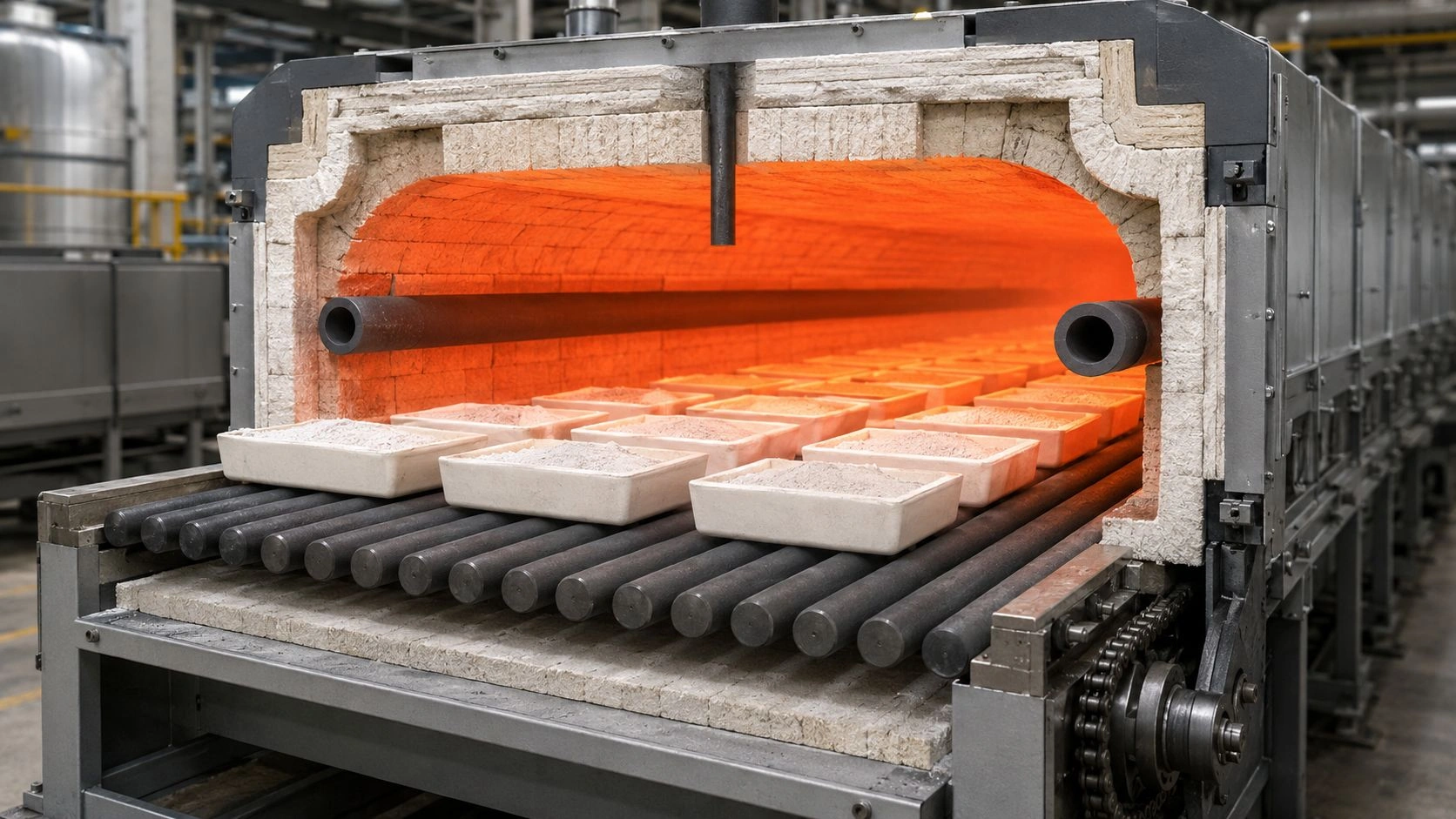
SiC tube components in Li battery cathode roller hearth kilns include roller tubes, radiant/heating tubes, thermocouple protection tubes, and cooling air pipes — each controls a different failure risk and requires separate specification by position, load, temperature, and atmosphere.
Which SiC tube components are used in cathode roller hearth kilns?
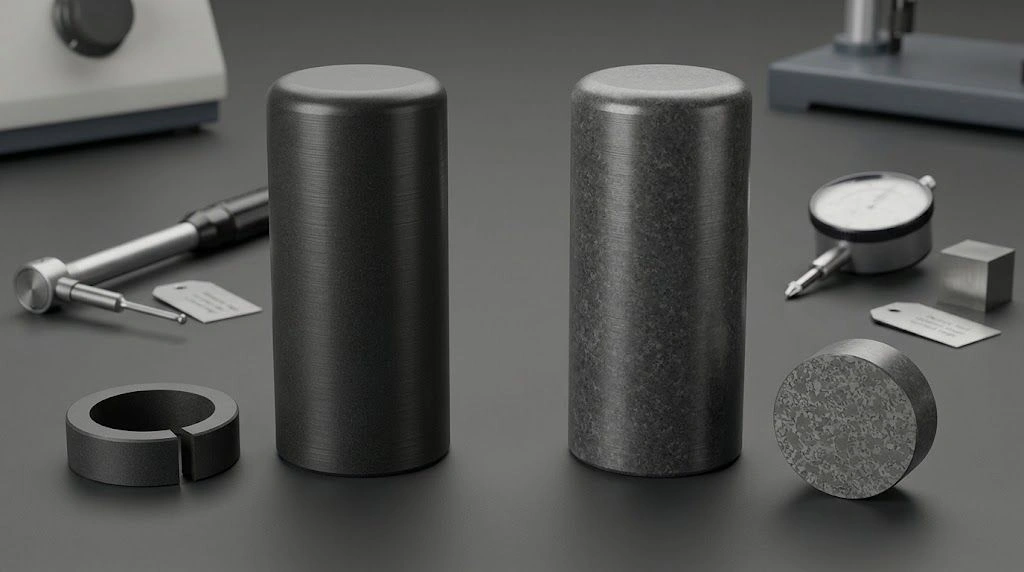
The first clarification for any SiC tube RFQ related to cathode roller hearth kilns is functional identity: which tube form is actually needed? The four main forms are physically similar — all are tubular silicon carbide components — but they serve fundamentally different engineering roles.
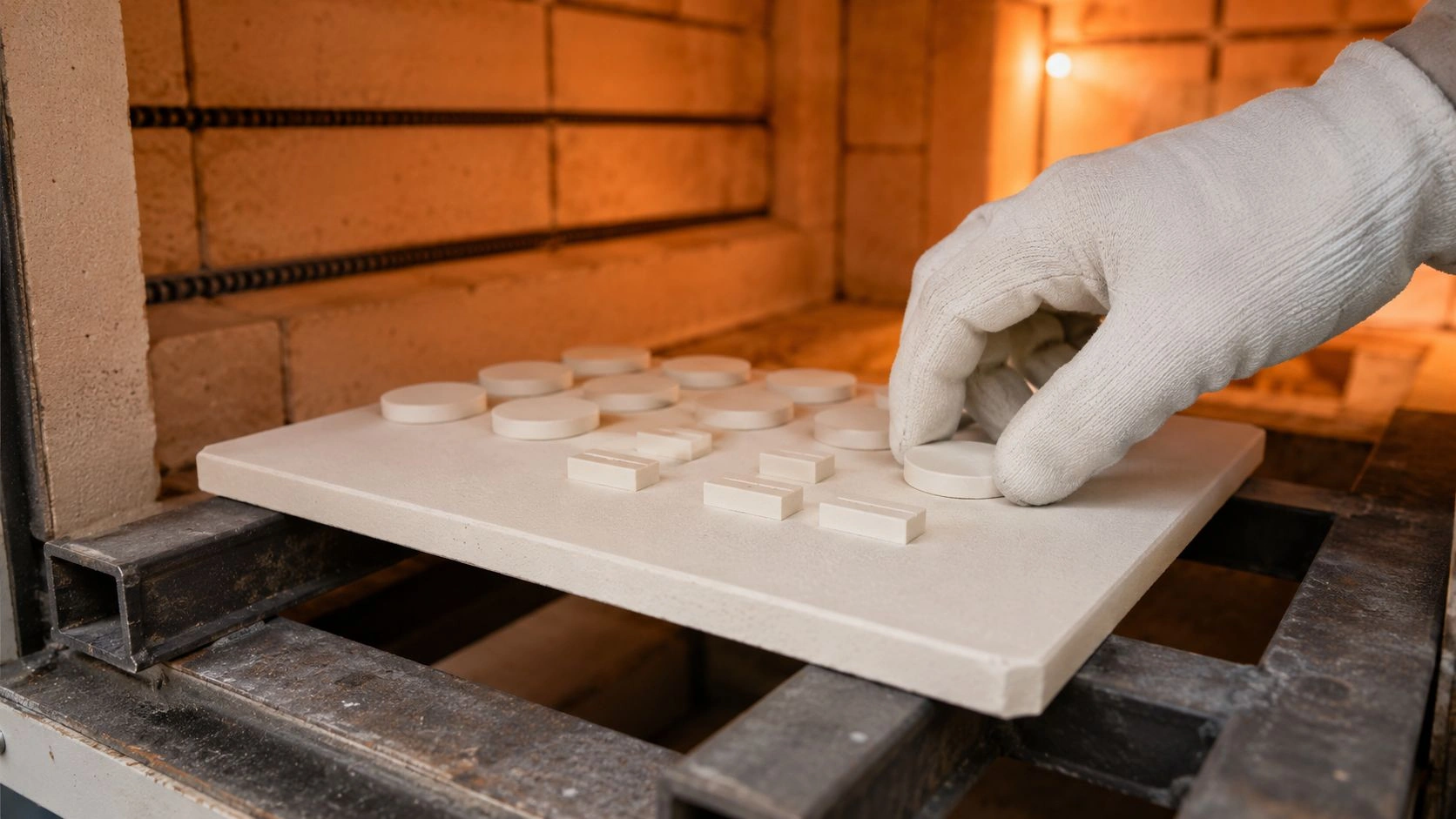
In a cathode active material roller hearth kiln, saggers filled with lithium-transition-metal precursor powders ride on ceramic rollers through a series of heating zones. Published coverage of SiC rollers for cathode active material manufacturing confirms this architecture: saggers carry the powder while rollers provide the transport mechanism, and the rollers must survive continuous mechanical loading, high temperature, oxygen or air atmosphere, and the chemical environment generated by the calcination chemistry. For NCM, NCA, and NCMA cathode chemistries, calcination is discussed against a process-typical cathode calcination band around 700–1200°C in controlled or oxidizing atmospheres, with long dwell times required for complete crystallization and phase formation — confirm chemistry + kiln recipe on RFQ; not a universal acceptance temperature band or loaded continuous rating.
The SiC Tube Component Map in Cathode Roller Hearth Kilns table maps each form to its kiln position:
| SiC tube form | Kiln position | Primary function | Main selection risk |
|---|---|---|---|
| SiC roller tube | Hearth transport zone | Moves loaded saggers through heating zones | Sag, bending, misalignment |
| SiC radiant tube | Heating zone | Transfers heat into the kiln chamber | Thermal output, wall design, mounting |
| SiC heating tube/element | Electric heating zone | Provides controlled electric heat | Power density, oxidation, replacement access |
| SiC thermocouple protection tube | Temperature measurement point | Shields sensors from corrosive furnace atmosphere | Gas tightness, response time, corrosion |
| SiC cooling air pipe | Cooling zone | Supports controlled airflow and thermal transition | Thermal shock, airflow stability, clogging |
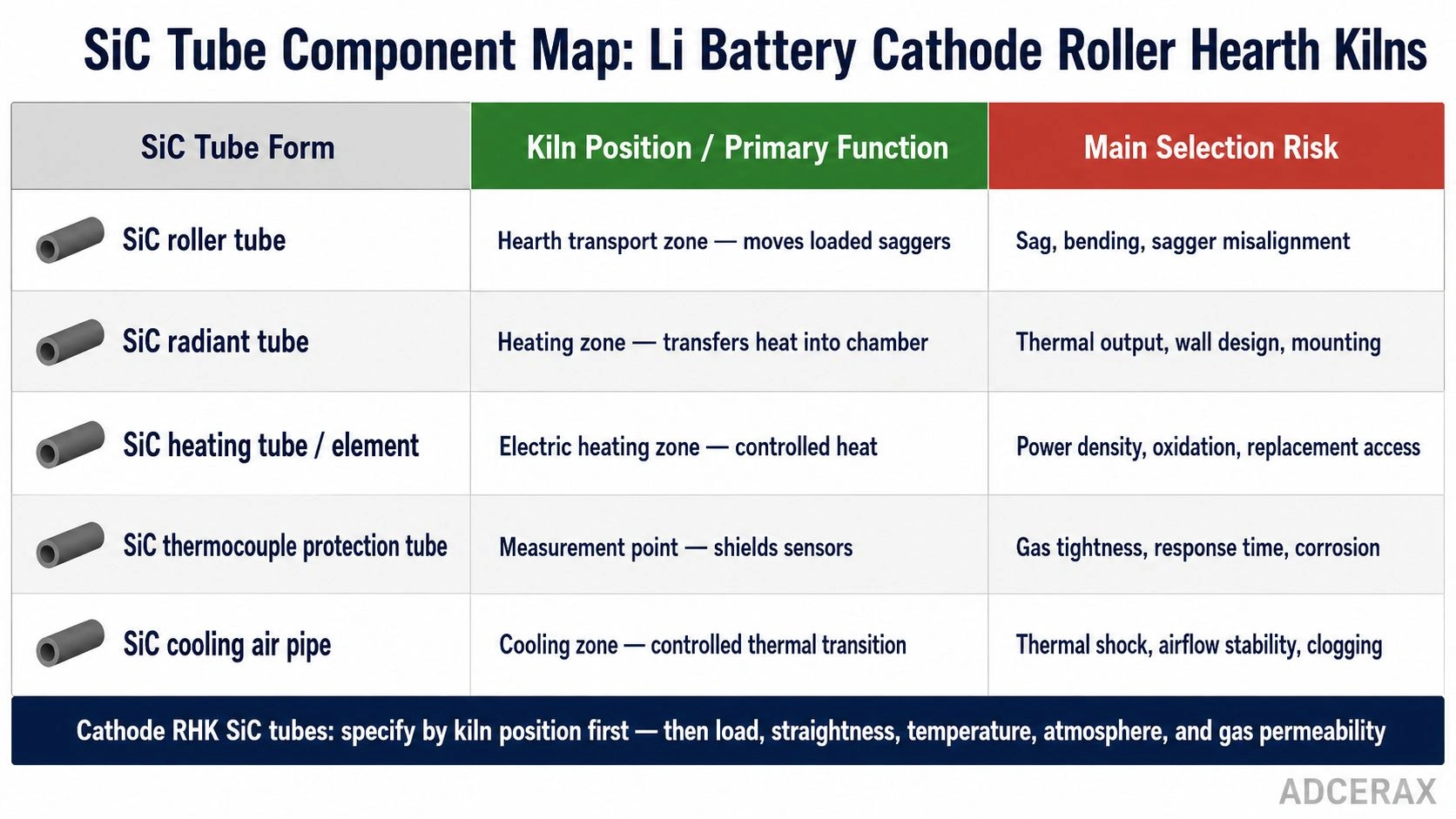
SiC tube components in cathode roller hearth kilns should be specified by kiln position first — roller tubes, radiant tubes, heating elements, thermocouple protection tubes, and cooling air pipes each have different load, thermal, atmosphere, and failure-mode requirements.
SiC roller tubes for sagger transport. The roller tube is the mechanical backbone of the roller hearth kiln. Dozens or hundreds of roller tubes run side by side across the kiln width, and the saggers sit directly on the rotating rollers. The roller tube must maintain straightness under the combined weight of the saggars and powder load across its unsupported span, resist creep and sagging at operating temperature, and survive the oxidizing atmosphere throughout its service life. Rollers are periodically inspected and replaced; their service life directly determines planned maintenance downtime frequency.
SiC radiant tubes, heating tubes, protection tubes, and cooling pipes. Radiant and heating tubes are separate from the roller transport system but equally important to kiln performance — they deliver the thermal energy that drives the calcination reaction. A thermocouple protection tube is a much smaller and lighter component that serves the measurement system rather than the thermal or transport system; its failure mode (gas attack, signal drift, or cracking) is independent of roller failure. The SiC cold air pipe product form addresses the cooling-zone pipe duty specifically — SiC thermal shock and corrosion resistance are commonly evaluated for controlled cooling transition applications; confirm duty and drawing on RFQ.
Why are SiC tubes suitable for cathode RHK operating conditions?
After identifying the component types, the material argument for SiC in each position must be made specific to cathode RHK conditions rather than generic high-temperature capability.
Temperature, oxygen atmosphere, and long dwell exposure. Cathode active material calcination imposes sustained high-temperature exposure in oxidizing or oxygen-rich atmospheres — conditions that favor dense, oxidation-resistant ceramics over metals or graphite. A ScienceDirect 2024 study on NCM 811 raw-material calcination confirms that calcination under oxidizing atmosphere involves complex heat and mass transfer, with oxygen concentration playing a direct role in reaction kinetics and final cathode quality. This means the kiln atmosphere is not only hot but chemically active, and roller or tube materials that oxidize, scale, or shed particles can contaminate the cathode powder or alter its chemistry.
SiC's oxidation resistance in air and oxygen-rich atmospheres — where a protective SiO₂ layer is a material-behavior-typical surface response at temperature — can make it more stable than many competing ceramics or metal alloys in this combination of high temperature and oxidizing gas; confirm grade·atmosphere·time on the supplier TDS, not as a product oxidation guarantee. The high thermal conductivity of dense SiC also supports uniform temperature distribution across the roller, reducing the thermal gradients that can cause cracking during repeated heating and cooling cycles.
Mechanical loading and straightness under continuous operation. GlobalSpec's analysis of SiC rollers for CAM manufacturing confirms that high-throughput roller hearth kilns increase mechanical stress on ceramic rollers as kiln width and load rise, and that improper roller selection can cause failure and sagger misalignment. For cathode kiln rollers, straightness is a performance-critical specification: rollers are discussed with an illustrative deflection sensitivity where sag or bend on the order of a few tenths of a millimeter can cause sagger rocking, misalignment, or cascading failure across multiple kiln zones — confirm span·OD/ID·load·straightness on the drawing RFQ; not a contract straightness or deflection limit. SiC's high elastic modulus — as a qualitative engineering note, higher than most refractory materials — can support lower deflection under the same span and load versus lower-modulus alternatives; confirm grade TDS + span calculation; do not treat this as a contract deflection ratio.
Third-party context (not factory proof for any single supplier): Kanthal's published application experience describes SiC heating elements used for years in roller hearth kilns for battery and electronics manufacturing, emphasizing precise temperature control and productivity. Schunk publicly positions RBSiC rollers for NCM, NCA, and NCMA cathode active material calcination as industry-practice alignment between RHK duty and SiC grades — confirm duty·supplier evidence on RFQ; not an unverified grade-as-contract claim. Saint-Gobain's cathode powder kiln documentation describes saggers containing the powder while rollers provide transport, establishing mechanical context for roller tube specification.
Thermocouple protection and sensor reliability. Published 3M SiC thermocouple protection tube data (third-party context, not a substitute for your supplier TDS) describes dense SiC protection tubes with gas impermeability, high-temperature resistance, corrosion resistance, and thermal shock behavior — the property combination typically required to protect a measurement sensor in a continuously operating kiln atmosphere where temperature uniformity and process control depend on accurate measurement data.
Product context for SSiC, RBSiC, and NBSiC tube grades across roller, protection, radiant, and heat-exchange applications: silicon carbide tubes and heat exchange components and silicon carbide ceramic material grades.
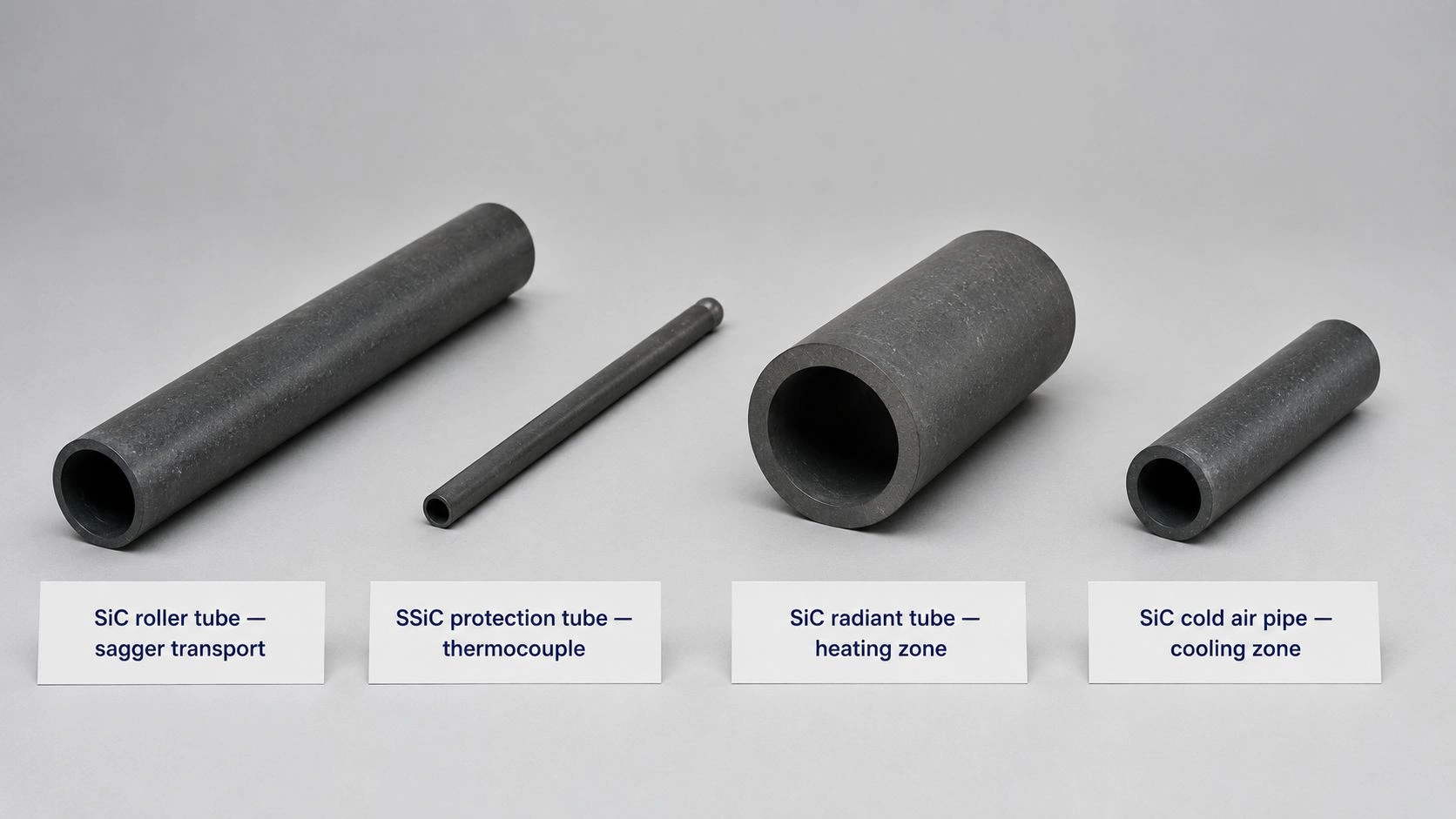
Typical SiC tube forms in cathode roller hearth kilns — roller tubes, thermocouple protection tubes, radiant tubes, and cooling air pipes — should be specified separately because each serves a different kiln-zone function.
What failure modes occur when SiC tubes are mis-specified?
The most frequent mistake in cathode kiln SiC tube procurement is attributing all component problems to material grade or material quality rather than to component-specific specification gaps. Cathode roller hearth kilns generate several distinct failure modes, and each belongs to a different component type with different specification variables.
Roller sag, bending, and sagger misalignment. Roller failure in cathode kilns is most commonly a mechanical specification problem, not a material chemistry problem. If the roller tube OD/ID ratio, wall thickness, and support span are not matched to the sagger load and kiln temperature, the roller will deflect under service conditions even if the SiC material itself is correct. Saint-Gobain's cathode powder kiln guidance confirms that improper roller material selection or construction can cause roller failure and sagger misalignment that stops kiln production. The fix is to re-specify the roller span, wall thickness, and straightness tolerance — not necessarily to switch SiC grades.
Heating tube and temperature uniformity failures. If a radiant or heating tube is incorrectly sized — wall too thin, end mounts too rigid, tube OD not matched to the heater output — the first failure indicator is temperature non-uniformity across the kiln cross-section, not tube fracture. Kiln temperature variation in cathode calcination directly affects product quality because NCM and NCA cathode materials are sensitive to local temperature differences during crystallization. Saint-Gobain's ceramic radiant tube documentation covers the importance of wall thickness, thermal conductivity, and mounting design for correct heat transfer in radiant tube applications.
Thermocouple protection tube failure and sensor drift. A thermocouple protection tube that has been cracked, oxidized through, or contaminated with kiln gas will show as measurement drift, unstable readings, or thermocouple degradation — not as an obvious ceramic failure at the next inspection. Gas permeability, crack detection, and regular visual inspection of the protection tube are required to catch this failure mode before it propagates to process control problems.
The Misdiagnosis Matrix maps observed kiln problems to better diagnostic questions:
| Observed problem | Possible wrong diagnosis | More useful engineering question |
|---|---|---|
| Sagger misalignment | "SiC quality is poor" | Is roller span, load, straightness, or mounting incorrect? |
| Temperature variation | "Heating element is weak" | Is radiant tube placement, airflow, or zone control unstable? |
| Sensor drift | "Thermocouple failed" | Is the protection tube leaking or reacting with kiln atmosphere? |
| Tube cracking | "Thermal shock resistance is low" | Was the heating/cooling ramp or support constraint excessive? |
| Short service life | "Need higher grade SiC" | Is lithium-containing vapor, powder dust, or oxygen exposure driving corrosion? |
Diagnosis should be based on crack location, component type, kiln zone, thermal history, and atmosphere analysis before any material or grade change is specified.
What specifications should be included in a SiC tube RFQ?
A SiC tube RFQ for Li battery cathode roller hearth kilns must begin with the component function because the specification language differs fundamentally between a roller tube, a radiant tube, a protection tube, and a cooling pipe.
The RFQ Parameters by SiC Tube Type table maps the critical fields for each form:
| Parameter | Roller tube | Radiant/heating tube | Thermocouple protection tube | Cooling pipe |
|---|---|---|---|---|
| OD/ID/length | Required | Required | Required | Required |
| Wall thickness | Required | Required | Required | Required |
| Straightness/runout | Critical | Medium | Medium | Medium |
| Load/span | Critical | Low | Low | Medium |
| Peak temperature | Critical | Critical | Critical | Critical |
| Atmosphere | Critical | Critical | Critical | Critical |
| Gas permeability | Medium | Medium | Critical | Medium |
| Mounting design | Critical | Critical | Medium | Critical |
| Surface finish | Medium | Medium | Medium | Medium |
RFQ fields for roller tubes. Roller tube specification must include OD/ID, length, wall thickness, straightness tolerance (typically expressed as maximum bow over the full length), allowable runout, supported span, kiln zone temperature, atmosphere, sagger contact condition, and end design. Load-per-roller should be included if available from kiln design data, or the sagger mass and pitch should be provided so the supplier can calculate the load. Material grade — RBSiC, SSiC, or RSiC — should be specified or discussed with the supplier based on temperature and atmosphere requirements.
RFQ fields for protection tubes. Thermocouple protection tube specification must include thermocouple type (K, N, S, R, B), required insertion length, OD/ID, wall thickness, closed-end configuration, peak temperature, atmosphere, required gas tightness, and surface finish. If the kiln contains reactive species — fluorides, sulfates, or lithium-bearing vapors — this chemistry should be described so the supplier can confirm SiC grade compatibility.
RFQ fields for radiant tubes and cooling pipes. Radiant tube specification must include OD/ID, wall thickness, length, end mounting method, thermal output requirement, peak temperature, and atmosphere. Cross-material context when alumina or other ceramic tubes may be more appropriate than SiC for specific kiln zones: the ceramic tubes and pipes range.
What supplier evidence should be requested before qualification?
Before qualifying SiC tubes for cathode roller hearth kiln service, request the following from the supplier.
For all component types: material grade identification, manufacturing route (RBSiC, SSiC, RSiC, or NBSiC), density and open porosity data, dimensional inspection report, surface finish measurement, packaging description, and lot traceability. For roller tubes: straightness or bow measurement over full length, wall thickness consistency report, load/deflection discussion at the proposed span and temperature, and any available service-life data from comparable cathode kiln applications. For thermocouple protection tubes: gas permeability or leak-test result, corrosion compatibility statement for the specific atmosphere, and response-time or wall-thickness recommendation for the thermocouple type. For radiant tubes: wall thickness confirmation against thermal output requirement, mounting hardware compatibility, and replacement procedure.
An illustrative qualification approach is to run a small pilot batch — often discussed as five to ten roller tubes — in one kiln zone with straightness and sag monitoring over the first production campaign before ordering full kiln quantities; confirm the buyer risk plan and sample size on RFQ — not a standard trial-batch SLA. This can provide service data from the specific kiln atmosphere, load, and temperature profile rather than relying only on material certificates.
Evaluating SiC tubes for a Li battery cathode roller hearth kiln? Share the tube function, drawing, kiln zone, atmosphere, peak temperature, roller span or mounting design, sagger load, target service life, and any failure history from the current components via custom RFQ. A supplier can then screen whether SSiC, RBSiC, RSiC, or NBSiC tubes fit the specific cathode RHK position and propose a qualification batch — confirm duty·supplier evidence; not an unverified grade-as-contract claim.
Frequently Asked Questions
Are SiC tubes the same as SiC rollers in cathode roller hearth kilns?
Not always. SiC kiln rollers are tubular and may be described generically as SiC tubes, but "SiC tubes" in a cathode roller hearth kiln can also refer to radiant tubes, thermocouple protection tubes, heating tubes, or cooling air pipes. The functional role must be identified before the material grade, dimensions, and inspection requirements can be correctly specified.
Why are SiC rollers used in Li battery cathode kilns?
SiC rollers are used because cathode active material calcination requires components that maintain straightness under continuous sagger loading at high temperature in oxidizing atmospheres, resist creep and sagging over long service campaigns, and survive repeated heating and cooling cycles without cracking. SiC's high elastic modulus, oxidation resistance, and thermal shock resistance support these requirements better than many competing ceramic materials at cathode calcination temperatures.
What causes SiC roller failure in cathode RHKs?
Common causes include excessive span-to-diameter ratio that causes sagging under sagger load, overloading beyond the roller's designed mechanical capacity, poor straightness on delivery, thermal shock from rapid heating or cooling, mounting stress at end supports, corrosion from lithium-containing vapor or powder in the kiln atmosphere, and grade selection that does not match the specific temperature and oxidizing atmosphere combination.
When are SiC thermocouple protection tubes used in cathode kilns?
They are used where thermocouples must be protected from high operating temperature, oxidizing or potentially reactive kiln atmospheres, powder dust from cathode material, and gas flow — while still providing accurate temperature measurement for kiln zone control. Gas tightness and response time are the primary selection parameters, in addition to temperature capability and corrosion resistance for the specific dopant chemistry.
What should be included in a SiC tube RFQ for cathode roller hearth kilns?
Include the tube function, component drawing, material grade, OD/ID/length/wall thickness, straightness requirement (for rollers), gas permeability requirement (for protection tubes), kiln zone, peak temperature, atmosphere, sagger load and span (for rollers), mounting method and hardware, surface finish, and lot traceability and inspection documentation requirements.
Which SiC grade is suitable for cathode roller hearth kilns?
The appropriate grade depends on the component function. As industry-practice / screening guidance, RBSiC and RSiC are commonly discussed for rollers and kiln furniture in cathode calcination because of shape capability and cost-effectiveness at relevant temperatures; SSiC may be preferred for thermocouple protection tubes, high-corrosion zones, or duties needing highest density and chemical resistance — confirm duty·supplier evidence on RFQ; do not treat grade names as an unverified contract specification, and do not mix RSiC published numbers with dense RB/SS TDS values. Third-party context: Schunk publicly positions RBSiC for NCM, NCA, and NCMA calcination rollers as current industry practice for roller tube grade screening — not factory proof for any single vendor.
Related reading
- SiC tubes in coal gasification reactor internals — When SiC tubes face coal-gasifier internals rather than cathode RHK roller duty
- SiC heat-exchanger tubes for sulfuric acid — When the duty shifts to sulfuric-acid SiC heat-exchanger tubes
- SiC tubes in HF reactor service — When HF reactor chemistry gates SiC tube grade beyond RHK oxidizing calcination