Silicon carbide mechanical seals often outlast carbon, alumina ceramic, and many metal-based seal faces when the service involves abrasion, corrosive fluids, high sliding speed, elevated temperature, or hard particles. SiC lasts longer because it combines high hardness, strong chemical resistance, high stiffness, low thermal expansion, good thermal conductivity, and precision-lapped sealing surfaces. It is not universal: dry running, impact loading, poor lubrication, wrong face pairing, thermal shock, installation stress, or seal-face distortion can still cause early failure regardless of material hardness. The correct selection starts with the failure mode, not the material name.
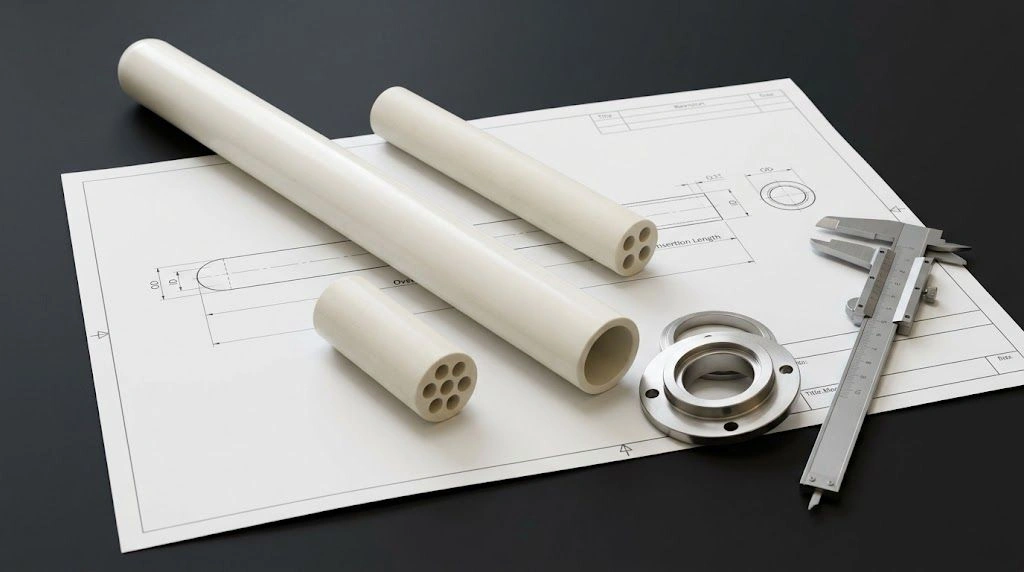
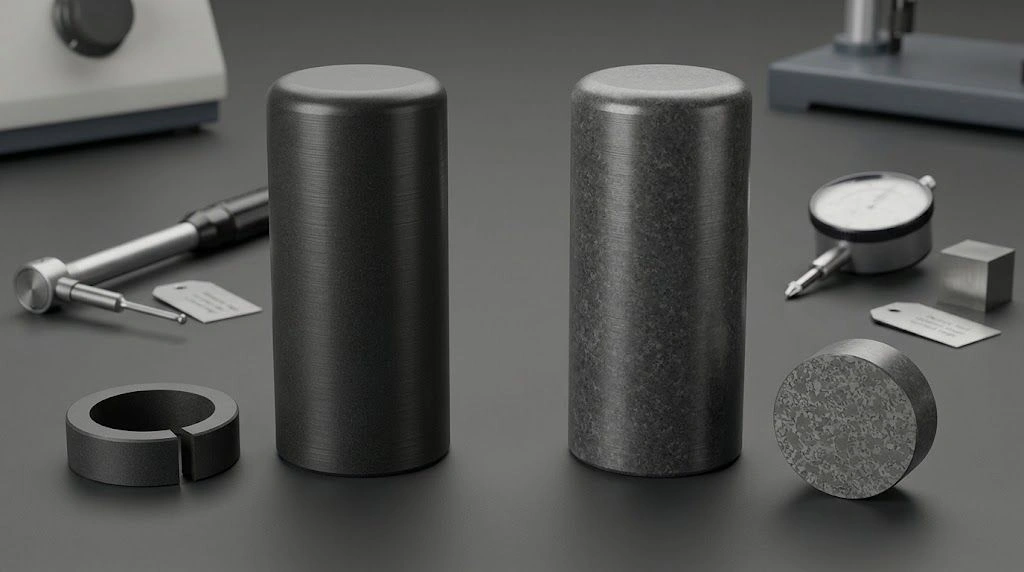
The silicon carbide mechanical components at ADCERAX — including SSiC and RBSiC seal rings for pumps, compressors, and mixers in high-corrosion and abrasive service, with custom diameter from 20 mm to 100 mm and precision-lapped surfaces — provide the product context for the selection decisions described in this guide.

Silicon carbide mechanical seals often outlast carbon and ceramic seal faces in abrasive, corrosive, and high-speed service — but early failure from dry running, face pairing mismatch, thermal distortion, or installation stress can still occur regardless of material hardness.
Why do silicon carbide mechanical seals often last longer?
The answer is not simply that SiC is hard. It is that SiC addresses several simultaneous failure mechanisms that shorten mechanical seal life in demanding pump service.
[CITE: CoorsTek's published silicon carbide mechanical seals documentation confirms that SiC seal faces improve seal performance, increase seal service life, and reduce maintenance and running costs in pump and rotating equipment applications — and Vulcan's published seal face material guide confirms that SiC is valued specifically for its combination of high hardness, strong thermal conductivity, and chemical and thermal stability in challenging sealing environments where these properties must coexist rather than any single property being sufficient alone.]
Hardness and wear resistance reduce face scoring. Mechanical seals create a controlled leakage path between two lapped faces — typically one carbon graphite face and one harder ceramic or metal face. The interface is very thin, sometimes just microns, and any particle that enters the gap, any surface imperfection, or any chemical attack on the face geometry will disrupt the controlled leakage and begin progressive seal degradation. SiC's hardness — typically above 2000 HV for sintered grades — means that abrasive particles in the process fluid must be nearly as hard as diamond to score the SiC face. This gives SiC seals a significant service life advantage in slurry, wastewater, and particle-bearing fluid services where carbon or alumina faces score quickly and lose the precision flatness that sealing depends on.
Thermal stability helps preserve flatness and leakage control. The precision of a mechanical seal depends on face flatness, which is produced by lapping and must be maintained under operating conditions. SiC's low coefficient of thermal expansion — approximately 4–5 × 10⁻⁶/°C for sintered grades — means the seal face changes dimension very little as the seal heats up to operating temperature. Combined with SiC's high thermal conductivity, which dissipates heat generated at the seal interface more effectively than low-conductivity oxide ceramics, SiC faces tend to maintain their lapped geometry better than alternatives in high-speed or high-temperature service.
The Why SiC Mechanical Seals Often Last Longer table maps the durability factors:
| Durability factor | How SiC helps | When benefit is strongest | Boundary condition |
|---|---|---|---|
| Abrasive wear | High hardness resists scoring | Slurry, wastewater, solids-bearing fluids | Hard particles trapped at the interface can still damage faces |
| Corrosion | Strong chemical resistance | Acids, alkalis, aggressive process fluids | Grade selection matters; SSiC often preferred in severe chemistry |
| Heat control | Thermal conductivity helps dissipate heat | High-speed or high-load sliding | Dry running can still overheat the face |
| Face stability | High stiffness and low expansion support flatness | Precision leakage control | Metal holder CTE mismatch can distort the assembly |
| Surface finish | Lapped SiC can hold precise sealing surfaces | Low-leakage rotating equipment | Wrong lubrication film can cause instability |
| Hard-hard pairing | SiC-SiC resists high-solids wear | Abrasive lubricating media | Requires correct lubrication and PV conditions |
Values indicative. Verify with seal OEM, pump conditions, supplier-specific SiC grade data, and application testing.
When does SiC outperform carbon, ceramic, or tungsten carbide seal faces?
After establishing why SiC is durable, the material comparison must be specific — because each alternative has conditions where it still outperforms SiC.
SiC vs carbon: abrasion and corrosion vs dry-running tolerance. Carbon graphite seal faces are the most common counterpart to SiC in mechanical seals, providing lubricity that helps maintain the fluid film at the seal interface. Carbon performs well in clean, non-abrasive fluids where the primary requirement is low friction and stable film formation. Published PDH mechanical seal fundamentals confirm that mechanical seals commonly pair a carbon graphite face against a harder material such as SiC, with the carbon providing the self-lubricating component of the interface. Carbon degrades faster when abrasives are present, when corrosive chemicals attack the graphite matrix, or when process conditions allow the fluid film to break down. SiC progressively replaces carbon as the counterface when abrasive particles, corrosive process fluids, or face scoring begin to limit the carbon's service life.
For dry-running applications — where the seal must operate briefly without fluid film — carbon has better survival behavior than SiC-SiC pairings. Published mechanical seal material comparisons from multiple seal suppliers confirm that carbon provides better dry-running capability because of its self-lubricating character, while SiC-SiC faces without a lubrication film generate heat rapidly and may thermal-fracture. Xylem's published pump service documentation confirms the SiC-SiC pairing as a premium selection for wastewater service where abrasive solids are present in the lubricating fluid, compared with the standard carbon-ceramic pairing for cleaner water applications.
SiC vs tungsten carbide: chemical stability vs impact toughness. Tungsten carbide seal faces offer very high hardness and, critically, much higher fracture toughness than SiC. In applications involving mechanical shock, vibration, misalignment, bearing damage, or impulsive loading, tungsten carbide can survive conditions that would crack or chip an SiC face. Vulcan's seal face material guide notes that tungsten carbide is typically reserved for physically demanding applications where impact resilience is the dominant requirement, and that SiC is often preferred where chemical stability and thermal properties are more important than fracture toughness.
The Seal Face Material Selection Matrix maps the decision:
| Service condition | Recommended first check | Why | When to reconsider |
|---|---|---|---|
| Clean water/clean light fluid | Carbon-SiC | Good balance of lubricity and wear resistance | Upgrade if abrasive particles appear |
| Abrasive slurry/wastewater | SiC-SiC | High wear resistance on both faces | Check lubrication and solids trapping |
| Corrosive chemicals | SSiC-carbon or SSiC-SSiC | Strong chemical resistance | Check carbon compatibility and dry-running risk |
| High shock or vibration | Tungsten carbide pairing | Better impact toughness | SiC may still fit if corrosion dominates |
| Dry-running risk | Carbon-containing pairing | Carbon has better dry-running behavior | Do not default to SiC-SiC without lubrication review |
| High-speed/high-temperature duty | SSiC-based pairing | Thermal stability and hardness | Confirm PV limit, cooling, and face loading |
| Food/light industry clean fluids | Carbon-SiC or ceramic-carbon | Cost and cleanliness may dominate | SiC upgrade if wear or leakage increases |
Values indicative. Verify with seal OEM, fluid chemistry, solids content, and pump operating data.

Mechanical seal face selection should start from service condition: SiC wins on wear, corrosion, and thermal stability, while carbon helps dry-running tolerance and tungsten carbide helps impact resistance.
When can SiC mechanical seals still fail early?
The failure modes that cause early SiC seal failure are usually system conditions, not SiC material defects. Recognizing this distinction prevents the wrong corrective action — upgrading to harder material when the system problem is still present.
[CITE: Published 911Metallurgist mechanical seal material selection guidance confirms that temperature changes can alter fits between metal components and ceramic or carbon seal faces because metals and seal-face ceramics have different coefficients of thermal expansion, and that this CTE mismatch can contribute to hang-up, face distortion, leakage, or fracture under operating conditions — and that face flatness and surface condition are critical to seal behavior, with faces that are improperly conditioned or loaded potentially preventing correct fluid film formation, causing overheating and progressive failure regardless of the seal face material hardness.]
Dry running, poor lubrication, and PV overload. Silicon carbide seal faces require a lubricating fluid film at the interface to function correctly. When a pump runs dry — even briefly during startup, upset, or cavitation — the SiC-SiC contact generates heat faster than the ceramic can dissipate, and thermal fracture can follow within seconds. The hardness that makes SiC resistant to abrasive wear also makes it brittle in impact and thermal shock. A SiC seal that has failed with radial cracking or face chipping in a service with known pump-dry-run events is more likely a lubrication failure than a material selection error.
PV limit — the product of contact pressure and sliding velocity — defines the operating regime where the seal face can maintain the lubricating film. Exceeding the PV limit for the selected face pair produces overheating, film breakdown, and accelerated wear or thermal damage. SiC has a favorable PV profile compared with carbon or alumina ceramic, but it still has a limit that must be evaluated against the pump's operating conditions.
Thermal expansion mismatch, distortion, and installation stress. The metal hardware that holds or drives the SiC seal ring has a thermal expansion coefficient substantially different from SiC. As the assembly heats from startup temperature to operating temperature, the metal expands more than the SiC, changing the fit at the interface. This differential expansion can distort the SiC ring, cause hang-up in gland designs where the ring must slide axially, or introduce bending stress that eventually cracks a large thin-wall ring. The seal design — the metal gland, the drive configuration, the secondary seal type, and the clearances — must account for this thermal expansion differential. An SiC seal ring that cracks consistently at the same operating temperature or after a consistent warm-up interval is more likely experiencing thermal-expansion-induced stress than chemical attack.
Which SiC grade or face pairing should be selected?
After understanding the failure modes, the grade and pairing decisions can be made systematically.
SSiC for corrosive, high-purity, and severe-duty sealing. Pressureless sintered SSiC is usually the first choice when the process fluid is chemically aggressive, when high-purity contact is required, or when precise face flatness must be maintained over long service life. Published MechanicalSeals.net guidance confirms that alpha/pressureless sintered SiC is specifically recommended for chemical applications, while reaction-bonded SiC is common in mechanical seals for more general service. SSiC has no free-silicon phase that could be selectively attacked by aggressive acids or alkalis, and its dense microstructure supports better and more consistent lapping results.
Face pairing: carbon-SiC, SiC-SiC, or SiC-WC. The most common seal face pairing is carbon graphite against SiC, which combines carbon's lubricity with SiC's hardness and chemical resistance. This pairing performs well in clean or lightly loaded fluid service. Vulcan's published guidance confirms that SiC-SiC pairing is often preferred for lubricating media that contain high solids content — wastewater, slurry, coolant — where abrasive particles would rapidly wear carbon. For high impact or shock loading, tungsten carbide is the alternative to SiC's role as the hard face.
The silicon carbide seal ring page at ADCERAX covers pump, compressor, and mixer seal rings in SSiC and RBSiC grades, with custom OD, ID, thickness, drive slots, and lapped surface finish. The silicon carbide ceramic material grades page covers SSiC, RBSiC, and NBSiC grade routing for seals, bearings, and mechanical components.

Typical mechanical seal ring options show why material ranking alone is insufficient: SSiC fits corrosive service, RBSiC fits general mechanical seal roles, carbon supports lubricity in clean fluids, and tungsten carbide supports high-impact service.
What RFQ data should be sent for SiC seal rings or seal faces?
A complete SiC mechanical seal ring RFQ must give the supplier enough information to confirm grade suitability, propose geometry, and support surface finish verification.
The Misdiagnosis Matrix first maps common seal failure misattributions to better diagnostic questions:
| Observed problem | Common wrong diagnosis | Better engineering question |
|---|---|---|
| Seal leaks after short runtime | ""SiC is defective"" | Was face flatness, installation, spring load, or secondary seal correct? |
| Face scoring | ""Need harder material only"" | Are solids trapped between faces or is flush inadequate? |
| Thermal cracking | ""SiC cannot handle heat"" | Was dry running, rapid thermal shock, or PV overload present? |
| Rapid carbon wear | ""Carbon is always inferior"" | Is the fluid abrasive enough to require SiC-SiC pairing? |
| SiC face chips | ""Wrong grade only"" | Was impact, vibration, edge loading, or assembly stress the root cause? |
| Chemical attack | ""SiC is not corrosion-resistant"" | Was the correct SiC grade selected and are secondary materials compatible? |
The RFQ should include: pump or equipment type, shaft size, seal face drawing with OD/ID/thickness and all drive features, stationary or rotary ring role, SiC grade preference with SSiC or RBSiC designation, proposed mating face material, process fluid name and chemical family, pH or concentration range, solids content and particle size estimate, fluid viscosity, operating temperature, seal chamber pressure, shaft speed, flush plan and flush fluid if applicable, dry-running risk assessment, required surface finish, flatness and parallelism specification, quantity for prototype and production, and inspection method and acceptance criteria.
Ask the supplier to confirm SSiC or RBSiC material route, density and open porosity, free-silicon content where relevant, Vickers hardness, surface finish capability in Ra and flatness in light bands or μm, dimensional inspection method, and lot traceability. For new pump seal upgrades, also describe the current seal material, its failure mode, and the observed failure interval — this context allows the supplier to confirm whether SiC addresses the actual root cause.
Replacing carbon, ceramic, or tungsten carbide mechanical seals with SiC? Share your pump type, shaft size, seal drawing, process fluid, pH or chemical family, solids content, pressure, temperature, shaft speed, dry-running risk, current face pairing, failure mode, and service life target. ADCERAX can review whether SSiC or RBSiC seal rings in the required geometry and surface finish will address the failure mode and propose a grade with material data.
Frequently Asked Questions
Why do silicon carbide mechanical seals often last longer?
SiC seal faces often last longer because their combination of high hardness, strong chemical resistance, stiffness, low thermal expansion, and thermal conductivity helps preserve the precisely lapped face geometry that mechanical seals depend on. CoorsTek confirms that SiC seal faces improve performance, increase seal life, and reduce maintenance costs. In abrasive, corrosive, high-speed, or high-temperature service, these properties directly address the main failure mechanisms: face scoring, chemical degradation, thermal distortion, and loss of flatness.
Is SiC better than carbon for mechanical seals?
SiC is usually better for abrasive or corrosive service where face scoring and chemical attack are the dominant failure modes. Carbon can be better for clean fluids, lower friction pairing, and dry-running-sensitive applications where the seal may need to survive brief fluid-film interruptions. Published mechanical seal material comparisons confirm that carbon has better dry-running capability, while SiC provides superior hardness and chemical resistance in demanding service.
When should SiC-SiC seal faces be used?
SiC-SiC face pairing is commonly selected when the fluid is lubricating but contains abrasive solids or particles that would rapidly wear a carbon counterface. It provides strong wear resistance on both faces but requires adequate lubrication film, correct PV conditions, and consistent fluid film to avoid dry-running damage. Published Xylem documentation confirms the SiC-SiC pairing as a premium selection for wastewater pump service.
When should tungsten carbide be selected instead of SiC?
Tungsten carbide is preferred when the sealing environment involves mechanical shock, vibration, misalignment, bearing damage, or other physically demanding conditions where fracture toughness is more important than chemical resistance. Vulcan's published guide confirms that tungsten carbide is typically reserved for physically demanding applications, with SiC preferred where corrosion resistance and thermal stability dominate.
Is SSiC better than RBSiC for mechanical seals?
SSiC is often the safer choice for aggressive chemical corrosion, high-purity fluid contact, and demanding precision seal faces because its dense, single-phase microstructure provides better and more consistent corrosion resistance without a free-silicon phase that could be selectively attacked. Reaction-bonded SiC is common in mechanical seals for more general service, but chemical applications are where alpha/pressureless sintered SiC is specifically recommended.
What causes SiC mechanical seals to fail early?
Common early-failure causes include dry running without adequate fluid film, PV overload beyond the seal face limit, thermal shock from rapid temperature changes, thermal expansion mismatch between the SiC ring and metal holder components, excessive clamping stress during installation, solids trapping at the face without adequate flush, and wrong mating material for the service conditions.
What should be included in a SiC seal ring RFQ?
Include pump or equipment type, shaft size, seal face drawing with OD/ID/thickness and drive features, stationary or rotary ring role, SiC grade preference, proposed mating face material, process fluid and chemical family, pH, solids content and particle size, temperature, pressure, shaft speed, flush plan, dry-running risk, required surface finish and flatness, quantity, and inspection requirements.
"