Technical ceramics (also called advanced / engineering ceramics) are high-purity, engineered ceramic materials—oxides such as alumina and zirconia, non-oxides such as SiC and Si₃N₄, and selected composites—specified when metals or polymers cannot hold hardness, temperature, insulation, or corrosion duty. This page answers what they are versus traditional ceramics, which family fits which industrial stress, and what to put in an RFQ.
3-minute decision: Use technical ceramics when wear, heat, dielectric insulation, or chemical attack will kill metal/polymer life. Default oxide path: alumina for hardness/insulation/cost; zirconia when fracture toughness / sealing-wear matters more. Default non-oxide: SiC for extreme heat + abrasion; Si₃N₄ for high-speed / strength-to-weight. Do not buy “ceramic” by melting point alone—name the family and the failure mode you are solving.
How do technical ceramics differ from standard ceramics?
Standard ceramics (bricks, pottery, many porcelains) start from natural clays with moderate purity and property scatter. Technical ceramics start from controlled synthetic powders so composition, porosity, and microstructure can be designed for industrial loads.
| Feature | Standard ceramics | Technical ceramics |
|---|---|---|
| Feedstock | Natural clays / minerals | High-purity synthetic powders |
| Purity / control | Low–moderate | High; microstructure engineered |
| Typical role | Construction, housewares | Wear, insulation, high-temp, corrosion parts |
Which material families dominate industrial specs?
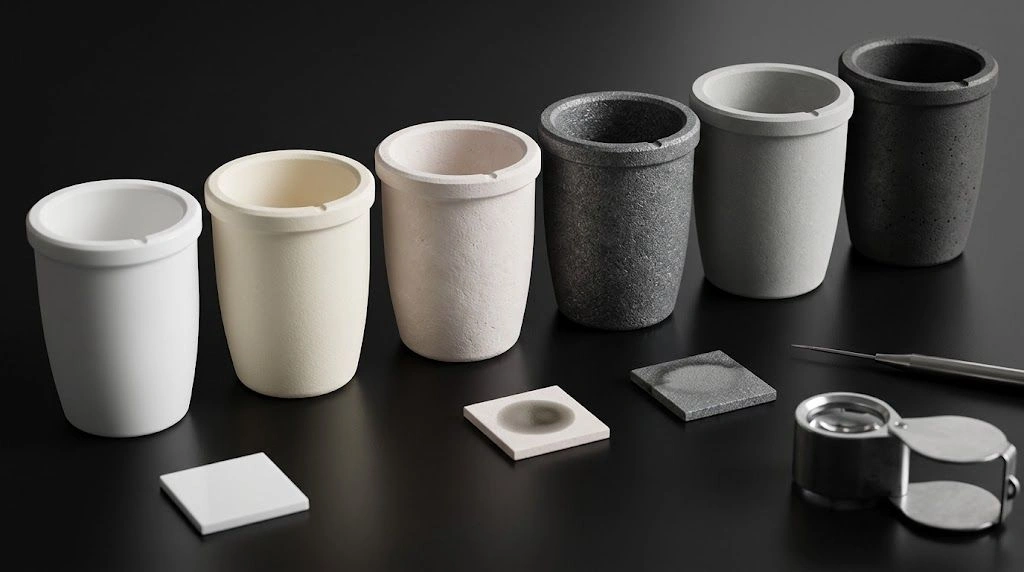
Oxides: Alumina (Al₂O₃) for hardness, electrical insulation, and furnace/chemical duty; zirconia (ZrO₂, often Y-TZP/PSZ) when toughness and contact/sealing durability lead. Common forms include alumina tubes for thermocouple protection / furnace instrumentation and alumina crucibles for melt and calcination containment.
Non-oxides: Silicon carbide for thermal/chemical attack and kiln/seal duty; silicon nitride for bearings and high-speed structural parts where density matters.
Composites: ZTA (zirconia-toughened alumina) when alumina needs extra crack tolerance; CMCs when thermal-shock / fracture energy must rise beyond monolithic oxides—qualify fiber system and atmosphere separately.
| Family | First-look duty | Watch-out |
|---|---|---|
| Alumina | Insulators, tubes, valves, wear at moderate toughness need | Lower toughness than Y-TZP |
| Zirconia | Tough oxide wear/seal parts | CTE higher; LTD if microstructure wrong |
| SiC | High-temp abrasion / chemical | Impact/joining design critical |
| Si₃N₄ | High-speed / strength-to-weight | Cost and process control |
Which properties actually change the design?
- Mechanical: Hardness and compressive strength typically far above commodity metals; density often ~3–6 g/cm³. Use ceramics for wear and compression—not ductile impact without proper design.
- Thermal: Many grades survive 1400–2000 °C class service windows metals cannot; thermal-shock capacity is grade- and geometry-specific—do not assume quench abuse is free.
- Electrical: Oxides such as alumina give high resistivity / dielectric strength for substrates and HV insulation. Separate ionic-conductor grades (e.g., fully stabilized zirconia at high T) from structural insulators in the RFQ.
How should engineers select a technical ceramic?
| If the governing stress is… | First-look family | RFQ must state |
|---|---|---|
| Dielectric insulation + corrosion/heat | Alumina | Purity class, temp, media, voltage |
| Contact wear / seal with crack risk on an oxide | Zirconia (Y-TZP/PSZ) | Stabilizer mol%, humidity, CTE stack |
| Abrasion + ultra-high T / aggressive chemistry | SiC | Atmosphere, joining method, thermal shock |
| High-speed rotation / mass-sensitive structure | Si₃N₄ | Speed, lubrication, reliability class |
| Need alumina + higher toughness | ZTA / composite | Volume fraction, process route |
Selection is duty-first: temperature, media, load, electrical class, then geometry (tube, crucible, custom part). Cost is judged on downtime avoided, not billet price alone.
What belongs in a technical-ceramics RFQ?
- Primary failure mode you are solving (wear / heat / insulation / corrosion)
- Material family + grade window (not only “ceramic”)
- Temperature profile, atmosphere, chemicals
- Mechanical / electrical loads and mating materials
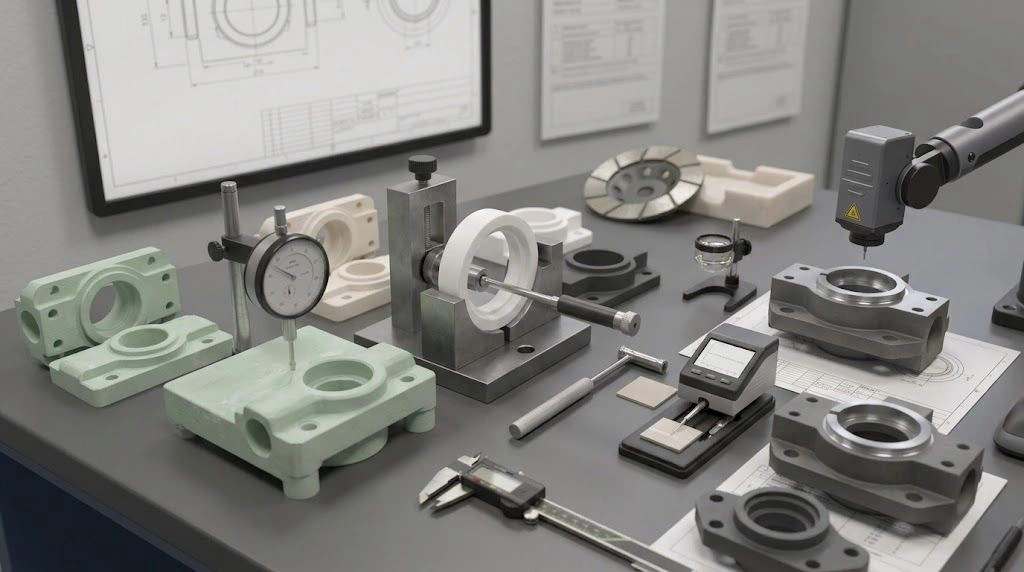
- Drawing, tolerances, surface finish, inspection
- Quantity path: sample → pilot → production
Share the duty and drawing for a manufacturability review against the materials range above—no need to guess a grade name alone.
Frequently Asked Questions
Are technical ceramics the same as advanced ceramics?
In industrial English they largely overlap. This page treats them as engineered high-purity ceramics for industrial duty, not clayware.
Why not always use the hardest ceramic?
Hardness without toughness, thermal-shock margin, or joinability still fails. Match the failure mode.
When do metals still win?
When ductility, impact toughness, conductivity, or cost dominate and the environment is mild enough.
How is this different from a “types of ceramics” catalog?
Here the goal is industrial selection logic (technical vs traditional + family vs duty). For a broader materials map, see the Related reading types overview.