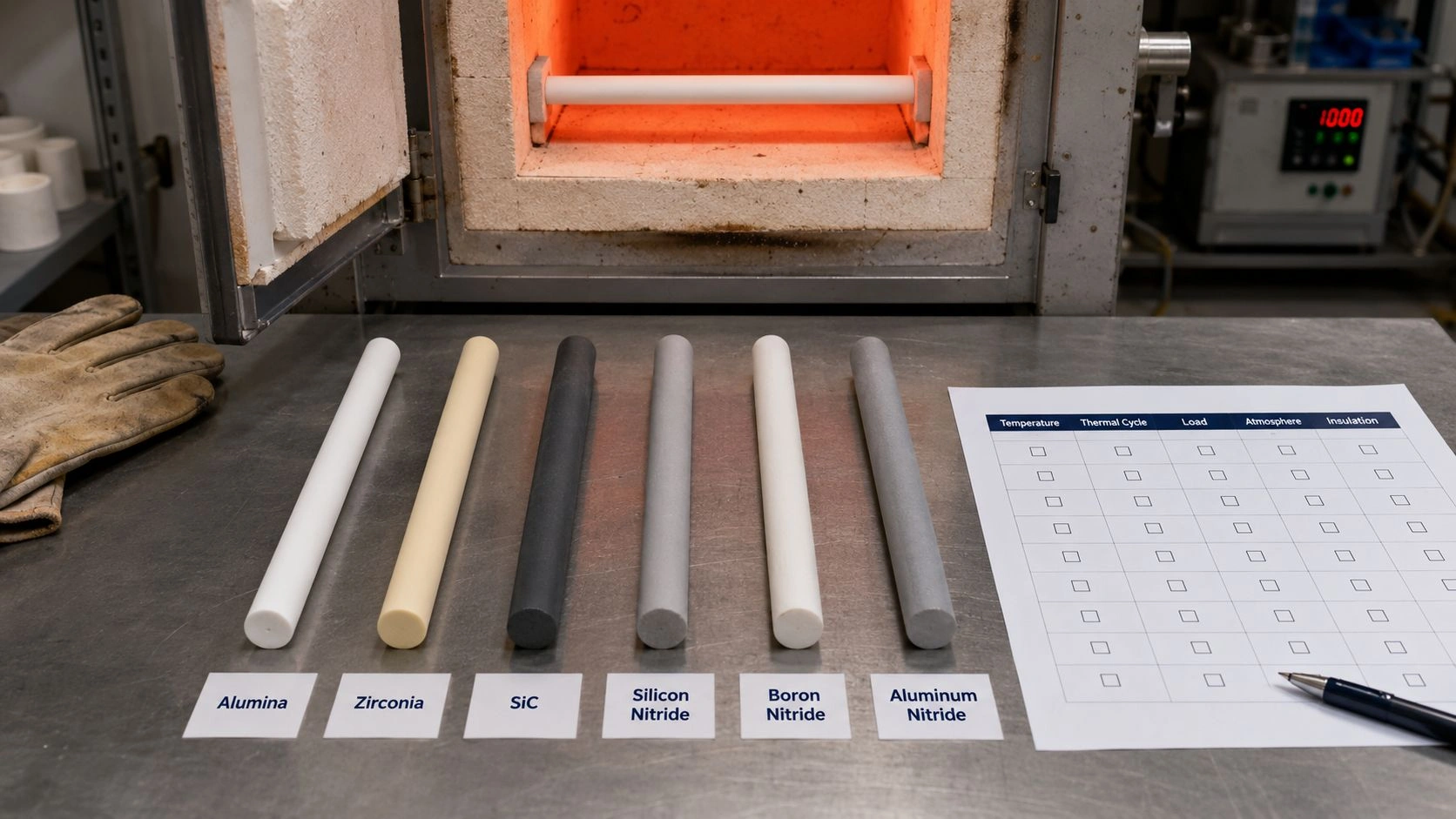
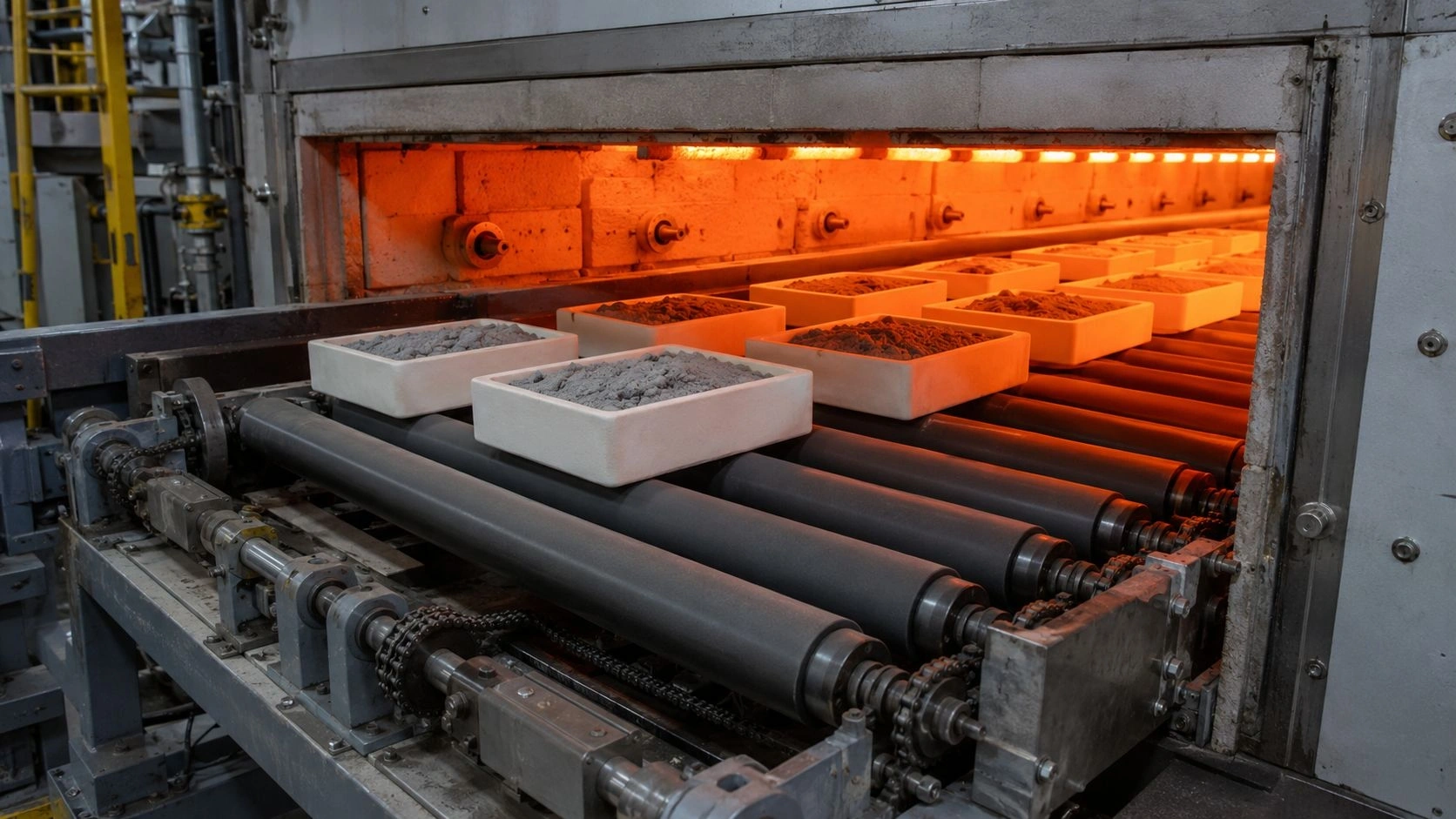
Ceramic rods are the better choice when the part must act as a solid support, guide, spacer, pin, shaft, or wear-resistant contact surface — when the ceramic material body itself is the functional element. Ceramic tubes are the better choice when the design needs an internal bore for protection, insulation, flow, sensing, heating element housing, gas routing, or weight reduction — when the hollow passage is part of the function. The practical decision is not ""rod or tube"" by material name, but whether the component must carry load and contact as solid material or provide a controlled hollow path with a functional bore.
The ceramic parts and components at ADCERAX — covering alumina, zirconia, silicon carbide, silicon nitride, and boron nitride rods, tubes, and custom profiles for high-temperature, insulating, wear-resistant, and corrosion-resistant industrial service — provide the product context for the selection decisions described in this guide.
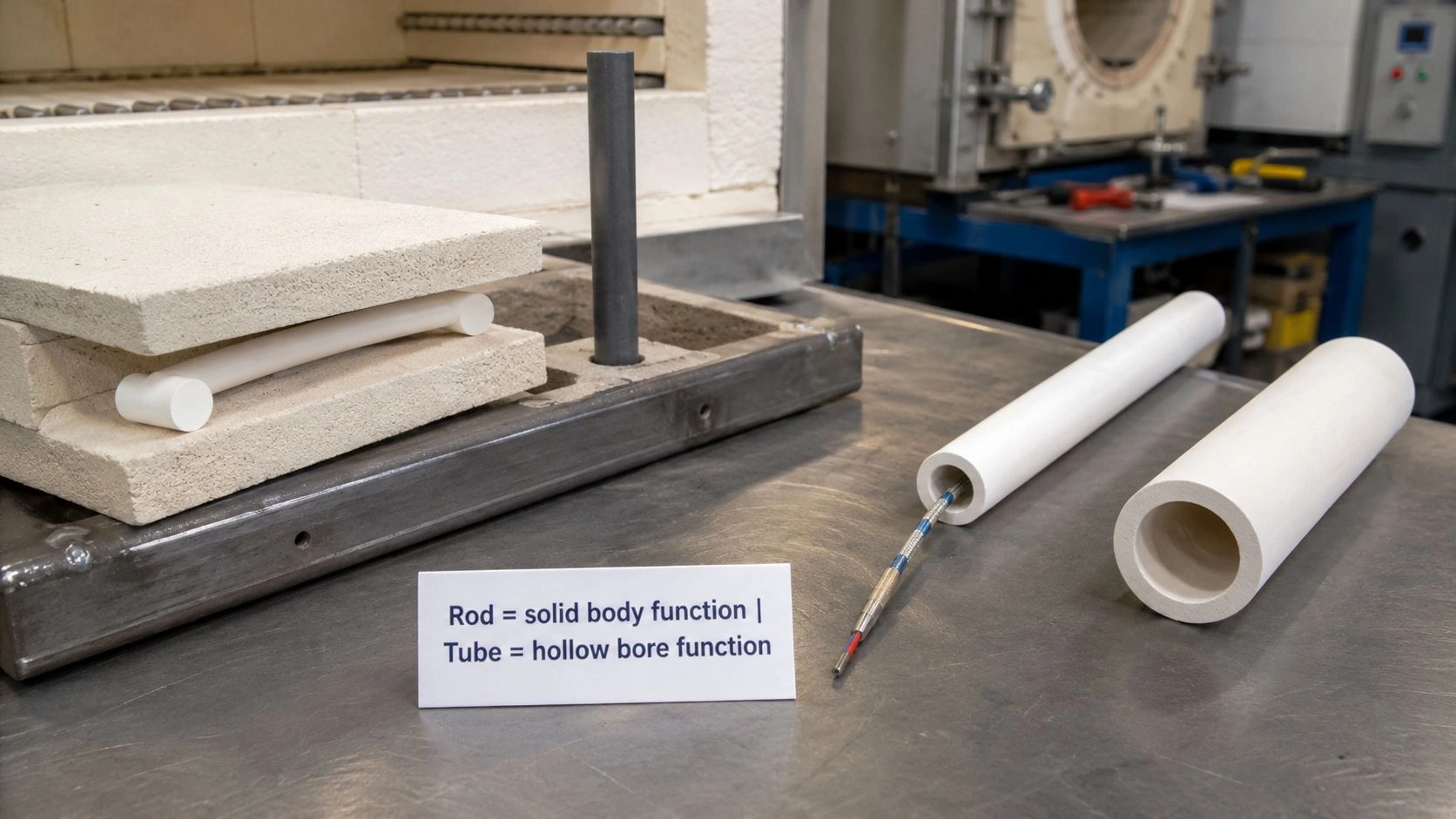
Ceramic rod vs ceramic tube selection is primarily a geometry-function decision: rods provide a solid cross-section for support, guidance, wear contact, and positioning; tubes provide a hollow bore for thermocouple protection, heater insulation, conductor routing, gas or liquid flow, and weight reduction.
What is the core difference between a ceramic rod and a ceramic tube?
The core difference is geometry, and geometry determines function.
A ceramic rod is a solid or near-solid cylindrical component. In cross-section, ceramic material fills the full diameter — there is no intentional hollow passage. This makes a rod useful whenever the design requires a continuous material body across the section: for supporting loads, providing a guide surface, acting as a pin or shaft, spacing components, or presenting a wear-resistant contact area. ADCERAX describes ceramic rods as straight engineered components used as supports, guides, standoffs, and wear parts in industrial equipment where chemical resistance, high temperature, and dimensional stability are required.
A ceramic tube is a hollow cylindrical component with an internal bore defined by both the outer diameter and the inner diameter, with wall thickness as the critical geometric variable that connects them. The bore is the distinguishing feature — it performs a function that a rod cannot provide without modification. ADCERAX describes ceramic tubes as hollow cylindrical components used in high-temperature, aggressive, insulating, or abrasive-flow environments, with applications including thermocouple protection, furnace heating tubes, conductor insulation sleeves, and corrosive flow lines.
Ceramic rod: solid functional body. When a designer specifies a ceramic rod, the material across the full cross-section carries the load, provides the contact surface, resists wear, or defines the geometry. The component is chosen because ceramic material needs to be present all the way through — there is no hollow center that serves any purpose. Removing material from the center would reduce the rod's function without adding a new one.
Ceramic tube: hollow functional path. When a designer specifies a ceramic tube, the bore is intentional and functional. A thermocouple protection tube protects the sensor element inside its bore. A furnace heating tube allows a heating element to run through its center while the ceramic wall insulates and protects the element from the furnace atmosphere. A gas flow tube routes process gas through the ceramic body from one side to the other. In each case, the bore is not a weight-saving hole — it is part of how the component works.
Why geometry matters before material grade. The selection between rod and tube should happen before material grade is chosen, not after. Alumina, zirconia, silicon carbide, and silicon nitride can all be manufactured as rods or as tubes, so knowing which material is preferred does not resolve the shape question. GlobalSpec's selection guide for ceramic tube and rod products confirms this: ceramic tubes and rods are used in high-temperature applications requiring erosion resistance and electrical or thermal insulation, but the application determines which geometry applies. The material grade choice comes after the geometry choice is confirmed.
The simplest decision rule: choose a rod when the material body is the function; choose a tube when the internal passage is part of the function.
When should engineers choose a ceramic rod instead of a ceramic tube?
After understanding the geometry difference, the application-based selection rule can be applied directly.
Choose ceramic rods for these applications. Rods are the correct geometry when the component must carry a contact load, guide a moving part, space components at a defined distance, act as a pin in a pivot or assembly, or present a continuous wear surface to another component. In furnace and kiln environments, ceramic rods are used as support bars, guide rails, and spacers. In automation equipment, ceramic rods serve as guide shafts, positioning pins, and wear-resistant slides. In electrical equipment, insulating ceramic rods serve as standoffs and terminal separators where the solid material prevents current passage between points. In all of these applications, the full ceramic cross-section is what makes the rod work.
Choose ceramic tubes for these applications. Tubes are the correct geometry when an internal bore is needed for any functional purpose: protecting a thermocouple or sensor from furnace atmosphere while allowing temperature measurement through the closed wall; housing a heating element within the ceramic bore while the wall insulates the element from mechanical contact and chemical exposure; routing process gas through the ceramic body in a controlled path; providing an insulating sleeve around an electrical conductor or busbar; or reducing the total mass of a structural element where the center is not needed for load-bearing.
Use a tube only when the bore has a real function. A common mistake is specifying a tube ""to save material"" or ""to reduce weight"" without checking whether the thinner wall that results can still survive the handling, clamping, vibration, thermal cycling, or assembly loads the component will actually face. Hollow ceramics are more vulnerable to handling damage, edge chipping, and thin-wall fracture than solid rods of the same OD. The weight savings must be worth the increased care required in handling and installation.
The Ceramic Rod vs Ceramic Tube Selection Matrix maps the main application requirements:
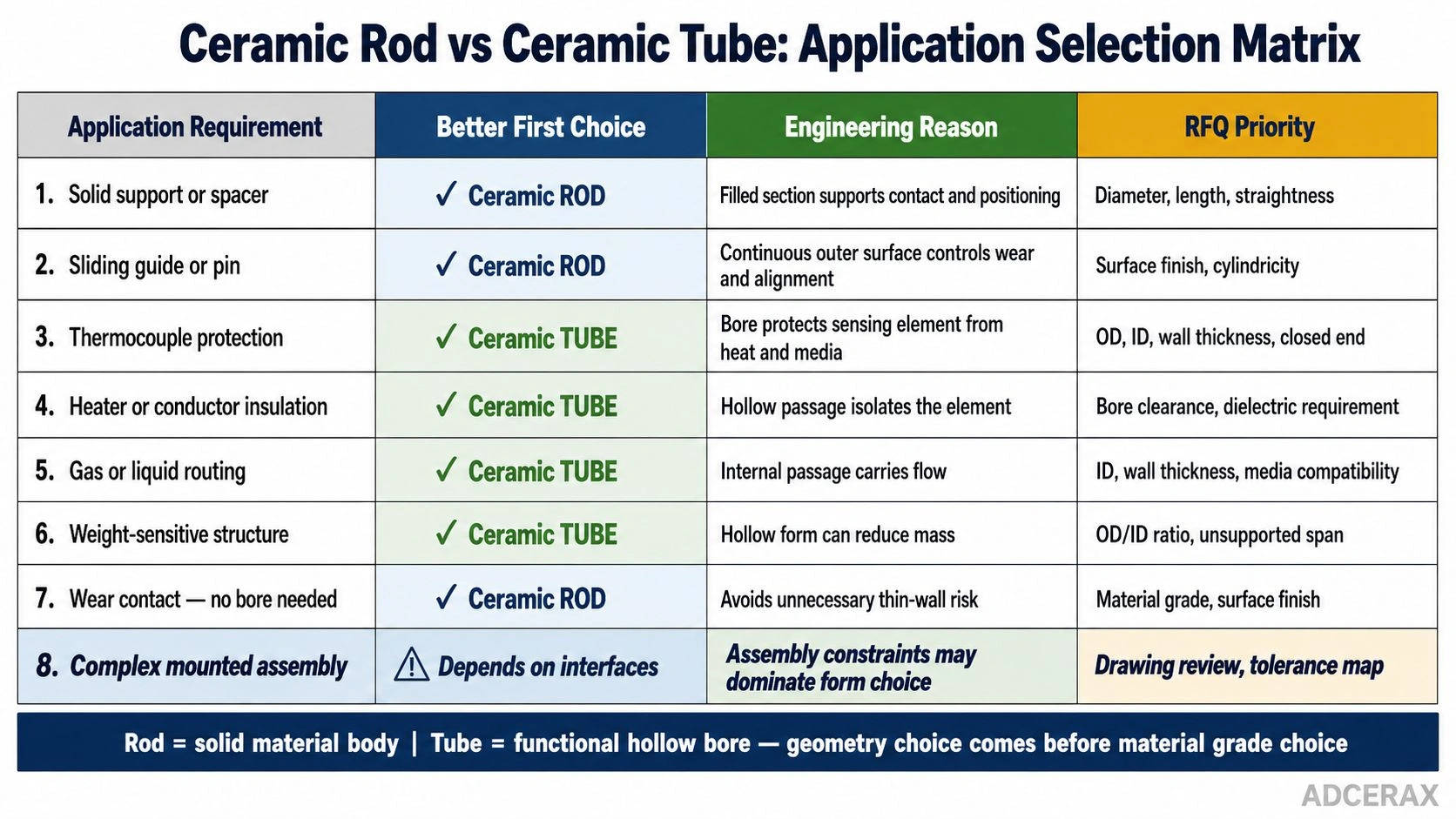
Ceramic rod vs ceramic tube selection should begin with the application requirement: rods fit solid support, sliding guide, spacer, pin, and wear-contact roles, while tubes fit thermocouple protection, heater insulation, conductor routing, flow paths, and weight-sensitive hollow structures.
| Application requirement | Better first choice | Engineering reason | RFQ priority |
|---|---|---|---|
| Solid support or spacer | Ceramic rod | Filled section supports contact and positioning | Diameter, length, straightness |
| Sliding guide or pin | Ceramic rod | Continuous outer surface controls wear and alignment | Surface finish, cylindricity |
| Thermocouple protection | Ceramic tube | Bore protects sensing element from heat and media | OD, ID, wall thickness, closed end |
| Heater or conductor insulation | Ceramic tube | Hollow passage isolates the element | Bore clearance, dielectric requirement |
| Gas or liquid routing | Ceramic tube | Internal passage carries flow | ID, wall thickness, media compatibility |
| Weight-sensitive structure | Ceramic tube | Hollow form can reduce mass | OD/ID ratio, unsupported span |
| Wear contact with no bore need | Ceramic rod | Avoids unnecessary thin-wall risk | Material grade, surface finish |
| Complex mounted assembly | Depends on interfaces | Assembly constraints may dominate form choice | Drawing review, tolerance map |
How load, bore, wall thickness, and tolerance change the decision
After the first-pass geometry decision, the specific dimensional variables that determine whether the rod or tube will perform correctly in the design must be evaluated.
Rod sizing: diameter, straightness, span, and contact stress. For a ceramic rod used as a support, guide, pin, or wear element, the critical dimensions are the outer diameter, the total unsupported length, the straightness over that length, the surface finish at any contact or sliding zone, and the end geometry if the rod sits in a holder or recess. A rod that is undersized in diameter for its span will deflect excessively under load and may crack. A rod with poor straightness will create uneven contact, concentrate stress at one point, and wear unevenly or fracture there.
Tube sizing: OD, ID, wall thickness, concentricity, and bore finish. For a ceramic tube, the critical dimensions are more numerous because both the outer and inner surfaces matter. The outer diameter governs how the tube fits into a housing, holder, or furnace port. The inner diameter governs what can pass through the bore. The wall thickness — the difference between OD and ID divided by two — governs everything else: bending strength, thermal shock resistance, manufacturability, handling fragility, and firing behavior. Two tubes with the same OD but different IDs behave very differently under load.
Circular hollow-section analysis confirms that the area of a tube cross-section and its second moment of area — which governs bending stiffness — depend on both the outer and inner radii, not outer diameter alone. This is why specifying OD without ID for a ceramic tube is an incomplete specification. A tube with OD 30 mm and ID 20 mm has a very different wall thickness and structural capacity than a tube with OD 30 mm and ID 26 mm, even though both share the same outer diameter.
Why the same OD does not mean the same tube performance. This is the most common dimensioning mistake in ceramic tube procurement. Engineers often specify OD and length from a previous similar-looking component without confirming ID and wall thickness. A tube with the right OD but the wrong wall thickness may crack during assembly, fail under bending, or fracture from thermal shock when the wall is too thin for the heating and cooling rates in the application.
Tolerance zones: critical vs non-critical dimensions. For both rods and tubes, not all dimensions are equally important. For rods, the critical tolerance zones are typically the contact diameter, the straightness over the functional span, and the surface finish at sliding or wear interfaces. For tubes, the critical tolerances are typically OD at the seating or housing interface, ID at the element clearance zone, wall thickness uniformity, and concentricity. Non-critical dimensions — end face flatness, cut-end chamfer size, minor surface features — should be relaxed relative to the critical zones to allow efficient manufacturing without unnecessary rework.
Engineering statics references note that the polar moment of inertia of a hollow circular section depends on the difference between outer and inner radii to the fourth power — meaning that small changes in wall thickness create large changes in torsional rigidity. For ceramic tubes used in applications with any rotational or twisting load component, this relationship makes wall thickness a design-critical dimension, not a manufacturing variable.
The ceramic rods at ADCERAX cover alumina, zirconia, SiC, and silicon nitride round, square, and threaded rod forms for support, guide, and wear-contact service. The ceramic tubes and pipes page covers alumina, SiC, zirconia, and boron nitride hollow cylindrical forms for thermocouple protection, furnace heating, insulation, and flow applications.
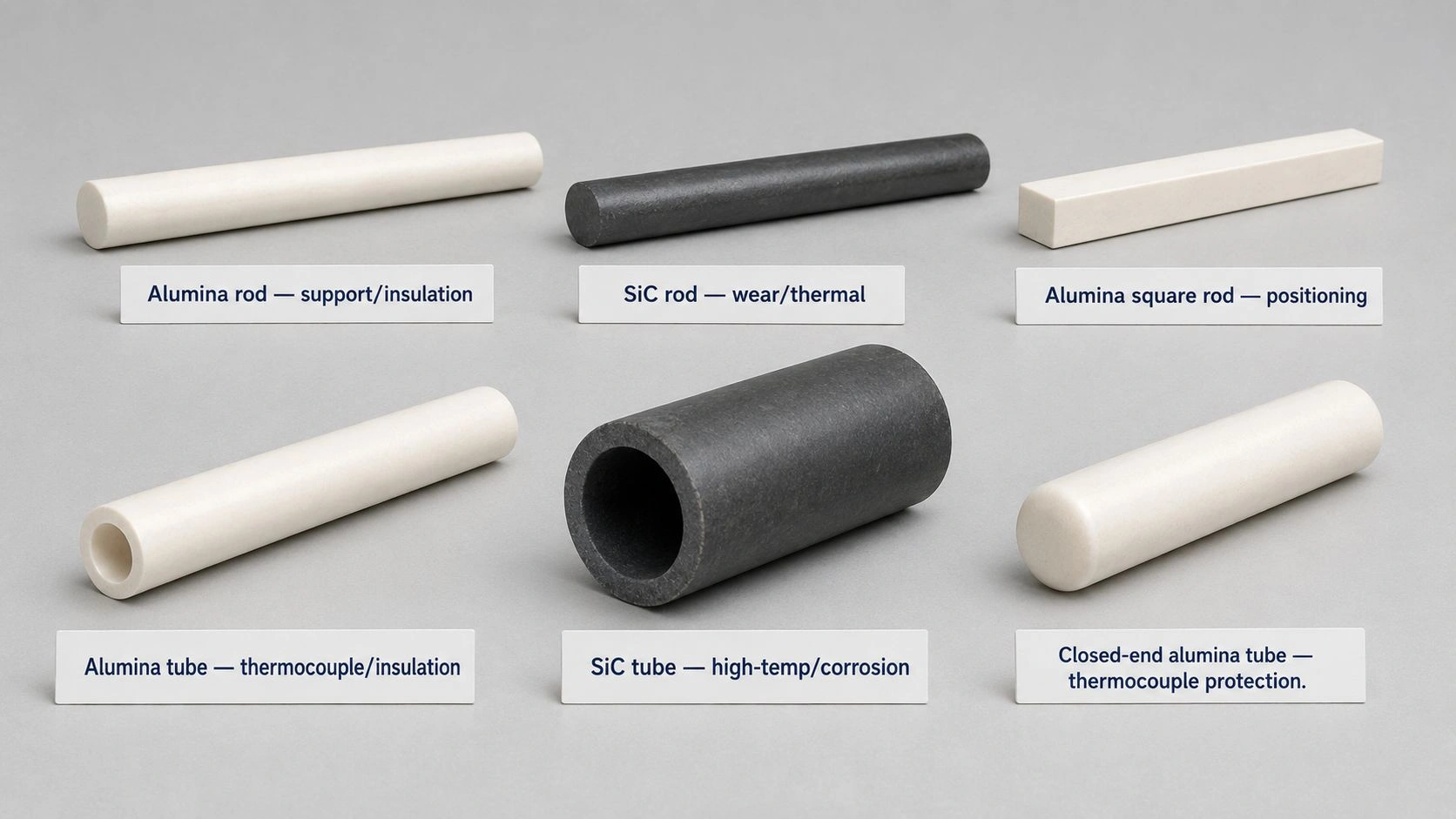
Ceramic rods and tubes can both be manufactured from alumina, SiC, zirconia, silicon nitride, and other technical ceramics, but the functional geometry must be specified first: solid rods for support, positioning, and wear contact; hollow tubes for protection, insulation, flow, and sensing applications.
Common mistakes when replacing a ceramic rod with a tube — or the reverse
Many field failures in ceramic rod and tube applications are not material failures — they are geometry-selection or geometry-specification failures.
Mistake 1: comparing OD only. The most common error is treating rods and tubes as interchangeable because their outer diameter appears similar. A tube with the same OD as a rod does not provide the same cross-section area, the same bending stiffness, the same contact behavior, or the same edge and end geometry. A tube specified to replace a rod because it looks the same size on a catalog page may fail immediately under the original rod's load conditions.
Mistake 2: ignoring tube wall thickness. Specifying a ceramic tube with too thin a wall to reduce material cost or match a desired bore size is one of the most frequent causes of tube fracture during assembly, installation, or early thermal cycling. Thin-walled ceramic tubes are fragile. They chip easily at the bore entrance during thermocouple or element insertion, crack under clamping forces that solid rods would easily survive, and may fail under the residual stress of a non-uniform temperature field that a thicker wall would tolerate.
Mistake 3: drilling a rod when a tube should be specified. When a design requires a through-bore — for a thermocouple, a conductor, a gas feed, or a heating element — the instinct to take an available ceramic rod and drill it is understandable but often technically difficult. Long, concentric, straight bores in fired ceramics are difficult to machine without creating internal stress concentrations. Grinding or EDM of a bore in a dense alumina, silicon carbide, or zirconia rod is possible but expensive and carries residual surface damage risk. If the bore is central to the design, specifying a tube from the start is usually more reliable and more economical than modifying a solid rod.
Mistake 4: blaming material grade when the geometry is wrong. When a ceramic component fails earlier than expected — by cracking, fracturing, chipping, or deforming — the first engineering question should be whether the geometry was correct for the load path and assembly condition, not whether a harder or denser material was needed. A ceramic tube that cracks because it was used where a rod was the right geometry will crack again if replaced by a tube in a different material but the same wrong geometry. Precision Ceramics confirms that alumina is hard-wearing, high-temperature capable, and electrically insulating — but none of those material properties prevent failure from a geometry that is wrong for the application.
The custom ceramic parts service at ADCERAX emphasizes that real operating conditions, assembly context, and tolerance strategy affect custom ceramic reliability more than drawings alone — which is why functional description should accompany dimensional drawings in any complex rod or tube RFQ.
What to include in an RFQ for ceramic rods or ceramic tubes
A well-structured RFQ for ceramic rods or ceramic tubes begins with function, not dimensions. The supplier needs to understand what the component must do before confirming whether the specified dimensions are achievable, appropriate, and manufacturable.
State the function. Before listing dimensions, describe the component's role: solid support between two surfaces, guide for a linear sliding element, thermocouple protection in a furnace, insulating sleeve for a conductor, flow tube for process gas, or wear-contact pin in an assembly. This description allows the supplier to check whether the specified geometry and material grade are consistent with the described function — and to flag conflicts before manufacturing begins.
The RFQ Checklist maps the required specification fields for each form:
| Specification item | Rod RFQ | Tube RFQ |
|---|---|---|
| Material | Alumina, zirconia, SiC, Si₃N₄, BN, etc. | Alumina, zirconia, SiC, Si₃N₄, BN, etc. |
| Main dimensions | Diameter/width/length | OD/ID/wall thickness/length |
| Geometry | Round, square, flat end, chamfered end | Open end, closed end, flanged, slotted, drilled |
| Critical tolerances | Diameter, straightness, surface finish | OD, ID, concentricity, wall thickness |
| Load condition | Compression, bending, sliding, wear | Pressure, bending, thermal cycling, insertion |
| Environment | Temperature, media, abrasion, voltage | Internal/external media, temperature, flow |
| Inspection | Diameter report, straightness, finish | OD/ID report, bore quality, wall check |
| Drawing need | Recommended | Strongly recommended |
Separate critical from non-critical tolerances. Tightening all tolerances to the same level wastes manufacturing time and budget on dimensions that do not affect function. For ceramic rods, the critical tolerances are typically on the contact diameter, straightness, and surface finish at wear or sliding zones. For ceramic tubes, the critical tolerances are typically on OD at the mounting interface, ID at the element clearance zone, and wall thickness uniformity. Non-critical dimensions — minor end chamfers, face flatness on non-sealing ends, or finish on non-contact surfaces — can be held to standard manufacturing specifications without the expense of precision grinding.
Request inspection documentation for critical dimensions. For rods with precision fit requirements — guide pins, positioning shafts, close-tolerance standoffs — a dimensional report for diameter, straightness, and surface finish is appropriate. For tubes used in instrumentation, sensor protection, or tight-clearance element housings — a bore and wall inspection report confirming OD, ID, and concentricity to specified tolerance is important. This documentation should be agreed upon before order placement, not requested after delivery.
The structural ceramics page at ADCERAX covers the broader context of tubes, rods, plates, rings, sleeves, and custom ceramic profiles for engineering applications requiring dimensional precision and high-temperature or chemical resistance.
Selecting ceramic rods or ceramic tubes for your application? Share your component function, operating temperature, media exposure, load condition, voltage or insulation requirements, critical tolerances, surface finish, and a drawing if available. ADCERAX can review whether rod or tube geometry is appropriate, confirm material grade, and provide a manufacturing-ready specification review.
Frequently Asked Questions
What is the main difference between a ceramic rod and a ceramic tube?
A ceramic rod is solid and is selected when the material body provides support, guidance, spacing, or wear resistance. A ceramic tube is hollow and is selected when the bore is needed for protection, flow, insulation, routing, or weight reduction. The selection is a geometry-function decision before it is a material decision.
Is a ceramic rod stronger than a ceramic tube?
Not automatically. A solid rod provides more material across the same OD, but tube strength depends on OD, ID, wall thickness, length, material, and loading direction. A thick-walled tube in silicon carbide may be mechanically stronger than a thin rod in alumina. Engineers should compare the actual geometry and material under the actual load, not just the product names.
Which material is best for ceramic rods?
It depends on the function. Alumina is common for electrical insulation and general wear resistance; zirconia for high toughness and precision wear applications; silicon carbide for thermal and corrosion-intensive environments; silicon nitride for high-strength mechanical applications where fracture toughness is important.
Which material is best for ceramic tubes?
Alumina is common for furnace tubes, thermocouple protection, and electrical insulation sleeves; silicon carbide for high-temperature and corrosion-resistant tubes in aggressive atmospheres; zirconia for precision thermal or wear tube applications; boron nitride for selected high-temperature non-wetting or machinable tube needs.
Can a ceramic rod be drilled to become a ceramic tube?
Sometimes, but it is not always the best approach. Long, straight, concentric bores in fired ceramics require precision grinding or EDM, which adds cost and introduces surface stress. If the bore is central to the design, specifying a tube from the start is usually more reliable and more economical than post-machining a solid rod.
What dimensions matter most for ceramic tubes?
OD, ID, wall thickness, length, concentricity, bore finish, end configuration, and straightness. Wall thickness is especially critical because it affects bending strength, thermal shock resistance, handling fragility, and manufacturability. Specifying OD alone for a ceramic tube is an incomplete specification.
What dimensions matter most for ceramic rods?
Diameter, length, straightness, cylindricity, surface finish, end geometry, and any critical contact or fit tolerance zones. For guide and wear applications, surface finish and diameter tolerance at the functional contact zone are typically the most important specification items.
What should be sent to a supplier for rod or tube selection?
Send drawings, material preference, operating temperature, media exposure, load condition, voltage or insulation requirements, critical tolerances, surface finish requirements, and a functional description of the component's role: solid support, guide, sleeve, protection tube, flow path, or wear element.
"