Crucible material should be selected first by metal chemistry, then by process type, atmosphere, purity requirement, and thermal cycle. Alumina is useful for many laboratory and oxide-stable applications; graphite and SiC are common for non-ferrous melting where heat transfer and thermal shock matter; BN is preferred when non-wetting behavior and clean release are critical under vacuum or inert gas; zirconia supports very high-temperature and corrosive melts; platinum, molybdenum, tungsten, and tantalum are used only when their atmosphere and reaction limits match the metal. No crucible material is universal — every selection must be confirmed against the metal's specific chemistry and the process boundary.
That hierarchy — metal first, then process, then atmosphere, then purity — is the framework this guide uses throughout.
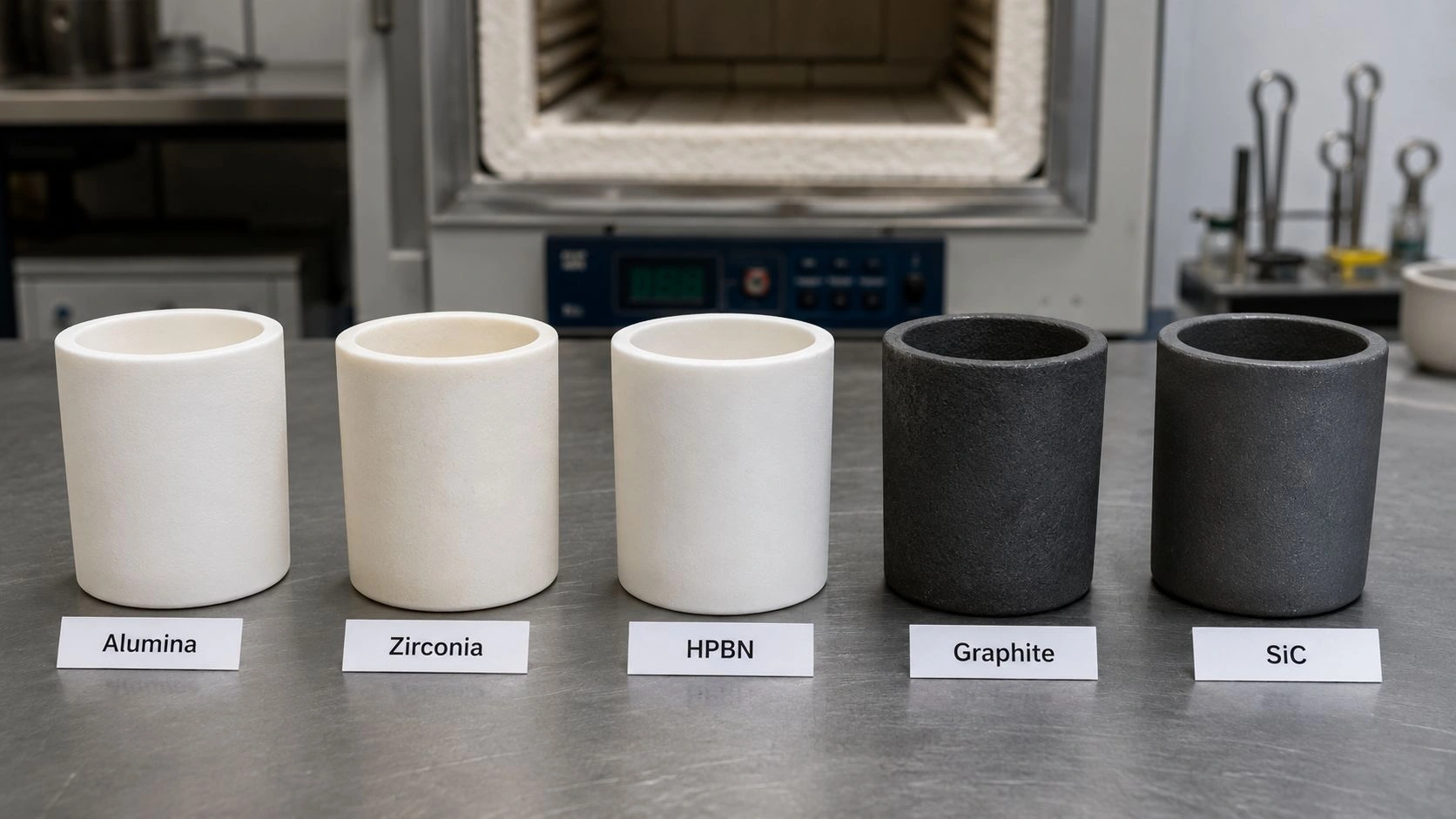
Crucible material selection starts with metal chemistry, not temperature rating — alumina, zirconia, BN, SiC, and graphite each serve different metal families under different process and atmosphere conditions.
The first rule: select by metal chemistry, not temperature alone
The most common crucible selection mistake is choosing by maximum temperature rating rather than by chemical compatibility with the metal. A crucible can survive the furnace temperature and still fail if the melt reacts with the wall, wets it strongly and sticks, dissolves part of the ceramic body, or introduces contamination through an impurity pathway the buyer did not anticipate.
Published crucible selection guidance from thermal evaporation equipment suppliers describes crucible choice as having two primary considerations — chemical compatibility and thermal compatibility — and instructs users to select crucible material based on the material being processed rather than choosing a default material for the equipment, confirming that metal chemistry drives the selection logic rather than nominal temperature rating.
The distinction between chemical compatibility and thermal compatibility matters in practice. Thermal compatibility means the crucible can withstand the temperature without mechanical failure. Chemical compatibility means the melt and the crucible do not react, dissolve, or exchange contaminating species at that temperature. A crucible can pass the thermal test and fail the chemical test — and the failure may not be obvious until the metal shows unexpected impurities, the crucible wall shows localized attack, or the melt refuses to release cleanly.
Why melting point is only the first filter
If the metal's melting point exceeds the crucible's rated service temperature, the material is eliminated immediately. But once the temperature is acceptable, the more important questions are chemical: Does the melt reduce the crucible oxide? Does the metal dissolve carbon? Does the flux or slag attack the grain boundary? Does the melt wet the wall and require mechanical force to release? These questions are metal-specific, and the answers often exclude materials that appeared acceptable from the temperature rating alone.
Chemical compatibility vs thermal compatibility
For most common metals, chemical compatibility is the tighter constraint. Aluminum reduces some oxides at high temperature. Titanium dissolves oxygen from oxide ceramics. Silicon is sensitive to carbon contamination and wetting behavior. Rare earth metals can pick up oxygen, carbon, nitrogen, and metallic impurities from many conventional refractory options. Reactive metals as a group are harder to contain cleanly than non-ferrous foundry metals because their affinity for oxygen and carbon increases as purity requirements tighten.
Why atmosphere changes the answer
The same crucible material may be acceptable in an inert atmosphere and unacceptable in air — or vice versa. Graphite is oxidation-limited in open air, which constrains open-air service compared with vacuum or inert-gas environments. BN has useful oxidation resistance in air up to a grade-specific limit, but above that limit the surface changes and non-wetting behavior degrades. Alumina is chemically stable in air but may react with reducing atmospheres containing carbon monoxide or hydrogen at high temperature. Every material boundary in this guide is atmosphere-dependent.
Metal-by-metal crucible material selection
The Crucible Material Selection Matrix below maps common metal families to candidate crucible materials, caution zones, and the primary selection driver:
| Metal/material family | Common candidate crucibles | Use with caution | Main selection driver |
|---|---|---|---|
| Aluminum/Al alloys | Graphite, SiC, BN, alumina for selected lab use | Alumina if sticking/cracking occurs; graphite in oxidizing high-temp service | Wetting, oxidation, carbon pickup, thermal shock |
| Magnesium/Mg alloys | BN, graphite/protected systems, selected ceramics | Oxide ceramics without compatibility review | Reactivity, atmosphere, clean release |
| Copper/brass/bronze | Clay-graphite, SiC, graphite, alumina/zirconia for lab use | BN or alumina without melt-contact testing | Thermal shock, flux, alloy chemistry |
| Nickel alloys | Alumina, zirconia, yttria, MgO, selected refractory metals | Graphite if carbon pickup matters | Temperature, oxygen/carbon contamination |
| Precious metals | Alumina, zirconia, platinum, graphite/clay-graphite depending on process | Low-grade refractories | Purity, corrosion, assay requirement |
| Titanium/zirconium/niobium | BN, PBN, yttria, CaO/ZrO₂, refractory metal liners | Graphite or alumina without reaction review | Reactivity, oxygen/carbon pickup |
| Silicon/germanium | Quartz, Si₃N₄-coated systems, BN/PBN for specialty use | Graphite/alumina without contamination review | Wetting, oxygen, carbon, crystal process |
| Rare earth metals | BN, tantalum/tungsten/molybdenum, yttria, CaO | Alumina/silica without reaction review | Oxygen sensitivity, crucible reaction |
| Zinc/low-melting nonferrous | Graphite, SiC, clay-graphite | Materials sensitive to flux or vapor | Thermal cycling, vapor, flux attack |
| Evaporation metals | Alumina, BN, graphite, Mo/W/Ta liners | Default crucible without deposition compatibility review | Vapor compatibility and source geometry |
This matrix is a starting point only. Confirm compatibility through supplier data, literature, customer standards, and small-scale melt-contact or evaporation trials.
The metal families below each deserve a brief engineering note that the matrix alone cannot capture:
Aluminum and magnesium. For clean laboratory or vacuum/inert-atmosphere work with aluminum and magnesium, BN is a frequently specified option because of its non-wetting behavior toward most molten metals and its low contamination transfer. For foundry-scale aluminum melting and holding, SiC and clay-graphite are widely established routes where thermal shock resistance and durability matter more than trace-level contamination control. Magnesium's reactivity in air means atmosphere control is often the primary concern — the crucible material choice follows from whether the process is air-atmosphere, inert-gas, or protective-cover-gas.
Copper, brass, and bronze. Non-ferrous foundry applications involving copper alloys typically use clay-graphite or SiC crucibles because they handle the thermal shock of repeated charge cycles and the alloy-specific slag chemistry. For laboratory copper melting where contamination is the concern, high-purity alumina or zirconia may be evaluated. Flux chemistry is often the dominant attack mechanism in copper alloy melting rather than direct metal-ceramic reaction.
Precious metals. Gold, silver, platinum, palladium, and their alloys are generally compatible with alumina and zirconia in clean melting, assay, and remelting applications. Published precious-metal assay and recovery references describe alumina crucibles for clean-contact melting steps and zirconia for higher-temperature corrosive applications. Platinum labware is specified for analytical fusion steps involving acids and aggressive fluxes.
Titanium and reactive metals. Titanium, zirconium, and niobium have high chemical affinity for oxygen, carbon, and nitrogen at elevated temperature. BN and PBN are used for some titanium melting and evaporation applications because of their relatively inert behavior toward molten titanium under controlled atmosphere. Calcia-stabilized zirconia and yttria are evaluated for reactive metal containment in vacuum arc or induction melting. No oxide ceramic is universally safe for reactive metals — literature review and compatibility testing are required.
Silicon and germanium. The silicon melting and crystallization literature treats crucible and coating selection as a combined problem involving thermal properties, contamination control, wetting behavior, cost, reusability, and component design. Quartz is widely used for silicon melting in Czochralski growth. BN and PBN are used for germanium and some compound semiconductor crystal growth applications where direct melt contact requires both cleanliness and non-wetting behavior.
Do not misdiagnose crucible failure as material mismatch
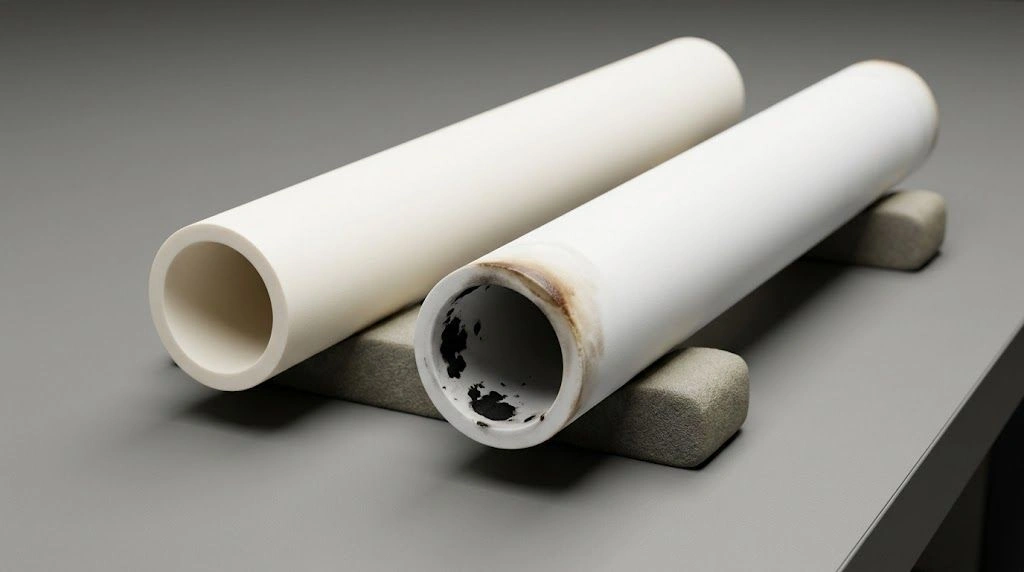
A cracked, contaminated, or short-lived crucible does not always mean the material family was wrong. Before switching to a different material, the failure pattern should be diagnosed against the most likely root causes.
Cracking: thermal shock vs melt expansion vs geometry. Most crucible cracks originate from thermal stress rather than from the crucible being chemically unsuitable for the metal. If the crack pattern radiates from the bottom or corners, or occurs during rapid cooling or heating, thermal shock from the operating procedure is the more likely cause. Melt expansion during solidification can also crack a crucible if the charge occupies too much of the volume. Switching to a different material may extend tolerance but will not fix a process that generates excessive thermal gradients.
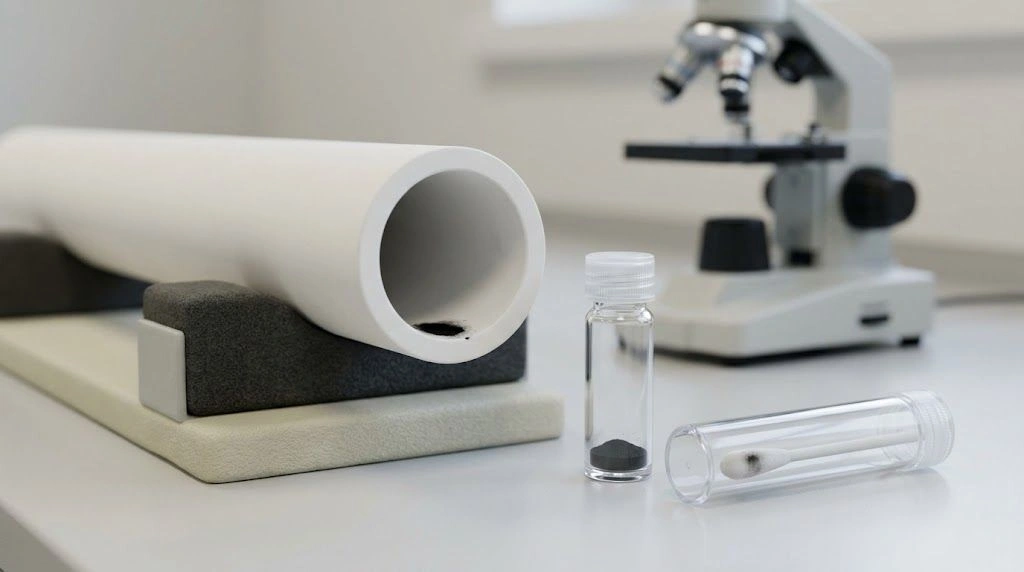
Contamination: crucible body vs tools, flux, atmosphere, feedstock. When a melt shows unexpected impurities, the crucible body is one of several possible sources. Graphite tools, flux residues from prior melts, reactive furnace atmospheres, and impure feedstock can all contribute contamination that is incorrectly attributed to the crucible material. Before switching crucible material, confirm that tools, liners, feedstock, and atmosphere have been controlled.
Sticking: wetting vs shape and cooling profile. If the metal sticks to the crucible wall, the cause may be the material's wetting behavior — but it can also be inadequate wall taper, insufficient bottom radius, an overfilled charge that freezes against the wall, or a cooling profile that allows the metal to bond before shrinkage pulls it away. BN's non-wetting behavior reduces sticking for many metals, but a poorly designed crucible geometry will cause sticking problems even with BN.
Short service life: material mismatch vs process overload. A crucible that fails rapidly is not necessarily made from the wrong material. Excessive hold temperature, repeated thermal cycling without preheating, aggressive flux chemistry, or overfilling all shorten service life independent of material choice.
The Failure Diagnosis Table below maps observed problems to better diagnostic questions:
| Observed problem | Common assumption | Better diagnostic question |
|---|---|---|
| Crucible cracks after cooling | Material temperature rating too low | Did the melt freeze against the wall or was the cooling too fast? |
| Metal sticks to wall | Wrong crucible material | Is wall taper, bottom radius, fill level, or non-wetting liner needed? |
| Unexpected contamination | Crucible impurity only | Could tools, flux, graphite hardware, atmosphere, or feedstock contribute? |
| Rapid wall wear | Poor crucible quality | Is slag, flux, oxide, or alloy chemistry attacking the wall? |
| Short life in air | Material defect | Is graphite/BN/refractory metal being used outside atmosphere boundary? |
| Inconsistent melt results | Wrong material | Is the heating method, fill level, or source geometry inconsistent? |
Diagnosis should be based on service records and inspection before any material switch is specified.
Process type changes the material choice
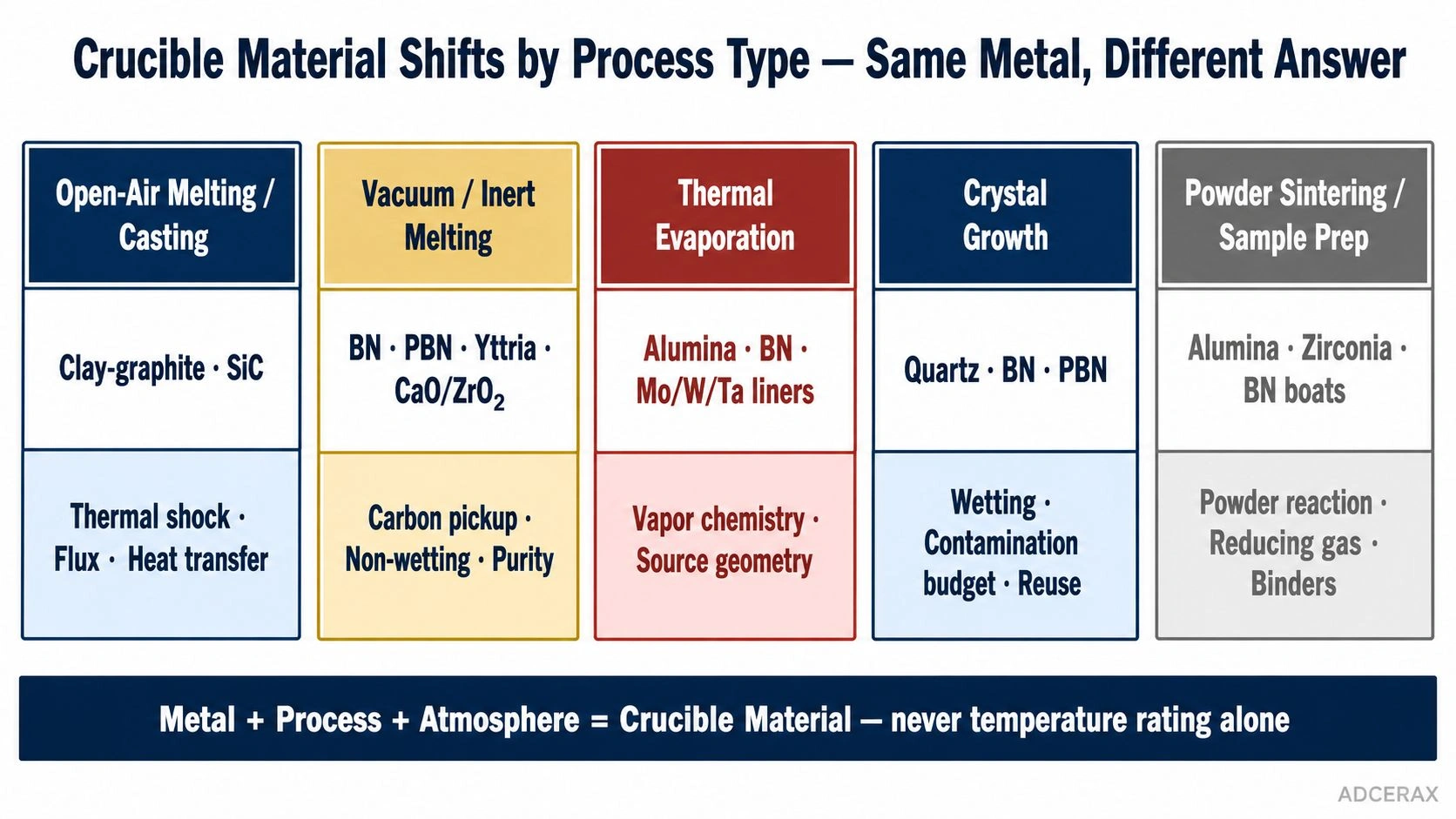
The same metal may require different crucible materials in different processes — open-air casting, vacuum melting, thermal evaporation, and crystal growth each impose different compatibility requirements on the crucible.
The same metal may need a different crucible in a different process. Process type is the second-most important selection variable after metal chemistry.
Open-air melting and casting. In foundry-scale open-air non-ferrous melting, the dominant requirements are thermal shock resistance, flux and slag compatibility, heat transfer efficiency, and durability across repeated charge cycles. Clay-graphite and SiC crucibles are the established workhorses for aluminum, copper, zinc, and similar metals in this context. Contamination from graphite carbon is generally acceptable in foundry casting applications where trace contamination levels are within alloy specifications.
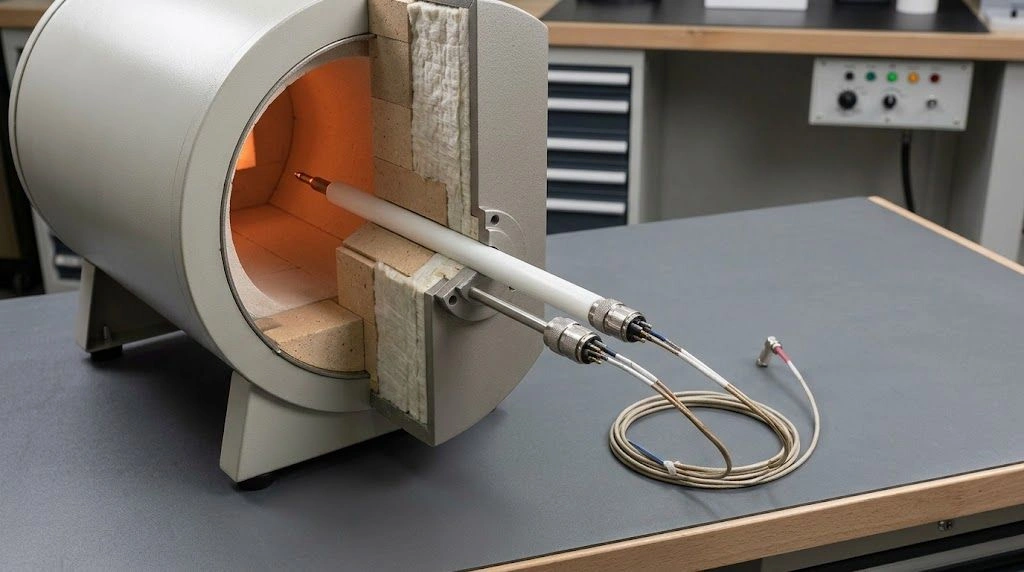
Vacuum and inert-gas melting. When the furnace atmosphere is vacuum or inert gas, carbon pickup from graphite becomes more relevant, and the non-wetting and chemically inert behavior of BN becomes more valuable. For reactive metals — titanium, zirconium, rare earths — vacuum melting is often the only viable process, and crucible selection narrows significantly to BN, PBN, yttria, calcia-stabilized zirconia, or refractory metal options.
Thermal evaporation and source crucibles. In physical vapor deposition by thermal evaporation, the crucible acts as a heated source vessel for the evaporant. The compatibility requirement is vapor chemistry at the source temperature, not just melt-contact chemistry. Alumina, BN, graphite, and refractory metal liners are all used as evaporation sources depending on the evaporant material and deposition process. Source geometry, uniform heating, and liner behavior matter as much as bulk material compatibility.
Crystal growth and semiconductor-adjacent processes. Silicon Czochralski growth uses quartz crucibles extensively because of silica's controlled dissolution behavior in silicon melt and the established process infrastructure around it. For compound semiconductor and germanium growth by Bridgman, VGF, or related methods, BN and PBN crucibles are used for both their purity and their non-wetting behavior toward the melt. The contamination budget in crystal growth is orders of magnitude tighter than in foundry casting.
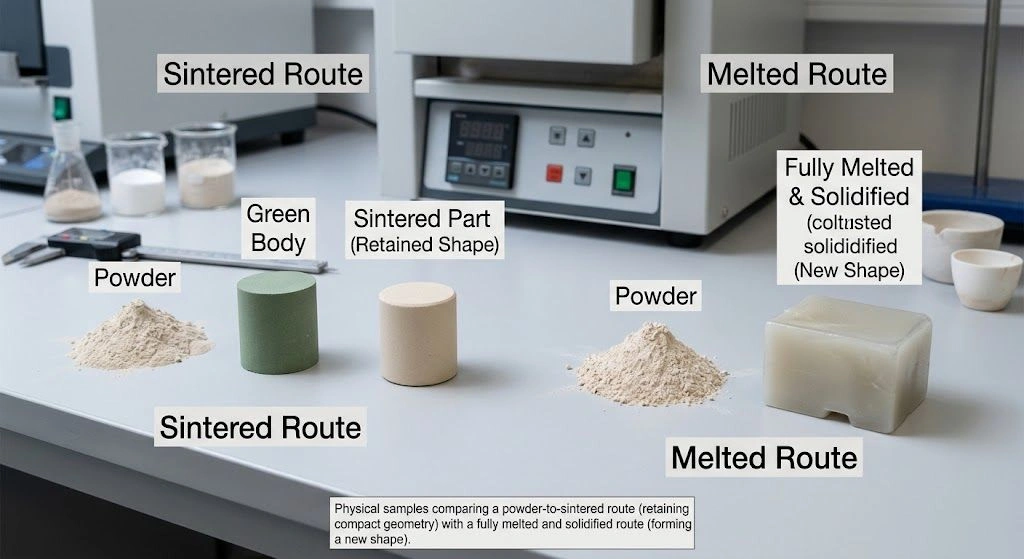
Powder sintering and alloy sample preparation. When a crucible contains powder at sintering temperature rather than a fully molten bath, the interaction mechanism changes. The concern is reaction with binders, reducing atmosphere, volatile species from the powder, and possible liquid-phase formation during sintering. Alumina, zirconia, and BN plates, boats, and crucibles are used depending on the powder chemistry and sintering atmosphere.
Material boundaries: when to use or avoid each crucible family
After metal and process are defined, material boundaries determine the final shortlist:
| Crucible material | Best-fit strength | Main limitation | Typical RFQ question |
|---|---|---|---|
| Alumina | General high-temperature lab use, thermal analysis, oxide stability | Thermal shock, sticking, reaction with selected melts | "Is Al₂O₃ compatible with this alloy and flux?" |
| Zirconia | Very high temperature, corrosion resistance, precious-metal/powder work | Thermal cycling, stabilization grade, cost | "Which stabilized zirconia grade is required?" |
| BN | Non-wetting release, vacuum/inert melting, reactive metals | Oxidation boundary in air, softer structure, cost | "Is hot-pressed BN or PBN needed?" |
| PBN | High-purity, low-outgassing, dense-wall vacuum use | Size/geometry/cost constraints | "Is CVD PBN necessary for purity?" |
| SiC | Thermal shock, heat transfer, non-ferrous foundry use | Oxidation/carbon/slag compatibility | "Which SiC grade and atmosphere?" |
| Graphite | Heat transfer, induction coupling, non-ferrous melting | Oxidation in air, carbon contamination | "Is carbon pickup acceptable?" |
| Quartz | High-purity silica applications and selected silicon/glass work | Softening/devitrification/reaction boundary | "Is the process below quartz limits?" |
| Platinum | Selected analytical and noble-metal chemistry | Alloying, cost, mechanical limits | "Will sample chemistry attack Pt?" |
| Mo/W/Ta | High-temperature vacuum/inert specialty use | Oxidation and metal compatibility limits | "Can atmosphere remain oxygen-free?" |
Alumina is the most broadly specified ceramic crucible for laboratory heating, thermal analysis, and many oxide-stable applications. Its limitations appear at the intersection of reactive metals, thermal shock conditions, and applications where melt adhesion is a quality concern. The alumina ceramic crucibles are positioned for laboratory, analytical, and moderate-temperature metal applications where chemical stability in air and electrical insulation matter.
For corrosive high-temperature melts, review zirconia crucible options for corrosive high-temperature melts.
Zirconia extends the operating range beyond alumina's practical boundary for corrosive melts and very high temperature applications. Stabilized zirconia — partially stabilized with yttria, magnesia, or calcia — resists phase transformation during thermal cycling better than unstabilized zirconia. Zirconia crucibles are often specified for precious-metal melting, high-temperature powder sintering, and applications where alumina's upper chemical-resistance boundary is insufficient.
BN and PBN serve the non-wetting, clean-release, and vacuum-atmosphere end of crucible selection. The boron nitride crucibles (hot-pressed HPBN and CVD PBN) are used for aluminum, magnesium, copper, titanium, precious metals, and silicon under vacuum or inert gas where carbon-free and non-wetting contact is the governing requirement. PBN's CVD structure provides higher purity and lower outgassing than sintered HPBN, making it the preferred option for semiconductor crystal growth and high-purity vacuum evaporation applications.
For non-ferrous foundry heat-transfer duty, review silicon carbide crucible options for non-ferrous foundry duty.
SiC and clay-graphite are the foundry workhorses for non-ferrous melting. Their thermal shock resistance, heat transfer efficiency, and durability across repeated charge cycles make them practical choices for aluminum, copper, zinc, and brass melting at production scale. Their limits are carbon contamination in high-purity or carbon-sensitive applications, and oxidation when used above graphite's air-service temperature without protection.
Platinum, molybdenum, tungsten, and tantalum are specialty materials that replace ceramics when neither oxide nor non-oxide ceramics provide adequate chemical inertness for the specific metal and atmosphere combination. They are not general-purpose replacements for ceramic crucibles — each requires a controlled atmosphere, careful metal compatibility review, and acceptance of higher cost.
RFQ checklist for metal-specific crucible selection
The crucible selection conversation with a supplier can only produce a reliable recommendation if the supplier receives the complete process context — not just the metal name and a temperature requirement.
Engineering guidance on crucible selection confirms the complete decision hierarchy for submitting a useful crucible inquiry: metal or alloy composition, process type, atmosphere, temperature and hold time, flux and slag chemistry, purity targets and contamination exclusions, geometry, thermal cycling profile, and reuse expectation — because each of these variables can independently change which crucible material family is appropriate, and a supplier who receives only "metal type and temperature" cannot confirm chemical compatibility, non-wetting behavior, or contamination pathway without the remaining context.]
| RFQ field | Why it matters | Recommended wording |
|---|---|---|
| Metal/alloy composition | Primary compatibility driver | "List major and minor alloying elements" |
| Process type | Changes material choice | "Melting, casting, evaporation, sintering, or crystal growth" |
| Atmosphere | Controls oxidation and reaction | "Air, vacuum, argon, nitrogen, hydrogen, reducing gas" |
| Temperature/hold time | Determines thermal boundary | "Operating temperature, peak temperature, and dwell time" |
| Flux/slag | Often attacks crucible faster than metal | "Specify flux, oxide, slag, or salt chemistry" |
| Purity target | Controls contamination tolerance | "List elements that must be avoided" |
| Geometry | Controls thermal shock and release | "OD, ID, height, wall, bottom radius, taper, lid, spout" |
| Reuse expectation | Changes cost-performance target | "Single-use, short campaign, or repeated cycles" |
| Test requirement | Confirms compatibility | "Request sample melt-contact test before production" |
RFQ fields are the minimum for a metal-specific crucible recommendation; add drawing, COA requirement, and surface finish as needed.
A supplier who receives a complete set of these inputs can confirm whether the candidate material is appropriate, identify any boundary condition that might require a different grade or a liner, and recommend whether a small-scale melt-contact or evaporation trial is appropriate before committing to production quantities.
Selecting a crucible for a specific metal, alloy, or evaporation material? Send the metal or alloy composition, process type, atmosphere, temperature, hold time, flux chemistry, purity targets, and crucible geometry drawing. A supplier response can return a material recommendation with grade confirmation, contamination-pathway review, and compatibility documentation for the confirmed process; turnaround depends on inquiry complexity.
Related reading
- BN versus graphite crucible selection
- Alumina crucibles in quartz-glass manufacturing use and avoid cases
- Zirconia crucibles for melting and casting stability
Frequently Asked Questions
What crucible material should I use for melting aluminum?
For foundry-scale aluminum melting in air, clay-graphite and SiC crucibles are the established practical options because of their thermal shock resistance and durability. For clean laboratory or vacuum/inert-atmosphere aluminum work where carbon contamination and non-wetting behavior are concerns, BN is often evaluated. The correct answer depends on whether the application is open-air foundry melting, laboratory sample preparation, or a specialized process — atmosphere and purity requirement drive the final selection.
What crucible is best for copper, brass, or bronze melting?
Clay-graphite and SiC crucibles are widely used for copper-alloy melting because they handle the thermal cycling of production melting and the flux or slag chemistry typical of these alloys. For laboratory-scale copper melting where contamination control is critical, high-purity alumina or zirconia may be evaluated instead. Flux chemistry is often the dominant attack mechanism in copper-alloy melting, so the flux composition should be reviewed alongside the metal chemistry when selecting a crucible.
Can alumina crucibles be used for molten metals?
Alumina is suitable for some molten-metal applications — particularly where the metal and its alloys are not chemically aggressive toward alumina, the temperature is within range, the thermal cycle is controlled, and contamination from aluminum or silicon in the crucible is acceptable. Alumina is not recommended for reactive metals such as titanium or zirconium, and may cause sticking problems with metals that wet oxide ceramics strongly. Process testing with a trial crucible is recommended before production use.
What crucible material is used for titanium or reactive metals?
Reactive metals including titanium, zirconium, and niobium require crucible materials that resist oxygen, carbon, and nitrogen transfer at high temperature under vacuum or inert atmosphere. BN and PBN are evaluated for some titanium melting and evaporation applications. Yttria and calcia-stabilized zirconia are evaluated for reactive metal containment in vacuum arc and induction melting. No oxide ceramic is universally safe for reactive metals — literature review and small-scale compatibility testing are necessary before production use.
How do I choose a crucible for thermal evaporation?
For thermal evaporation, select the crucible material based on the evaporant material's vapor chemistry and the source temperature, not only on the crucible's maximum service temperature. Alumina, BN, graphite, and refractory metal liners (Mo, W, Ta) are all used depending on the evaporant. A published evaporation compatibility chart from the evaporation equipment supplier or from a crucible reference source is the starting point — but confirmation with a supplier and a deposition trial is recommended for unfamiliar material combinations.
What information should I give a supplier when requesting a crucible recommendation?
Provide the metal or alloy composition including major and minor elements, the process type (melting, casting, sintering, evaporation, crystal growth), the furnace atmosphere, the operating and peak temperature with hold time, any flux or slag chemistry, the purity targets and contamination elements to exclude, the crucible geometry (OD, ID, height, wall thickness, bottom radius, taper, lid, spout), whether reuse is required, and whether a melt-contact or evaporation compatibility test is needed before production quantities. A supplier who receives all of these inputs can confirm material suitability — a supplier who receives only "what crucible for [metal]" cannot.