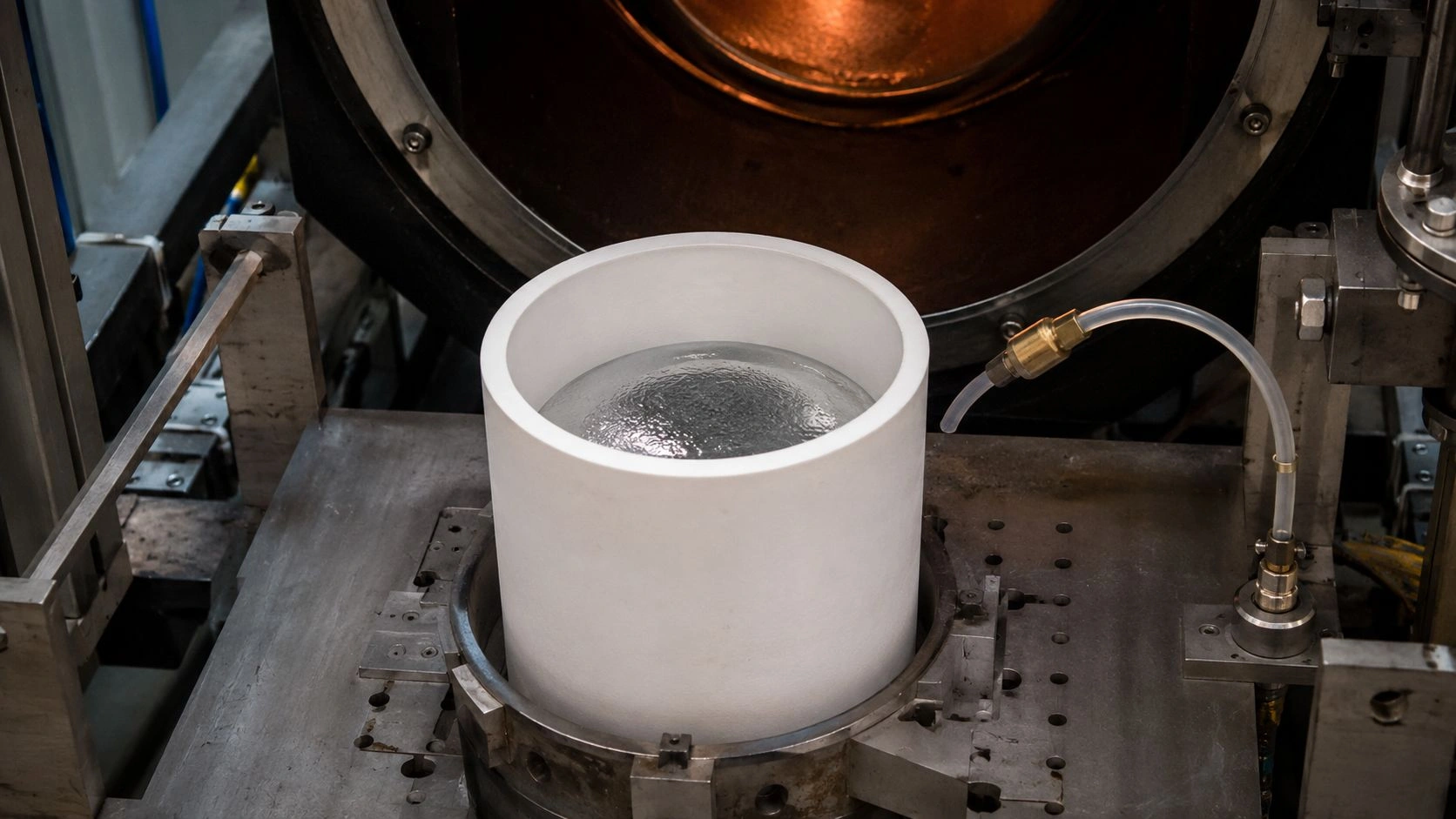
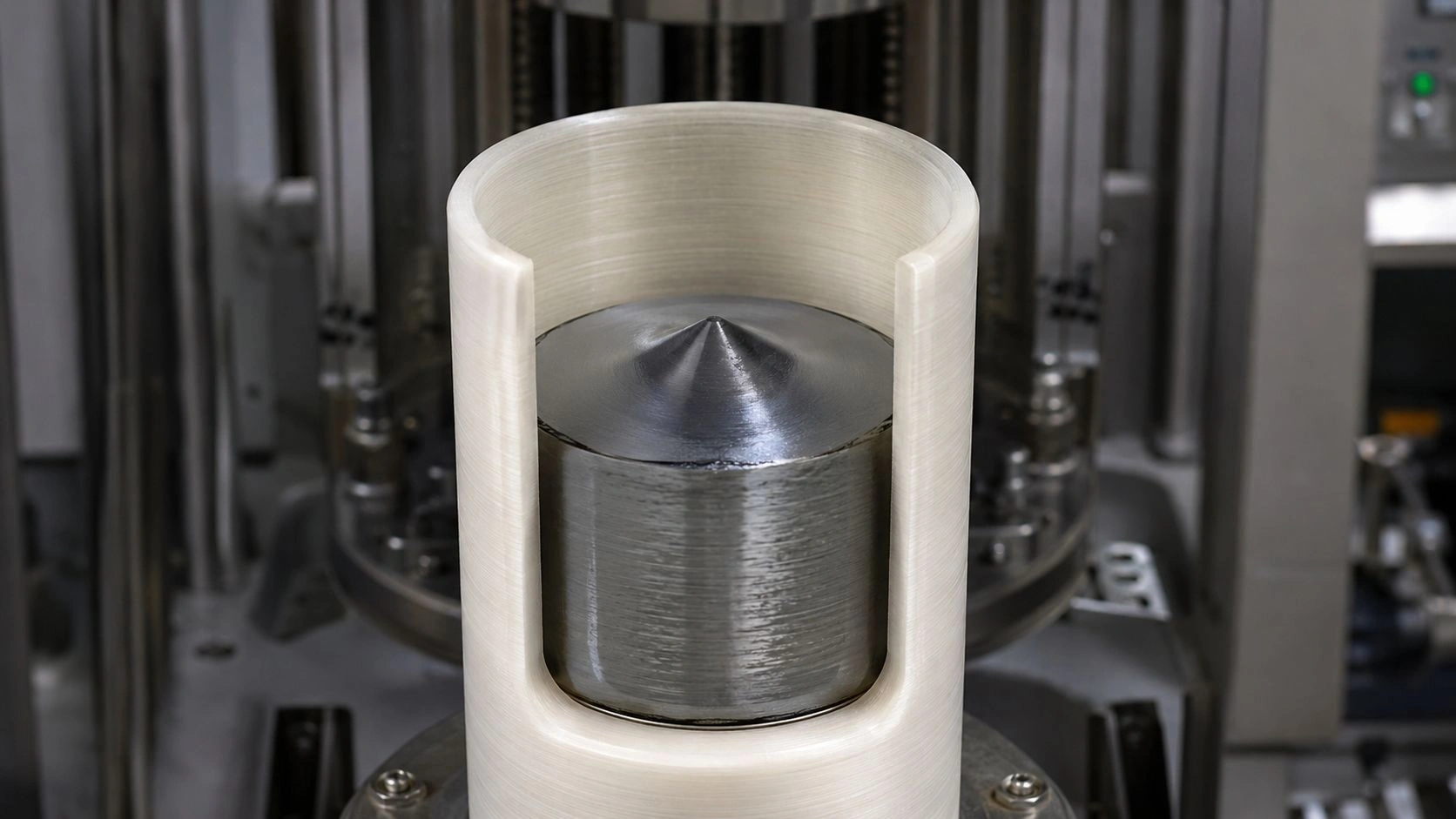
BN crucibles are useful in nuclear-materials-adjacent research when the experiment requires a non-wetting, electrically insulating, high-temperature containment or interface material for controlled-atmosphere thermal analysis, molten salt compatibility testing, surrogate material studies, or graphite isolation. Their suitability depends on the atmosphere, salt or melt chemistry, boron sensitivity of the analytical method, any neutron-environment considerations, and the regulatory status of the research. BN should not be treated as a universal nuclear research crucible: boron content can affect neutron behavior, trace analysis results, oxidation response, and documentation requirements. The correct evaluation starts with the experiment objective and the compliance context, not with the material's temperature rating.
The boron nitride crucibles catalog — including hot-pressed BN and PBN crucibles for high-temperature, non-wetting, and vacuum-compatible applications, and BN liners for graphite or metal crucible isolation — covers the non-sensitive research containment and interface component applications described in this guide. For grade-family context, see the boron nitride ceramic hub.
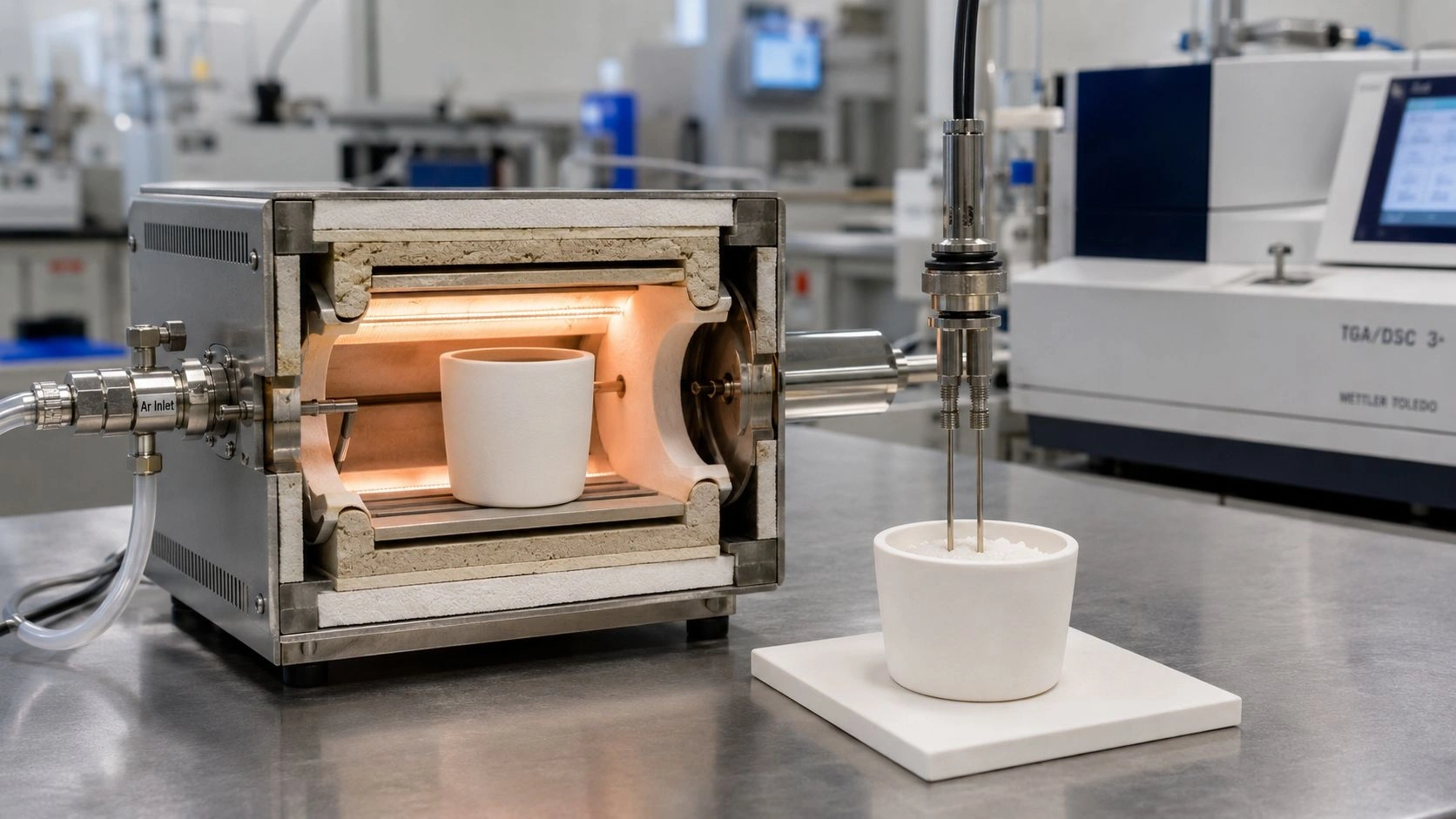
BN crucibles in nuclear-materials-adjacent research serve as non-wetting, electrically insulating, controlled-atmosphere containment or interface components — their suitability must be evaluated against experiment objectives, boron sensitivity, and institutional compliance requirements.
When are BN crucibles appropriate in nuclear material research?
Positioning the crucible role correctly is the first step: BN crucibles are relevant as material interface components — containment vessels, sample holders, liners, and thermal-analysis accessories — not as process recipe elements for nuclear operations.
Published research context (for example ORNL hexagonal-BN property summaries and Argonne molten-salt electrochemical work using BN vessels) describes h-BN as chemically inert, thermal-shock resistant, electrically insulating, and non-wetted by many molten salts and reactive molten metals — making BN a candidate containment interface for non-radioactive or controlled molten-salt compatibility studies. Treat those sources as published context, not a contractual suitability SLA; confirm salt chemistry, moisture control, and institutional authorization on RFQ.
The BN Crucible Suitability Matrix for Nuclear-Materials-Adjacent Research maps the main research contexts:
| Research context | BN crucible fit | Main reason | Boundary condition |
|---|---|---|---|
| Controlled-atmosphere thermal analysis | Strong to conditional | Non-wetting, insulating, machinable | Check boron-sensitive measurements |
| Molten salt compatibility screening | Conditional | Published research uses BN in molten salt test setups | Salt chemistry and moisture control matter |
| Graphite crucible isolation | Strong | BN liner reduces direct graphite interaction | Fit, sealing, and thermal expansion must be reviewed |
| Neutron-sensitive experiment | Conditional to weak | Boron may influence neutron behavior | Requires physics review before material approval |
| Oxidizing high-temperature exposure | Weak | BN oxidation depends on microstructure and water vapor | Consider oxide ceramics or redesign |
| Regulated radioactive material handling | Not decided by material alone | Compliance governs use | Requires institutional authorization |
Values indicative. Verify per project-specific regulatory, ASTM/ISO, and supplier-specific data. Radioactive-material research must be authorized through your institution's compliance program.
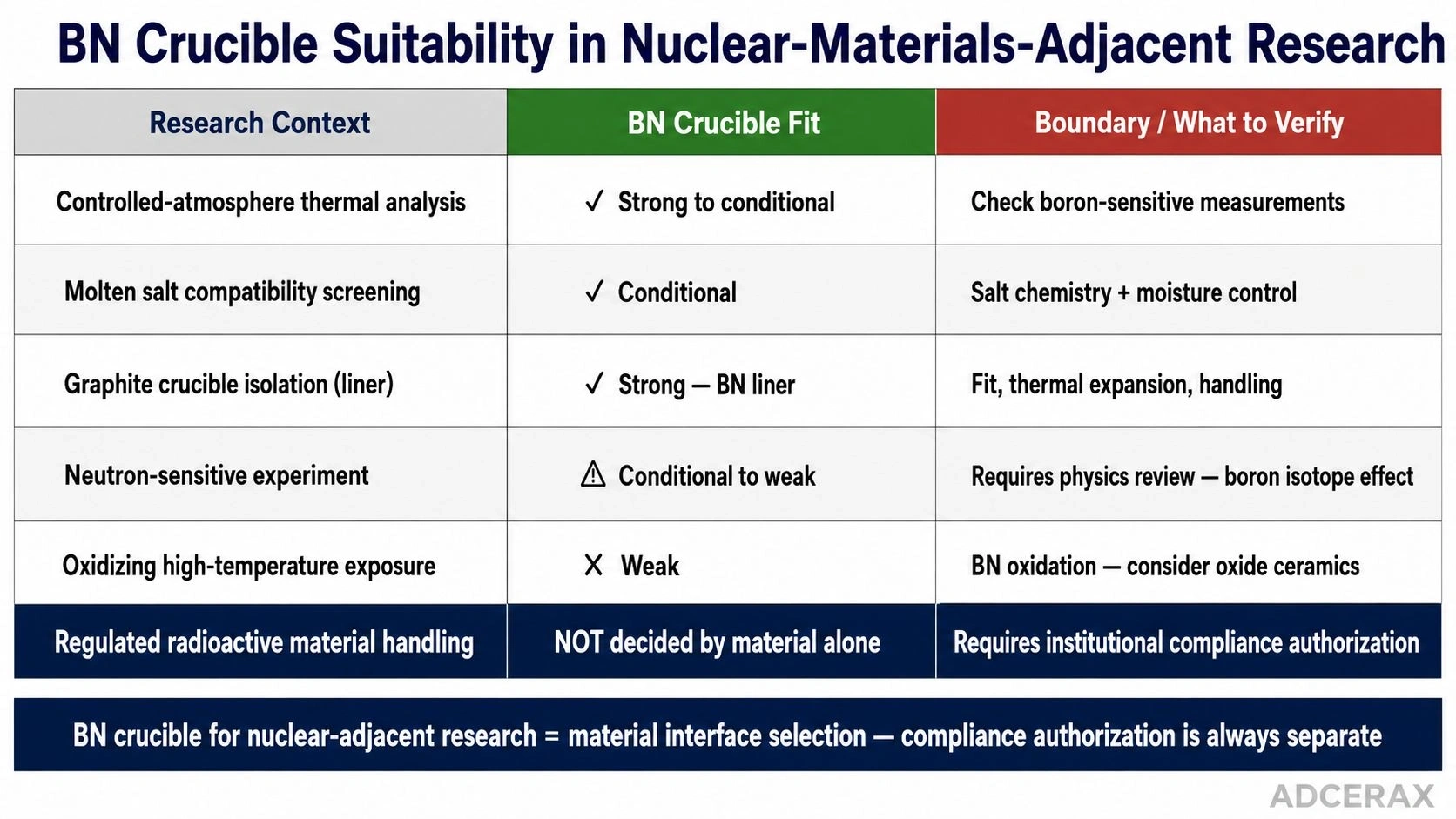
BN crucible suitability in nuclear-materials-adjacent research depends on research context — controlled-atmosphere thermal analysis, molten salt compatibility screening, graphite isolation, neutron sensitivity, oxidation exposure, and regulated-material handling each require separate validation.
Controlled-atmosphere thermal analysis and compatibility screening. The clearest and safest application for BN crucibles in nuclear-materials-adjacent research is non-radioactive compatibility work: thermogravimetric analysis, differential thermal analysis, melting point measurement, and phase screening performed under argon, nitrogen, vacuum, or another controlled atmosphere on non-radioactive materials or surrogate compositions. In this context, BN's non-wetting behavior provides cleaner sample recovery, its electrical insulation eliminates current-path concerns in electrochemical setups, and its thermal shock resistance supports rapid temperature cycling without cracking. The material's machinability — available through the custom ceramic parts service from small batch quantities — allows custom crucible geometry for specific sample masses or furnace configurations.
BN liners for graphite or metal isolation. When the research furnace uses graphite or metal hardware and the experiment must minimize direct contact between the melt or sample and the graphite surface — to reduce carbon pickup, wall reaction, or contamination — a BN liner inserted into the graphite outer crucible provides a clean, non-wetting interface. This composite crucible architecture allows the graphite to deliver thermal and structural performance while the BN liner controls the sample interface. The BN crucible liner covers cylindrical, conical, and stepped liner profiles for standard graphite crucible bore sizes.
What nuclear-specific constraints change the BN crucible decision?
Nuclear-materials-adjacent research adds selection filters that do not apply in ordinary high-temperature laboratory work, and these filters must be evaluated before BN is approved for the specific experiment.
Boron content, neutron behavior, and trace-analysis sensitivity. Boron is not only a ceramic constituent — it is a material with neutron-relevant properties. Natural boron contains both ¹⁰B and ¹¹B isotopes, and ¹⁰B has a well-documented high neutron absorption cross-section. In experiments where the neutron field, neutron moderation, or neutron-economy of a system is a measured variable, the presence of a boron-containing crucible may need to be accounted for or may change the experimental result. This does not automatically exclude BN from all neutron-relevant experiments — neutron behavior is Conditional and requires physics and institutional compliance review before use; it is not resolved by the crucible material datasheet alone, and no absolute usable/unusable determination for regulated nuclear duty is implied by the ceramic datasheet.
For trace analytical work where boron is a measured element — some advanced alloy compositions, molten salt characterization, or material-release experiments can include boron at low concentrations — the BN crucible contributes boron to the measurement blank, as with any boron-containing vessel. Running blank experiments in the actual BN crucible type and verifying that the crucible's boron contribution is below the analytical method's quantitation limit is the correct validation step before BN is approved for boron-trace measurements.
Radiation exposure does not replace compatibility testing. Some researchers assume that if a material survives neutron irradiation testing, it is broadly acceptable for nuclear research environments. Published PubMed-indexed research on BN ceramics reports resistance to ionizing radiation under neutron and electron aging conditions, which is useful data for radiation-tolerant material selection. However, radiation resistance is one property among many, and it does not substitute for the experiment-specific assessment of boron contribution, melt compatibility, atmosphere requirements, and regulatory approval. A BN crucible that passes irradiation resistance evaluation must still be checked against the salt chemistry, temperature, atmosphere, and analytical method of the specific experiment.
Regulatory context governs use beyond material properties. Nuclear-materials-adjacent research in most jurisdictions operates under licensing frameworks that define what materials can be possessed, in what quantities, under what safety controls, and with what waste management plans. The NRC's 10 CFR Part 70 framework for domestic licensing of special nuclear material and the IAEA's safety standards system both establish that the authorization to possess or use radioactive materials or special nuclear materials resides in institutional licensing and safety reviews, not in material specifications. A BN crucible RFQ can specify grade, purity, and dimensions without touching these compliance requirements — but the researcher and institution must ensure that the experiment itself is properly authorized before equipment is ordered or used.
When should BN be avoided or replaced?
After mapping where BN can be appropriate, the conditions where it should not be used or should be used only after additional validation are equally important.
Oxidizing atmosphere and high-temperature air exposure. The principal material limitation of hot-pressed BN in open environments is oxidation. Published NASA high-temperature BN oxidation research is useful context: oxidation response depends on grade, porosity, microstructure, crystallinity, and atmosphere (including water vapor effects on boron oxide volatilization) — confirm duty on RFQ rather than inventing °C/% oxidation curves. The same published context notes that monolithic BN has long been used as a crucible material in inert high-temperature environments, which also confirms that inert atmosphere is the operating condition, not air. For research requiring air-atmosphere high-temperature holds, oxide ceramics such as alumina, magnesia, or yttria are more appropriate unless the BN grade is specifically reviewed for the intended air–temperature combination.
Boron-sensitive analytical programs. When the experiment requires accurate boron measurement at low concentrations in the sample — molten salt fluoride systems with boron-bearing species, or materials where trace boron is mechanistically important — the BN crucible's boron contribution to the analysis must be validated. If the blank contribution cannot be distinguished from the sample signal at the concentration level of interest, PBN, an alumina crucible, or a different sample vessel should be evaluated.
The HPBN vs PBN vs BN Liner options for research applications are mapped in this table:
| Option | Best fit | Main advantage | Main limitation |
|---|---|---|---|
| Hot-pressed BN crucible | Machined research crucibles and holders | Custom geometry and practical machining | Binder/additive and porosity must be checked |
| PBN crucible | High-cleanliness, low-porosity containment | Dense CVD structure and high purity | More geometry and cost constraints |
| BN liner | Isolating graphite, quartz, or metal crucibles | Non-wetting barrier and easier replacement | Interface fit and handling control matter |
| Alumina/oxide crucible | Oxidizing environments or boron-sensitive work | No boron contribution | May wet or react with some melts |
| SiC/graphite/metal crucible | Structural or conductive environments | Strength or conductivity | Carbon, corrosion, or reaction risk may increase |
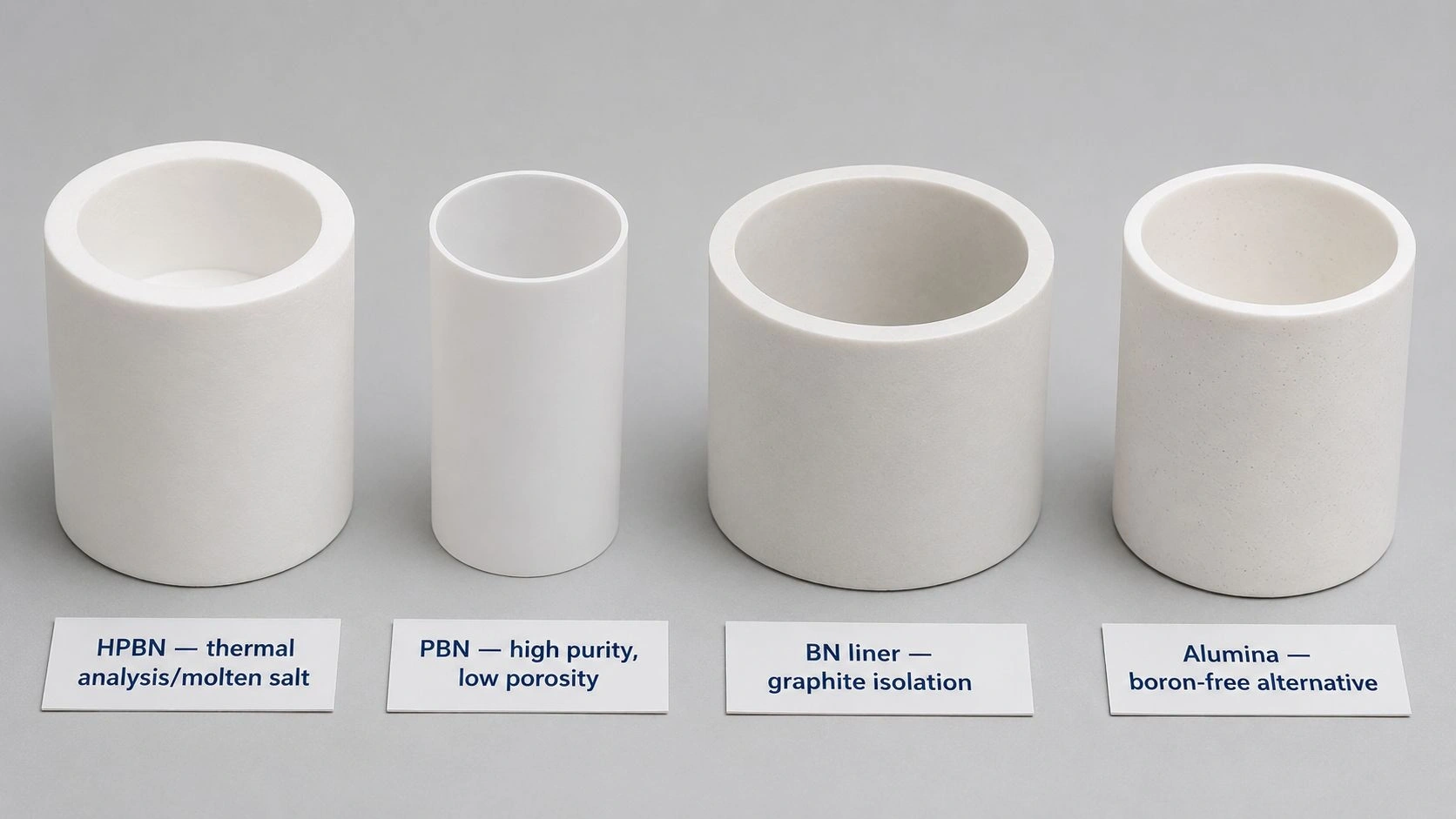
HPBN crucibles, PBN crucibles, BN liners, and alumina alternatives solve different research-interface problems — thermal analysis, high-purity containment, graphite isolation, and boron-free operation should be specified separately.
PBN vs hot-pressed BN in research applications. Published CVD-PBN (pyrolytic BN) screening context often cites greater than 99.99% purity with virtually no porosity as a typical published purity/porosity description — confirm on lot COA / RFQ; this is not a contractual purity or porosity guarantee. That published context contrasts CVD densification with the powder-compaction and binder-dependent route used for standard hot-pressed BN. When the research requires minimizing binder-derived impurities, reducing gas permeability, or providing the densest available BN structure, PBN from the PBN crucible range is the appropriate specification family to evaluate. For most laboratory sample holder, thermal analysis accessory, and molten salt screening uses, hot-pressed BN is more practical because it can be machined to custom geometry at lower cost.
What specifications should be included in a safe BN crucible RFQ?
A BN crucible RFQ for nuclear-materials-adjacent research should describe the component entirely within the domain of material selection and mechanical specification — not as part of a nuclear process description. The RFQ scope is the ceramic part, not the experiment protocol.
Required RFQ fields include BN grade designation, manufacturing route (HPBN or PBN), purity statement with additive or binder disclosure where available, density and open porosity data if available, dimensions (OD/ID/height/wall thickness), lid or cover requirement, surface finish specification for the inner bore and contact surfaces, closed or open end configuration, atmosphere category, peak temperature category, compatible media family (for example: fluoride salt screening, chloride salt screening, metal alloy compatibility), expected contact duration category, and whether boron-sensitive analytical measurement is involved.
The RFQ should not include radioactive material quantities, enrichment levels, special nuclear material designations, classified process parameters, or any information that would need to travel through export control or institutional security review channels before being shared with a supplier.
What documentation should a supplier provide for regulated research environments?
After the BN crucible is specified and the material is confirmed suitable, the documentation package must support the research laboratory's quality and compliance records.
Custom BN crucibles and liners can be supplied with material certification, lot traceability, dimensional inspection reports, and optional surface-finish or third-party testing documentation — confirm documentation scope on RFQ. That ceramic COA / dimensions / lot package supports laboratory quality records; it does not replace institutional safety authorization for the research program.
The Misdiagnosis Matrix maps common procurement errors in this context:
| Misdiagnosis | Why it is risky | Correct engineering question |
|---|---|---|
| ""BN is inert, so it is always acceptable"" | BN still contains boron and oxidizes under some conditions | Is boron, oxygen, or moisture relevant to this experiment? |
| ""PBN and HPBN are interchangeable"" | Manufacturing route changes density, porosity, purity, and cost | Does the experiment require dense CVD BN or machinable bulk BN? |
| ""Nuclear research only needs high-temperature resistance"" | Neutron behavior, trace contamination, and licensing may dominate | What variable could invalidate the result or compliance review? |
| ""A crucible material can be selected without documentation"" | Regulated labs need traceability and material evidence | What supplier data will be stored with the experiment record? |
The supplier documentation package for regulated research environments should include: material grade identification with manufacturing route clearly stated, purity statement with major impurity elements where available, density and open porosity data where applicable, dimensional inspection report for the delivered parts, surface finish measurement at functional surfaces, packaging and cleanliness description, lot and batch traceability numbers, and confirmation of whether the part is HPBN, PBN, or a liner configuration.
Compliance routing. The institution holds the license/authorization for radioactive-material or special-nuclear-material research; the ceramic supplier provides ceramic COA, dimensions, and lot documentation only. All questions related to radioactive-material licensing, special nuclear material possession or use, export control, security classification, waste management, radiation worker protection, and institutional safety authorization should be directed to the buyer's institutional compliance office, not to the ceramic supplier. Supplying ceramic parts or documentation does not constitute nuclear-facility qualification or any claim that the supplier satisfies regulated nuclear program requirements.
The ceramic crucibles range provides cross-material context for cases where alumina, zirconia, SiC, or other ceramic vessels are more appropriate for specific atmospheric conditions or where boron contribution must be completely eliminated from the analytical system.
Evaluating BN or PBN crucibles for nuclear-materials-adjacent research? Share your component drawing, BN grade requirement, atmosphere category, peak temperature range, media family, boron-sensitive measurement status, and documentation requirements via the custom ceramic parts path. Confirm that the application is non-military and non-weapons-related and that the research program has been reviewed through your institution's compliance process. Material certification, lot traceability, dimensional inspection, and custom geometry can be scoped for the containment and interface component requirements — confirm on RFQ.
Related reading
- BN crucibles for superalloy sample preparation — When the duty is superalloy sample-prep crucibles, not nuclear-materials compliance documentation
- BN crucibles and aluminum-alloy casting inclusions — When aluminum-alloy casting inclusions / interface cleanliness gate the BN crucible choice
- BN crucibles for silver and copper refining — When silver/copper refining melt chemistry — not neutron/compliance review — drives the BN RFQ
Frequently Asked Questions
Are BN crucibles used in nuclear material research?
Yes, BN crucibles appear in nuclear-materials-adjacent research contexts including controlled-atmosphere thermal analysis, molten salt compatibility testing, surrogate material studies, and component isolation. Published work from Argonne National Laboratory documents electrochemical testing conducted in boron nitride crucibles in molten salt research. Any use involving radioactive materials must be reviewed and authorized through the laboratory's applicable institutional safety and licensing program.
Does boron nitride absorb neutrons?
Boron-containing materials are relevant in neutron environments because natural boron contains ¹⁰B, which has a high thermal neutron absorption cross-section. Neutron behavior is Conditional — it requires physics and compliance review before use in a neutron-sensitive setup; the ceramic datasheet alone does not authorize an absolute usable/unusable determination for regulated nuclear duty.
Is PBN better than hot-pressed BN for nuclear research?
PBN is preferred when dense, high-purity, low-porosity BN is needed — published CVD-PBN screening context often cites greater than 99.99% purity with virtually no porosity as a typical description; confirm on lot COA / RFQ (not a contractual purity/porosity guarantee). Hot-pressed BN is more practical for many custom-machined laboratory crucibles and liners where lower cost and machining flexibility are priorities. The choice depends on whether density, purity, and outgassing control or machinability and cost are the dominant selection factors.
Can BN crucibles be used with molten salts?
BN can be useful in some molten salt research because hexagonal BN is non-wetted by molten salts and reactive molten metals, as documented in ORNL material property data. Compatibility depends on the specific salt chemistry, moisture content of the atmosphere, operating temperature, and contact duration. Salt systems with high oxidizing potential or significant moisture activity require validation before BN is approved.
Can BN crucibles be used with radioactive materials?
The ceramic material specification does not authorize the use of BN crucibles with radioactive materials. Any research involving radioactive materials, including activities, quantities, shielding, containment, waste, and handling procedures, must be reviewed and authorized through the laboratory's institutional safety program, licensing, and applicable national regulations. The institution holds the license/authorization; the supplier provides ceramic COA, dimensions, and lot documentation only.
What should be included in a BN crucible RFQ for regulated research?
Include the component drawing, BN grade designation with HPBN or PBN type, purity documentation requirement, atmosphere category, temperature range, contact media family, surface finish specification, tolerance, packaging requirement, and lot traceability requirement. Do not include sensitive nuclear process parameters or radioactive material quantities in supplier correspondence. Direct all compliance, licensing, export control, and safety questions to your institutional compliance office.